At-home tricep training requires a slightly different approach than gym-based programming because most home setups lack the cable and machine variety that produce specific tricep isolation. The best at home tricep workouts work around this by combining dumbbell extension variations, resistance band exercises, bodyweight floor dips, and creative bodyweight setups (like bed sheet anchoring) that produce real tricep development without specialized gym equipment.
Below are ten effective at-home tricep exercises that cover band-based kickback and pushdown work, dumbbell extension variations (skull crushers and overhead presses), bodyweight tricep loading (floor dips), and complementary stretching for tricep recovery. Together they form a complete tricep training program that fits in any home gym with minimal equipment (a pair of dumbbells and a resistance band cover most of the list).
Band Triceps Kickback

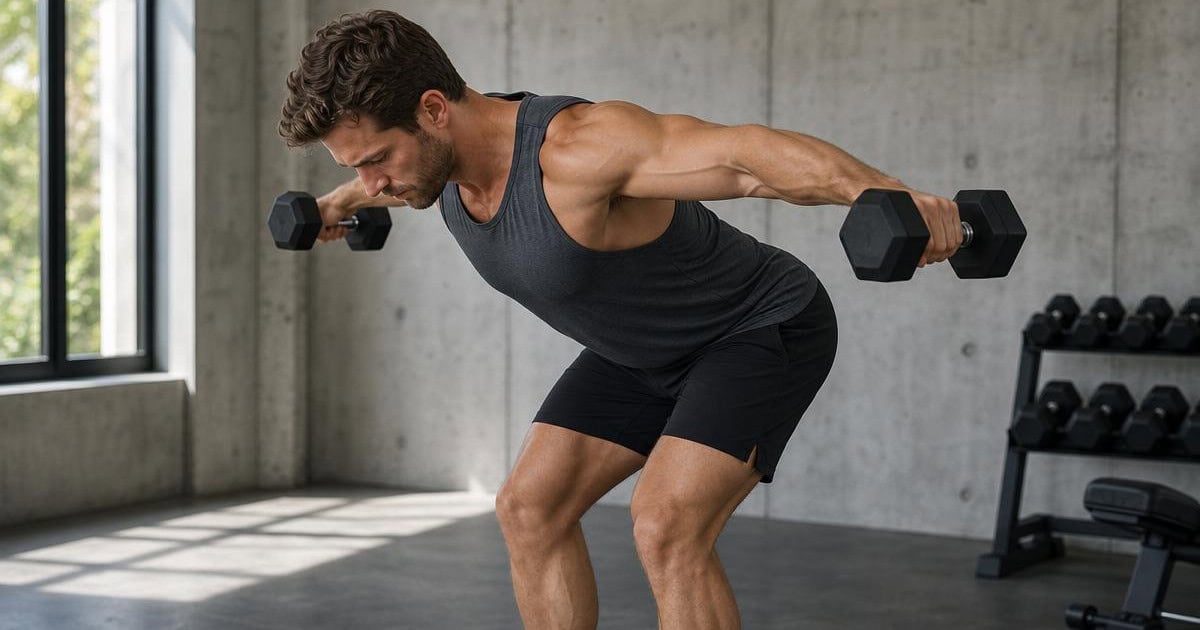
The Band Triceps Kickback hinges over and uses a resistance band anchored at a low point to perform a kickback motion. The band tension increases through the rep, which loads the lockout position (where the tricep is most contracted) most heavily.
For at-home tricep training, band kickbacks produce nearly identical stimulus to dumbbell kickbacks while requiring less equipment. The accommodating resistance pattern (lighter at the start, heavier at the lockout) actually produces stronger contraction at the peak than dumbbell variations because it matches the natural strength curve of the tricep extension. Run it for 3 sets of 12 to 15 reps.
Anchor a resistance band at a low point (door anchor, sturdy table leg, or step on the band). Hinge over with a flat back and the upper arm tucked at the side, elbow bent at 90 degrees. Pull the band end backward by extending the elbow until the arm is straight. Squeeze at the lockout. Lower under control.
Dumbbell Pronate Grip Triceps Extension

The Dumbbell Pronate Grip Triceps Extension lies flat with dumbbells held in pronated grip (palms facing the feet) and performs an extension motion. The pronated grip changes the muscle recruitment slightly compared to the standard neutral-grip skull crusher.
For at-home tricep training, the pronated-grip skull crusher produces slightly different muscle recruitment than standard variations. The grip change can break through plateaus that traditional tricep work creates over time, and the dumbbell version allows each arm to work independently. Run it for 3 sets of 10 to 12 reps as primary tricep mass work.
Lie flat on the floor or a bench. Hold dumbbells with palms facing the feet (pronated grip), arms extended above the chest. Bend at the elbows to lower the dumbbells toward the sides of the head. Press back to the start by extending the elbows. Keep the upper arms still and pointed at the ceiling.
Weighted Seated Triceps Extension

The Weighted Seated Triceps Extension sits on a bench or chair and performs an overhead tricep extension with a single dumbbell held with both hands above the head. The seated position eliminates body sway and produces strict isolation.
Overhead extension work targets the long head of the triceps, which is the largest of the three tricep heads and the muscle that produces visible mass at the back of the upper arm. The seated version is the cleanest form of overhead extension because the bench-supported position eliminates lower-back loading. Run it for 3 sets of 10 to 12 reps as primary long-head work.
Sit on a bench with feet planted firmly. Hold a single dumbbell overhead with both hands cupping the top end. Lower the dumbbell behind the head by bending at the elbows, keeping the upper arms vertical. Extend back to the start by straightening the elbows.
Dumbbell Prone Triceps Kickback

The Dumbbell Prone Triceps Kickback lies face-down on a bench (or hinges over) with dumbbells held at the sides and performs the kickback motion by extending the elbows backward. The prone position eliminates body sway entirely and produces the strictest possible kickback form.
For tricep isolation, the prone kickback is the most strict variation that exists. The face-down position removes the body lean and momentum that standing or hinged kickbacks allow, which forces the triceps to do all the work. Run it for 3 sets of 12 to 15 reps as accessory work.
Lie face-down on a bench with arms hanging at the sides holding dumbbells. Pull the upper arms back parallel to the body, then extend the elbows to kick the dumbbells backward to lockout. Hold briefly. Lower under control. Use lighter weight than for standing kickbacks; the strict form produces stronger stimulus per pound.
Resistance Band Triceps Pushdown

The Resistance Band Triceps Pushdown anchors a resistance band overhead and pushes the band down by extending the elbows. The exercise mimics the cable pushdown pattern using only band equipment.
For at-home tricep training, the band pushdown is the most direct alternative to gym-based cable pushdowns. The band tension produces continuous loading throughout the rep, and the at-home setup costs significantly less than cable equipment. Run it for 3 to 4 sets of 12 to 15 reps as a finisher after heavier extension work.
Anchor a resistance band overhead (door anchor or sturdy attachment point). Stand facing the anchor with elbows tucked at the sides, bent at 90 degrees. Push the band down by extending the elbows until the arms are straight. Squeeze the triceps at the bottom. Return under control.
Overhead Triceps Extension with Bed Sheet

The Overhead Triceps Extension with Bed Sheet uses a folded bed sheet anchored to a door and performs an overhead extension pattern with the sheet providing isometric resistance. The improvised setup produces strong tricep loading without any equipment beyond what most homes already have.
For travelers and lifters in extremely minimal-equipment situations, the bed sheet variation produces real overhead tricep loading without specialized gear. The tensile strength of folded fabric provides plenty of resistance for tricep work. Run it for 3 sets of 12 to 15 reps as accessory work in any minimal-equipment program.
Anchor a folded bed sheet by closing it in a sturdy door (with the door closed, the sheet should not slip out). Grip both sheet ends overhead. Lower the hands behind the head by bending at the elbows while pulling against the sheet tension. Press back to the start by extending the elbows.
Overhead Triceps Stretch

The Overhead Triceps Stretch reaches one arm overhead and bends at the elbow to bring the hand toward the back, then uses the opposite hand to gently pull the elbow further back. The stretch lengthens the tricep through its full overhead range.
For tricep recovery and ongoing flexibility, the overhead tricep stretch addresses the chronic tightness that pressing-heavy training produces. Daily stretching for 30 to 60 seconds per side counteracts the tightness without limiting strength gains. Run it as cool-down after pushing or arm-focused sessions.
Stand or sit tall. Reach one arm straight overhead. Bend the elbow to bring the hand down behind the head. Use the opposite hand to gently pull the elbow further back, deepening the stretch through the tricep. Hold for 30 to 60 seconds. Switch sides.
Triceps Stretch

The Triceps Stretch brings one arm across the body at chest height and uses the opposite hand to gently pull the elbow toward the body. The position stretches the tricep through horizontal adduction.
The standard tricep stretch complements overhead tricep stretching by addressing a different range of motion. The two stretches together cover the full tricep length and produce stronger flexibility gains than either alone. Run them as a pair during cool-downs after upper-body sessions.
Stand or sit tall. Bring one arm across the body at chest height with the elbow bent slightly. Use the opposite hand to gently pull the elbow toward the body, increasing the stretch through the back of the upper arm. Hold for 30 to 60 seconds. Switch sides.
Triceps Dips Floor

The Triceps Dips Floor sits on the floor with the hands behind the body and feet planted forward, then dips the body up and down by bending at the elbows. The bodyweight version of the dip works the triceps and front delts without requiring parallel bars.
For tricep development at home, the floor dip is one of the most accessible direct tricep exercises that exists. No equipment needed, no parallel bars, no bench: just floor space and bodyweight. Run it for 3 sets of 12 to 20 reps as a foundational tricep exercise that complements weighted variations.
Sit on the floor with hands placed flat behind the body, fingers pointing forward. Plant the feet flat on the floor with knees bent. Lift the hips off the floor. Lower the body by bending the elbows, then press back to the start by extending the elbows. Keep the hips lifted throughout.
Dumbbell One Arm Triceps Extension on Stability Ball

The Dumbbell One Arm Triceps Extension on Stability Ball lies with the upper back on a stability ball and performs single-arm tricep extensions with a dumbbell. The unstable surface and unilateral loading produce extreme tricep isolation alongside core stability demand.
For lifters with a stability ball at home, the unilateral extension on a ball produces stronger tricep stimulus per rep than bilateral floor variations. The unstable surface forces continuous core engagement, and the unilateral loading catches strength imbalances. Run it for 3 sets of 10 to 12 reps per arm as accessory work.
Lie with the upper back on a stability ball, feet planted on the floor. Hold a dumbbell in one hand with the arm extended straight up. Bend at the elbow to lower the dumbbell toward the same-side ear, keeping the upper arm vertical. Press back to lockout by extending the elbow. Maintain the bridge position throughout. Switch arms each set.
How To Program These Workouts
A productive at-home tricep session pulls six to eight exercises from the list above. A balanced session includes one heavy extension (skull crusher or pronate grip extension), one overhead exercise (seated tricep extension), one isolation exercise (band kickback or pushdown), one bodyweight exercise (floor dips), and complementary stretches (tricep stretch, overhead tricep stretch). Run primary lifts for 3 to 4 sets of 8 to 12 reps; isolation work for 3 sets of 12 to 15 reps; bodyweight dips for 3 sets to near failure.
Train triceps two to three times per week. The triceps recover within 48 to 72 hours of moderate training, but they get significant indirect work from chest day and shoulder day, which means dedicated tricep work compounds quickly with other upper-body training. Most lifters program one focused tricep session per week alongside the indirect tricep work from chest pressing, or split tricep work across two upper-body days for higher total volume.
For more tricep programming, see our best dumbbell tricep workouts and how to build bigger triceps. For broader at-home programming, see our best upper body workouts at home.
Final Thoughts
The best at home tricep workouts produce real tricep development without requiring cable machines, parallel bars, or specialized gym equipment. The combination of dumbbell extensions, band-based isolation, bodyweight loading, and complementary stretching covers every major tricep training function in a way that fits any home setup. For home lifters who want stronger arms, this format is one of the most effective tricep training options available.
Stay focused on full range of motion. The most common at-home tricep training mistake is shortening the range of motion to allow heavier weight, which kills the effective stimulus. The fix: use weights light enough to lock out completely at the top of every rep and lower fully under control. Strict full-range reps with moderate weight produce stronger tricep growth than partial-range reps with heavier weight.
Frequently Asked Questions
What equipment do I need for at home tricep workouts?
A pair of dumbbells (15 to 30 pounds for most beginners, 25 to 50 pounds for intermediates) and a resistance band cover most exercises. The dumbbells handle skull crushers and overhead extensions; the band handles pushdowns and kickbacks. Optional additions: a stability ball (for unilateral extensions), a sturdy door (for the bed-sheet variation). Most home tricep programs work with just dumbbells and a band.
How often should I train triceps at home?
Two to three times per week works for most lifters. The triceps recover within 48 to 72 hours of moderate training. Most lifters do well with one focused tricep session per week as part of an upper-body day, or split tricep work across two upper-body days for higher total volume. The triceps also get significant indirect work from chest and shoulder pressing, which counts toward total tricep volume.
Can I build big triceps at home?
Yes for beginners and intermediates. Dumbbell and band-based tricep training produces real tricep growth for 12 to 24 months of consistent practice, and progressive variations extend that runway by another 12 to 24 months. Advanced lifters chasing maximum tricep size eventually benefit from heavy barbell work (close-grip bench press, weighted dips), but consistent at-home tricep training produces measurable development at every level.
Are bodyweight dips enough for triceps?
Not by themselves for advanced lifters. Bodyweight dips produce moderate tricep stimulus that caps out as lifters get strong because the load (bodyweight) does not increase. Adding dumbbell and band variations produces stronger ongoing development by allowing progressive load increases. Bodyweight dips remain valuable as part of a complete program; they just should not be the only tricep exercise.
What’s the best at home tricep exercise?
The dumbbell skull crusher (lying tricep extension) is the most effective single at-home tricep mass-builder for most lifters. The combination of heavy loading and full range of motion produces stronger tricep growth per rep than most other tricep exercises. Overhead extensions come second for long-head development. Most well-designed at-home tricep programs use both as primary exercises.