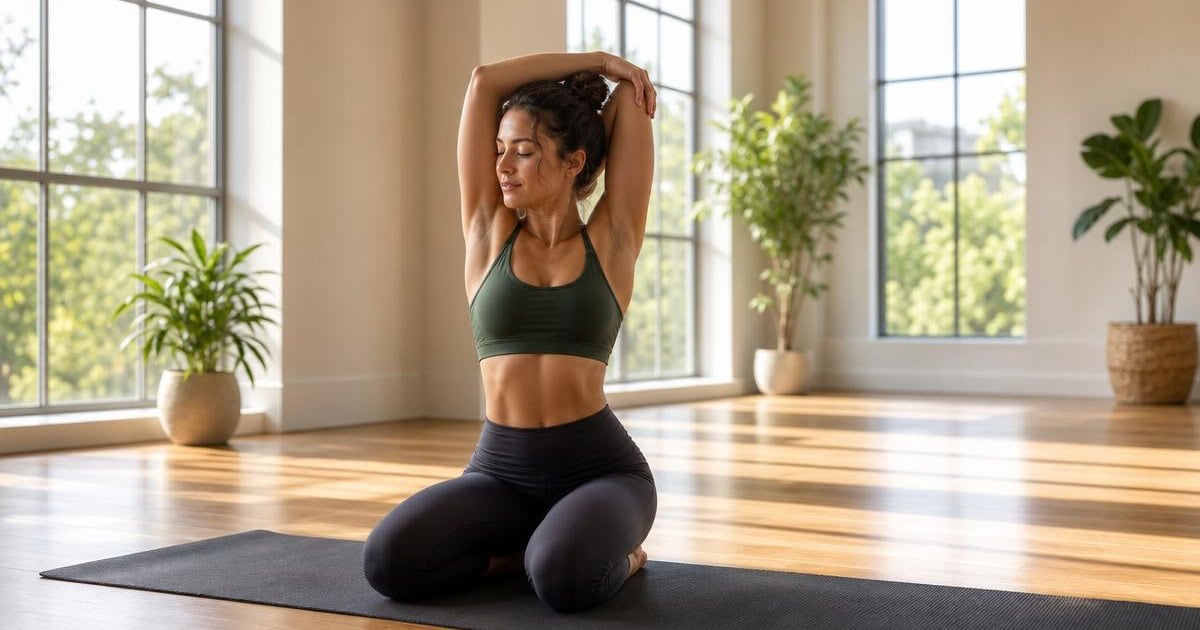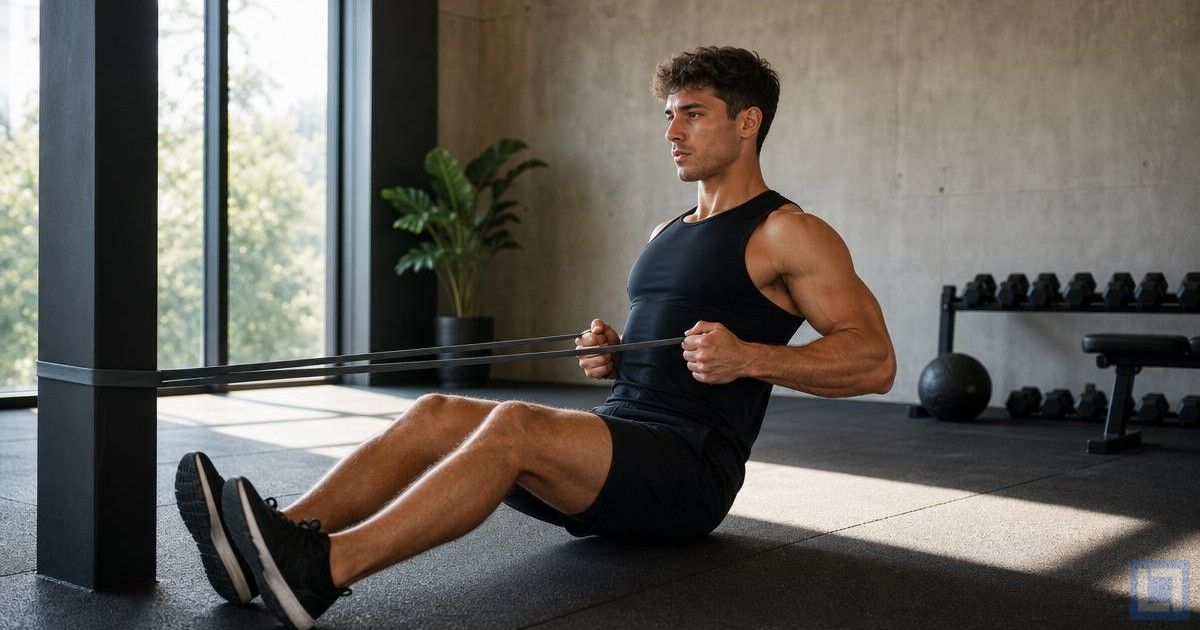
Upper-body resistance band training produces real strength and conditioning across every major upper-body movement pattern using equipment that fits in any travel bag. The accommodating resistance pattern of bands (lighter at the start, heavier at the contracted position) produces unique loading that complements (and in some cases exceeds) constant-load training of dumbbells and barbells. Bands also produce strong loading on stabilizing muscles because the tension changes throughout the rep, which produces broader functional development per session than isolated weight training.
Below are ten effective upper-body band exercises that cover pressing (push-up, seated chest press, overhead press), pulling (skier, face pull), arm work (biceps curl, triceps pushdown), shoulder health (external rotation, serratus wall slide), and conditioning (lying air bike). Together they form a complete upper-body band training program that fits in any setting from home to travel hotel rooms. A 30 to 45-minute session pulled from this list produces strong upper-body stimulus across every major muscle group.
Resistance Band Upper Body Lying Air Bike

The Resistance Band Upper Body Lying Air Bike lies on the back with bands looped around the hands and performs an air-bike motion combining upper-body cycling with leg flutter motions. The continuous full-body movement produces strong cardiovascular and upper-body conditioning.
For upper-body band conditioning, the lying air bike fits naturally as a high-density warm-up or finisher. The combined upper-and-lower-body motion produces stronger conditioning than isolated arm work. Run it for 3 sets of 30 to 45-second intervals at steady tempo.
Lie flat on the back with resistance bands looped around the hands. Pull the bands toward the body in alternating arm motions while simultaneously performing a leg-cycling motion. Keep the lower back pressed to the floor throughout. Continue at a steady tempo for the prescribed time.
Resistance Band Skier

The Resistance Band Skier mimics the cross-country skier exercise by pulling bands down and back simultaneously while performing a slight squat or lunge motion. The exercise hits the back, lats, and triceps along with cardiovascular conditioning.
For upper-body band sessions, the skier exercise produces strong back-and-tricep loading combined with cardiovascular demand. The pulling pattern complements pressing exercises by emphasizing the posterior chain. Run it for 3 to 4 sets of 30 to 45 seconds at sustainable tempo.
Anchor a resistance band at chest height. Stand facing the anchor holding band ends in each hand. Pull both bands down and back simultaneously while bending the knees into a slight squat. Return to start by extending the arms forward and standing up. Continue at a steady rhythm.
Resistance Band Push-up

The Resistance Band Push-up performs a push-up while a resistance band is wrapped across the upper back and held under the hands. The band tension adds resistance to the pressing motion, increasing the loading on the chest, shoulders, and triceps.
For loaded push-up training in upper-body band sessions, the band push-up adds real resistance to the standard push-up pattern. The accommodating resistance is heaviest at the lockout where the chest contracts hardest. Run it for 3 to 4 sets of 8 to 12 reps as primary push work.
Wrap a resistance band across the upper back. Get into a push-up position with the band ends pinned under the hands. Lower the chest to within an inch of the floor by bending the elbows. Press back to lockout against the band tension. Maintain tight body position throughout.
Resistance Band Standing External Rotation

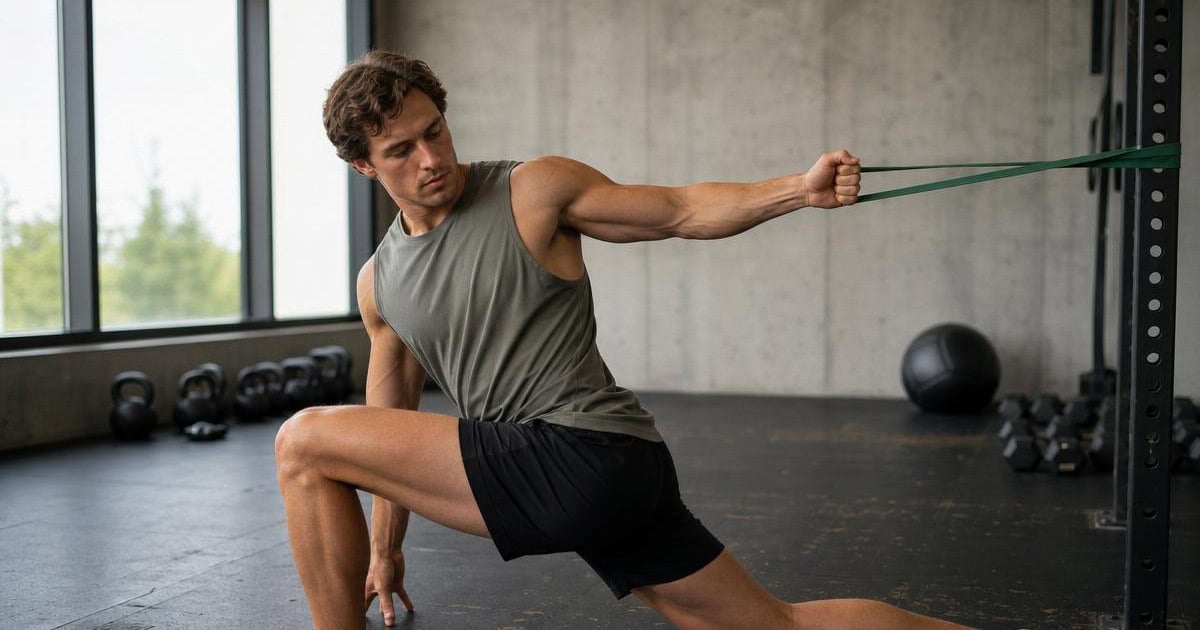
The Resistance Band Standing External Rotation anchors a band at elbow height and rotates the shoulder externally against the band tension. The pattern targets the rotator cuff (specifically the infraspinatus and teres minor) directly.
For shoulder health in upper-body band sessions, the standing external rotation is one of the most direct rotator cuff exercises that exists. The pattern strengthens often-weak external rotator muscles that prevent shoulder injuries. Run it for 3 sets of 12 to 15 reps per side as accessory shoulder work.
Anchor a resistance band at elbow height. Stand sideways to the anchor with the elbow tucked at the side and bent at 90 degrees. Hold the band end with the hand of that arm. Rotate the shoulder externally to pull the band away from the body. Return under control. Switch sides on the next set.
Resistance Band Seated Chest Press

The Resistance Band Seated Chest Press anchors bands behind the body and performs a chest pressing motion while seated. The seated position eliminates lower-body involvement and isolates the chest, shoulders, and triceps.
For seated upper-body band training, the chest press is the foundational pressing exercise. The seated position works well for lifters with knee or back limitations and produces strong chest loading. Run it for 3 to 4 sets of 10 to 12 reps as primary push work.
Anchor resistance bands behind the body at chest height (when seated). Sit on a bench or chair facing away from the anchor. Hold the band ends at the chest with elbows at the sides. Press both hands forward to extension. Lower under control to the chest.
Resistance Band Seated Biceps Curl

The Resistance Band Seated Biceps Curl seats with feet on a band and curls the band ends toward the shoulders. The seated position eliminates leg drive and isolates the biceps for strict curling work.
For seated upper-body band training, the seated curl produces strong bicep isolation. The fixed seated position prevents body sway and produces strong direct bicep loading. Run it for 3 to 4 sets of 10 to 12 reps as primary bicep work.
Sit on a bench or chair. Place a resistance band under the feet. Hold the band ends with palms facing forward. Curl the band toward the shoulders by bending at the elbows. Squeeze the biceps at the top. Lower under control.
Resistance Band Seated Face Pull

The Resistance Band Seated Face Pull anchors a band overhead and pulls the band toward the face by retracting the shoulder blades and pulling the elbows back. The pattern hits the rear delts, rhomboids, and middle traps.
For posture and rear-delt training in upper-body band sessions, the face pull is one of the most important exercises for lifters who sit a lot or do heavy pressing. The pattern strengthens the often-weak postural muscles. Run it for 3 sets of 15 to 20 reps as accessory back and rear-delt work.
Anchor a resistance band overhead. Sit facing the anchor with band ends in each hand. Pull the band toward the face by retracting the shoulder blades and pulling the elbows out and back. Squeeze at the contracted position. Return under control.
Resistance Band Serratus Wall Slide

The Resistance Band Serratus Wall Slide stands facing a wall with a band around the wrists and slides the arms up and down against the wall while pressing outward against the band tension. The pattern targets the serratus anterior and shoulder stabilizers.
For shoulder mobility and serratus anterior strength, the band serratus wall slide is one of the most direct exercises that exists. The pattern improves overhead pressing mechanics and shoulder health. Run it for 3 sets of 10 to 12 reps as accessory shoulder work.
Stand facing a wall. Loop a resistance band around the wrists. Press the forearms against the wall with elbows at shoulder height. Slide the forearms up the wall toward overhead while pressing outward against the band tension. Slide back down under control.
Resistance Band Overhead Shoulder Press

The Resistance Band Overhead Shoulder Press stands on a band with the ends held at the shoulders and presses both hands overhead against the band tension. The pattern produces strong shoulder loading through the natural pressing motion.
For upper-body band sessions, the overhead press is the foundational shoulder exercise. The accommodating resistance pattern increases as the bands stretch tight at lockout, which produces strong loading at the strongest portion of the rep. Run it for 3 to 4 sets of 8 to 12 reps as primary shoulder work.
Stand on a resistance band with both feet at shoulder-width. Hold the band ends at the shoulders with palms facing forward. Press both hands overhead to lockout. Lower under control to the shoulders. Brace the core hard throughout.
Resistance Band Triceps Pushdown

The Resistance Band Triceps Pushdown anchors a band overhead and pushes the band down by extending at the elbows. The pattern isolates the triceps through pure elbow extension.
For tricep training in upper-body band sessions, the band pushdown is the most direct tricep isolation exercise. The fixed band path eliminates compensation patterns. Run it for 3 sets of 12 to 15 reps as accessory tricep work after primary pressing.
Anchor a resistance band overhead. Stand facing the anchor with the band gripped in both hands at chest level. Keep the elbows pinned at the sides. Push the band down by extending the elbows fully. Squeeze the triceps at the bottom. Return under control.
How To Program These Workouts
A productive upper-body band session pulls seven to nine exercises from the list above. A balanced session includes one push movement (push-up or seated chest press), one pull movement (skier or face pull), one shoulder press (overhead press), one bicep exercise (seated curl), one tricep exercise (pushdown), and 1 to 2 shoulder health exercises (external rotation, serratus wall slide). Run pressing and pulling movements for 3 to 4 sets of 8 to 12 reps; arm isolation for 3 sets of 10 to 15 reps; shoulder health work for 3 sets of 12 to 20 reps.
Train upper-body band sessions 2 to 3 times per week. The accommodating resistance produces moderate joint stress, which allows higher frequency than barbell-heavy upper-body programs. Most lifters do well with 2 to 3 upper-body band sessions per week alongside lower-body or full-body band sessions and 1 to 2 dedicated cardio days. The format also fits naturally as a travel program.
For broader band programming, see our best resistance band workouts and best full body resistance band workouts. For specific arm training, see our best resistance band arm workouts.
Final Thoughts
The best upper-body resistance band workouts deliver complete training across every major movement pattern through equipment that fits in any setting. The combination of pressing, pulling, arm isolation, shoulder health, and conditioning movements covers every major upper-body function in one piece of portable equipment. For home lifters, travelers, and anyone wanting effective upper-body training without weights, resistance band training is one of the most versatile options available.
Stay focused on band tension throughout the rep. The most common upper-body band training mistake is letting the band slack at the bottom of movements, which kills the loading and reduces the effective stimulus. The fix: maintain constant band tension throughout the entire range of motion. Bands and free weights load differently; trying to use bands like dumbbells produces weaker results than using bands as bands. The accommodating resistance pattern is what makes band training effective; respect it.
Frequently Asked Questions
Can resistance bands build upper body muscle?
Yes for beginners, intermediates, and most general fitness goals. The combination of progressive band training, appropriate volume, and consistent nutrition produces real upper-body muscle development for years of consistent practice. Advanced lifters chasing maximum strength eventually benefit from heavy free weights that allow loads bands cannot match, but consistent band training produces measurable upper-body development at every level.
What resistance band weights for upper body?
Most beginners need a set of bands ranging from light (10 to 30 pound resistance equivalent) to medium-heavy (40 to 70 pound resistance equivalent). The variety lets lifters use lighter bands for isolation work (lateral raises, curls) and heavier bands for compounds (push-ups, presses). Loop bands and tube bands with handles cover most upper-body exercises; door anchors expand the exercise selection significantly.
How often should I do upper body band workouts?
Two to three times per week works for most lifters. The accommodating resistance produces moderate joint stress, which allows higher frequency than barbell-heavy programs. Most successful programs include 2 to 3 upper-body band sessions per week alongside lower-body or full-body work and 1 to 2 dedicated cardio sessions.
Are resistance bands good for shoulders?
Yes, particularly good. The bands produce smooth strength curves that load the shoulders without the joint stress of heavy free-weight pressing. The accommodating resistance is also gentler at the bottom of the rep where shoulders are most vulnerable, which makes band shoulder training particularly safe for lifters with shoulder issues. External rotation and serratus wall slides are especially valuable for shoulder health.
Can I get a good upper body workout with just bands?
Yes, very effectively. The 10 exercises in this list cover every major upper-body function (pressing, pulling, arm isolation, shoulder health) and produce comprehensive upper-body training in 30 to 45 minutes. Most lifters who consistently do 2 to 3 upper-body band sessions per week see measurable strength and muscle development within 8 to 12 weeks combined with appropriate nutrition.