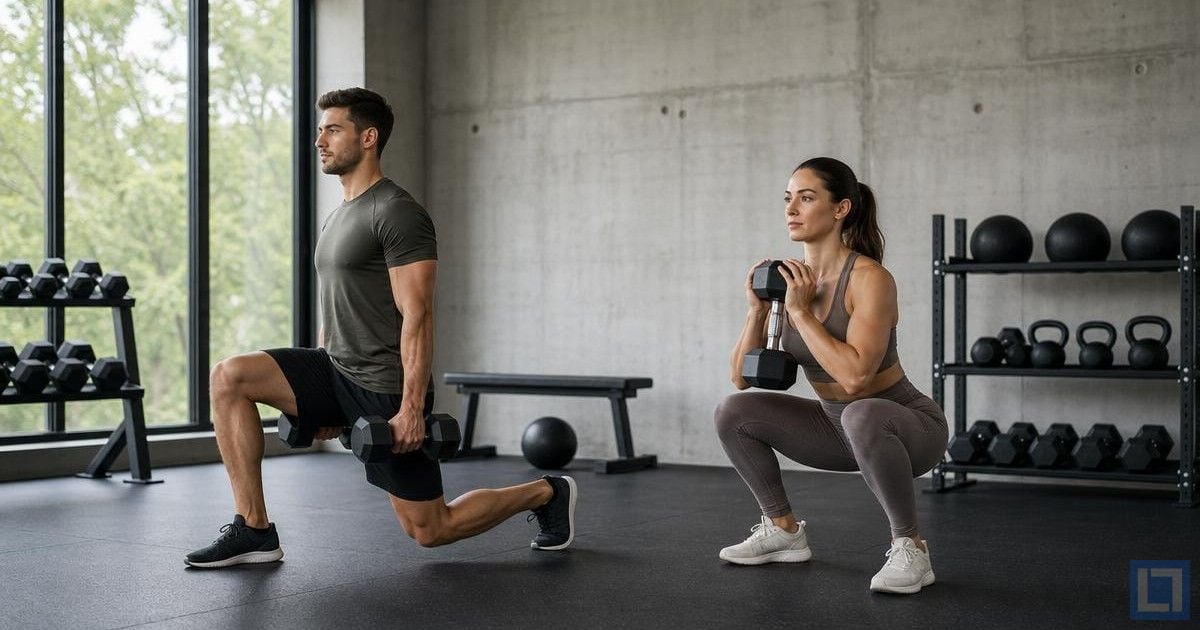
Dumbbell-only training produces real lower-body strength and development for lifters without barbell access. The combination of bilateral and unilateral movements covers every major lower-body function, and the dumbbell format allows easier setup and load progression than barbell work for many home and travel scenarios. The best lower body dumbbell workouts emphasize the unilateral, lateral, and explosive variations that dumbbells handle particularly well.
Below are ten effective lower body dumbbell exercises that cover bilateral squats, unilateral lunges and split squats, lateral movements, glute-focused work, and explosive cleans. Together they form a complete lower body training program that fits in any home gym with a pair of dumbbells and adequate floor space.
Dumbbells Glute Bridge

The Dumbbells Glute Bridge lies on the back with knees bent and a dumbbell or two held across the hips, then drives the hips up by squeezing the glutes hard. The added external load increases the strength stimulus on the glutes significantly compared to bodyweight bridges.
For lower-body programs that emphasize glute development, the loaded glute bridge is one of the most direct exercises that exists. The hip-thrust mechanics target the glutes specifically without quad involvement, which fills a key gap in squat-and-lunge dominant programs. Run it for 3 to 4 sets of 12 to 15 reps as the primary glute exercise.
Lie flat with knees bent and feet planted shoulder-width apart. Place a heavy dumbbell across the hips. Drive the hips up by squeezing the glutes hard at the top. Lower under control. Hold the top position briefly on each rep to maximize the contraction.
Dumbbell Static Lunge

The Dumbbell Static Lunge takes a long stance with dumbbells held at the sides and drops straight down by bending both knees, then drives back to standing without moving the feet. The static position eliminates the dynamic stepping component and produces focused unilateral loading.
For pure unilateral leg strength, the dumbbell static lunge is one of the most effective exercises that exists. The static stance allows higher rep counts than walking lunges (which split effort between balance and movement) and produces stronger glute and quad development per rep. Run it for 3 to 4 sets of 8 to 12 reps per leg.
Set up in a long stance with one foot forward and one back. Hold dumbbells at the sides with arms extended. Drop straight down by bending both knees, lowering the back knee toward the floor. Drive through the front heel to stand. Complete all reps on one leg before switching.
Dumbbell Thruster
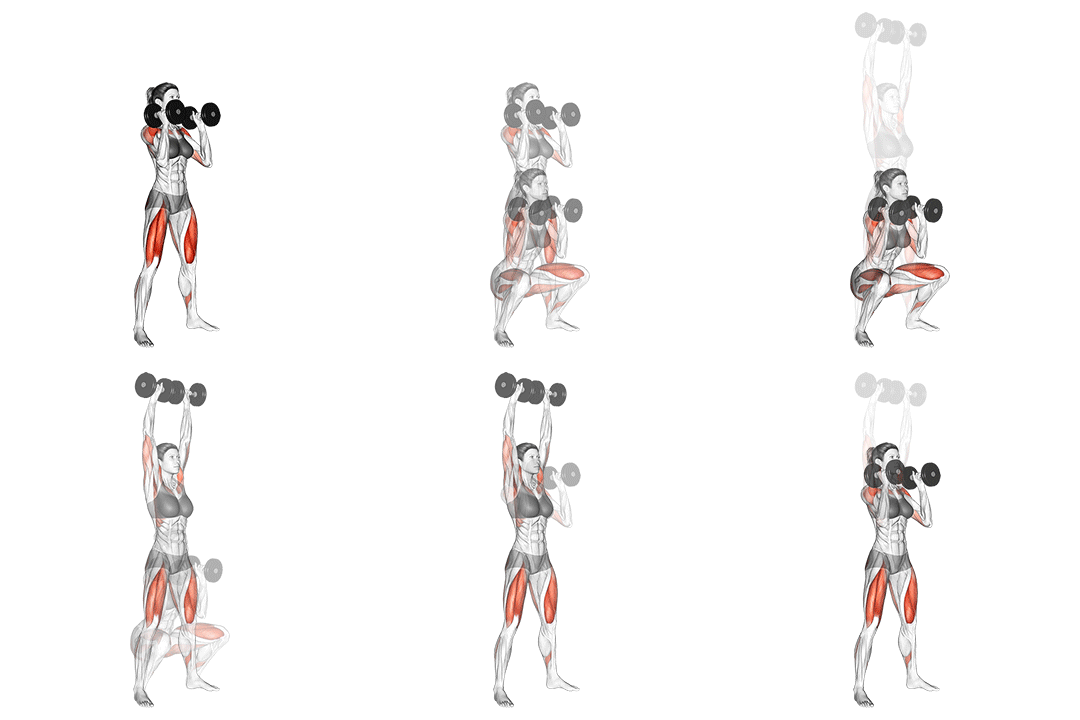
The Dumbbell Thruster combines a front squat and overhead press into one continuous motion: squat to depth holding the dumbbells at the shoulders, then drive up explosively while pressing the dumbbells overhead to lockout. The exercise hits the entire body in one movement.
Thrusters appear in many CrossFit-style workouts because they hit the legs and shoulders simultaneously and elevate heart rate quickly. The combination of leg drive and overhead pressing produces both strength and conditioning adaptations in shorter total time than performing the movements separately.
Hold the dumbbells at the shoulders with elbows pointing forward. Squat to depth with chest tall. Drive up explosively, using the leg drive momentum to press the dumbbells overhead to lockout. Lower the dumbbells back to the shoulders and immediately drop into the next squat.
Dumbbell Sumo Squat

The Dumbbell Sumo Squat takes a wide stance with feet turned out and squats down with a single heavy dumbbell held between the legs. The wide stance and dumbbell position emphasize the inner thighs and glutes more than narrower squat variations.
For glute and inner-thigh focused work, the sumo squat is one of the most direct dumbbell exercises that exists. The wide stance reduces the range of motion compared to narrower squats but increases the loading on the adductors and glutes. Run it for 3 sets of 10 to 12 reps as accessory work.
Set the feet wide with toes turned out roughly 30 to 45 degrees. Hold a heavy dumbbell with both hands hanging between the legs. Squat to parallel depth with chest tall. Drive back to standing through the whole foot, squeezing the glutes hard at the top.
Dumbbell Cossack Squats

The Dumbbell Cossack Squats take a wide stance and shift the body weight to one side while bending that knee fully, with the opposite leg straight. The lateral motion combined with deep unilateral squatting hits the inner thigh, glutes, and quadriceps from a unique angle.
For lateral-plane lower-body work, the Cossack squat is the most demanding dumbbell exercise that exists. The combination of deep range of motion and lateral motion produces stronger hip mobility gains alongside the strength work. Use it as variety in lower-body programming.
Stand with feet wide. Hold a single dumbbell at the chest. Shift the body weight to one side and bend that knee fully while keeping the opposite leg straight. The opposite foot may rotate up onto the heel. Push back to the wide stance and switch sides.
Dumbbell Side Squat

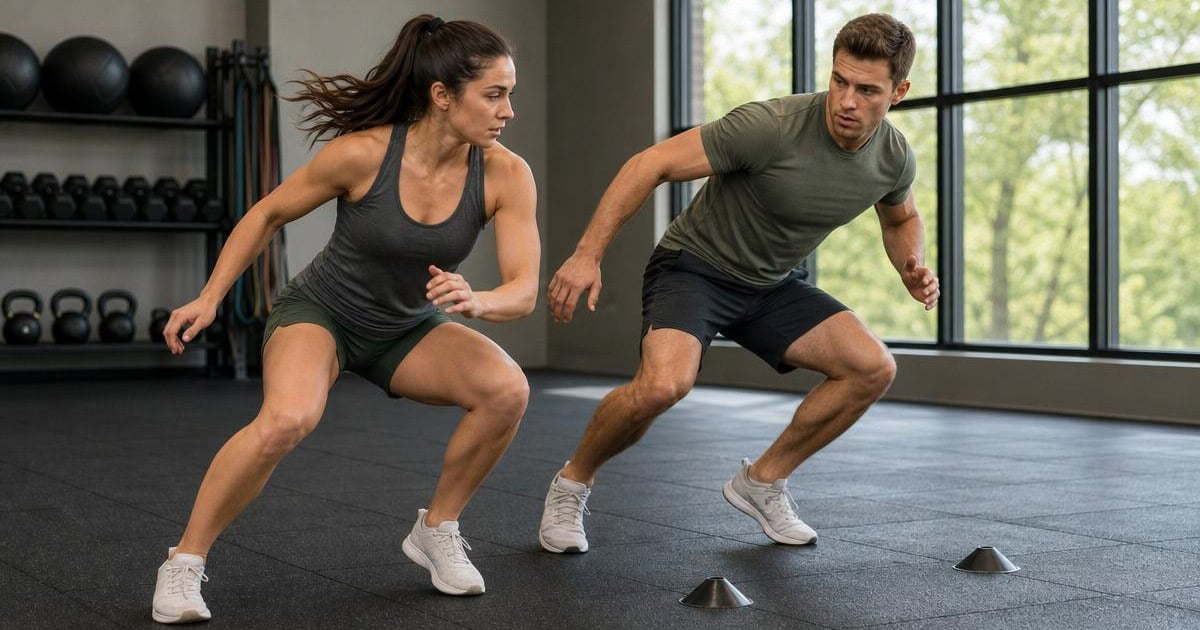
The Dumbbell Side Squat takes a step out to one side while holding dumbbells, then squats down on the stepping leg while the opposite leg stays straight. The lateral movement pattern hits the inner thighs and glutes through a different plane than forward or backward lunges.
Most dumbbell leg programming happens in the sagittal plane (forward and backward motion). Side squats add lateral motion, which trains the muscles and movement patterns that stabilize the body during athletic activities. Run it for 3 sets of 10 to 12 reps per side.
Stand with feet hip-width apart holding dumbbells. Take a wide step out to the side and bend the stepping leg while keeping the opposite leg straight. Push back to the standing position through the bent leg. Alternate sides on each rep.
Dumbbell Split Squat
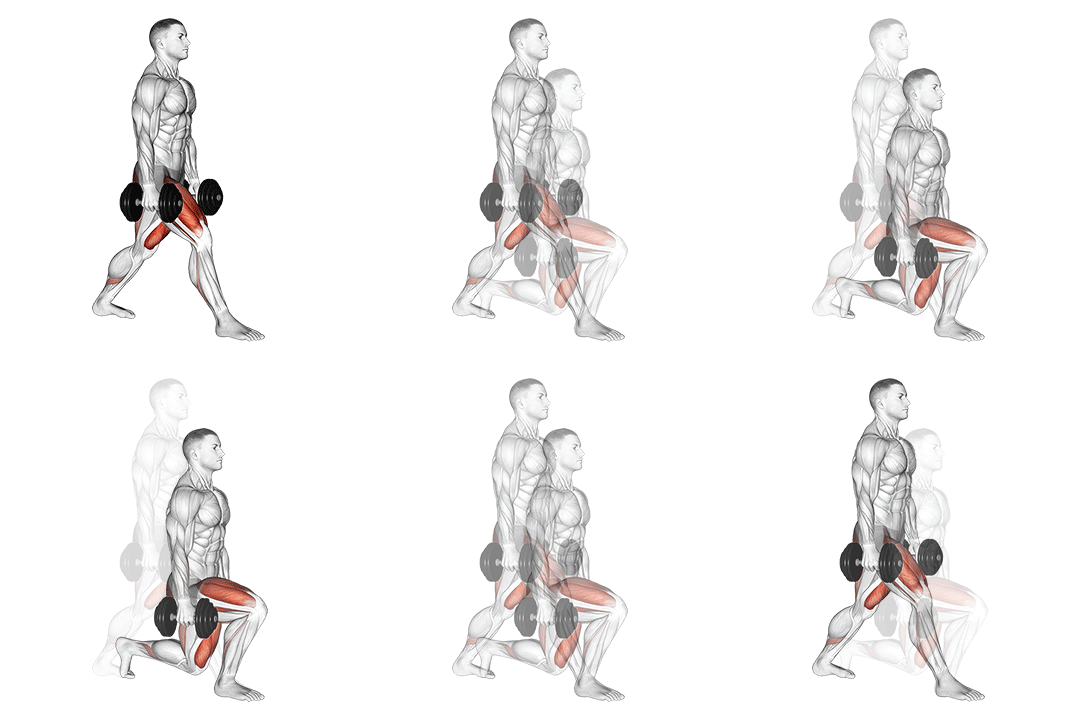
The Dumbbell Split Squat takes a long stance with one foot forward and one back, then drops straight down by bending both knees while holding dumbbells at the sides. The static position eliminates body sway and produces focused unilateral loading.
The dumbbell split squat is one of the most effective unilateral leg exercises that exists. The static stance allows heavier loading than walking lunges, and the dumbbell position keeps the spine neutral while loading the front leg through its full range of motion. Run it for 3 to 4 sets of 8 to 10 reps per leg.
Set up in a long stance with feet roughly hip-width apart laterally. Hold dumbbells at the sides. Drop straight down by bending both knees, lowering the back knee toward the floor. Drive through the front heel to stand. Complete all reps on one leg before switching.
Dumbbell Lying Femoral

The Dumbbell Lying Femoral lies face-down on a bench with a dumbbell held between the feet, then curls the dumbbell up toward the glutes by bending at the knees. The exercise targets the hamstrings directly through their primary knee-flexion function.
For direct hamstring work in dumbbell-only programs, the lying femoral curl is one of the most accessible options that exists. The position eliminates body sway and forces the hamstrings to do all the work, which produces stronger isolation than standing curl variations. Run it for 3 sets of 10 to 15 reps.
Lie face-down on a bench with the legs extended and a dumbbell positioned between the feet. Bend at the knees to curl the dumbbell up toward the glutes. Squeeze the hamstrings at the top. Lower under control. Use a partner to help position the dumbbell if needed.
Dumbbell Clean

The Dumbbell Clean lifts a pair of dumbbells from the floor to the shoulders in one explosive motion, transitioning through a hip-hinge pull and a fast catch at the shoulders. The exercise teaches the full-body explosive coordination that more advanced movements depend on.
For lifters chasing power and athletic performance alongside leg development, the dumbbell clean adds explosive training to the program. The combination of hip drive and rapid catch produces stronger neural adaptations than slower strength work. Build technique with light weight before chasing heavier loads.
Stand with dumbbells on the floor between the legs. Hinge at the hips with a flat back, grip the dumbbells. Drive through the floor explosively, pulling the dumbbells up close to the body. As the dumbbells rise, drop under them and catch them at the shoulders. Lower under control to the start.
Dumbbell Power Clean

The Dumbbell Power Clean performs the clean pattern but catches the dumbbells without dropping into a full squat (the catch position is quarter-squat depth, not full). The power version emphasizes the explosive pull rather than the depth of the catch.
For pure power development, the power clean is more effective than the full clean because the lifter cannot use the descent into the squat to absorb the bar. The dumbbells must be caught with explosive hip extension only, which produces stronger power output. Run it for 4 sets of 3 to 5 explosive reps with full recovery between sets.
Set up the same as the standard clean with dumbbells at the floor. Drive through the floor explosively. As the dumbbells rise, drop under them only into a quarter-squat (knees bent slightly), catching the dumbbells at the shoulders. Stand up to lockout. Lower under control.
How To Program These Workouts
A productive lower body dumbbell session pulls six to eight exercises from the list above. A balanced session includes one bilateral squat (sumo squat or front squat), one unilateral exercise (split squat or static lunge), one lateral movement (Cossack or side squat), one glute-focused piece (glute bridge), one hamstring isolation (lying femoral), and one explosive piece (clean or thruster). Run primary exercises for 3 to 4 sets of 8 to 12 reps; finishers for higher rep counts.
Train lower body two to three times per week. Heavy lower-body work needs 48 to 72 hours for full recovery, but the moderate loading of dumbbell training often allows higher frequency than barbell work. Most lifters do well with two sessions per week (Monday/Thursday) or three sessions for advanced lifters with high training capacity.
For more dumbbell programming, see our best dumbbell leg workouts and best full body dumbbell workouts. For broader leg programming, see our best calisthenics leg workouts.
Final Thoughts
The best lower body dumbbell workouts deliver complete lower-body development without requiring a barbell or rack setup. The combination of bilateral, unilateral, lateral, and explosive movements covers every major function the lower body uses during athletic and daily-life activity. For home lifters and travelers, dumbbells are one of the most versatile lower-body training tools available.
Pay attention to depth and tempo. The most common dumbbell leg training mistake is sacrificing depth to chase heavier weight, which reduces the effective stimulus on the glutes and hamstrings. Use weights that allow full range of motion (parallel squat depth, lunge with back knee close to the floor) on every rep. Slower tempos with full range of motion outperform fast tempos with partial range for muscle development.
Frequently Asked Questions
How heavy should my dumbbells be for lower body workouts?
Most intermediate lifters work with 30 to 60 pounds per dumbbell for squats and lunges, 40 to 80 pounds for sumo squats and Cossack squats (single heavy dumbbell), and 20 to 40 pounds for hamstring isolation work. The right weight is whatever allows clean reps in your target range with one or two reps in reserve.
Can I build big legs with just dumbbells?
Yes for beginners and intermediates. Dumbbells produce real leg growth for years before lifters bump up against the load ceiling barbells eventually surpass. The unilateral variations (split squats, Bulgarian split squats, lunges) actually load each leg with 80 to 90 percent of bodyweight even with moderate dumbbell weight, which produces strong leg development without ever needing barbell loads.
How often should I train lower body with dumbbells?
Two to three times per week works for most lifters. Lower-body recovery takes 48 to 72 hours, so spacing sessions appropriately is important. Most lifters do well with two sessions per week (one heavier focused on bilateral work, one lighter focused on unilateral and explosive work) or three sessions for advanced lifters with high training capacity.
Are dumbbell exercises better than barbells for legs?
Different exercises have different strengths. Barbells allow heavier total loading that produces maximum strength gains. Dumbbells excel at unilateral work, lateral motion, and explosive variations that barbells handle awkwardly. Most well-designed leg programs use both: barbells for primary heavy compounds, dumbbells for accessory unilateral and explosive work.
Why do my legs not grow from dumbbell training?
Three common reasons. First, insufficient volume: most lifters who fail to grow legs do less than 10 weekly working sets per major leg muscle. Second, partial range of motion: cutting squat depth or lunge depth significantly reduces the effective stimulus per rep. Third, no progressive overload: using the same dumbbell weight for months without adding reps or weight produces no growth signal. Fix all three and progress resumes within weeks.