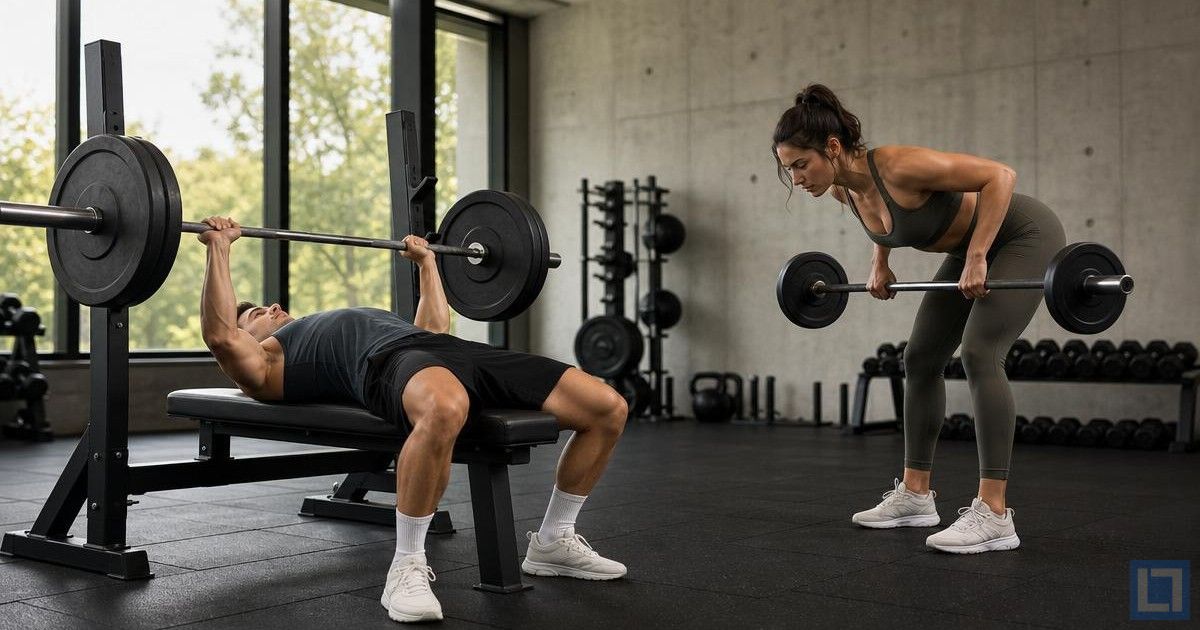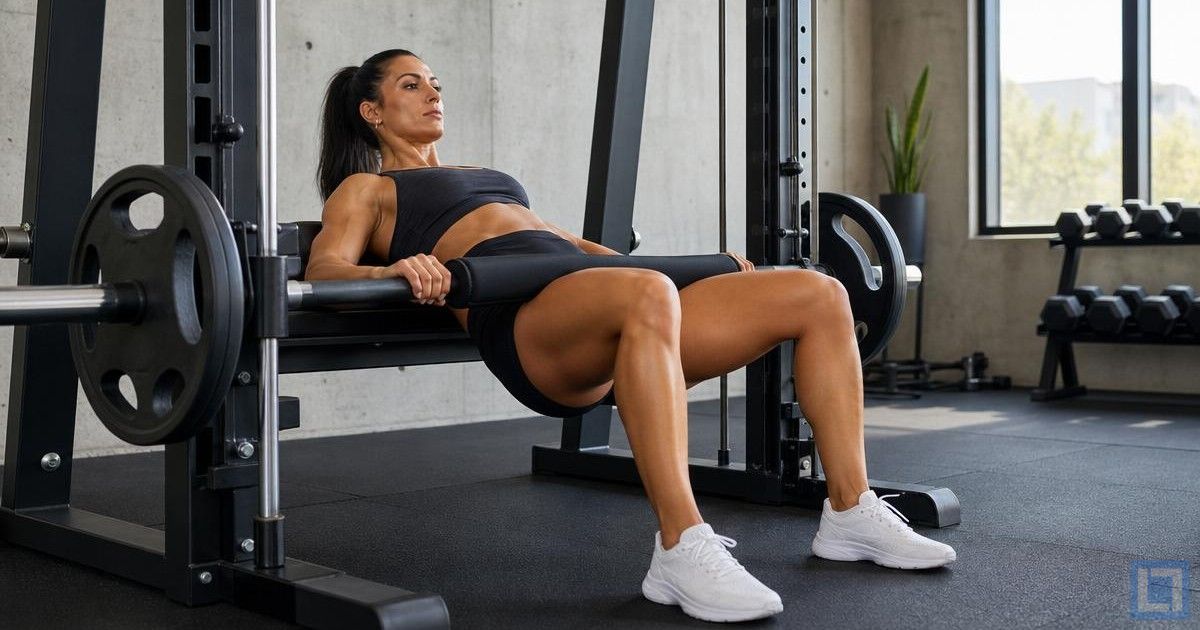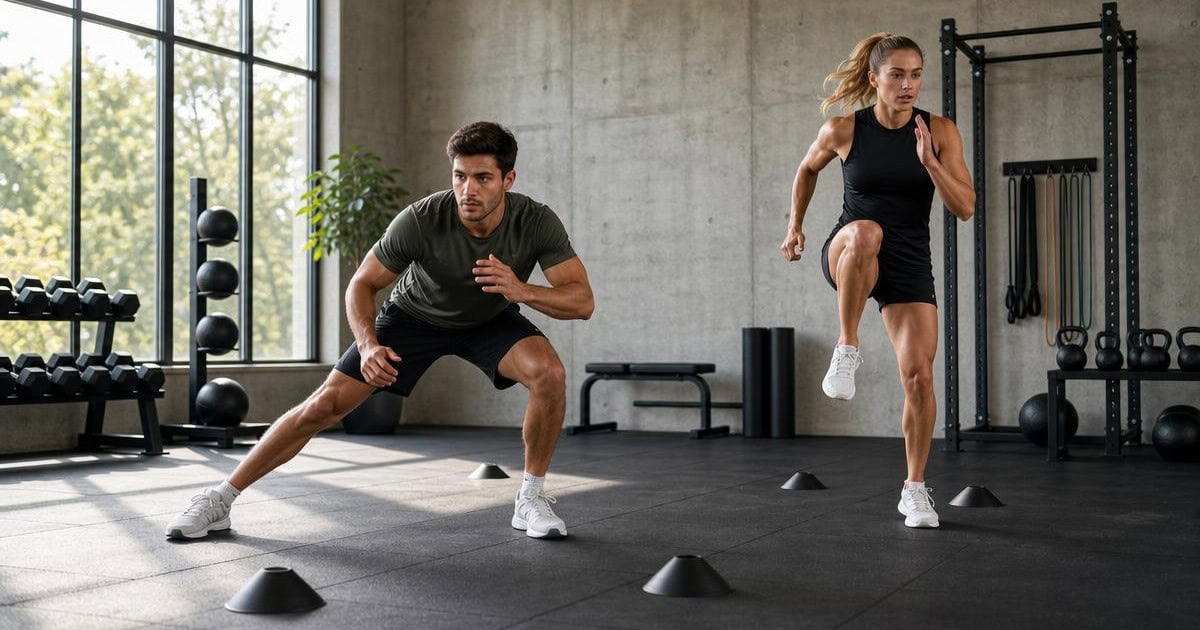
Pickleball strength training produces real on-court performance improvements through exercises that build the specific physical capacities pickleball demands: rotational power for forehands and backhands, lateral movement strength for kitchen-line cuts and side-to-side coverage, single-leg strength for explosive pushes off one leg, core stability for posture during long rallies, and rotator cuff health for sustained stroke mechanics over matches and seasons. The format works particularly well for pickleball because pure on-court play rarely develops the strength foundation that supports higher-level performance and injury prevention as the sport’s intensity scales up. Most pickleball players who consistently add 2 to 3 strength sessions per week alongside court time see measurable improvements in court speed, stroke power, sustained match endurance, and reduced injury risk within 8 to 12 weeks. Pickleball is the fastest-growing sport in America and the player base is aging into a level where strength training is increasingly critical for long-term participation.
Below are ten effective pickleball-specific exercises that cover rotational power (medicine ball rotational throw, dumbbell wood chop squat), unilateral leg strength (Bulgarian split squat, single-leg deadlift with knee lift, step-up), explosive leg power (jump squat), lateral and core stability (side plank, plank, lateral walk push-up), and shoulder health (rotator cuff external rotation). Together they form a complete pickleball training program that hits every physical demand of the sport. A 30 to 45-minute session pulled from this list, performed 2 to 3 times per week alongside court time, produces strong athletic foundation that supports pickleball performance and longevity in the sport.
Medicine Ball Rotational Throw
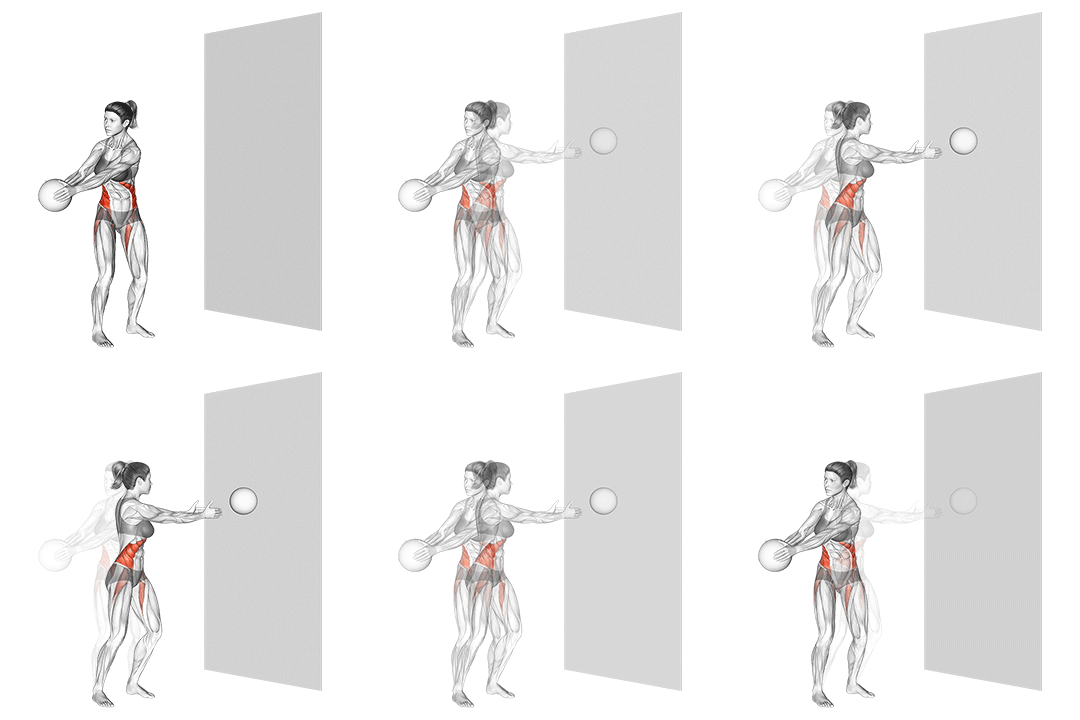
The Medicine Ball Rotational Throw stands sideways to a wall and throws a medicine ball into the wall using rotational hip and core power. The pattern produces explosive rotational power that translates directly to pickleball forehand and backhand mechanics.
For pickleball training, the rotational throw is one of the most direct rotational power exercises that exists. The pattern hits the obliques and hips through explosive rotation that mirrors the forehand and backhand stroke mechanics. Run it for 4 sets of 6 to 8 reps per side as primary explosive rotational work.
Stand sideways to a wall about 3 to 5 feet away with feet shoulder-width. Hold a medicine ball at the hip closer to the wall. Rotate explosively at the hips and core, throwing the ball into the wall. Catch the rebound and reset. Switch sides between sets. Use a medicine ball that can withstand impact (typically 6 to 12 pounds for most pickleball players).
Jump Squat

The Jump Squat performs explosive squat motion ending with a vertical jump, then absorbs the landing back into the squat. The pattern produces explosive leg power that translates directly to the explosive pushes off the court that pickleball requires.
For pickleball training, the jump squat produces strong leg power that translates to explosive court movement, sprint to the kitchen, and quick changes in direction. The pattern hits the legs through dynamic loading. Run it for 3 sets of 5 to 8 reps as primary leg power work, with full recovery between sets.
Stand with feet shoulder-width. Squat down by sitting the hips back. Explosively extend the legs and hips to jump straight up vertically. Land softly with bent knees, immediately lowering into the next squat. Continue in a smooth tempo. The explosive extension produces strong leg power loading critical for pickleball court speed.
Side Plank
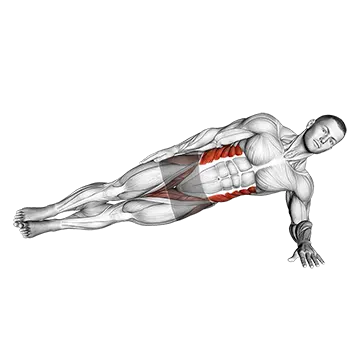
The Side Plank holds the body in a side-lying position supported on the forearm with the hips lifted and body in a straight line. The pattern produces direct oblique and lateral core stability loading critical for pickleball lateral movement.
For pickleball training, the side plank produces direct oblique and lateral hip stability loading that supports the lateral cuts and quick directional changes pickleball demands. The pattern hits the obliques and gluteus medius through sustained isometric loading. Run it for 3 sets of 30 to 60-second holds per side as primary lateral core work.
Lie on one side with the forearm planted on the floor under the shoulder. Stack the feet (or stagger them for easier balance). Lift the hips up to form a straight line from head to heels. Hold the position while engaging the obliques and gluteus medius. Switch sides between sets. Maintain straight body position throughout.
Single Leg Deadlift with Knee Lift

The Single Leg Deadlift with Knee Lift combines a single-leg deadlift with a knee drive at the top. The pattern produces strong combined posterior chain loading and balance work critical for pickleball single-leg pushes and lateral pushes off one leg.
For pickleball training, the single-leg deadlift with knee lift produces strong combined posterior chain, balance, and unilateral leg strength work. The pattern hits the glutes and hamstrings through unilateral loading combined with the dynamic knee drive that mirrors court movement. Run it for 3 sets of 6 to 8 reps per side as combined posterior chain and athletic mechanics work.
Stand on one leg with the free leg extended slightly behind. Hinge at the hip while extending the free leg back behind the body, lowering the torso forward. Drive back to standing by extending the planted hip while simultaneously driving the free knee up to chest height. Hold briefly at the top. Reverse the motion. Switch legs between sets.
Dumbbell Bulgarian Split Squat
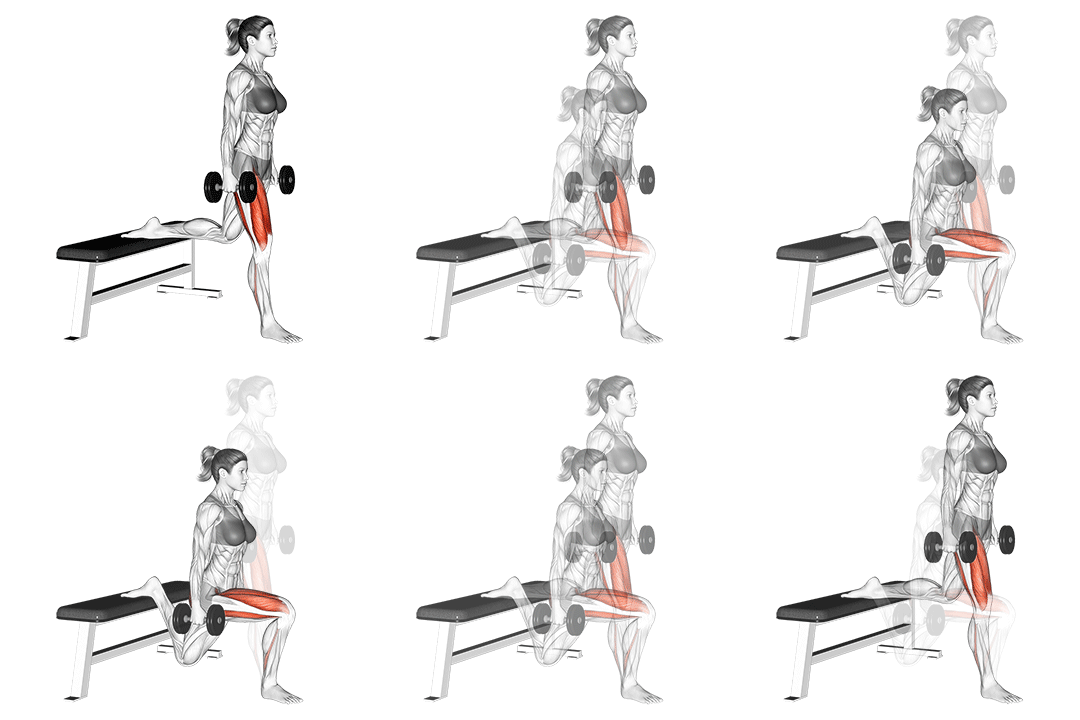
The Dumbbell Bulgarian Split Squat performs split squats with the back foot elevated on a bench while holding dumbbells at the sides. The pattern produces strong unilateral leg loading critical for pickleball lateral pushes, quick lunges to balls, and single-leg court movement.
For pickleball training, the Bulgarian split squat is one of the most effective unilateral leg exercises for pickleball-specific strength. The pattern hits the quads and glutes through deep range of motion that mirrors lunging strokes. Run it for 3 sets of 8 to 10 reps per leg as primary unilateral leg work.
Stand 2 to 3 feet in front of a bench with one foot resting on the bench behind the body and a dumbbell in each hand. Drop straight down by bending the front knee until the back knee approaches the floor. Drive through the front foot to push back to standing. Switch sides between sets. Maintain controlled tempo throughout.
Dumbbell Wood Chop Squat

The Dumbbell Wood Chop Squat combines a squat with a diagonal chopping motion, simulating the rotational power and squat-pivot mechanics of pickleball forehands and backhands.
For pickleball training, the wood chop squat produces combined squat strength and rotational power work that translates directly to pickleball stroke mechanics. The pattern hits the legs and core through combined squat and rotation. Run it for 3 sets of 8 to 10 reps per side as combined squat and rotational power work.
Stand with feet shoulder-width holding a single dumbbell in both hands at one shoulder. Squat down while bringing the dumbbell down diagonally across the body to the opposite hip. Drive back to standing while bringing the dumbbell back up across the body to the starting shoulder. Switch sides between sets. The combined squat and chop motion mirrors pickleball stroke mechanics.
Lateral Walk Push-Up

The Lateral Walk Push-Up combines a push-up with lateral walking motion at the top. The pattern produces combined upper body strength and lateral movement coordination critical for pickleball.
For pickleball training, the lateral walk push-up produces combined upper body strength and lateral coordination work. The pattern hits the chest, shoulders, triceps, and lateral movement coordination. Run it for 3 sets of 6 to 8 reps as combined upper body and lateral movement work.
Start in a high plank position with hands shoulder-width apart. Perform one push-up. At the top, walk one hand and the same-side foot laterally about 2 feet, then walk the other hand and foot to follow. Perform another push-up. Continue in alternating direction across the floor. The lateral motion produces strong shoulder stability and coordination work.
Cable Half Kneeling External Rotation

The Cable Half Kneeling External Rotation performs single-arm rotator cuff external rotation in a half-kneeling position. The pattern produces strong rotator cuff loading critical for pickleball stroke mechanics and shoulder injury prevention.
For pickleball training, the external rotation builds the rotator cuff strength critical for repeated stroke mechanics over long matches. The pattern hits the infraspinatus and teres minor that produce the controlled shoulder rotation pickleball strokes require. Run it for 3 sets of 12 to 15 reps per arm as rotator cuff and shoulder health work.
Set the cable pulley at hip height with a single handle. Take a half-kneeling position sideways to the cable column with the inside knee down. Grip the handle with the outside arm. Pin the elbow against the side at 90 degrees. Rotate the forearm outward (away from the body) by external rotation at the shoulder. Maintain elbow position pinned to the side. Use light weights only.
Dumbbell Step Up

The Dumbbell Step Up steps onto an elevated surface (bench or box) while holding dumbbells at the sides. The pattern produces strong unilateral leg drive critical for pickleball court movement and quick pushes off one leg.
For pickleball training, the step-up produces strong unilateral leg loading that translates to explosive court movement and quick pushes to the ball. The pattern hits the quads, glutes, and balance throughout. Run it for 3 sets of 8 to 12 reps per leg as primary unilateral leg work.
Stand in front of a sturdy elevated surface (12 to 18 inches high) with dumbbells held at the sides. Step onto the surface with one foot, driving through the heel and using the leg to lift the body up. Step back down under control with the same leg. Switch sides between sets or alternate per rep. Maintain controlled tempo throughout.
Plank on Hands
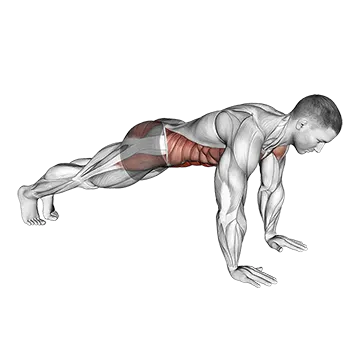
The Plank on Hands holds the body in a high plank position supported on hands and toes with a rigid straight body. The pattern produces direct anterior core stability loading critical for the upright posture pickleball requires.
For pickleball training, the plank produces direct anterior core stability loading that supports posture during long matches. The pattern hits the abs and shoulder stabilizers through sustained isometric loading. Run it for 3 sets of 30 to 60-second holds as foundational core stability work.
Set up on hands and toes with hands directly under the shoulders and body in a straight line from head to heels. Engage the core, glutes, and quads to maintain rigid body position. Hold the position while breathing normally. Avoid sagging hips or hiking shoulders. Continue for the working interval.
How To Program These Workouts
A productive pickleball strength program organizes these exercises across 2 to 3 weekly sessions, scheduled to avoid conflicting with key court sessions or tournaments. A common 2-day structure: Day 1 (Lower Body and Core): Bulgarian split squat, step-up, single-leg deadlift with knee lift, jump squat, side plank, plank. Day 2 (Power and Stability): medicine ball rotational throw, dumbbell wood chop squat, lateral walk push-up, cable external rotation. Run unilateral work for 3 sets of 8 to 10 reps per leg, explosive power work for 3 to 4 sets of 5 to 8 reps with full recovery, rotational work for 4 sets of 6 to 8 reps per side, and core/stability work for 3 sets of 30 to 60-second holds or 6 to 12 reps. Total session covers 14 to 20 working sets focused on pickleball-specific strength.
Train pickleball strength sessions 2 to 3 times per week alongside court time. The combination of strength work and pickleball-specific play produces strong but recoverable training stimulus when properly programmed. Most successful pickleball programs include 2 to 3 weekly strength sessions of 30 to 45 minutes each plus 2 to 4 court sessions per week. The format works particularly well when scheduled either: 1) at the end of a court session (so on-court fatigue is acceptable for strength quality), 2) on court rest days, or 3) several hours before light court work in the same day. Avoid heavy strength sessions before tournaments or important matches.
For broader athletic programming, see our best workouts for tennis players and best workouts for athletes. For specific power work, see our best workouts for explosive legs.
Final Thoughts
The best pickleball workouts deliver real on-court performance improvements through exercises that build the specific physical capacities pickleball demands: rotational power, lateral movement strength, single-leg strength, core stability, and rotator cuff health. The combination of strength work, rotational power, single-leg training, and shoulder health work covers every physical demand of pickleball and produces broader athletic development than court time alone. For pickleball players who want measurable performance improvements (faster court coverage, more powerful strokes, longer endurance), want to reduce injury risk through proper strength preparation, or want to extend their pickleball playing career as the sport’s competitive level continues to rise, dedicated pickleball strength training is one of the most effective investments players can make.
Stay focused on rotational power and shoulder health. The most common pickleball strength training mistake is treating it like general fitness training without prioritizing the specific physical demands of pickleball. The fix: prioritize rotational power exercises (medicine ball throws, wood chops) for stroke power, single-leg work (Bulgarian split squats, step-ups, single-leg deadlifts) for court movement, and rotator cuff work (external rotations) for shoulder longevity. Skip generic isolation work that doesn’t translate to court performance. Quality pickleball-specific training produces stronger results than generic fitness work, especially as the sport demands more athleticism over time.
Frequently Asked Questions
Should pickleball players lift weights?
Yes effectively for most players. The combination of strength work and court time produces measurable improvements in court speed, stroke power, sustained match endurance, and injury reduction. Most successful pickleball players include 2 to 3 weekly strength sessions during regular play and competitive seasons. As pickleball continues to grow in competitive intensity, strength training becomes increasingly important for players who want to maintain or improve their level over time. Pure court play rarely develops the strength foundation needed for maximum performance and long-term durability.
How often should pickleball players train strength?
Two to three times per week works for most players. The combination of strength work and 2 to 4 court sessions per week produces strong but recoverable training stimulus when properly programmed. Most successful programs include 2 to 3 weekly strength sessions of 30 to 45 minutes each, scheduled either after court sessions or on rest days. Daily strength training plus daily court time typically produces accumulated fatigue and injury risk.
What’s the most important physical quality for pickleball?
Multiple qualities matter together. Rotational power drives forehand and backhand stroke power. Lateral movement strength drives court coverage and quick directional changes. Single-leg strength drives explosive pushes to the ball. Core stability drives posture during long rallies. Rotator cuff strength drives sustained stroke mechanics over matches. Most successful pickleball strength programs develop all of these qualities simultaneously rather than focusing on one. The exercises in this list cover all major physical demands of pickleball.
Can older pickleball players benefit from strength training?
Yes especially. Most pickleball players are over 40, and strength training becomes increasingly important with age for both performance and injury prevention. Regular strength training preserves muscle mass, maintains joint health, and supports the explosive movements pickleball demands. Most successful older pickleball players include 2 to 3 weekly strength sessions specifically targeting the pickleball demands: rotational power, single-leg strength, core stability, and shoulder health. Working with a trainer experienced with older athletes can significantly improve technique quality and program design.
Are there pickleball-specific exercises that aren’t in regular gym programs?
Yes a few. Medicine ball rotational throws are critical for pickleball but uncommon in general gym programs. Lateral movement work (lateral push-ups, side planks with reach, lateral lunges) is more important for pickleball than typical gym programs emphasize. Rotator cuff external rotations are essential for pickleball stroke longevity but often skipped in general programs. Most successful pickleball-specific programs include these pickleball-particular exercises rather than relying on general fitness routines.