Bands are one of the most underrated tools for glute training. The best resistance band glute workouts hit both the gluteus maximus and the often-neglected gluteus medius in ways that bodyweight alone cannot, and the gear travels in a backpack. That makes bands a strong choice for home training, hotel workouts, or as targeted glute activation before heavy leg sessions.
Below are ten effective resistance band glute exercises ranging from glute medius activation drills like clamshells and side walks to heavier compound work like banded split squats and 45-degree hyperextensions. For more glute-focused programming, see our best glute workouts for growth guide. To browse the full equipment library, explore our resistance band exercises collection.
Resistance Band Elevated Glute Bridge

The Resistance Band Elevated Glute Bridge combines an elevated foot position with band resistance for serious glute tension. You set the feet on a low box, loop a band over the hips with anchors at the sides, and bridge the hips up against the band’s pull.
Elevation changes the angle of the bridge so the glutes work through a longer range of motion, while the band keeps tension on at the top, where bodyweight bridges typically lose it. The combination delivers more glute stimulus per rep than either modification alone.
Drive through the heels rather than the toes. Squeeze hard at the top for a brief pause before lowering with control. Skipping the squeeze is the most common mistake on bridges and turns the exercise into mostly hamstring work.
Resistance Band Glute Bridge
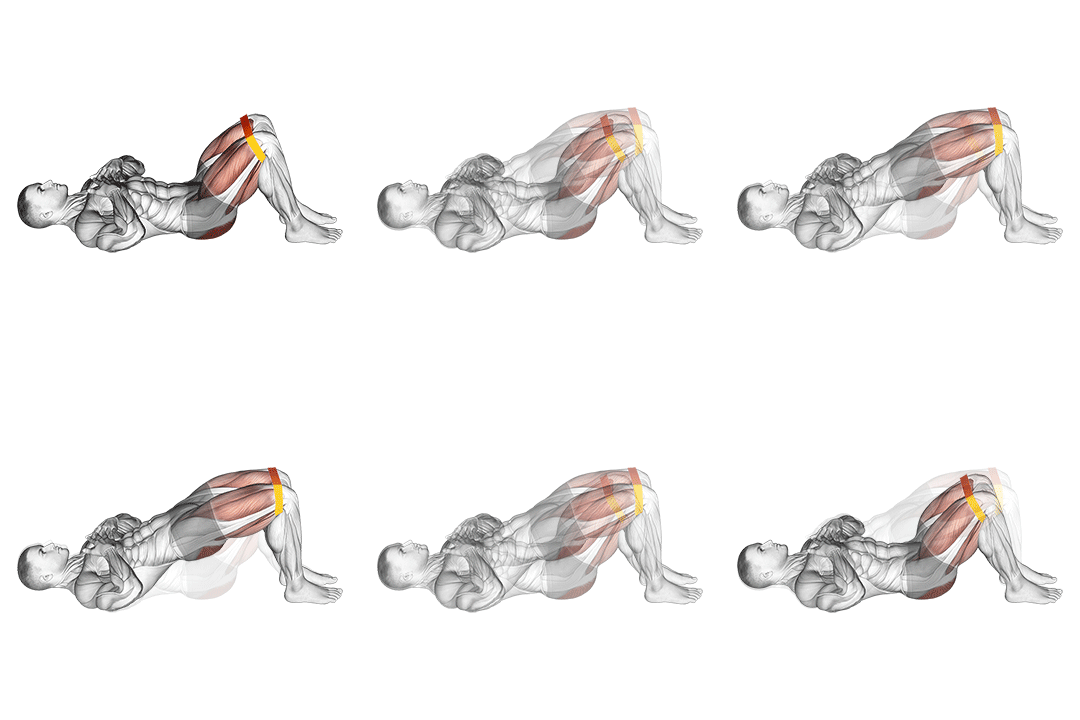
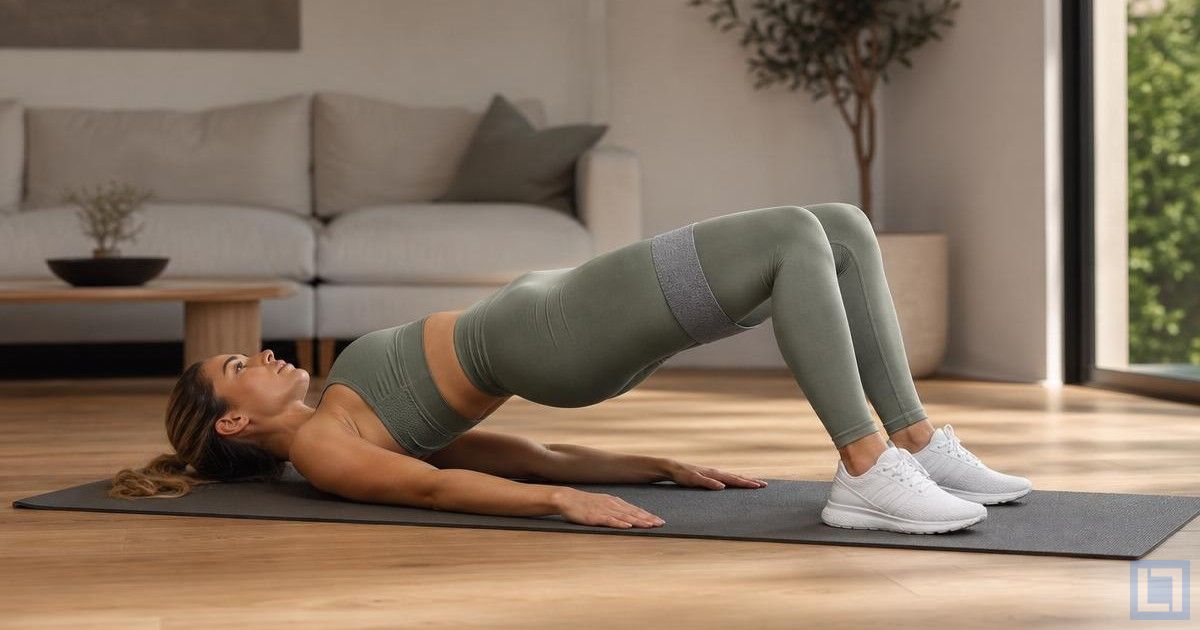
The Resistance Band Glute Bridge adds a mini band around the thighs above the knees to a standard glute bridge. The band provides constant outward tension that activates the gluteus medius alongside the gluteus maximus, making the bridge significantly more effective for total glute development.
Most lifters under-train the glute medius compared to the glute maximus. Adding a band recruits both heads of the glute simultaneously, which is exactly what you want for both strength balance and visible glute shape. It is one of the highest-value tweaks you can make to a basic bridge.
Press the knees outward against the band the entire time. The band’s job is to give you something to push against, so keep the tension live throughout the rep. Squeeze the glutes hard at the top.
Resistance Band Standing Balance Glute Kickback

The Resistance Band Standing Balance Glute Kickback is a unilateral glute drill. Standing on one leg while pressing the other foot back against band tension isolates the glute on the working side and trains balance simultaneously.
Single-leg work is essential for catching glute imbalances most lifters develop without realizing it. The dominant side does the lion’s share of the work in bilateral movements like squats and bridges, leaving the weaker side under-developed. Unilateral kickbacks force each side to do its own work.
Hinge slightly at the hip and brace the standing leg. Press the working foot back smoothly against the band, pause, and return under control. Avoid arching the lower back as the foot extends backward.
Resistance Band Side Plank Glute Raise

The Resistance Band Side Plank Glute Raise combines a side plank hold with a band-resisted hip abduction. You hold a side plank with a band around the thighs and raise the top knee against the band. The combo torches the obliques and the glute medius at the same time.
The combination is a time-efficient way to train two often-neglected areas in one move. The side plank trains the obliques isometrically while the band-loaded raise hammers the glute medius dynamically. Together, they cover most of what gets missed in standard core and glute training.
Hold the side plank steady. The body should not rock or shift during the leg raises. If holding the plank breaks down before the leg raise sets do, work the plank as a separate piece first.
Resistance Band Lunge
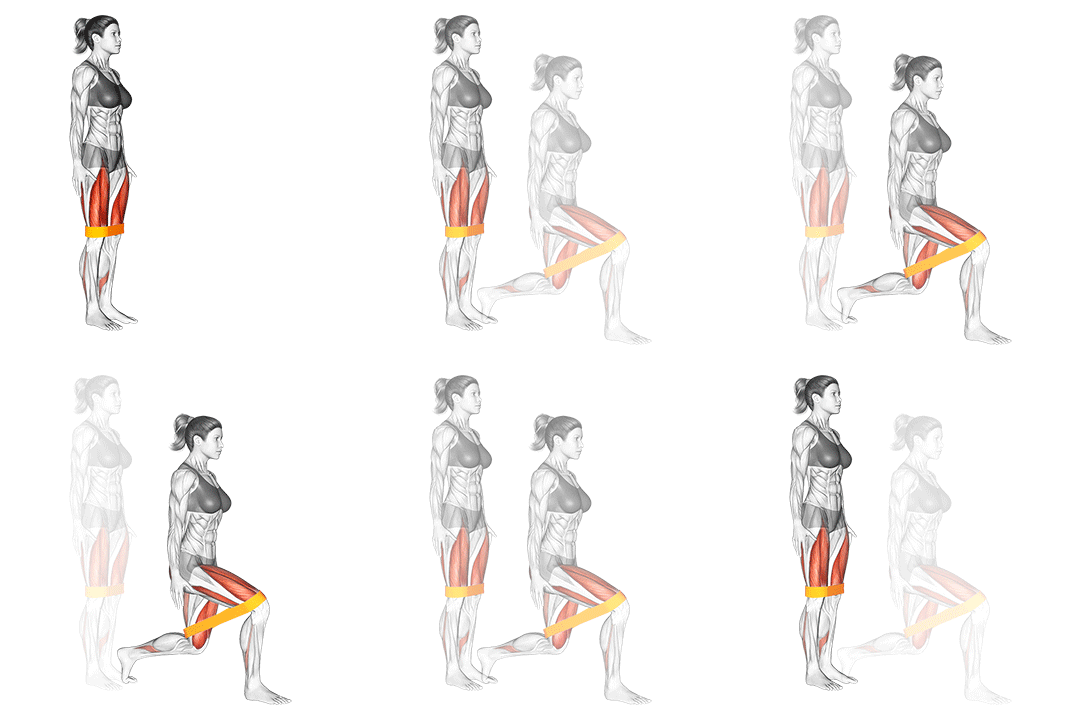
The Resistance Band Lunge adds band tension to standard forward lunges by standing on the band and holding the ends at the shoulders. The band provides increasing resistance as you stand, loading the top of the lunge where bodyweight alone loses tension.
This is one of the few ways to make bodyweight lunges meaningfully harder without grabbing dumbbells. Bands accommodate to the strength curve of the lunge, getting harder exactly where you are strongest, which is the opposite of free weights. That reverse loading pattern is excellent for glute activation.
Step into a long lunge and drop straight down rather than forward. Drive through the front heel to stand. Keep the chest up and avoid letting the band pull you into a hunched posture.
Resistance Band Clam

The Resistance Band Clamshell is a glute medius activation exercise. Lie on your side with knees bent and a mini band above the knees, then open the top knee upward against the band like a clamshell opening. It is the gold-standard glute medius activation drill used in physical therapy and warm-ups everywhere.
For lifters with weak glute medius activation (which is most lifters), the clamshell is hard to beat. It isolates the muscle without pulling in the much stronger glute max, so the medius can’t hide behind its larger neighbor. Done before squatting or lunging, it can dramatically improve form.
Keep the hips stacked vertically. Do not let the top hip rotate backward as the knee opens. The motion should come strictly from the hip, not from rolling the trunk.
Resistance Band Squat

The Resistance Band Squat adds resistance to a standard bodyweight squat. Stand on the band and hold the ends at your shoulders. As you stand up, the band lengthens and resistance increases, loading the top half of the squat the heaviest.
Bands give you accommodating resistance, the opposite of how dumbbells and barbells work. That reverse loading pattern hits the glutes hard at lockout, where bodyweight squats give you the easiest portion of the rep. Using bands turns the lockout into the hardest part instead.
Set up with the feet shoulder-width and the band fully under both feet. Squat to whatever depth you can hit cleanly with a vertical torso, then drive up against the band. The band should be tight at lockout but slack at the bottom.
Resistance Band 45 Degrees Hyperextension

The Resistance Band 45 Degrees Hyperextension adds resistance to a 45-degree hyperextension. You loop a band over the shoulders and anchor it low, then perform the hyperextension on a 45-degree bench. The band loads the glutes and back extensors hard at the top of the rep.
Hyperextensions are one of the best glute exercises in existence when performed correctly: rounded upper back, posterior pelvic tilt at the top, and a focus on driving the hips into the pad rather than arching the lower back. Adding a band brings resistance to a movement that normally is bodyweight only.
Round the upper back slightly and tuck the pelvis at the top of each rep. The cue is “drive the hips into the pad,” not “lift the chest.” Done correctly, you will feel this almost entirely in the glutes.
Resistance Band Side Walk Squat

The Resistance Band Side Walk Squat performs lateral walking steps while staying in a quarter squat with a resistance band looped around the thighs above the knees. The constant band tension and squat position fire the glute medius continuously throughout the set.
Side walks (also called monster walks or crab walks) are one of the most effective glute medius activation drills available. They are nearly always used as a warm-up before heavy leg training because the medius works overtime during squats and deadlifts but is rarely hit directly elsewhere.
Stay low. Standing up between steps lets the glutes rest, which defeats the purpose. Take controlled lateral steps without letting the knees collapse inward, then walk back the other direction to even out the work.
Resistance Band Split Squat

The Resistance Band Split Squat stands on a resistance band with the front foot and performs stationary split squats. The band provides accommodating resistance, loading the top of the movement most heavily.
Split squats are excellent for glute development on their own because the unilateral position forces each side to handle its own load. Adding a band emphasizes the lockout portion, where standing back up loads the glutes the hardest. Combined, the two effects make the split squat much more effective than the bodyweight version.
Keep the front shin vertical or slightly forward. Drive through the front heel to stand. The back foot is just for balance, so keep the load on the front leg.
How To Program These Workouts
Bands work in two main contexts: as the entire workout when bands are all you have, or as targeted activation before heavier leg training. Both are valuable, and the band exercises here suit both approaches.
For a band-only session, pick four to six exercises spanning bridges, lunges/split squats, hip abduction (clamshells, side walks), and a finisher (kickbacks, hyperextensions). For activation before squats or deadlifts, pick two: usually a clamshell or band-walk plus a band glute bridge. Five to ten minutes of light band work before heavy leg training reliably improves glute recruitment for the rest of the session.
If you also have dumbbells available, our dumbbell workouts for glutes guide pairs well with this one for a more complete glute program.
Final Thoughts
The best resistance band glute workouts are surprisingly effective for how simple the equipment is. Properly loaded band exercises hit the glute medius better than most barbell work, and the accommodating resistance pattern is uniquely good for the lockout portion of bridges, squats, and lunges where the glutes do their hardest work.
Start with the simpler movements like clamshells, glute bridges, and side walks. Layer in the loaded squats and lunges as the band starts to feel easy. Glute development takes consistent work over months, but the result is well worth it.
Frequently Asked Questions
What strength of band should I use?
Most people start with a light or medium mini-band for activation drills like clamshells and side walks, and a medium-to-heavy long band for compound work like band squats and lunges. If a band is too light, you finish sets without feeling much. If it is too heavy, your form breaks down. Pick the heaviest band that lets you do clean reps for the full set.
Can resistance band glute workouts replace squats and deadlifts?
They can train the glutes effectively on their own, but they will not develop the same overall strength or the same total muscle mass that heavy barbell work delivers. The best long-term glute development combines both: bands for activation, isolation, and accessory work, plus barbells or dumbbells for the heaviest compound lifts you can do.
How often can I train glutes with bands?
Three to five times a week works for most lifters. Bands are easier on recovery than heavy weights, so the glutes can handle more frequent training without getting beaten up. Just keep the heaviest sessions to two or three a week and use the rest for activation or moderate volume.
Will band glute work make my glutes bigger?
Yes, when the load is heavy enough and the volume is high enough. Glutes grow in response to mechanical tension, and bands can absolutely deliver that. The visible result will likely be slower than with heavy barbell work, but consistent band training does build glute size and shape.
Are these exercises beginner friendly?
Most of them, yes. Clamshells, glute bridges, side walks, and basic split squats work well for true beginners. The 45-degree hyperextension and kickback variations require a bit more body control and are better added once the simpler movements feel routine.