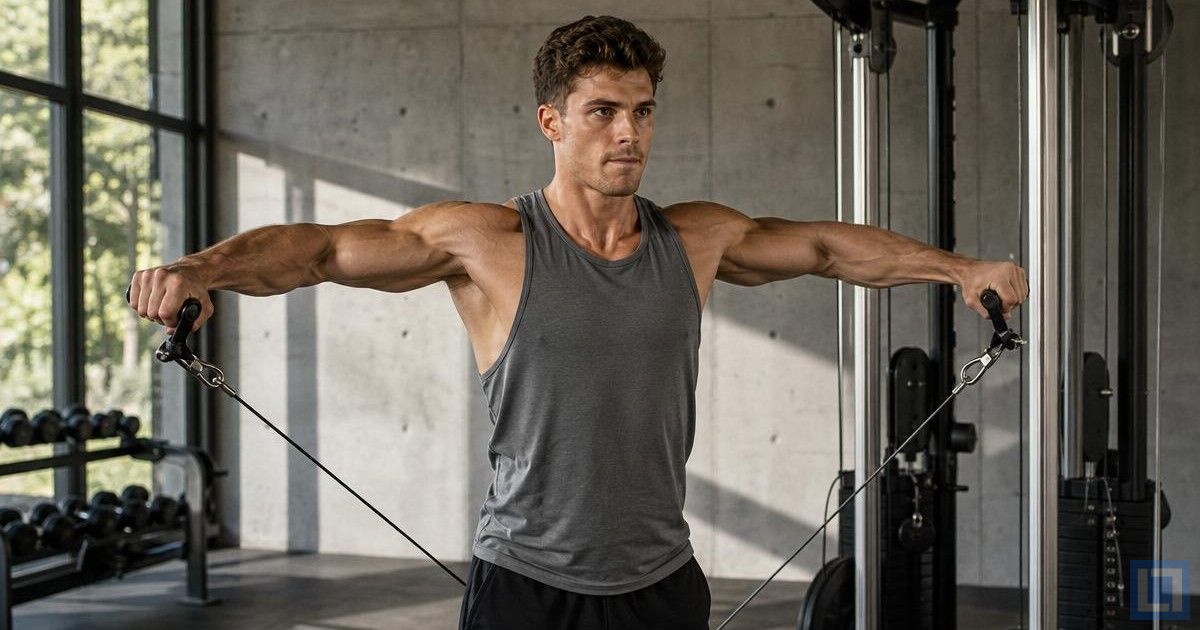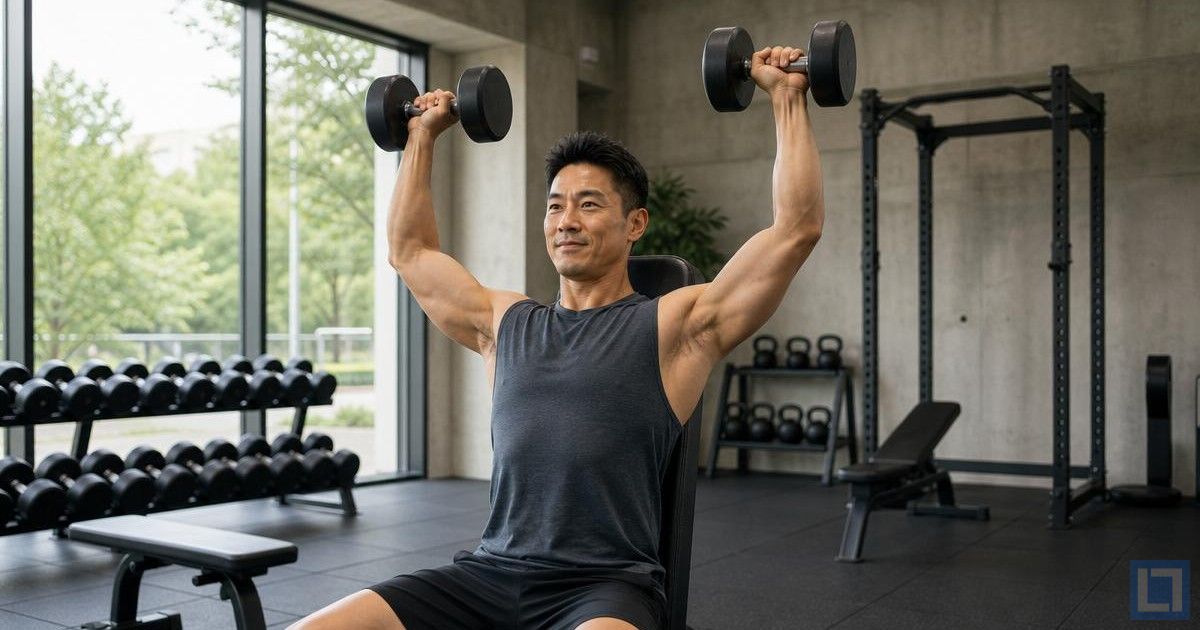
Building complete shoulders requires work on three separate deltoid heads: the front delt, the side delt, and the rear delt. Most lifters’ shoulders are unbalanced because pressing exercises emphasize the front delts heavily while leaving the side and rear delts under-developed. The best dumbbell shoulder workouts deliberately train all three heads with appropriate volume and intensity for each.
Below are ten effective dumbbell shoulder exercises that cover front delt pressing, side delt isolation, rear delt work, and trap development. Together they form a complete shoulder program that requires nothing more than a pair of dumbbells and an incline bench.
Dumbbell Seated Shoulder Press

The Dumbbell Seated Shoulder Press sits on a bench with back support and presses the dumbbells overhead. The seated position eliminates leg drive and isolates the shoulders directly, while the back support keeps the spine in a stable position throughout the lift.
Vertical pressing is the foundation of any serious shoulder program. The shoulder press hits the front delts heavily and engages the side delts and triceps as secondary movers. The seated dumbbell version is the most accessible vertical pressing variation because it does not require the body bracing that standing presses demand.
Sit with feet planted and back firmly against the bench. Press the dumbbells overhead until the arms are nearly locked, then lower under control to roughly ear level. Keep the elbows at roughly 30 degrees in front of the body rather than directly to the sides. Avoid over-arching the lower back.
Dumbbell Arnold Press
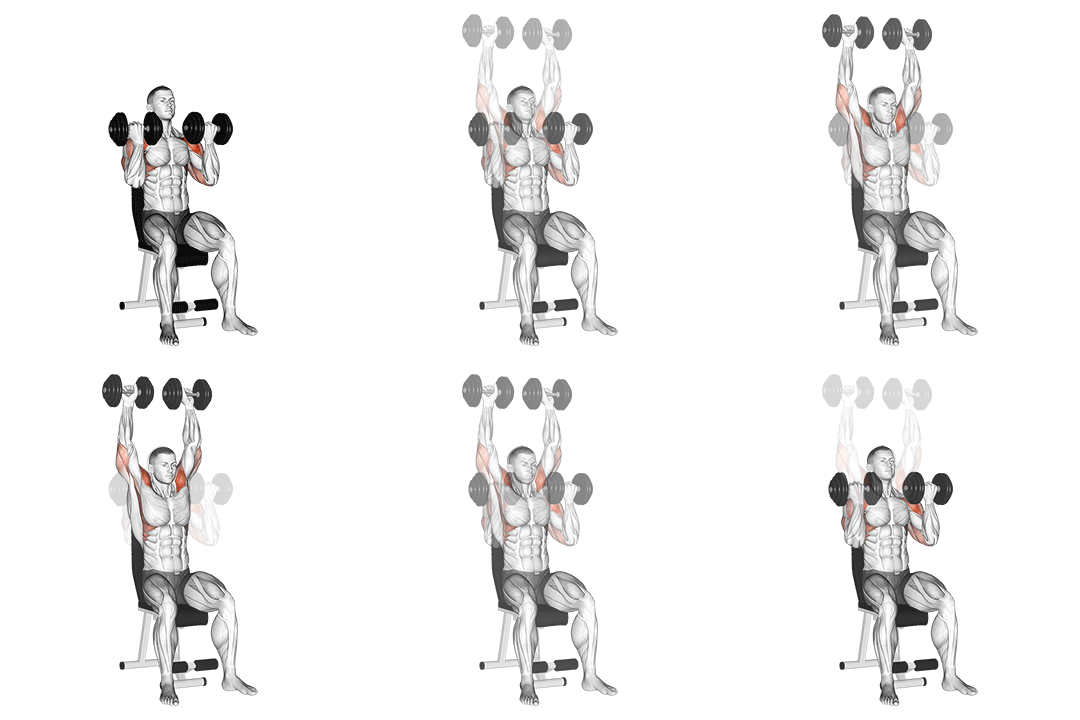
The Dumbbell Arnold Press starts with palms facing the body at shoulder level, then rotates the wrists outward as the dumbbells press overhead, ending with palms facing forward. The wrist rotation through the press hits the front and side delts in one combined motion.
Standard overhead presses hit the front delts heavily but mostly miss the side delts. The Arnold press fixes that by adding the rotation, which engages the side delts as the wrists turn. It is a strong substitute for the standard shoulder press when total shoulder development is the goal.
Start at shoulder level with palms facing the body. As you press up, rotate the wrists outward so palms face forward at lockout. Reverse the rotation as the dumbbells lower back to the start. Move smoothly to control both the press and the rotation.
Dumbbell Lateral Raise

The Dumbbell Lateral Raise stands with dumbbells at the sides and lifts them out to shoulder height. It is the most effective side delt exercise and the foundation of any program built for visible shoulder width.
After heavy compound work, lateral raises finish the side delts. Most pressing exercises emphasize the front delts heavily, leaving the side delts under-trained. Lateral raises fix that gap. Run them for 3 to 4 sets of 12 to 15 reps with strict form; light weight done right outperforms heavy weight done sloppy.
Keep the elbows slightly bent and lift the dumbbells straight out to the sides until parallel with the floor. Pause briefly at the top, then lower under control. Avoid swinging the weight; if the load is too heavy to do strict, drop down a pair.
Dumbbell Front Raise

The Dumbbell Front Raise stands with dumbbells at the thighs and lifts them forward to shoulder height. The exercise targets the front deltoid directly through pure shoulder flexion.
Front raises are often skipped on the assumption that pressing exercises hit the front delts adequately. They do, but direct front delt work in addition produces fuller front shoulder development. Run them for 2 to 3 sets of 12 to 15 reps as accessory work after the main pressing is done.
Stand with dumbbells at the thighs, palms facing the body. Lift one or both dumbbells straight forward to shoulder height, keeping the arms nearly straight. Pause briefly at the top, then lower under control. Avoid swinging the body to use momentum.
Dumbbell Rear Delt Fly
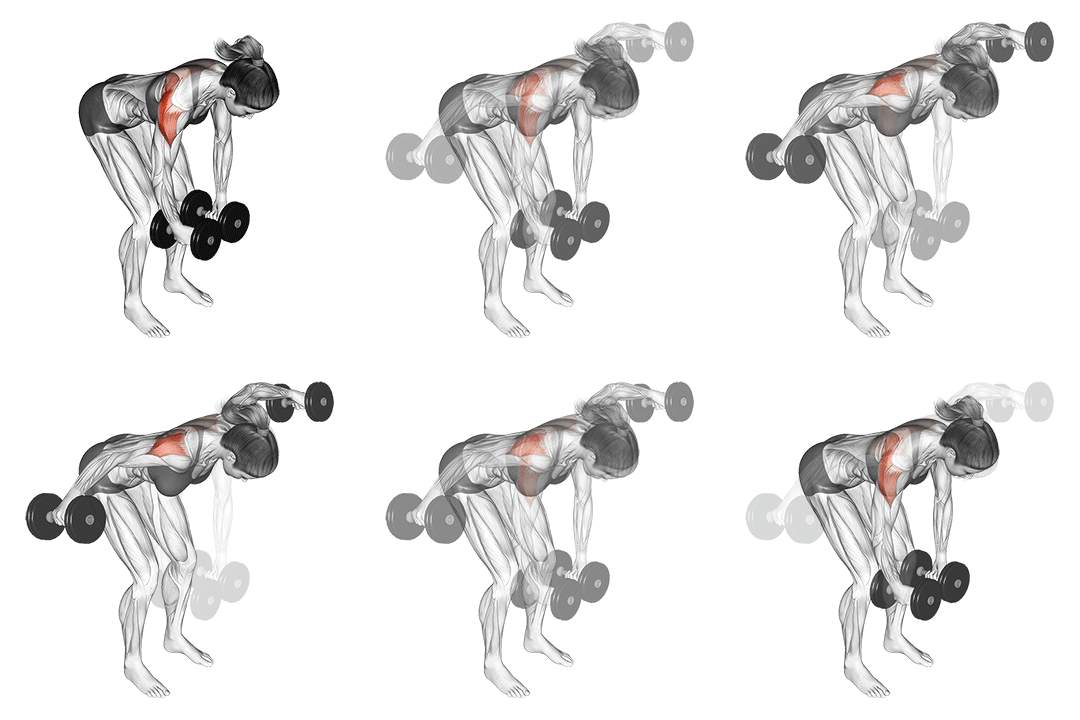
The Dumbbell Rear Delt Fly hinges over with dumbbells in each hand and lifts the bells out to the sides through a fly motion, targeting the rear deltoids and upper back. The hinged position isolates the rear delts more effectively than standing variations.
The rear delts are the most under-trained shoulder muscle in most lifters’ programs. Pressing exercises hit the front and side delts; rowing exercises hit the rear delts somewhat but not in isolation. The rear delt fly fills that gap directly. Run it for 3 sets of 12 to 15 reps with light to moderate weight.
Hinge at the hips with a flat back and dumbbells hanging down. Keep elbows slightly bent and lift the dumbbells out to the sides through a wide arc, leading with the elbows. Squeeze the rear delts hard at the top. Lower under control. Use light weight; this is precision work.
Dumbbell Reverse Fly
The Dumbbell Reverse Fly performs the rear delt fly motion from a standing or lying position, with the chest down and dumbbells lifted out to the sides. The fly pattern targets the rear delts and upper back with a slightly different angle than the bent-over rear delt fly.
The reverse fly variation provides shoulder training redundancy that helps lifters who have plateaued on the standard rear delt fly. The slightly different angle hits muscle fibers from a different direction, which can produce additional growth in lifters who already have the bent-over version in their program.
Either lie face-down on a bench with dumbbells hanging or hinge over from standing. Keep elbows slightly bent and lift the dumbbells out to the sides through a wide arc. Squeeze the rear delts and upper back at the top. Lower under control.
Dumbbell Upright Row

The Dumbbell Upright Row stands with dumbbells in front of the thighs and pulls them up toward the chin by raising the elbows. The motion targets the side delts, traps, and rear delts simultaneously.
The upright row is one of the most efficient shoulder-and-trap combination exercises that exists. The pull pattern hits the side delts and traps with significant load, which produces shoulder width and upper back thickness in one movement. Some lifters have shoulder issues that limit upright rows; those lifters should avoid them in favor of separate lateral raises and shrugs.
Stand with dumbbells in front of the thighs, palms facing the body. Pull the dumbbells up toward the chin by lifting the elbows up and out, keeping the dumbbells close to the body. The elbows should lead the motion and end higher than the wrists. Lower under control.
Dumbbell Shrug

The Dumbbell Shrug stands with heavy dumbbells at the sides and shrugs the shoulders straight up toward the ears. It is the most direct trap exercise that exists and produces visible upper back thickness with consistent training.
Direct trap work fits any complete shoulder program. The shrug isolates the upper traps in their primary function (elevating the shoulder blades) and allows heavy loading because the range of motion is short. Three sets of 8 to 12 reps with heavy weight produces strong trap growth over months.
Stand tall with heavy dumbbells at the sides, palms facing the body. Shrug the shoulders straight up toward the ears as high as possible. Hold the contraction briefly at the top, then lower under control. Avoid rolling the shoulders forward or backward; the motion is straight up and down only.
Dumbbell Incline Y-raise

The Dumbbell Incline Y-Raise lies face-down on an incline bench and raises the dumbbells overhead in a Y-shape, targeting the lower traps and rear delts. It is one of the most direct exercises for the often-neglected lower trapezius.
Most lifters under-train the lower traps because nothing in standard shoulder work targets them directly. The Y-raise fixes that with a precise movement pattern that hits the lower traps almost exclusively. It is one of the highest-leverage exercises for shoulder health and posture in any program.
Lie face-down on an incline bench set to roughly 30 to 45 degrees. Hold light dumbbells with palms facing each other. Raise the arms in a Y-shape (45 degrees from the body) until they point up and slightly out. Squeeze the lower traps hard at the top. Use very light weight.
Dumbbell Rear Delt Raise


The Dumbbell Rear Delt Raise lies face-down on an incline bench and raises the dumbbells out to the sides in a horizontal motion, targeting the rear delts directly. The supported chest position eliminates body sway entirely.
For lifters who struggle to feel the rear delts work during standing rear fly variations, the incline-bench rear delt raise solves the problem. The bench-supported position eliminates compensation from other muscle groups and forces the rear delts to do the work. It is the cleanest rear delt isolation exercise that exists.
Lie face-down on an incline bench with dumbbells hanging straight down. Keep elbows slightly bent and raise the dumbbells out to the sides until the upper arms are horizontal. Squeeze the rear delts hard at the top. Lower under control. Use light weight; this is precision work.
How To Program These Workouts
A productive dumbbell shoulder session pulls six to eight exercises from the list above. A balanced session includes one heavy compound press (seated shoulder press or Arnold press), one front delt isolation (front raise), one side delt isolation (lateral raise), one rear delt isolation (rear delt fly or rear delt raise), one trap exercise (shrug or Y-raise), and a finisher.
Train shoulders one to two times per week if pressing is heavily included in chest work; two to three times per week if shoulders are programmed separately. The shoulders recover within 48 to 72 hours of moderate training. Direct shoulder work twice per week with moderate volume produces strong development over months.
For more dumbbell programming, see our best upper body dumbbell workouts and best dumbbell back workouts. To browse the muscle archive, explore our shoulders exercise collection.
Final Thoughts
The best dumbbell shoulder workouts deliver complete deltoid development with the most accessible weight room equipment available. The combination of vertical pressing, lateral raises, and direct rear delt work covers the full shoulder structure in a way most barbell-only programs cannot match. Dumbbells also allow joint-friendly loading patterns that protect the shoulders during heavy training.
Pay attention to form on the smaller-muscle exercises. Lateral raises, rear delt flies, and Y-raises are all about precision rather than load. Light weight done right produces faster growth than heavy weight done sloppy. The lifters who get the broadest shoulders are the ones who use moderate weight with strict form on every set rather than chasing the heaviest possible load.
Frequently Asked Questions
How heavy should my dumbbells be for shoulder workouts?
Pressing variations typically use 30 to 60 pounds for most intermediate lifters. Lateral raises, front raises, and rear delt work all run lighter (15 to 30 pounds) where form quality matters more than load. Shrugs handle the heaviest weights (50 to 100+ pounds) due to the short range of motion. The right weight is whatever allows clean reps in your target rep range with one or two reps in reserve.
How often should I train shoulders?
Once or twice per week if pressing is heavily included in chest work; two to three times per week if shoulders are programmed as a separate day. Total weekly volume matters more than session count: aim for 12 to 20 working sets per week across all three deltoid heads.
Do I really need rear delt work?
Yes. The rear delts are the most under-trained shoulder muscle in most lifters’ programs because pressing exercises do not target them. Direct rear delt work (flies, raises, Y-raises) builds the muscle that gives the shoulders their rounded 3D appearance from every angle. Skipping rear delts produces shoulders that look full from the front but flat from the side.
Can dumbbells alone build big shoulders?
Yes for beginners, intermediates, and most recreational lifters. Dumbbells produce real shoulder development for years before lifters bump up against the load ceiling barbells eventually surpass. The variety of dumbbell shoulder exercises (press variations, raise variations, fly variations) also keeps the program interesting longer than barbell-only shoulder training.
Should I train shoulders on the same day as chest?
Either approach works. Combining them on the same day is efficient because both involve pressing patterns; separating them allows more focused volume per session. The combined approach (push day or chest-shoulder day) fits most schedules; the separated approach (dedicated shoulder day) produces slightly faster shoulder development in advanced lifters who can handle the additional volume.