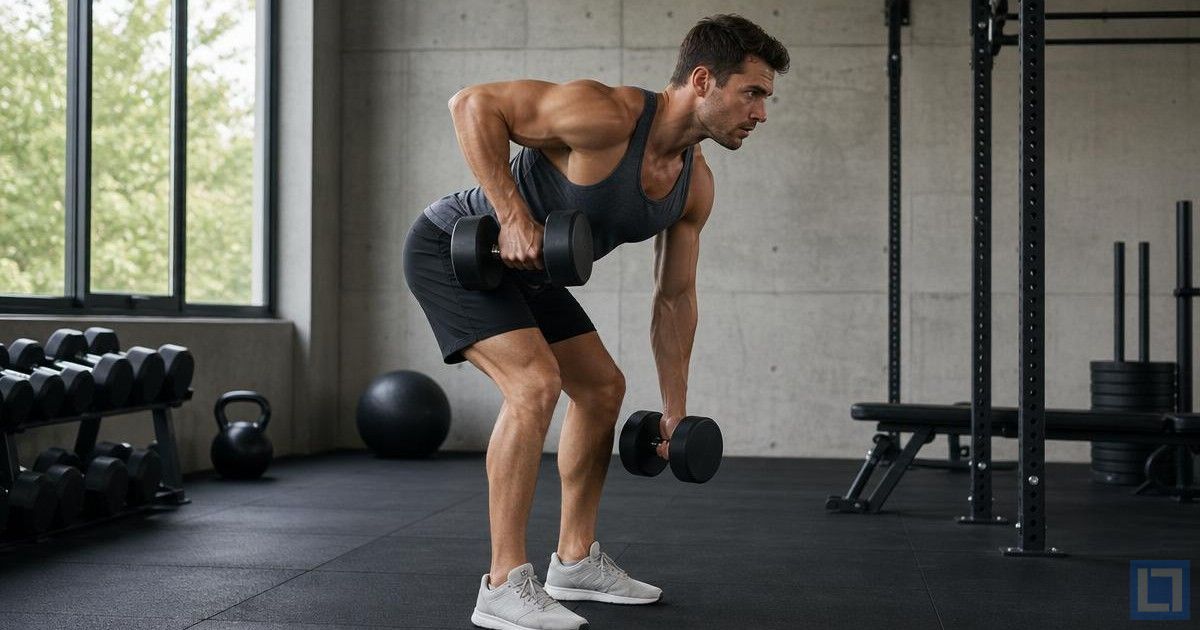
A strong, thick back is built through pulling and hinging from multiple angles. The best dumbbell back workouts cover all of them: single-arm rows for unilateral lat development, deadlifts and RDLs for posterior chain mass, pullovers for lat stretch, and specialty work like Y-raises and shrugs for the often-neglected upper back.
Below are ten effective dumbbell back exercises that cover the lats, mid-back, traps, lower back, and posterior chain. Together they form a complete back program that requires nothing more than a pair of dumbbells and a bench.
Dumbbell One Arm Bent Over Row
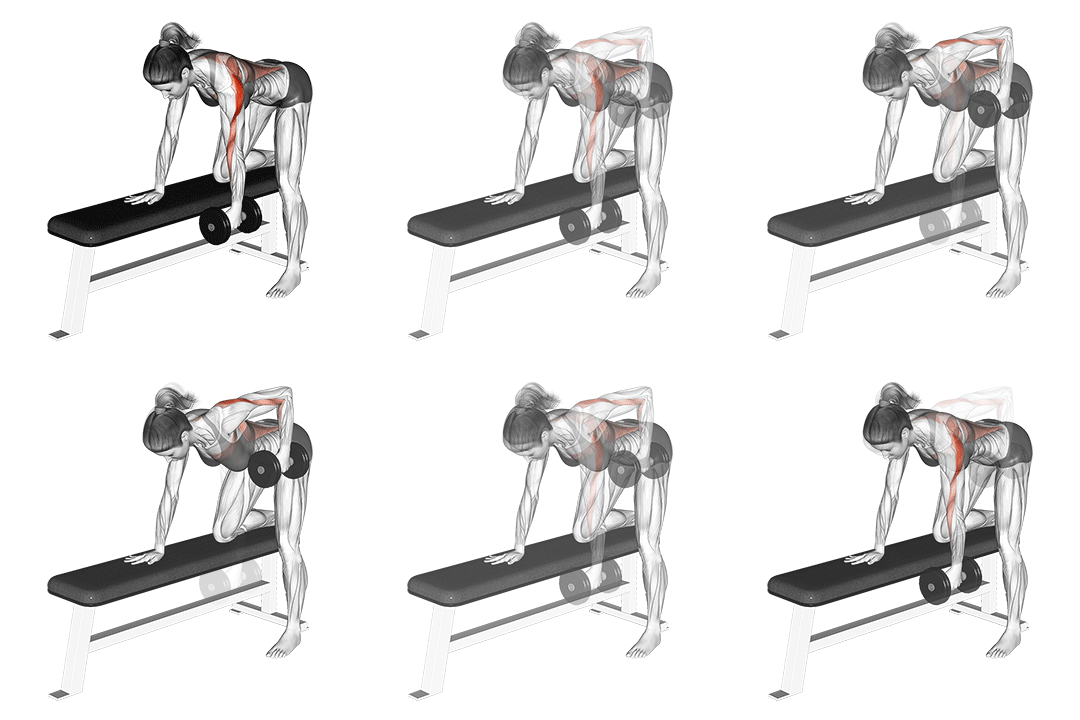
The Dumbbell One Arm Bent Over Row is the foundational dumbbell back exercise. Bracing one hand on a bench with the opposite knee on the bench, you row a dumbbell up to the hip with the other hand. The supported position eliminates body sway and lets you load the lat directly with significant weight.
No dumbbell back program is complete without single-arm rows. The unilateral position catches strength imbalances bilateral barbell rows hide, and the bench-supported setup removes the lower-back demand that makes barbell rowing limiting for some lifters. It is one of the best back mass-builders available with no rack required.
Set one hand and the same-side knee on a bench with the back flat and parallel to the floor. Hold the dumbbell in the opposite hand and pull it to the hip, squeezing the lat at the top. Lower under control. Avoid jerking the dumbbell with body momentum.
Dumbbell Deadlift

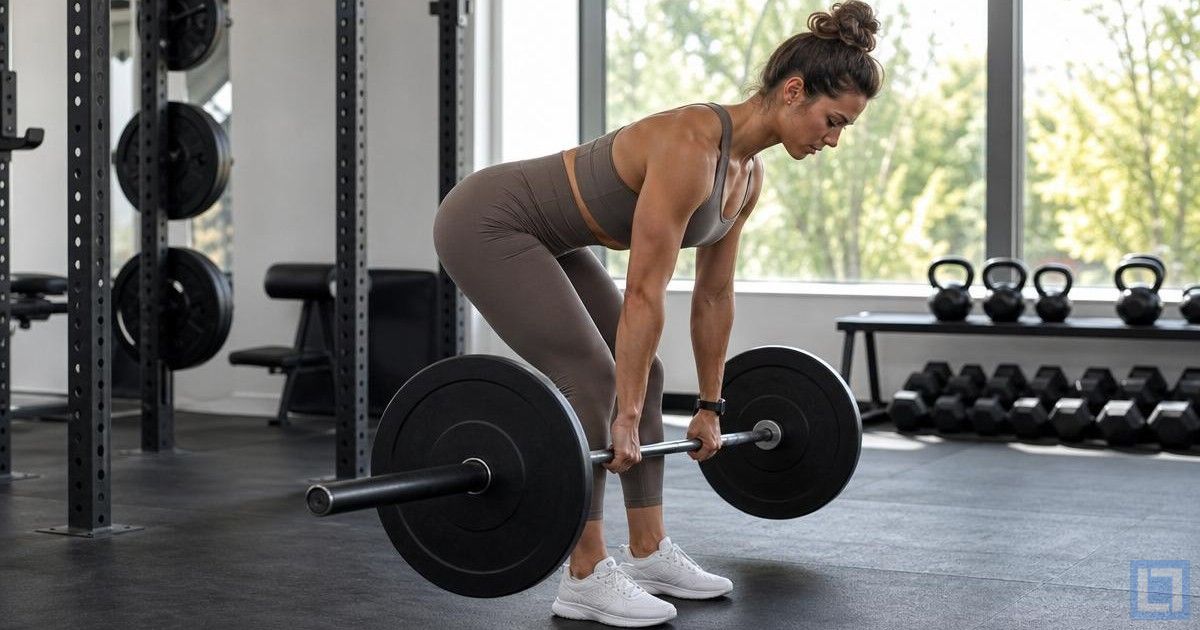
The Dumbbell Deadlift holds dumbbells at the sides and hinges at the hips to lower them toward the floor, then drives the hips forward to stand back up. It is the dumbbell version of the conventional barbell deadlift and one of the most efficient posterior chain builders that does not require a barbell.
For lifters without barbell access (or those who want a hinge variation that is easier on the lower back), the dumbbell deadlift is the right call. The neutral grip and hand position next to the body produce a more comfortable hinge pattern than the barbell version for many lifters.
Stand with feet shoulder-width and dumbbells at the sides. Hinge at the hips with a flat back and a slight knee bend. Lower the dumbbells to mid-shin level (or wherever flexibility allows with a flat back), then drive the hips forward to stand. Keep the back flat throughout.
Dumbbell Romanian Deadlift
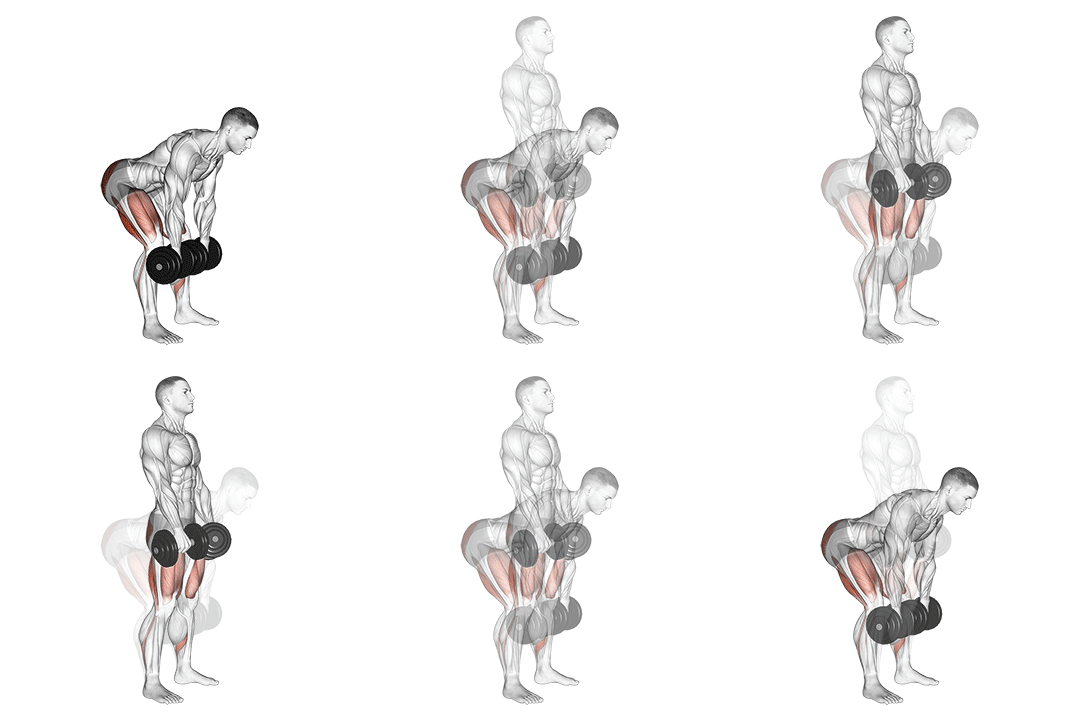
The Dumbbell Romanian Deadlift performs a Romanian deadlift with dumbbells at the sides instead of a barbell in front. It targets the hamstrings, glutes, and lower back through the hinge pattern with a deeper stretch than the conventional deadlift allows.
The dumbbell RDL is one of the most effective hamstring builders in any program. The combination of loaded stretch and hip-hinge pattern hits the entire posterior chain in one movement. It also avoids the spinal load that some lifters find limiting on barbell RDLs.
Hinge at the hips with a slight bend in the knees. Lower the dumbbells in a path close to the legs until the hamstrings stretch significantly. Drive the hips forward to stand back up. Keep the back flat throughout. The dumbbells should not bounce off the floor.
Dumbbell Pullover

The Dumbbell Pullover lies on a bench with the upper back across it and the body extended. Holding a single dumbbell in both hands above the chest, you arc the dumbbell back and behind the head until a deep stretch is felt in the lats, then pull it back to vertical above the chest.
Pullovers are one of the most underrated back-building exercises in any program. The deep stretch on the lats produces a significant growth stimulus that pull-ups and rows do not match, and the chest also gets significant work as a secondary mover. They pair excellently with rowing in a balanced back day.
Lie with the upper back across the bench and feet planted on the floor. Hold a single dumbbell in both hands above the chest. Arc the dumbbell back and behind the head until the lats stretch deeply, then pull it back to vertical. Keep a slight bend in the elbows throughout.
Dumbbell Around Pullover

The Dumbbell Around Pullover uses a circular motion path behind the head rather than a straight arc. The circular path through multiple planes stretches the chest and lats from different angles, providing a more complete stretch than the straight-line pullover.
For lifters who already use straight pullovers, the around variation adds a slightly different stimulus. The circular path engages the lats through more total range than the standard version, which can produce additional growth in lifters who have plateaued on regular pullovers.
Set up the same as a standard pullover with the upper back across a bench. Move the dumbbell in a circular path that takes it back behind the head and slightly to one side, then around to vertical. Reverse the direction every other set.
Dumbbell Incline Y-raise

The Dumbbell Incline Y-Raise lies face-down on an incline bench and raises the dumbbells overhead in a Y-shape, targeting the lower traps and rear delts. It is one of the most direct exercises for the often-neglected lower trapezius.
Most lifters under-train the lower traps because nothing in standard pulling work targets them directly. The Y-raise fixes that with a precise movement pattern that hits the lower traps almost exclusively. It is one of the highest-leverage exercises for shoulder health and posture in any program.
Lie face-down on an incline bench set to roughly 30 to 45 degrees. Hold light dumbbells with palms facing each other. Raise the arms in a Y-shape (45 degrees from the body) until they point up and slightly out. Squeeze the lower traps hard at the top. Use very light weight.
Dumbbell Decline Shrug

The Dumbbell Decline Shrug performs a shrug while lying face-down on a decline bench, isolating the upper traps and rhomboids without the spinal load of standing shrugs. The decline angle changes the line of pull, hitting the upper back from a different angle than upright shrug variations.
Where standing shrugs load the spine heavily, the decline version takes the spine out of the equation while still loading the traps with significant weight. It is a strong choice for anyone with lower-back issues that standing shrugs aggravate.
Lie face-down on a decline bench with dumbbells hanging straight down toward the floor. Shrug the shoulder blades up and back, squeezing the traps hard at the top. Lower under control. Avoid jerking the dumbbells with momentum.
Dumbbell Good Morning

The Dumbbell Good Morning holds a dumbbell at the chest in goblet position and hinges at the hips with a flat back, returning to standing by driving the hips forward. It builds the lower back, glutes, and hamstrings through the hip-hinge pattern with no spinal compression.
For posterior chain training without barbell loading on the spine, the dumbbell good morning is one of the best options. The chest-loaded position trains the same patterns as the barbell version without the same spinal stress, which makes it usable on heavier days when you do not want to load the spine further.
Hold the dumbbell tight against the chest. Hinge at the hips with a flat back and a slight knee bend. Lower the chest forward until the hamstrings stretch. Drive the hips forward to stand back up. Keep the back flat throughout.
Dumbbell Farmers Carry

The Dumbbell Farmers Carry holds heavy dumbbells at the sides and walks for distance or time. The continuous walking under heavy load trains the entire back (specifically the traps and erectors), the grip, and the core in one combined exercise.
Loaded carries are one of the most underrated full-body conditioning exercises in any program. The heavy load forces the upper back to stay engaged through every step, the grip works continuously, and the core has to brace against the asymmetric load if dumbbells differ in weight. They make excellent finishers on back days.
Hold heavy dumbbells at the sides with a strong grip. Walk with normal posture: tall spine, shoulders back, eyes forward. End the set when grip gives out or form breaks down. Both indicators are good signals to stop.
Dumbbell Step Back Lunge and Row

The Dumbbell Step Back Lunge and Row combines a reverse lunge with a single-arm row, hitting the legs and back simultaneously. As you step back into the lunge, you row the dumbbell to the hip with the same-side arm.
Combo movements like this earn a spot in any program where time efficiency matters. Hitting the back and legs in one movement produces a strong cardiovascular response alongside the strength work, and the unilateral pattern catches strength imbalances on both the row side and the lunge side.
Step back into a long reverse lunge. As the back knee descends toward the floor, row the dumbbell to the hip on the same side as the front leg. Reverse the rep by stepping forward and lowering the dumbbell. Alternate sides on each rep.
How To Program These Workouts
A productive dumbbell back session pulls five to six exercises from the list above. A balanced session includes one heavy unilateral row (single-arm row), one hinge variation (deadlift or RDL), one stretch movement (pullover), one upper-back specialty (Y-raise or decline shrug), and a finisher (farmers carry or step-back lunge and row).
Train back two to three times per week. The back recovers within 48 to 72 hours of moderate training, so spacing volume across multiple sessions produces faster growth than a single high-volume session. Pair back days with chest or shoulder days using a split structure for efficient programming.
For more pulling work, see our how to do a pull up guide and best dumbbell bicep workouts. To browse the equipment library, explore our dumbbell exercises collection.
Final Thoughts
The best dumbbell back workouts deliver complete back development with simple equipment. The single-arm row alone produces real lat growth that rivals barbell rowing for most lifters, and combined with hinge variations and specialty work, dumbbells cover the full back without ever needing a cable machine or pull-up bar.
Pay attention to form. Back exercises are easy to cheat with body sway, momentum, and partial range of motion. The lifters who get the most back growth are the ones who use moderate weight with strict form rather than heavy weight with sloppy execution. Especially on Y-raises and pullovers, light weight done right produces better results than heavy weight done wrong.
Frequently Asked Questions
How heavy should my dumbbells be for back workouts?
Single-arm rows can typically use heavier dumbbells than most other back exercises (50 to 100+ pounds per arm for intermediate lifters). Deadlifts and RDLs can also use heavy weight (60 to 100+ pounds per dumbbell). Pullovers, Y-raises, and shrugs work better with moderate weight (15 to 40 pounds) where form quality matters more than load.
Can dumbbells build a big back?
Yes, especially for beginners and intermediates. Single-arm rows, RDLs, and pullovers all produce real back growth when programmed with progressive overload. Advanced lifters chasing maximum back size sometimes benefit from adding pull-ups and barbell rows, but dumbbells remain useful even at advanced levels.
Do I need a bench for these exercises?
A bench dramatically expands the options. The pullover, single-arm row, decline shrug, and Y-raise all benefit from bench support. Without a bench, the standing exercises (deadlift, RDL, farmers carry, step-back lunge and row) still cover most patterns, but the bench-supported moves are worth the small investment for serious back training.
How often should I train back?
Two to three times per week works for most lifters. The back is a large muscle group that handles significant volume well, and frequent training tends to produce faster growth than infrequent high-volume sessions. Aim for 12 to 20 working sets per week across both pulling and hinging movements.
Will dumbbell back workouts fix my posture?
Often, yes. Most postural issues come from underdeveloped upper backs combined with tight chests. Direct upper-back work like Y-raises, decline shrugs, and reverse rows strengthens the muscles that pull the shoulders back into healthy posture. Combined with chest mobility work, consistent back training produces noticeable posture improvements within a few months.