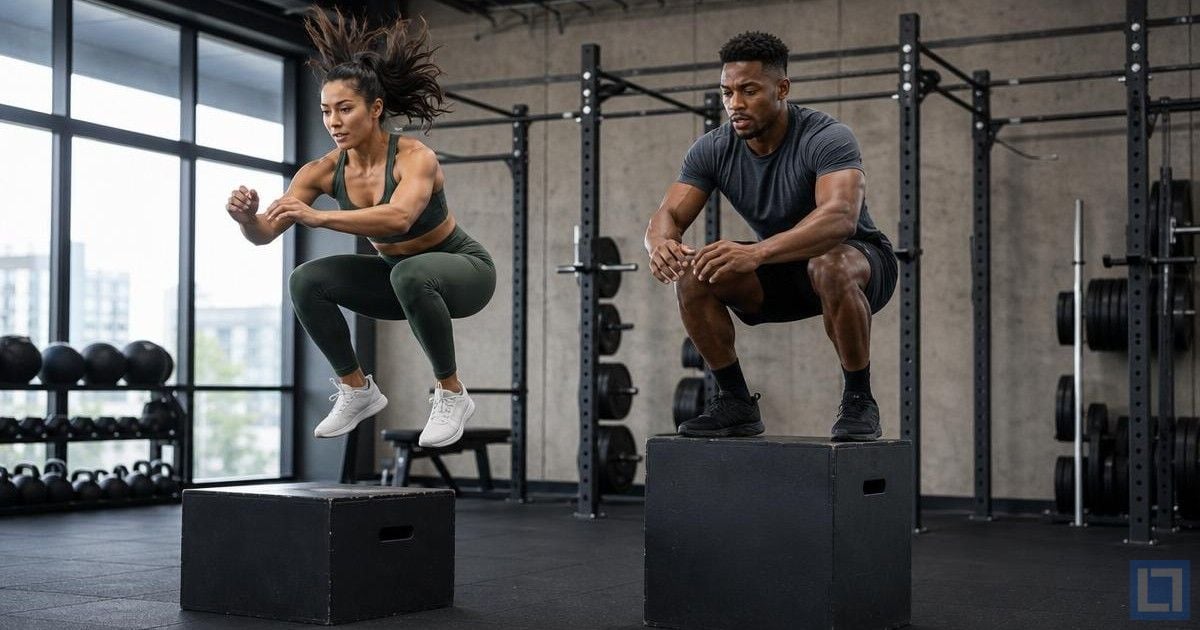
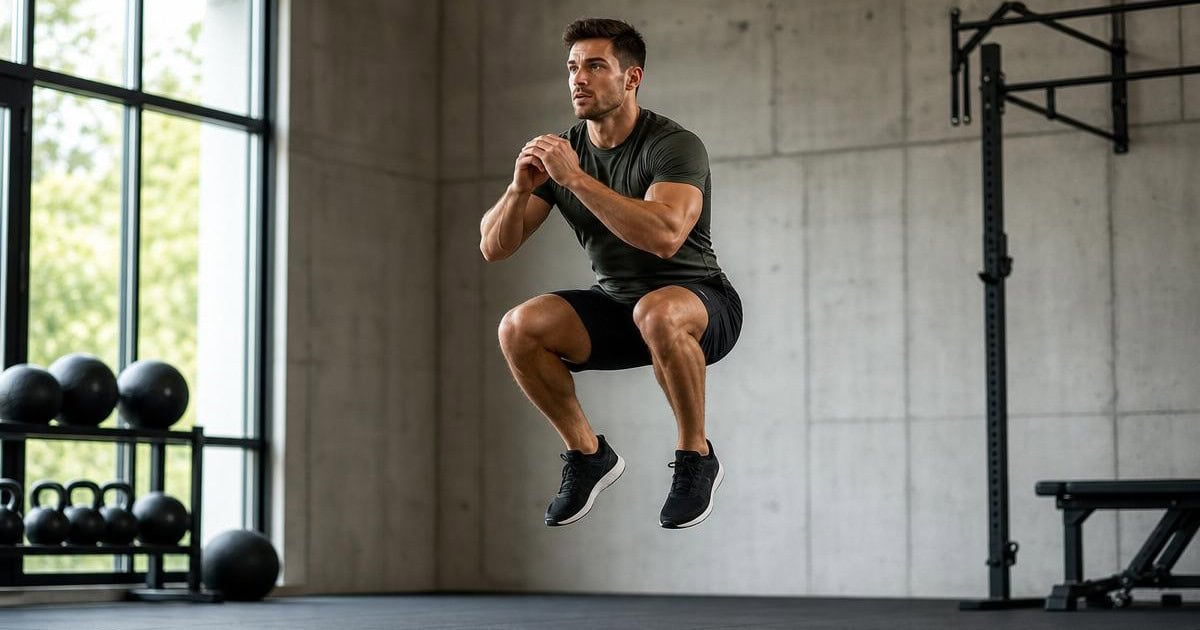
Dynamic stretching before training produces stronger results than static stretching. Where static stretches relax muscles and reduce force production temporarily, dynamic stretches actively warm up the muscles, increase joint range of motion, and prime the nervous system for the work ahead. The best pre-workout dynamic stretches address the most commonly tight or underactive muscle groups (hips, hamstrings, shoulders, thoracic spine) through controlled motion rather than passive holds.
Below are ten effective pre-workout dynamic stretches that cover upper-body warm-up (arm circles, dynamic chest stretches), lower-body activation (leg swings, walking lunges), full-body sequences (inchworm, world’s greatest stretch), and mobility work (90-90 hip twist, dynamic back stretch). A 5 to 10-minute warm-up pulled from this list prepares the body for any training session significantly better than skipping warm-up or using static stretches alone.
Arm Circles

The Arm Circles extend the arms out to the sides at shoulder height and rotate them in large circles. The dynamic motion warms up the shoulders, rotator cuff, and upper back through full ranges of motion.
For pre-workout warm-ups that target the upper body, arm circles are the foundational drill. The motion lubricates the shoulder joint, activates the rotator cuff, and prepares the upper body for pressing and pulling work. Run 10 to 15 reps in each direction (forward and backward) before any upper-body session.
Stand tall with arms extended out to the sides at shoulder height. Make 10 to 15 small forward circles, gradually increasing the size. Reverse direction for 10 to 15 backward circles. Keep the arms parallel to the floor throughout. Move smoothly without bouncing or jerking.
Back Forward Leg Swings

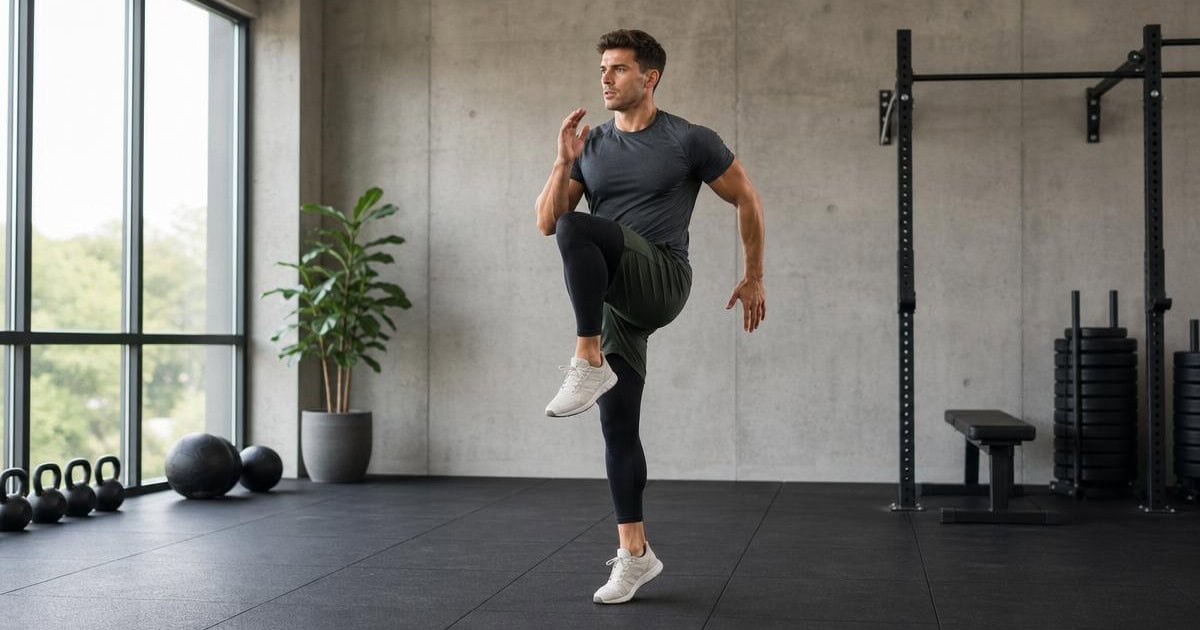
The Back Forward Leg Swings stand on one leg and swing the other leg forward and backward in a controlled pendulum motion. The dynamic stretch hits the hip flexors and hamstrings while warming up the hip joint.
For lower-body warm-ups before squatting, deadlifting, or running, leg swings are one of the most effective drills that exists. The motion targets the hip flexors and hamstrings (the two most commonly tight muscles in lifters who sit a lot) through dynamic loading rather than static stretching, which produces stronger pre-workout activation. Run 10 to 12 reps per leg before lower-body sessions.
Stand next to a wall or sturdy object for balance. Stand on one leg and swing the other leg forward and backward in a smooth controlled motion. Start with smaller swings and progressively increase the range as the hip warms up. Switch legs and repeat. Keep the standing leg slightly bent for stability.
Side to Side Leg Swings

The Side to Side Leg Swings stand and swing one leg side-to-side across the body. The lateral motion targets the inner and outer thighs, hip abductors, and adductors that forward-and-backward swings miss.
For complete hip warm-up, lateral leg swings complement front-to-back swings by hitting the lateral hip muscles. Most lower-body programs train primarily in the sagittal plane (forward and backward), which leaves the lateral hip stabilizers underactive going into heavy lifts. Lateral swings activate these muscles and prepare them for stabilization work during squats and lunges.
Stand next to a wall for balance. Stand on one leg and swing the other leg across the body to one side, then back across to the other side, in a controlled side-to-side motion. Run 10 to 12 reps per leg. Keep the upper body stable; only the swinging leg moves.
Walking Lunge

The Walking Lunge steps forward into a long stance, drops the back knee toward the floor, and steps the back leg forward into the next lunge in a continuous walking pattern. The exercise builds dynamic leg strength while warming up the entire lower body.
For lower-body warm-ups, walking lunges activate every major leg muscle (quads, hamstrings, glutes, calves) through full ranges of motion. The continuous walking pattern also drives heart rate up gently, which prepares the cardiovascular system alongside the muscles. Run 8 to 10 lunges per leg before squatting or deadlifting.
Stand tall and step forward into a long lunge stance. Drop the back knee toward the floor while keeping the front shin roughly vertical. Drive through the front heel to bring the back leg forward into the next lunge. Continue walking forward in alternating lunges.
Dynamic 90 90 Hip Twist

The Dynamic 90 90 Hip Twist sits on the floor in a 90-90 hip position (one leg bent at 90 degrees in front, one bent at 90 degrees to the side) and twists the trunk side-to-side, switching the leg positions. The motion mobilizes the hips through internal and external rotation.
For hip mobility specifically, the 90-90 hip twist is one of the most effective dynamic drills that exists. The position addresses the hip rotation patterns that most lifters lose from prolonged sitting, which limits squat depth and other lower-body movements. Run 8 to 10 reps per side before lower-body or full-body sessions.
Sit on the floor with one leg bent at 90 degrees in front of the body (foot pointing right) and the other leg bent at 90 degrees out to the side (foot pointing forward). Lean forward over the front leg briefly. Then rotate the legs to switch positions and lean over the new front leg. Continue alternating.
Inchworm
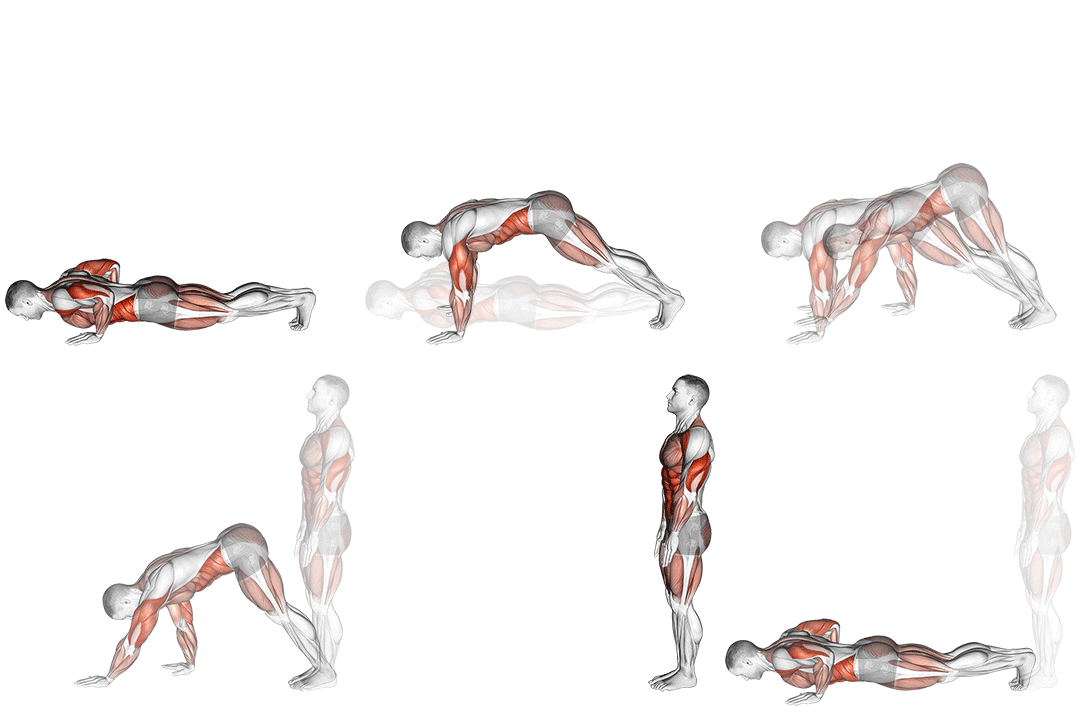
The Inchworm starts standing, hinges over to touch the floor, walks the hands forward into a plank position, and then walks the hands back to the feet to stand up. The full sequence hits the hamstrings, calves, shoulders, and core in one continuous motion.
For full-body warm-ups in minimal time, the inchworm is one of the most efficient drills that exists. The combination of hamstring stretching, shoulder warming, and core activation in a single repetition produces broader pre-workout benefits than isolated stretches. Run 5 to 8 reps before any full-body or upper-body workout.
Stand tall with feet hip-width apart. Hinge forward at the hips and place the hands on the floor, allowing the knees to bend if needed. Walk the hands forward into a high plank position. Briefly hold the plank. Walk the hands back to the feet, then stand up. Continue for the prescribed reps.
Dynamic Chest Stretch

The Dynamic Chest Stretch swings the arms back to open the chest and shoulders dynamically, then forward across the body in alternating fashion. The motion stretches the chest and front delts while activating the upper back and rear delts.
For upper-body warm-ups before pressing exercises, the dynamic chest stretch addresses the chronic chest tightness most lifters develop from heavy bench pressing and desk work. The dynamic motion is more effective than static stretches before training because it primes the muscles for movement rather than relaxing them. Run 10 to 15 reps before pressing sessions.
Stand tall with arms extended forward at shoulder height. Swing both arms back behind the body to open the chest, then forward across the body so the arms cross. Continue alternating in a smooth rhythm. Move dynamically without bouncing at the end ranges.
Dynamic Back Stretch

The Dynamic Back Stretch performs controlled spinal rotations, flexions, and extensions to mobilize the entire back through dynamic motion. The drill addresses lower back, mid-back, and upper back simultaneously.
For pre-workout warm-ups that prepare the back for heavy compound work (deadlifts, rows, squats), dynamic back stretching activates the entire spinal column through controlled motion. The combination of rotation and flexion patterns hits the multifidus, erectors, and rotator muscles that stabilize the spine during heavy lifting. Run for 30 to 60 seconds before back-heavy sessions.
Stand tall and perform a sequence of back-mobilizing motions: gentle rotations side-to-side, controlled forward flexions, gentle backward extensions, and slight side bends. Move slowly through each motion, ending each rep at moderate range rather than pushing to maximum stretch.
Toy Soldier Dynamic Stretch

The Toy Soldier Dynamic Stretch walks forward while alternately kicking each leg up to touch the opposite hand extended in front of the body. The pattern stretches the hamstrings dynamically while building coordinated full-body movement.
For lower-body warm-ups that target hamstring flexibility specifically, the toy soldier is one of the most effective drills that exists. The straight-leg kick produces dynamic hamstring loading without the static-stretch tightness that pre-workout static stretches create. Run 8 to 10 kicks per leg before lower-body or full-body sessions.
Stand tall with arms extended forward at shoulder height. Walk forward while kicking one leg up to touch the opposite hand (right leg to left hand, left leg to right hand). Keep the kicking leg straight and the standing leg slightly bent. Continue for the prescribed reps.
Worlds Greatest Stretch

The Worlds Greatest Stretch combines a deep lunge with thoracic spine rotation in one continuous sequence. The pattern addresses hip mobility, hamstring flexibility, and upper-back rotation simultaneously, which earned it the (somewhat overconfident) name.
The world’s greatest stretch is one of the most efficient single warm-up drills that exists. The combination of hip flexor stretching, hamstring loading, and thoracic rotation hits more limiting muscle groups per rep than any other dynamic stretch. Run 4 to 6 reps per side before any full-body workout.
Step forward into a deep lunge with the front foot planted firmly. Place the same-side hand on the floor next to the front foot. Rotate the trunk to extend the opposite arm up toward the ceiling. Hold briefly. Return the hand to the floor and step back to standing. Switch sides on the next rep.
How To Program These Workouts
A productive pre-workout dynamic warm-up runs 5 to 10 minutes total. Start with general full-body warm-up (jumping jacks or light jogging in place for 60 to 90 seconds to elevate body temperature), then run through 4 to 6 dynamic stretches relevant to the day’s training. For upper-body sessions, prioritize arm circles, dynamic chest stretch, and inchworm. For lower-body sessions, prioritize leg swings, walking lunges, and 90-90 hip twist. For full-body sessions, run a broader sample.
Run dynamic stretches for 10 to 15 reps per drill (or 30 to 60 seconds for continuous-motion drills). The goal is moderate intensity that warms up the muscles without producing significant fatigue. If a dynamic stretch feels exhausting, the intensity is too high; ease back to comfortable motion that elevates body temperature and joint mobility without burning energy needed for the actual workout.
For specific mobility work after warm-up or as a recovery routine, see our best shoulder mobility exercises and best hip mobility stretches. For recovery-focused stretching, see our best hamstring stretches.
Final Thoughts
The best pre-workout dynamic stretches produce stronger workout performance, reduced injury risk, and better long-term mobility than skipping warm-up or relying on static stretches. The combination of upper-body warm-up, lower-body activation, and full-body mobility drills covers every major joint and muscle group in 5 to 10 minutes of focused work, which is a small time investment for the strong performance and longevity benefits.
Stay consistent with warm-up. The most common mistake is treating warm-up as optional or rushing through it to get to the real workout. The fix: build the 5 to 10 minutes of dynamic warm-up into the workout itself, not as a separate optional component. The lifters who consistently warm up properly produce stronger long-term results and stay injury-free longer than those who skip it. Treat warm-up as part of the workout, not as an interruption to it.
Frequently Asked Questions
Is dynamic stretching better than static stretching before workouts?
Yes for performance reasons. Research shows that static stretching before training temporarily reduces strength and power output, while dynamic stretching maintains or improves performance. The mechanism: static stretches relax the muscle, which reduces force production for 30 to 60 minutes afterward; dynamic stretches activate the muscle while increasing range of motion, which produces both mobility and performance benefits.
How long should pre-workout dynamic stretches take?
5 to 10 minutes works for most lifters. Shorter warm-ups (under 5 minutes) often miss key muscle groups; longer warm-ups (over 15 minutes) waste energy that could be used for the actual training. Most productive warm-ups run a focused 5 to 10-minute sequence of 4 to 6 dynamic stretches relevant to the day’s work.
Should I do static stretches at all?
Yes, but after workouts or during dedicated mobility sessions, not before training. Static stretching produces real long-term flexibility gains but reduces strength and power output for the 30 to 60 minutes after the stretch. Save static stretches for cool-down (when reduced muscle tone is acceptable) or for separate mobility sessions on rest days.
Do I need different warm-ups for different workouts?
Mostly yes. Upper-body sessions emphasize shoulder, chest, and thoracic warm-up. Lower-body sessions emphasize hip, hamstring, and ankle mobility. Full-body sessions need a broader warm-up that hits both upper and lower body. The exercises in this list cover all three; pick 4 to 6 that match the day’s training rather than running the same warm-up for every workout.
Can I warm up with cardio instead of dynamic stretches?
Cardio alone is not enough. Light cardio (jumping jacks, easy jogging) elevates body temperature, but it does not address joint range of motion or muscle activation in the patterns the workout will use. The best warm-ups combine 1 to 2 minutes of light cardio (to elevate body temperature) with 4 to 6 minutes of dynamic stretches (to address mobility and activation). Either component alone misses key benefits the other provides.