Barbell glute training produces some of the strongest glute development available because the bilateral barbell loading allows heavier total weights than dumbbell or kettlebell variations. The combination of hip-extension exercises (glute bridge, hip thrust, Kas glute bridge) at the contracted position and squat-pattern exercises (back squat variations, step-up, split squat) at the stretched position covers both major glute functions and produces complete glute development. The barbell format also enables specialized variations (box squat, Anderson squat, quarter squat) that emphasize specific positions in the glute strength curve.
Below are ten effective barbell glute exercises that cover hip-extension work (glute bridge, Kas glute bridge, two-legs-on-bench glute bridge, hip thrust), squat-pattern variations (quarter squat, Anderson squat, box squat, bench squat), and unilateral exercises (step-up, split squat). Together they form a complete barbell glute training program for lifters with barbell access. A 60 to 75-minute session pulled from this list produces strong glute stimulus across hip-extension, contracted-position loading, and stretched-position loading.
Barbell Glute Bridge
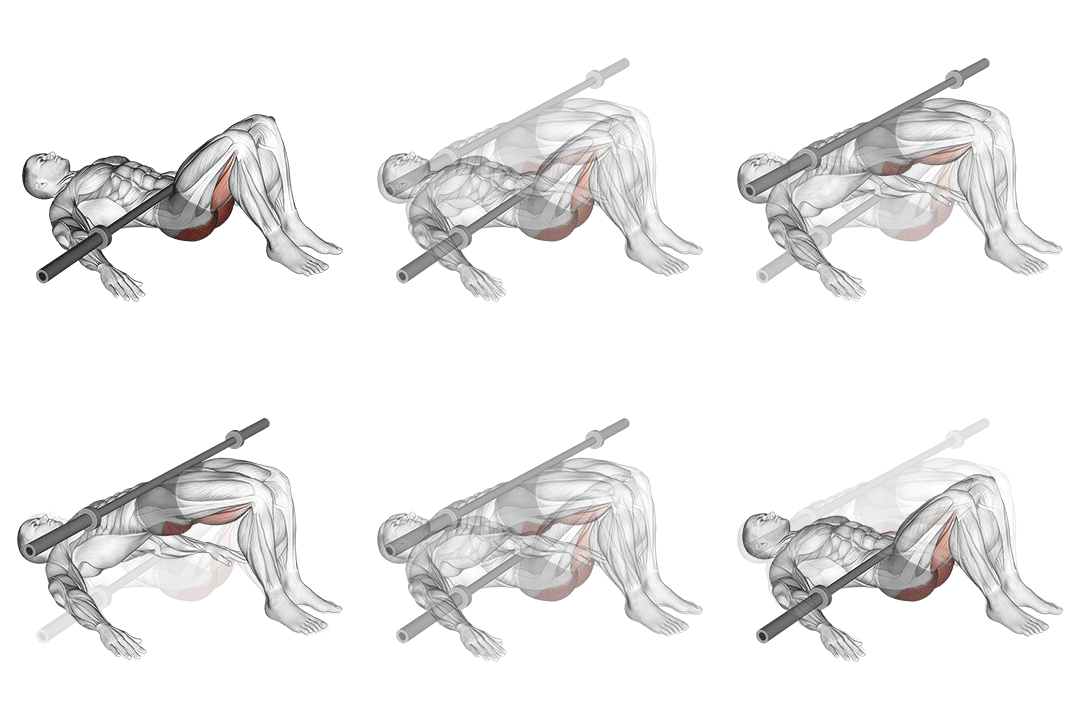
The Barbell Glute Bridge lies flat on the floor with knees bent and a barbell across the hips, then drives the hips up by squeezing the glutes. The pattern produces strong glute loading at the contracted position with full hip extension.
For barbell glute training, the glute bridge is the foundational exercise. The pattern hits the glutes at the contracted position with maximum loading and minimal lower-back demand. Run it for 3 to 4 sets of 10 to 15 reps as primary glute activation work.
Lie flat on the back with knees bent and feet planted shoulder-width apart. Position a loaded barbell across the hips (use a barbell pad for comfort). Drive the hips up by squeezing the glutes hard until the body forms a straight line from shoulders to knees. Lower under control.
Barbell Kas Glute Bridge

The Barbell Kas Glute Bridge performs a glute bridge with extreme hip extension at the top, where the lifter holds the contracted position briefly while squeezing the glutes maximally. The pattern (popularized by powerlifter Kas Tatchell) emphasizes peak glute contraction.
For maximum glute contraction development, the Kas glute bridge produces stronger contracted-position loading than standard glute bridges. The hold at peak extension trains the glutes to contract harder. Run it for 3 sets of 8 to 10 reps with 1 to 2-second peak holds as advanced glute work.
Lie flat on the back with knees bent and feet planted. Position a barbell across the hips. Drive the hips up to full extension, squeezing the glutes hard at the top. Hold the contracted position for 1 to 2 seconds while consciously contracting the glutes maximally. Lower under control.
Barbell Glute Bridge Two Legs on Bench

The Barbell Glute Bridge Two Legs on Bench performs glute bridges with both feet elevated on a bench. The elevation increases the range of motion and the glute stretch at the bottom position.
For increased range-of-motion glute training, the elevated glute bridge produces stronger glute stretching at the bottom than standard floor glute bridges. The pattern hits the glutes through a longer working range. Run it for 3 sets of 10 to 12 reps as accessory glute work.
Lie flat on the floor with both feet planted on a bench. Position a barbell across the hips. Drive the hips up by squeezing the glutes until the body forms a straight line from shoulders to knees. Lower under control to the start. The elevated foot position increases range of motion compared to floor variations.
Barbell Quarter Squat
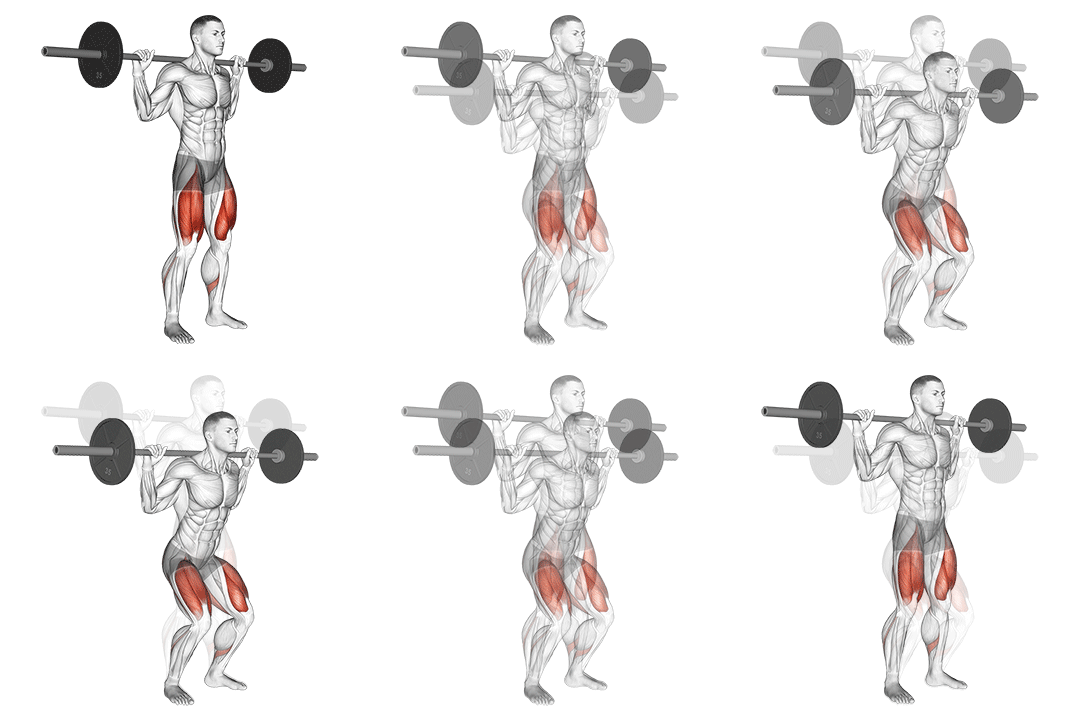
The Barbell Quarter Squat performs partial-range squats descending only to roughly a quarter-depth (knees bent slightly). The reduced range of motion allows significantly heavier loading than full squats.
For heavy barbell glute training that emphasizes lockout strength, the quarter squat produces extreme posterior-chain loading at heavier weights than full squats allow. The pattern hits the glutes through hip-extension lockout under maximum load. Run it for 3 to 4 sets of 4 to 6 reps with very heavy loading as overload glute work.
Set up under a barbell on a squat rack with the bar across the upper back. Step back to clear the rack. Stand with feet shoulder-width. Squat down to roughly quarter-depth (knees slightly bent, hips above parallel). Drive back to standing through the whole foot. Use heavier loads than full squats due to the reduced range of motion.
Barbell Anderson Squat

The Barbell Anderson Squat starts each rep from a deep dead-stop position in the bottom of the squat (resting on the safety bars), then drives up to standing. The dead-stop start eliminates the stretch reflex and produces maximum glute and quad loading from the bottom.
For glute training that develops bottom-position strength, the Anderson squat is one of the most demanding squat variations that exists. The dead-stop start develops the strength specific to the deepest squat position where the glutes contract hardest. Run it for 3 sets of 5 to 8 reps as advanced glute work.
Set up safety bars in a squat rack at the bottom position of a deep squat. Set up a barbell across the upper back. Squat down to rest the bar on the safety bars, allowing the body to relax briefly in the bottom position. Drive up explosively to standing without using the stretch reflex. Lower the bar back to the safety bars for the next rep.
Barbell Step Up

The Barbell Step Up holds a barbell across the upper back and steps up onto a sturdy box or bench, driving up through the standing leg before stepping back down. The unilateral pattern produces strong single-leg glute loading.
For unilateral barbell glute training, the step-up produces strong single-leg glute work that bilateral squatting cannot match. The pattern catches strength imbalances and hits the glute of the standing leg through full hip extension. Run it for 3 sets of 8 to 10 reps per leg as unilateral glute work.
Set up under a barbell on a squat rack with the bar across the upper back. Step back to clear the rack. Stand in front of a sturdy box or bench (knee height works for most lifters). Step up onto the box with one foot, driving through the heel to push the body up. Step back down. Alternate sides on each rep.
Barbell Split Squat

The Barbell Split Squat sets up in a split stance with one foot forward and one foot back (or elevated) and squats while holding a barbell across the upper back. The unilateral pattern produces strong glute loading on the front leg.
For unilateral barbell glute training, the split squat produces strong single-leg loading in a more controlled position than walking lunges. The pattern hits the front-leg glute through deep hip-flexion-to-extension range. Run it for 3 sets of 8 to 10 reps per leg as unilateral glute work.
Set up under a barbell on a squat rack with the bar across the upper back. Step back to clear the rack. Step into a split stance with one foot forward and one foot back. Drop straight down by bending the front knee. Drive through the front foot to push back to the start position. Switch sides between sets.
Barbell Box Squat

The Barbell Box Squat squats down to a low box and pauses briefly at the bottom before driving back to standing. The box pause eliminates the stretch reflex and produces stronger concentric loading from the bottom position.
For barbell glute training that develops bottom-position strength, the box squat is one of the most effective variations that exists. The pattern develops the explosive hip-extension strength that translates to athletic and powerlifting performance. Run it for 3 to 4 sets of 4 to 6 reps as primary heavy glute work.
Set up a box behind a squat rack at the desired squat depth. Set up under a barbell with the bar across the upper back. Squat down by sitting the hips back (more so than standard squats) until the glutes touch the box. Pause briefly while staying tight. Drive up to standing through the whole foot.
Barbell Bench Squat

The Barbell Bench Squat performs squats while holding a barbell across the upper back, descending to a bench at the bottom. Similar to box squats but using a standard bench for the depth marker.
For barbell glute training with consistent depth marking, the bench squat produces the same bottom-position loading as box squats. The pattern works as an accessible alternative when boxes are unavailable. Run it for 3 sets of 6 to 8 reps as glute and depth-consistency work.
Set a flat bench behind a squat rack. Set up under a barbell with the bar across the upper back. Step back to clear the rack and position behind the bench. Squat down by sitting the hips back until the glutes touch the bench. Pause briefly. Drive up to standing.
Barbell Hip Thrust

The Barbell Hip Thrust sits on the floor with the upper back braced against a bench and a barbell across the hips, then drives the hips up by squeezing the glutes. The pattern produces extreme glute loading at the contracted position with full hip extension.
For maximum glute development, the hip thrust is one of the strongest glute exercises that exists. The bench-supported position allows heavier loading than glute bridges and produces stronger contracted-position glute work. Run it for 4 to 5 sets of 8 to 12 reps as primary heavy glute work.
Sit on the floor with the upper back braced against a bench. Position a loaded barbell across the hips (use a barbell pad for comfort). Drive the hips up by squeezing the glutes hard until the body forms a straight line from shoulders to knees. Lower under control. Maintain upper back contact with the bench throughout.
How To Program These Workouts
A productive barbell glute session pulls six to eight exercises from the list above. A balanced session includes one heavy hip-extension compound (barbell hip thrust), one foundational glute bridge variation (Kas glute bridge or two-legs-on-bench), one squat variation (box squat or Anderson squat), one quarter-range overload exercise (quarter squat), and one unilateral exercise (step-up or split squat). Run primary heavy compounds for 4 to 5 sets of 6 to 10 reps; secondary glute exercises for 3 to 4 sets of 8 to 12 reps; unilateral work for 3 sets of 8 to 10 reps per leg.
Train barbell glute sessions 1 to 2 times per week as part of broader leg or full-body programming. The glutes recover within 48 to 72 hours of moderate training, but heavy compound lifts (hip thrust, box squat) require longer recovery. Most successful programs include 1 to 2 dedicated glute sessions per week with appropriate volume distributed across hip-extension and squat-pattern work. The format works particularly well as the glute-focused leg day in upper-lower or PPL splits.
For other glute programming, see our how to grow your glutes and best at home glute workouts. For broader leg training, see our best barbell leg workouts.
Final Thoughts
The best barbell glute workouts deliver real glute development through bilateral barbell loading that allows heavier total weights than alternative equipment. The combination of hip-extension exercises (hip thrust, glute bridges) and squat-pattern variations (Anderson, box, quarter squats) covers every major glute function and produces complete glute development from every visual angle. For lifters with barbell access who want serious glute training that produces measurable strength and visible aesthetic changes, dedicated barbell glute training is one of the most effective approaches available.
Stay focused on the contracted position of every hip-extension rep. The most common barbell glute training mistake is rushing through hip thrusts and glute bridges without pausing at the top, which reduces the contracted-position loading where the glutes do most of their work. The fix: pause briefly at the contracted position of every hip-extension rep and consciously squeeze the glutes hard. The glutes grow most strongly through peak-contraction loading; respecting that pattern through deliberate execution produces stronger results than mechanical rep counting.
Frequently Asked Questions
Hip thrusts or squats for glutes?
Both work; the choice depends on goals. Hip thrusts produce extreme glute loading at the contracted position with full hip extension. Squats produce broader leg development including significant glute work alongside quad and hamstring loading. Most successful glute programs include both: hip thrusts for direct glute focus, squats for combined leg development. The combination produces broader development than either alone for general aesthetic and strength goals.
How heavy should I barbell hip thrust?
Most intermediate lifters can hip thrust significantly more than they can squat (typically 1.2 to 1.8 times back squat max for women, 1.0 to 1.5 times for men). For training, work in the 8 to 12 rep range with 65 to 80 percent of hip thrust max. Beginners should start with the empty bar (45 to 60 pounds) and add weight gradually. Most lifters respond best to higher rep ranges (8 to 15) on hip thrusts compared to lower rep heavy training.
How often should I train glutes with barbell?
One to two times per week works for most lifters. The glutes recover within 48 to 72 hours of moderate training, but heavy compound lifts (hip thrust, heavy squats) require longer recovery. Most successful programs include 1 to 2 dedicated glute sessions per week with appropriate volume distributed across hip-extension and squat-pattern work. Advanced lifters with strong recovery often benefit from twice-weekly glute training with different exercise emphasis.
Box squats or regular squats for glutes?
Both work; the box squat produces stronger glute-specific loading because the pause-at-the-bottom eliminates the stretch reflex and forces the glutes to drive the lift from a dead stop. Regular squats produce broader leg development with stronger quad emphasis. Most successful programs include both: regular squats for foundational strength and quad development, box squats for direct glute and explosive hip-extension work.
Why do hip thrusts feel uncomfortable on the hips?
The barbell pressing into the hips can produce significant discomfort during hip thrusts. Most lifters use a barbell pad (foam wrap around the bar) or a folded towel between the bar and the hips to reduce the pressure. Some specialty equipment (hip thrust pads, hip thrust machines) addresses this even more effectively. Most lifters can train heavy hip thrusts comfortably with appropriate padding; the discomfort is mechanical rather than indicating something wrong with the exercise.