Bigger glutes are one of the most pursued physique goals in modern lifting, and they happen to be one of the muscle groups that responds fastest to focused training. The glutes are large muscles with significant load capacity, recover quickly, and respond well to multiple exercise patterns. Despite that, plenty of lifters spin their wheels on glute training for years without seeing meaningful growth.
This guide covers what actually works: the heavy compound and isolation exercises that drive most glute growth, how to target all three glute muscles for complete development, the volume and frequency that produces results, and the common mistakes that quietly stall progress.
What You’re Actually Building
The glutes are made up of three distinct muscles. The gluteus maximus is the largest and most visible — it makes up the bulk of what people see when they think “glutes.” The gluteus medius sits on the side of the hip and is responsible for the rounded shape from the side view. The gluteus minimus sits underneath the medius and assists with hip stability. Building visible glutes means training all three.
Most glute training over-emphasizes the maximus through compound movements like squats and deadlifts, which is good for size but produces a glute that looks flat or pancake-shaped from the side. Adding direct medius work (banded movements, side-loaded exercises) creates the rounded, full appearance most lifters actually want. The medius is also critical for hip stability during running, jumping, and any single-leg athletic movement.
For more on the muscle structure itself, browse our glutes exercise collection.
The Heavy Compounds That Drive Glute Growth
Direct glute exercises matter, but the heavy compounds are what actually build the size. The squat, hinge, and hip thrust patterns load the glutes with weights well beyond what isolation work can match, and the resulting tension and progressive overload drive most of the growth lifters see over months and years.
Barbell Hip Thrust

The Barbell Hip Thrust positions the upper back on a bench, places a barbell across the hips, and thrusts the hips upward by squeezing the glutes hard at the top. It is the single most effective glute mass-builder available because the loading pattern targets the glutes specifically (not the quads or hamstrings) at peak contraction.
The hip thrust is the cornerstone of any serious glute program. The bar position across the hips loads the glutes in their strongest contraction range, and the barbell allows heavier total loading than dumbbell or bodyweight versions. Run it for 3 to 4 working sets in the 6 to 10 rep range, with weight that allows clean form.
Barbell Squat

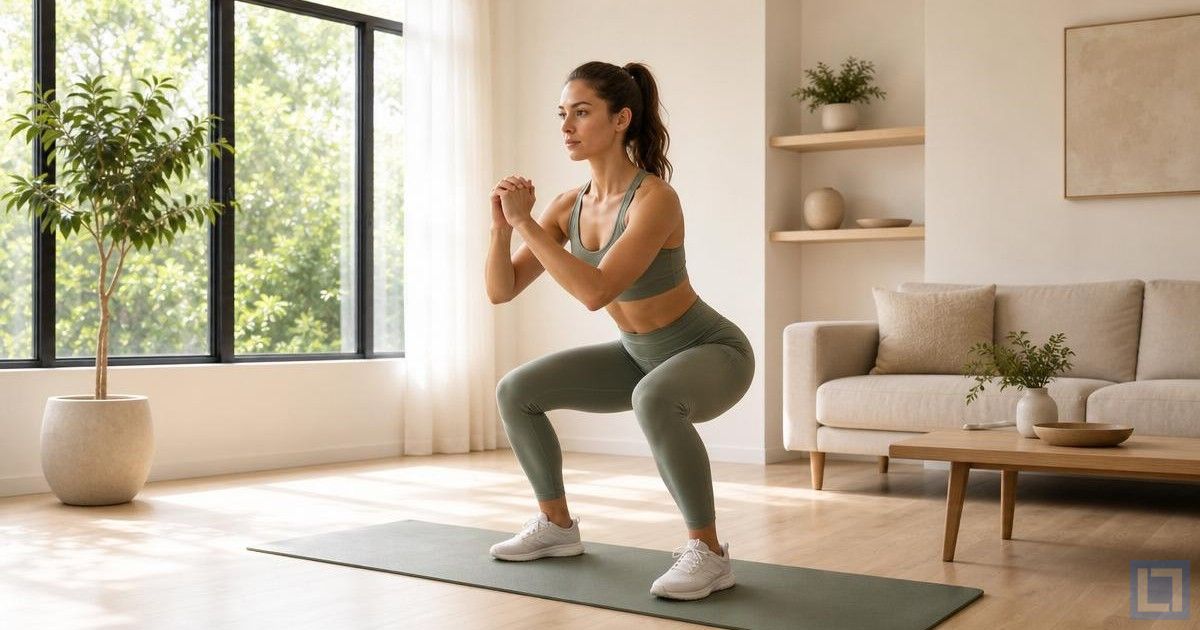
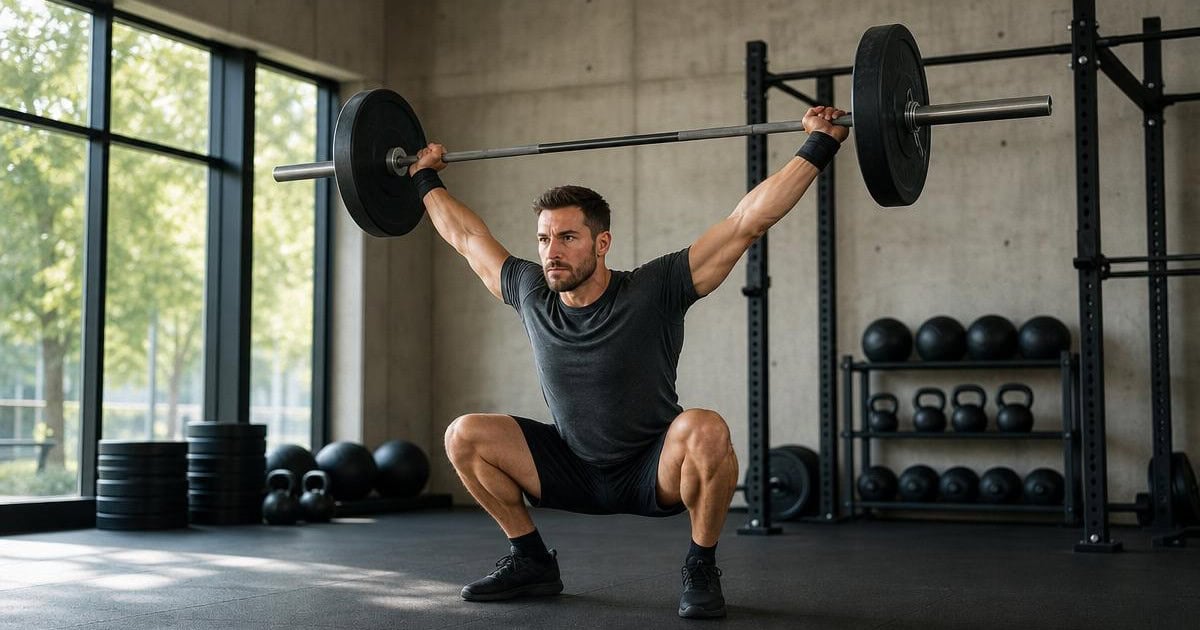
The Barbell Squat with a barbell across the upper back is one of the most effective glute mass-builders that exists, especially when squat depth reaches at or below parallel. Deep squats stretch the glutes under heavy load, which is one of the strongest growth signals the muscle responds to.
Most lifters under-develop their glutes from squatting because they cut depth short or set the bar too high. Going to parallel or below, with a slightly wider stance and the bar in a low-bar position (resting on the rear delts rather than the upper traps), shifts more emphasis to the glutes. Run squats for 3 to 4 sets in the 5 to 8 rep range as the primary leg compound.
Barbell Romanian Deadlift

The Barbell Romanian Deadlift is a hip-hinge variation that targets the glutes and hamstrings through a deep loaded stretch. The hinge pattern emphasizes the glutes’ role in hip extension, which is the function the muscle performs during sprinting, jumping, and any explosive lower-body movement.
The RDL pairs perfectly with hip thrusts in any glute program. Hip thrusts load the glutes at peak contraction; RDLs load them at peak stretch. Combining both produces more complete glute growth than either alone. Run RDLs for 3 sets in the 6 to 10 rep range.
Hitting Every Part Of The Glutes
Compound work builds the bulk of the glute maximus, but specialized exercises target the medius and minimus that compounds tend to miss. The exercises below fill in those gaps and produce the rounded, complete glute shape most lifters want.
Dumbbell Single Leg Hip Thrust

The Dumbbell Single Leg Hip Thrust thrusts the hips up using one leg at a time with a dumbbell across the hips. The single-leg position doubles the load on the working glute compared to a bilateral hip thrust, making it one of the most direct glute-loading exercises in any program.
Single-leg hip thrusts catch strength imbalances that bilateral work hides and let you load each glute individually with significant weight. The unilateral position also engages the gluteus medius for stability, which produces some side-glute development that bilateral work mostly misses.
Walking Lunge

The Walking Lunge holds dumbbells at the sides and walks forward in alternating long lunges. The unilateral pattern with deep range of motion produces significant glute loading on each step, and the continuous walking also drives heart rate up.
Walking lunges work the glutes through a different range than squats or hip thrusts, particularly at the bottom of each rep where the glute is stretched fully. They also train the medius for stability during the single-leg portion of each step. Run them for 2 to 3 sets of 12 to 16 total steps with moderate dumbbells.
Resistance Band Glute Bridge
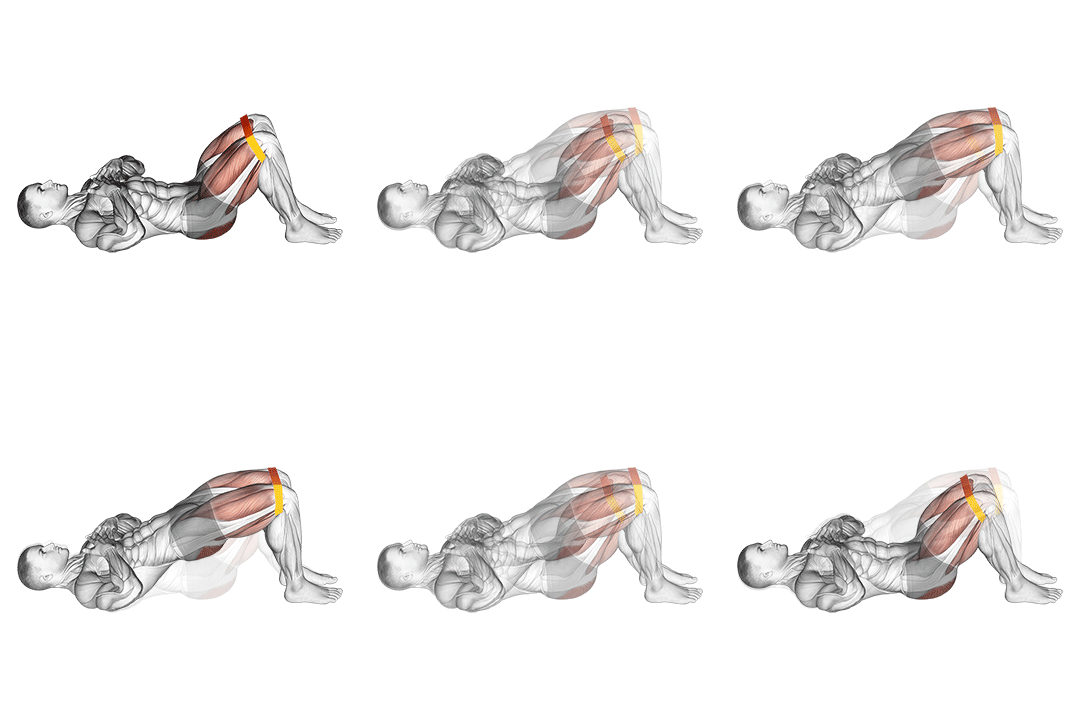
The Resistance Band Glute Bridge adds a mini band around the thighs above the knees to a standard glute bridge. The band provides constant outward tension that activates the gluteus medius alongside the gluteus maximus.
The band glute bridge is the simplest exercise that recruits both glute heads simultaneously. It also serves as an excellent activation drill before heavier glute work, priming the medius to fire during the heavier compounds that follow. Run it as a warm-up (2 sets of 15 to 20) or as a finisher (2 sets to failure).
Cable Kickback

The Cable Kickback (Cable Kickback II) anchors a cable at the ankle and kicks the leg back behind the body against the cable resistance. It targets the glute maximus directly through pure hip extension, with the cable providing constant tension throughout the rep.
Kickbacks finish glute day after the heavy compound work is done. The cable’s constant tension produces a stronger contraction at the peak position than free-weight kickbacks, which lose tension at the top. Run them for 3 sets of 12 to 15 reps per side, focusing on the glute squeeze rather than maximum range.
How Much Volume Builds Bigger Glutes
Most lifters can grow the glutes meaningfully on 12 to 20 working sets per week, with 14 to 16 sets being a strong middle target for serious glute development. Less than 10 sets per week is rarely enough to drive visible growth past the beginner stage; more than 20 sets per week becomes harder to recover from than it is worth.
Spread that volume across two to four sessions per week. The glutes recover within 24 to 48 hours of moderate training because they are large muscles with high blood flow, so frequent training works particularly well. A typical setup hits glutes directly twice per week (heavy compounds + targeted accessory work) with one or two lower-body sessions providing additional indirect volume.
Rep ranges should vary across the program. Heavy compounds (hip thrust, squat, RDL) work best in the 5 to 10 rep range. Accessory work (single-leg hip thrust, walking lunge, kickback) responds well to 8 to 15 reps. Activation and band work goes higher (15 to 25 reps) where the focus is on contraction quality rather than maximum load.
The Mistakes That Stall Glute Growth
Most lifters who fail to grow their glutes are making one or more of the same handful of mistakes.
Skipping direct glute work is the most common mistake. Many lifters assume squatting and deadlifting alone will build glutes, but those compounds emphasize the quads and hamstrings as much as the glutes. Without direct hip thrust work and targeted accessory exercises, glute development stays well below what is possible.
Insufficient depth on squats is the second mistake. Squats above parallel barely engage the glutes; they hit primarily the quads. Hitting parallel or going below dramatically increases glute involvement. Lower the load if needed to reach the depth where the glutes actually work.
Ignoring the gluteus medius is the third mistake. Almost all glute training emphasizes the maximus and ignores the medius, which produces a glute that looks flat from the side view. Adding banded movements, single-leg work, and lateral exercises develops the medius and creates the rounded shape from every angle.
Insufficient progressive overload is the fourth mistake. Glutes grow in response to mechanical tension that increases over time. Lifters who hit hip thrusts with the same 95 pounds for months without adding load will not see continued growth. Add weight every week or two until form starts to break down, then hold the load for a few weeks before progressing again.
Putting It All Together
A productive glute program runs heavy compounds first when fresh and isolation work after. A typical glute-focused day might look like this: warm up with the band glute bridge for 2 sets of 15, run the barbell hip thrust for 4 working sets of 8, the barbell RDL for 3 sets of 8, the dumbbell single-leg hip thrust for 3 sets of 10 per side, walking lunges for 2 sets of 14 total steps, and cable kickbacks for 3 sets of 12 per side. Total session volume: about 14 working sets focused on glutes.
For session-level glute programming, see our best resistance band glute workouts and best dumbbell leg workouts guides.
Final Thoughts
Building bigger glutes is straightforward but takes time. Pick the heavy hip thrust as the primary compound, pair it with squats and RDLs for compound load, and fill in with single-leg work, banded movements, and direct isolation. Train consistently with progressive overload over months. Pay attention to the small things: full squat depth, glute squeeze at peak contraction, medius activation, and total weekly volume.
Most lifters fail not because their program failed but because they did not give it enough time. The glutes typically take 12 to 16 weeks to show visible changes for most lifters, and major shape changes can take six months to a year of dedicated training. Stay with the same handful of foundational exercises, slowly add load, and let the system work.
Frequently Asked Questions
How long does it take to grow glutes noticeably?
Most lifters see meaningful glute growth within 12 to 16 weeks of consistent training combined with adequate calories and protein. Visible changes show up earlier (within 6 to 8 weeks) for beginners. Major shape changes (the rounded, full appearance from every angle) often take 6 to 12 months of dedicated training.
How often should I train glutes?
Two to four times per week works for most lifters. The glutes recover within 24 to 48 hours of moderate training because they are large muscles with high blood flow, so frequent training drives faster growth than infrequent high-volume sessions. Direct glute work twice per week, plus indirect work from squats and lunges on other lower-body days, is a strong baseline.
Hip thrust or squat for bigger glutes?
Both, with the hip thrust as the primary glute mass-builder and the squat as the supporting compound. The hip thrust loads the glutes specifically at peak contraction, while the squat loads them under deep stretch. The combination produces more complete glute growth than either alone. The best programs use both.
Do I need heavy weights to grow my glutes?
Progressive overload matters more than absolute weight. Beginners often start with bodyweight glute bridges and band work, progress to lighter dumbbell hip thrusts, and eventually work up to barbell loading. The glutes grow as long as the load is challenging and progressing over time, not because the absolute weight is heavy.
Will running grow my glutes?
Sprinting can contribute to glute development because explosive hip extension recruits the glutes heavily. Long-distance running rarely builds significant glute size because the load per step is moderate and the cardiovascular demand often pulls energy away from muscle building. For glute growth specifically, resistance training combined with sprint intervals produces faster results than running alone.