
A well-developed back is one of the most impressive physique features a lifter can build. The thickness of the lats, the visible separation between muscle groups, and the V-taper that makes the waist appear narrower all come from focused back training. Most lifters underdevelop their backs because the muscles are out of sight (you cannot see your own back during training), and because most programs prioritize chest and arm work that produces visible front-body changes faster.
This guide covers back anatomy and the muscle groups that determine size and shape, the training principles that drive both thickness and width, the foundational compound and isolation exercises, and programming strategies that produce visible back development over months of consistent practice. The training requires significant volume and time, but the results compound dramatically over years.
Back Anatomy And The Muscles That Matter
The back consists of multiple muscle groups that contribute to overall size and shape in different ways. Complete back development requires training each major group with appropriate volume.
The latissimus dorsi (lats) are the largest back muscles and produce the V-taper that makes the upper body look wider than the waist. The lats originate at the lower spine and pelvis and insert at the upper humerus, which means they pull the arms down and back. They load most heavily during vertical pulling exercises (pull-ups, lat pulldowns) and contribute heavily to overall back width.
The trapezius (traps) covers the upper back from the neck down to the mid-back. The traps contribute to the thickness of the upper back, particularly in the area between the neck and shoulders. They load most heavily during shrugging movements and during the lockout phase of heavy deadlifts and overhead presses.
The rhomboids and middle trapezius sit between the shoulder blades and contribute to mid-back thickness and posture. They load heavily during rowing exercises and during exercises that retract the shoulder blades. Underdeveloped rhomboids and mid-traps produce the forward-rounded posture that most lifters develop from pressing-heavy training.
The erector spinae are the long muscles running along the spine. They contribute to lower-back thickness and provide the structural strength that supports heavy deadlifts, squats, and other compound lifts. The erectors load during heavy hinge movements and isometrically during nearly every other lift.
The Principles Of Back Growth
Back training follows several principles that produce visible growth when combined consistently. Most lifters who fail to build big backs fail because they ignore one or more of these principles.
Train both thickness and width separately. Width comes primarily from vertical pulling (pull-ups, lat pulldowns) that hits the lats through their full range of motion. Thickness comes primarily from horizontal pulling (rows) that loads the mid-back, rhomboids, and rear delts. Most under-developed backs come from training only one pattern; the fix is including both vertical pulling and horizontal pulling in every back workout.
Use sufficient volume. Effective back growth requires 16 to 24 weekly working sets across all back exercises (deadlifts, rows, pull-ups, isolation work). The back is one of the largest muscle groups in the body, so it needs more total volume than smaller muscles to drive comparable growth. Most lifters who fail to grow their backs do less than 10 weekly sets.
Train heavy and high-rep both. Heavy compound work (deadlifts, barbell rows in the 4 to 8 rep range) produces the strength that allows progressive overload over months. Higher-rep isolation work (face pulls, lat pullovers, rear delt flies in the 12 to 20 rep range) produces the metabolic stress and muscle activation that drive direct growth. Most productive back programs use both rep ranges across sessions.
Pull with the elbows, not the arms. The most common back training mistake is pulling weight up using arm strength rather than back strength, which shifts loading to the biceps and forearms. The fix: focus on driving the elbows down and back during pulling exercises. The hands should feel like hooks attaching the weight to the body; all the pulling power comes from the back.
The Foundational Back Compound Lifts
The exercises below cover both thickness and width through compound loading patterns. Most well-designed back workouts pull two to three exercises from this list and run them as the primary heavy lifts of the session.
Barbell Deadlift

The Barbell Deadlift lifts a loaded barbell from the floor to a standing lockout position. The exercise hits the entire posterior chain (lats, traps, erectors, glutes, hamstrings) and serves as the heaviest compound lift in any back program.
Heavy deadlifts produce stronger total back development than nearly any other single exercise. The combination of lat loading (during the pull), trap loading (during the lockout), and erector loading (during the entire lift) produces back thickness that no isolation exercise can match. Run them for 4 to 5 sets of 4 to 8 reps as the primary heavy back lift of the week.
Pull Up

The Pull Up hangs from a bar with an overhand grip and pulls the body up until the chin clears the bar. The exercise is the most direct measure of bodyweight upper-body pulling strength and the foundational vertical pulling exercise for lat development.
No serious back program runs without pull-ups. The exercise builds the lats more directly than any other movement, and the grip and arm work produce strong arm development as a bonus. Build to 10 to 12 strict reps with bodyweight before progressing to weighted variations (weighted pull-ups produce stronger lat development than higher-rep bodyweight sets).
Barbell Bent Over Row

The Barbell Bent Over Row hinges at the hips with a barbell in the hands and rows the bar to the lower chest or upper abdomen. The compound pull hits the lats, mid-back, rear delts, and biceps simultaneously.
The barbell bent-over row is the gold standard horizontal pulling exercise for back thickness. The heavy bilateral loading and full range of motion produce stronger mid-back development than any other rowing variation. Run it for 4 sets of 6 to 10 reps as the primary horizontal pull on back day.
Width-Focused Pulling Variations
For back width specifically, vertical pulling is the priority. The variations below complement basic pull-ups by adding different angles and loading patterns that drive lat development.
Cable Close Grip Front Lat Pulldown

The Cable Close Grip Front Lat Pulldown sits at a cable lat pulldown station with a close-grip handle and pulls the handle down to the upper chest. The narrow grip emphasizes the lower lats more than wide-grip variations.
Lat pulldowns provide the volume work that complements heavier pull-ups. The cable allows precise weight selection and consistent loading throughout the rep, which makes pulldowns particularly useful for higher-rep training (12 to 15 reps) that drives muscle growth alongside the strength work from pull-ups. Run it for 3 to 4 sets of 10 to 15 reps.
Chin Up

The Chin Up hangs from a bar with an underhand grip and pulls the body up until the chin clears the bar. The underhand grip shifts emphasis to the biceps compared to the overhand pull-up while still hitting the lats heavily.
For complete lat development, chin-ups complement pull-ups by adding a different grip angle. Most lifters can do 1 to 2 more chin-ups than pull-ups due to the stronger bicep involvement. Run them as accessory pulling work alongside pull-ups for full lat and arm development.
Thickness-Focused Rowing Variations
For back thickness specifically, horizontal pulling is the priority. The variations below add depth and angle variety to the basic barbell row pattern.
Dumbbell One Arm Bent Over Row
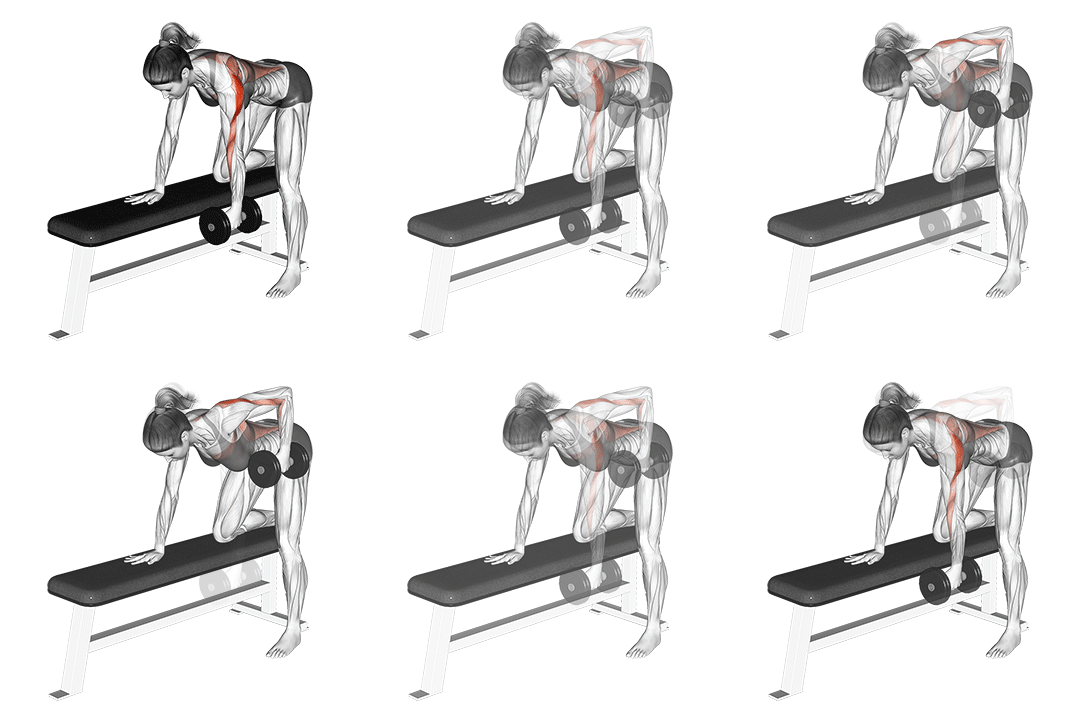
The Dumbbell One Arm Bent Over Row hinges over with one hand and one knee on a bench for support and rows a heavy dumbbell with the free hand. The unilateral pattern allows heavier loading per side than bilateral rows and catches strength imbalances.
The single-arm dumbbell row is one of the most effective lat and mid-back exercises that exists. The bench-supported position eliminates body sway entirely, the unilateral loading allows heavier weight per side, and the longer range of motion (the dumbbell can travel further than a barbell) produces stronger lat stretch and contraction. Run it for 3 to 4 sets of 8 to 12 reps per arm.
Barbell Shrug

The Barbell Shrug holds a barbell at the front of the body with arms extended and shrugs the shoulders straight up toward the ears. The exercise isolates the upper traps directly and produces the visible thickness in the upper back area.
Direct trap work fills in the upper back area that rowing and pulling exercises only hit indirectly. The traps respond well to heavy loading and high rep ranges (8 to 15 reps) with strict form. Run it for 3 sets of 8 to 12 reps as accessory work after compound back lifts.
How To Program For Back Growth
Back programming follows a structure designed to maximize total volume across both thickness and width while integrating with the indirect work that comes from biceps and rear delt training. The framework below produces consistent growth for most lifters who follow it for 12+ weeks.
Train back two to three times per week. Heavier compound work (deadlifts, barbell rows, weighted pull-ups) once or twice per week. Higher-rep isolation work (lat pulldowns, dumbbell rows, shrugs, face pulls) two to three times per week. Spread the volume across multiple sessions to drive faster growth than once-weekly high-volume sessions.
Run 16 to 24 weekly working sets across all back exercises. The back is one of the largest muscle groups in the body and needs more total volume than smaller muscles. Most lifters who fail to grow their backs do less than 10 weekly sets; the productive range is 16 to 24 sets per week, split across two to three sessions.
Hit both thickness and width every session. Every back workout should include at least one vertical pull (pull-ups, lat pulldowns, chin-ups), one horizontal pull (barbell row, dumbbell row), and one isolation or accessory exercise (shrugs, face pulls, rear delt flies). Including all three patterns produces fuller, more balanced back development than emphasizing only one or two patterns.
For more back-focused programming, see our best dumbbell back workouts and best kettlebell back workouts. For pull-up specific training, see our how to do a pull-up guide.
Final Thoughts
Building a bigger back is one of the most impressive physique transformations a lifter can achieve. The combination of width (V-taper) and thickness (visible muscle separation) creates the kind of upper-body presence that no amount of chest or arm training alone can match. The lifters with the most impressive physiques typically have well-developed backs that contribute most of their visible upper-body size.
Stay consistent with high volume. Most lifters who fail to build big backs fail because they treat back training as secondary to chest and arm work. The fix: program back training with the same intentionality as any other muscle group. 16 to 24 weekly working sets across two to three focused sessions for 12 to 16 weeks produces visible growth for most lifters with appropriate nutrition. Patience and consistency matter more than intensity.
Frequently Asked Questions
Why is my back so weak compared to my chest?
Most lifters develop a strength imbalance between chest and back because the standard pressing-heavy training programs prioritize chest work. The fix: program back training with at least equal volume to chest training (16 to 24 weekly sets each, not 16 sets chest and 8 sets back). Most lifters need to do twice as many back sets as they currently do to catch up the back development to match their chest development.
How often should I train back?
Two to three times per week works for most lifters. The back recovers within 48 to 72 hours of moderate training. Most productive back programs do one heavier session (deadlifts, barbell rows, weighted pull-ups) and one to two lighter sessions per week (lat pulldowns, dumbbell rows, isolation work). Spreading volume across multiple sessions produces faster growth than once-weekly high-volume sessions.
What’s the best back exercise?
The pull-up is the single most effective back exercise for lat development. The combination of full bodyweight loading, full range of motion, and direct lat targeting produces stronger back width per rep than any other exercise. The barbell deadlift comes second for total back development (thickness, especially upper traps and erectors). Most well-designed programs use both as primary back lifts.
Can I build a big back with bodyweight alone?
For width yes, for thickness partially. Pull-ups and chin-ups produce strong lat development for years of progressive practice (especially with weighted progressions). However, mid-back thickness requires horizontal pulling, which is harder to load progressively with bodyweight alone (inverted rows cap out as lifters get strong). Most lifters chasing maximum back development eventually benefit from adding heavy barbell rows alongside pull-ups.
How long until I see back growth?
Most lifters with consistent back training see meaningful strength improvements within 4 to 6 weeks. Visible back development takes 12 to 16 weeks combined with appropriate nutrition. Major changes (significantly improved back thickness and width) take 6 to 12 months of dedicated practice. The back is a large muscle group that responds slowly but rewards consistent training over years.