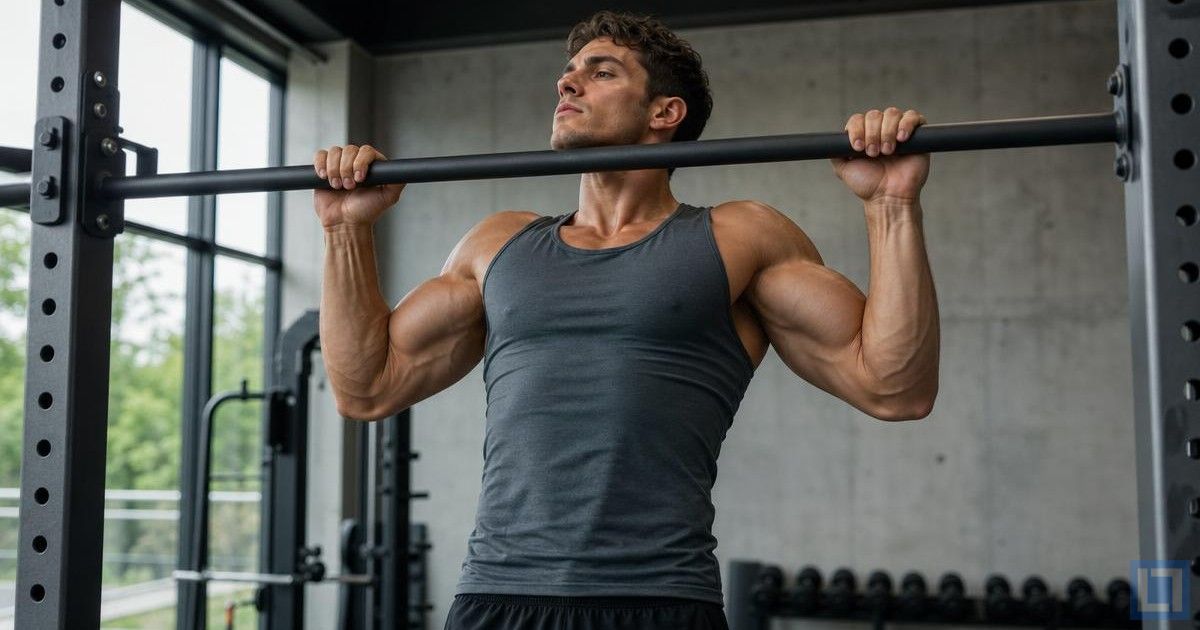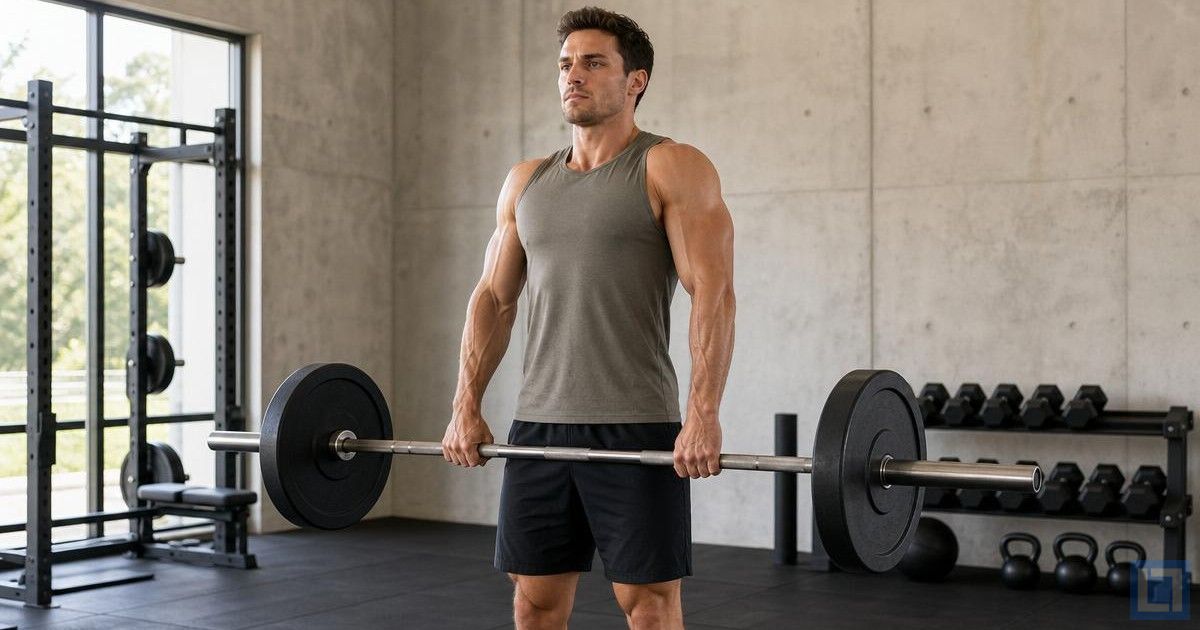
The trapezius (traps) is a large diamond-shaped muscle that runs from the base of the skull down to the mid-back, and out to the shoulders. The traps consist of three regions with distinct functions: the upper traps (elevate the shoulders, as in shrugs), the middle traps (retract the shoulder blades together, as in face pulls and rows), and the lower traps (depress the shoulder blades downward, as in Y-raises and certain rows). Effective trap training hits all three regions because exercises that emphasize only one (typically the upper traps through shrugs) tend to produce the bunched-up neck appearance without the broader back development. The combination of heavy shrug variations for upper traps, rows and face pulls for middle traps, and pulling exercises for lower traps produces complete trap development.
Below are ten effective trap-building exercises that cover heavy upper-trap work (barbell shrug, dumbbell shrug, trap bar shrug, power shrug), foundational pulling exercises that drive trap growth (deadlift, rack pull, farmer’s walk), middle-trap and rear-delt work (face pull, incline shrug), and combined upper-trap-and-side-delt work (upright row). Together they form the complete trap-building exercise foundation for any productive back program. Pull 5 to 6 exercises per session and rotate the selection across sessions for complete trap development. The traps respond particularly well to heavy frequency loading; many lifters benefit from training traps 2 to 3 times per week.
Barbell Shrug

The Barbell Shrug holds a barbell at hip level with arms extended and shrugs the shoulders straight up toward the ears, contracting the upper traps. The pattern is the foundational direct upper-trap exercise.
For trap growth, the barbell shrug is non-negotiable. The pattern hits the upper traps directly through pure shoulder elevation under heavy bilateral loading. The barbell allows heavier total weight than dumbbell variations. Run it for 4 to 5 sets of 10 to 15 reps as primary upper-trap work in any trap-focused program.
Stand tall holding a barbell at hip level with overhand grip slightly wider than shoulder-width. Shrug the shoulders straight up toward the ears as high as possible while keeping the arms straight. Squeeze the upper traps at the top. Lower under control to the start.
Dumbbell Shrug

The Dumbbell Shrug holds dumbbells at the sides with arms extended and shrugs the shoulders straight up toward the ears. The dumbbells allow slightly different positioning than barbell shrugs and accommodate independent shoulder mechanics.
For trap growth that includes varied loading angles, the dumbbell shrug produces strong upper-trap loading from a slightly different position than barbell variations. The independent dumbbell handles also work for lifters with shoulder asymmetries. Run it for 3 to 4 sets of 10 to 15 reps as primary trap work alongside barbell shrugs.
Stand tall holding dumbbells at the sides with palms facing the body. Shrug the shoulders straight up toward the ears as high as possible while keeping the arms straight. Squeeze the upper traps at the top. Lower under control to the start.
Barbell Deadlift

The Barbell Deadlift starts with the barbell on the floor and lifts it to standing position by hinging at the hips and extending through the legs. The exercise produces strong trap loading throughout the entire lift, particularly at the lockout position.
For trap growth, the conventional deadlift produces extreme trap loading because the entire bar weight pulls down on the trapezius throughout every rep. Most lifters with strong deadlifts develop visibly thick traps from the heavy bilateral loading alone. Run it for 4 sets of 5 to 8 reps as primary heavy compound work that builds traps.
Stand with feet hip-width with the barbell over the middle of the feet. Hinge at the hips and bend the knees to grip the bar with shoulder-width grip. Drive through the legs and pull the bar up close to the body until standing fully upright. Reverse the motion under control. Reset before each rep.
Barbell Rack Pull

The Barbell Rack Pull performs deadlifts with the bar starting elevated on safety pins or blocks (typically 2 to 6 inches above the floor). The reduced range of motion allows significantly heavier loading than full-range deadlifts, which produces extreme trap loading at lockout.
For maximum trap loading, the rack pull is one of the most effective exercises that exists. The reduced range of motion allows loads of 1.2 to 1.5 times the lifter’s deadlift max, which produces extreme trap stretch and contraction loading. Run it for 3 to 4 sets of 5 to 8 reps as primary heavy trap loading work.
Set up a barbell on safety pins or blocks at knee height (or slightly below). Stand with feet hip-width and grip the bar with shoulder-width grip. Drive through the legs and pull the bar up close to the body to lockout. Reverse the motion under control. Use loads heavier than conventional deadlifts due to the reduced range.
Farmers Walk
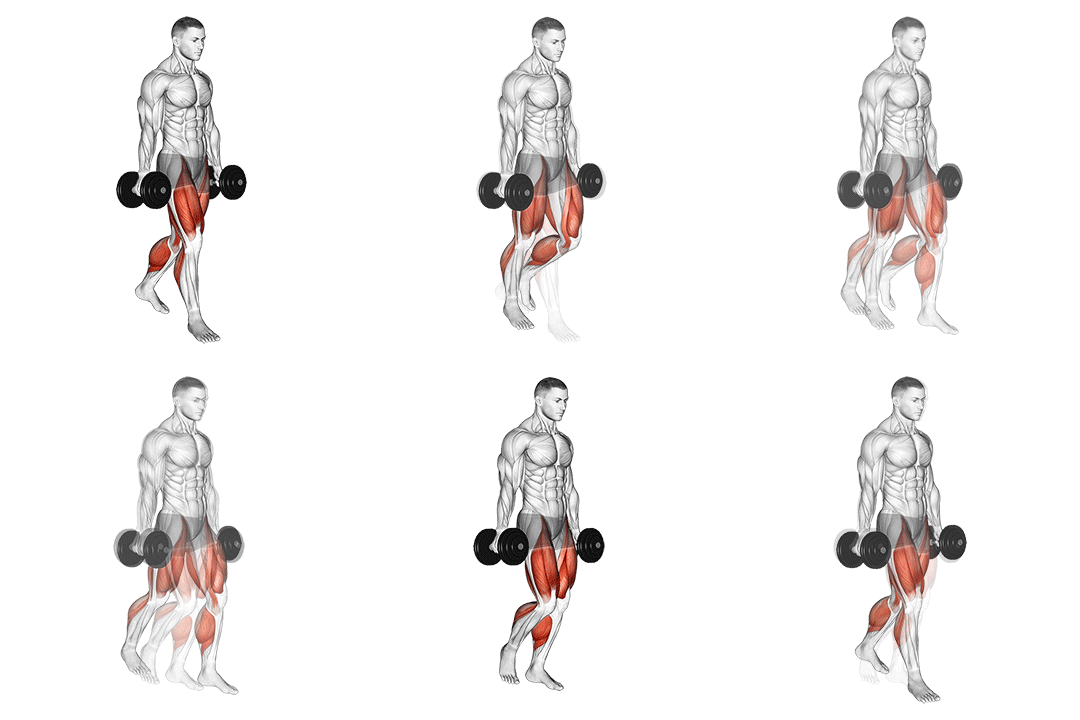
The Farmers Walk holds heavy dumbbells (or specialized handles) at the sides and walks for distance or time while maintaining upright posture. The pattern produces extreme trap loading through extended carries with significant load.
For trap growth, the farmer’s walk produces strong trap loading through sustained heavy carries. The trapezius works isometrically throughout the carry to support the heavy load, which produces strong combined strength and endurance development. Run it for 3 to 4 sets of 50 to 100-foot distances or 30 to 60-second carries with heavy loading.
Hold heavy dumbbells at the sides with arms extended. Stand tall with shoulders back and chest out. Walk forward at a steady pace while maintaining upright posture and tight grip on the dumbbells. Continue for the prescribed distance or time. Set the dumbbells down with control.
Barbell Upright Row

The Barbell Upright Row holds a barbell at hip level and pulls it up vertically toward the chin by lifting the elbows out to the sides. The pattern hits the upper traps and side delts simultaneously through the pull-up motion.
For trap training that includes the side delts and middle traps, the upright row produces strong combined upper-back loading that complements pure shrug work. The pattern hits multiple back regions in a single exercise. Run it for 3 sets of 8 to 12 reps as combined trap and side-delt work. Use moderate loads to avoid shoulder impingement risk.
Stand tall holding a barbell at hip level with overhand grip slightly narrower than shoulder-width. Pull the bar up vertically by lifting the elbows out to the sides, raising the bar to chest level. Lower under control to the start. Avoid pulling above chest level to reduce shoulder impingement risk.
Cable Standing Face Pull

The Cable Standing Face Pull stands facing a cable pulley set at face height and pulls a rope attachment toward the face by driving the elbows back and outward. The pattern produces strong middle and lower trap loading along with rear delt work.
For complete trap development that includes the often-undertrained middle and lower traps, the face pull is the foundational exercise. The pattern hits the middle traps and rhomboids through scapular retraction. Run it for 3 to 4 sets of 12 to 15 reps as primary middle-and-lower trap work.
Stand facing a cable pulley set at face height with a rope attachment. Grip the rope ends with both hands. Pull the rope toward the face by driving the elbows back and outward (not downward), separating the rope ends as the elbows pull back. Squeeze the middle traps and rear delts at the contracted position. Return under control.
Dumbbell Incline Shrug

The Dumbbell Incline Shrug lies face-down on an incline bench (set to 30 to 45 degrees) and shrugs dumbbells up by retracting and elevating the shoulder blades. The incline angle biases loading toward the middle traps more heavily than standing shrugs.
For middle-trap development, the incline shrug is one of the most direct exercises that exists. The face-down incline position eliminates upper-trap dominance and forces the middle traps to do most of the work. Run it for 3 sets of 10 to 12 reps as primary middle-trap work.
Set an incline bench to 30 to 45 degrees. Lie face-down on the bench with dumbbells held at arm’s length below the chest. Shrug the dumbbells up by retracting the shoulder blades back and together (not just lifting straight up). Squeeze the middle traps at the top. Lower under control.
Trap Bar Standing Shrug

The Trap Bar Standing Shrug holds a trap bar at the sides with arms extended and shrugs the shoulders straight up toward the ears. The neutral grip and centered loading produce strong upper-trap loading with reduced wrist strain compared to barbell shrugs.
For trap training that allows comfortable heavy loading, the trap bar shrug produces strong upper-trap loading with the neutral grip handles. The pattern allows heavier loading than barbell shrugs because the bar bears the weight independently. Run it for 3 to 4 sets of 10 to 15 reps as heavy trap work for lifters with trap bar access.
Stand inside a trap bar with feet hip-width and grip the handles with arms extended. Shrug the shoulders up toward the ears as high as possible while keeping the arms straight. Squeeze the upper traps at the top. Lower under control to the start.
Barbell Power Shrug

The Barbell Power Shrug performs explosive shrugs with the bar in front of the body, similar to the top of a clean pull. The pattern produces strong fast-twitch trap fiber recruitment along with traditional trap loading.
For trap training that includes explosive power development, the power shrug produces stronger fast-twitch trap recruitment than standard shrugs. The pattern translates to athletic explosive movements. Run it for 3 sets of 5 to 8 reps as explosive trap power work with moderate loads.
Stand tall holding a barbell at hip level with overhand grip slightly wider than shoulder-width. Drop slightly into a quarter-squat position. Drive up explosively, shrugging the shoulders hard at the top of the motion (similar to the top of a clean pull). Lower under control. Reset before each rep.
How To Program These Workouts
A productive trap-building program organizes these exercises across 2 to 3 weekly sessions with appropriate volume across all three trap regions. A standard trap-emphasis program: heavy compound day (deadlift 4 sets of 5 to 8 reps, rack pull 3 sets of 5 to 8, barbell shrug 4 sets of 10 to 15, farmer’s walk 3 sets of 50 feet), volume day (dumbbell shrug 4 sets of 12 to 15, trap bar shrug 3 sets of 10 to 12, face pull 4 sets of 12 to 15, incline shrug 3 sets of 10 to 12, upright row 3 sets of 10 to 12). Total weekly volume of 25 to 35 sets of direct trap work, which sits in the high range required for noticeable trap growth.
Train traps 2 to 3 times per week with appropriate variation across sessions. The traps recover within 48 to 72 hours of moderate training and can handle higher frequency than larger muscle groups. Most successful trap-building programs include 2 to 3 dedicated trap-emphasis sessions per week or distribute trap work across multiple weekly sessions (back day, pull day, deadlift day). The traps also get significant indirect work from any heavy pulling, which means many lifters develop strong traps simply through consistent deadlift training without specific trap focus.
For broader back programming, see our how to build a bigger back. For specific neck and trap aesthetics, see our how to get a bigger neck. For shoulder-trap combined work, see our best rear delt exercises.
Final Thoughts
Building bigger traps requires consistent training of all three trap regions (upper, middle, lower) across multiple weekly sessions with appropriate volume. The combination of heavy shrug variations, foundational pulling exercises, middle-trap work, and accessory variations covers every major trap function and produces the kind of complete trap development that creates the thick yoke, broad upper back, and powerful posture that strong traps produce. The traps respond particularly well to heavy frequency loading, which means lifters who commit to dedicated trap training can see measurable trap growth within 8 to 12 weeks of consistent practice combined with appropriate nutrition.
Stay focused on the contracted-position squeeze on every shrug rep. The most common trap training mistake is rushing through shrug reps without pausing at the top to consciously squeeze the traps, which significantly reduces the actual trap stimulus per rep. The fix: pause briefly at the top of every shrug rep (1 to 2 seconds) and consciously squeeze the traps as hard as possible before lowering. The traps grow most strongly through peak-contraction loading; respecting that pattern through deliberate execution produces stronger trap development than higher-weight reps with rushed motion. Quality reps with hard contraction at the top drive the trap growth that visible thickness requires.
Frequently Asked Questions
How long does it take to build bigger traps?
Most lifters see meaningful trap strength improvements within 6 to 8 weeks of dedicated trap training. Visible trap development appears within 12 to 16 weeks combined with appropriate nutrition. Major trap development (significantly thicker neck and shoulders, visible trap separation) takes 6 to 12 months of consistent practice. The traps respond particularly well to heavy frequency loading, which means dedicated trap training produces faster results than minimal trap work.
Are shrugs the best exercise for traps?
Shrugs are essential but not sufficient. Shrugs hit the upper traps directly, but the upper traps are only one of three trap regions. Lifters who only do shrugs develop visibly upper-trap-dominant traps (bunched-up neck appearance without broader back development). The fix: include heavy compound pulling (deadlift, rack pull) for full-trap loading, face pulls and incline shrugs for middle-trap development, and farmer’s walks for sustained loading. The combination produces complete trap development.
How often should I train traps?
Two to three times per week works for most lifters. The traps recover within 48 to 72 hours of moderate training and can handle higher frequency than larger muscle groups. Most successful programs include 2 to 3 dedicated trap-emphasis sessions per week or distribute trap work across multiple weekly back-and-pulling sessions. The combination of dedicated frequency and high indirect volume from heavy deadlifts produces the fastest trap growth.
Why won’t my traps grow?
The most common reasons traps fail to grow are insufficient volume (under 12 weekly sets of direct trap work), missing middle and lower trap exercises (only training upper traps with shrugs), insufficient progressive overload (same weights week after week), or insufficient peak contraction on shrugs (rushing through reps without squeezing at the top). The fix usually involves increasing total trap volume to 20 to 35 weekly sets, including all three trap regions in training, and committing to 6 to 12 months of consistent practice.
Will heavy deadlifts build my traps?
Yes, significantly. Heavy deadlifts produce extreme trap loading throughout every rep because the entire bar weight pulls down on the trapezius. Most lifters with strong deadlifts develop visibly thick traps from the heavy bilateral loading alone, even without specific trap focus. Lifters wanting maximum trap development can combine heavy deadlift training with dedicated trap-focused work (shrugs, rack pulls, face pulls) for accelerated results.