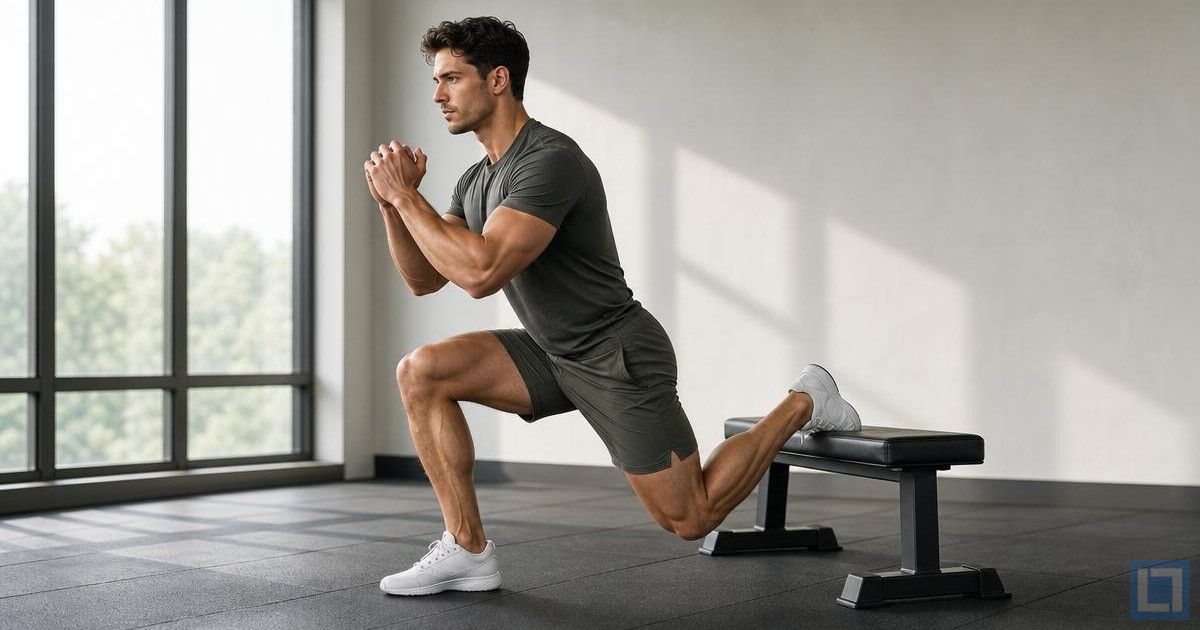
The Bulgarian split squat is one of the most effective single-leg exercises ever invented. The combination of deep range of motion, significant unilateral loading, and balance demand produces stronger leg development than nearly any other unilateral movement. Despite its effectiveness, the lift is technical, demanding on hip mobility, and frequently performed with form mistakes that limit results.
This guide covers exactly how to set up the Bulgarian split squat, the common form mistakes that limit quad and glute growth, the chair-supported progressions for beginners working on balance and depth, and the advanced loaded and plyometric variations that keep the exercise challenging at every level.
What Is A Bulgarian Split Squat
The Bulgarian split squat is a unilateral squat variation where the rear foot is elevated on a bench or sturdy surface roughly knee-height behind the lifter. The front leg performs nearly all of the work; the back leg only provides balance and a small amount of stability support. The result is a movement that loads each leg with roughly 85 to 90 percent of the lifter’s bodyweight (versus 50 percent in a bilateral squat).
The lift gets its name from Bulgarian weightlifters who used it in the 1980s as an assistance exercise for the snatch and clean and jerk. It became popular in Western strength training during the 1990s and is now a staple of every serious unilateral leg program. The combination of unilateral loading, deep range of motion, and balance demand makes it one of the most efficient single exercises for the entire lower body.
The Anatomy Of A Proper Bulgarian Split Squat
A proper Bulgarian split squat looks deceptively simple but contains several precise positioning details that determine whether the exercise hits the legs effectively or wastes effort on poor mechanics. Five elements matter most.
Stance length: the front foot is positioned far enough forward that when the back knee touches the floor, the front shin is roughly vertical. Stance too short shifts emphasis to the quads and stresses the front knee; stance too long shifts to the glutes and reduces the depth available. Most lifters find the right stance after a few practice sessions.
Bench height: the rear foot rests on a bench or surface roughly 12 to 18 inches off the floor (knee-height for most lifters). Higher surfaces make the exercise harder by increasing hip flexion demand on the rear leg; lower surfaces make it easier. Standard gym benches at knee-height work well for most lifters.
Front knee tracking: the front knee tracks straight forward over the toes, never collapsing inward. Knee collapse during the descent kills glute engagement and stresses the inner knee joint. Pay attention to knee position throughout the rep, especially as fatigue accumulates.
Torso position: the torso stays relatively upright with a slight forward lean, not hinged forward into a deadlift position. Excessive forward lean shifts emphasis to the lower back and reduces the loading on the front leg. Keep the chest tall throughout the rep.
Range of motion: the front knee bends until the back knee is roughly an inch above the floor, then drives back to standing. Cutting depth short (stopping with the back knee 6+ inches off the floor) significantly reduces the quad and glute stretch. Reach the depth on every rep, even if it means lowering the rep count temporarily until strength catches up.
The Standard Bulgarian Split Squat

The Bulgarian Split Squat is the standard bodyweight version. Set up with the rear foot resting on a bench, the front leg forward in a long stance, then lower the back knee toward the floor by bending the front leg. Drive back to standing through the front heel.
Build a base of 12 to 15 clean reps per leg with bodyweight before adding load. The bodyweight version is far from easy; even strong squatters often struggle with the balance and unilateral demand on their first session. Work the bodyweight version for two to three weeks before progressing to loaded variations.
The Most Common Bulgarian Split Squat Mistakes
Most lifters who fail to feel their legs work during Bulgarian split squats are making one or more of the same handful of mistakes. The list below covers what to fix.
Stance too short is the most common form mistake. Lifters who set the front foot too close to the bench end up with the front knee traveling well over the toes during the descent, which stresses the patellar tendon and shifts emphasis off the glute. The fix: lengthen the stance until the front shin is roughly vertical at the bottom of the rep.
Front knee collapse is the second mistake. As fatigue accumulates, many lifters let the front knee drift inward toward the centerline of the body. This kills glute engagement and stresses the inner knee. The fix: actively push the front knee outward toward the small toe of the front foot throughout the descent.
Excessive forward lean is the third mistake. Some lifters hinge the torso forward significantly during the descent, which turns the lift into a quad-glute hybrid that loads the lower back heavily. The fix: keep the chest tall with only a slight forward lean. If the torso wants to fall forward, the load is too heavy or the front foot needs to be moved further forward.
Insufficient depth is the fourth mistake. Stopping the back knee 6 inches above the floor cuts the quad and glute stretch significantly. The fix: drop the back knee to within an inch of the floor on every rep. If the depth is unreachable with the current stance, adjust the front foot position rather than skipping the depth.
Beginner Progressions Before The Standard Lift
Lifters who struggle with the balance demand of the standard Bulgarian split squat should not push through poor reps; bad form establishes bad patterns that get harder to fix later. The progressions below build the strength and balance to perform clean reps over a few weeks of consistent work.
Bulgarian Split Squat With Chair

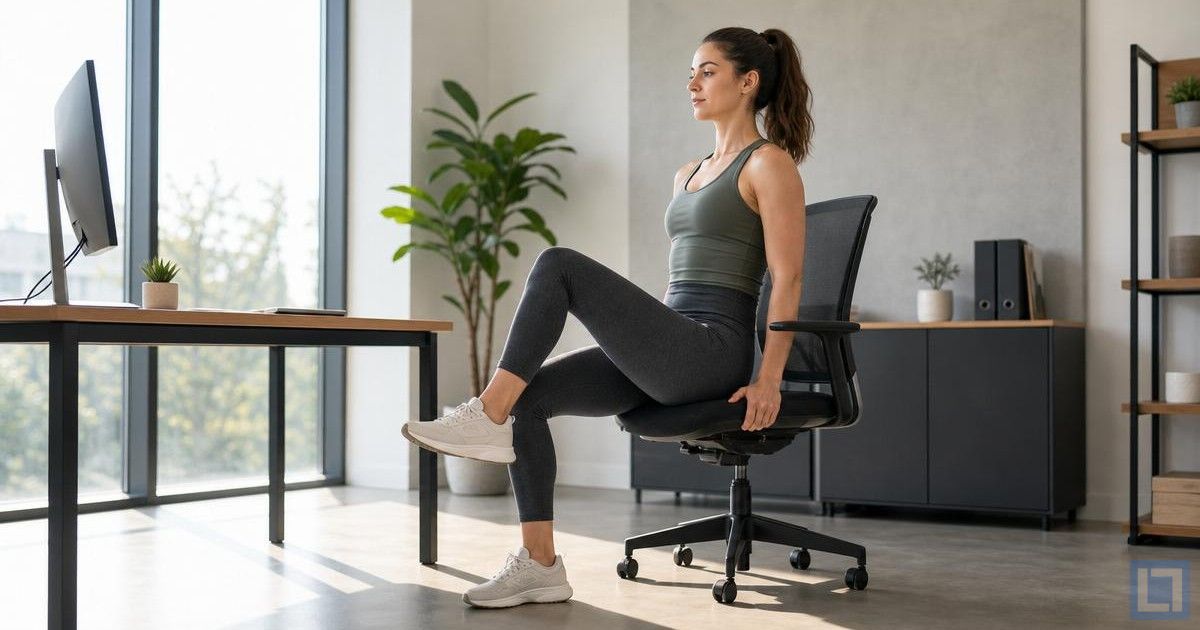
The Bulgarian Split Squat With Chair holds onto the back of a chair or sturdy surface during the rep, which removes the balance demand entirely. The chair-supported version lets beginners learn the leg mechanics without fighting the balance challenge simultaneously.
Build to 12 to 15 clean reps per leg with chair support before attempting the unsupported version. The transition between the two takes most beginners one to two weeks of consistent practice. Progress gradually by reducing how much you grip the chair until the support becomes unnecessary.
Assisted Bulgarian Split Squat

The Assisted Bulgarian Split Squat uses light fingertip support against a wall or bar to remove some of the balance demand without fully committing to chair-style support. The fingertip touch provides just enough proprioceptive feedback to maintain balance through the rep.
The fingertip-assisted version is the bridge between full chair support and the unsupported standard lift. Work this version for one to two sessions before attempting the unsupported version. The transition usually feels natural once the leg mechanics are dialed in.
Loaded And Advanced Variations
Lifters who have mastered the bodyweight version benefit from loaded variations that increase the strength stimulus. The variations below add external load, plyometric demand, or both to continue progressing the exercise past pure bodyweight.
Dumbbell Assisted Bulgarian Split Squat

The Dumbbell Assisted Bulgarian Split Squat holds a single dumbbell at the chest in goblet position during the rep. The lighter load of a single dumbbell (versus dumbbells at both sides) introduces external loading without overwhelming the balance demand.
Use this variation as the first loaded version most lifters progress to. A 30 to 50-pound dumbbell at the chest provides meaningful loading while the chest-loaded position keeps the torso upright. Progress to dumbbells at both sides once 12 reps with a moderate goblet weight feel manageable.
Dumbbell Bulgarian Split Squat
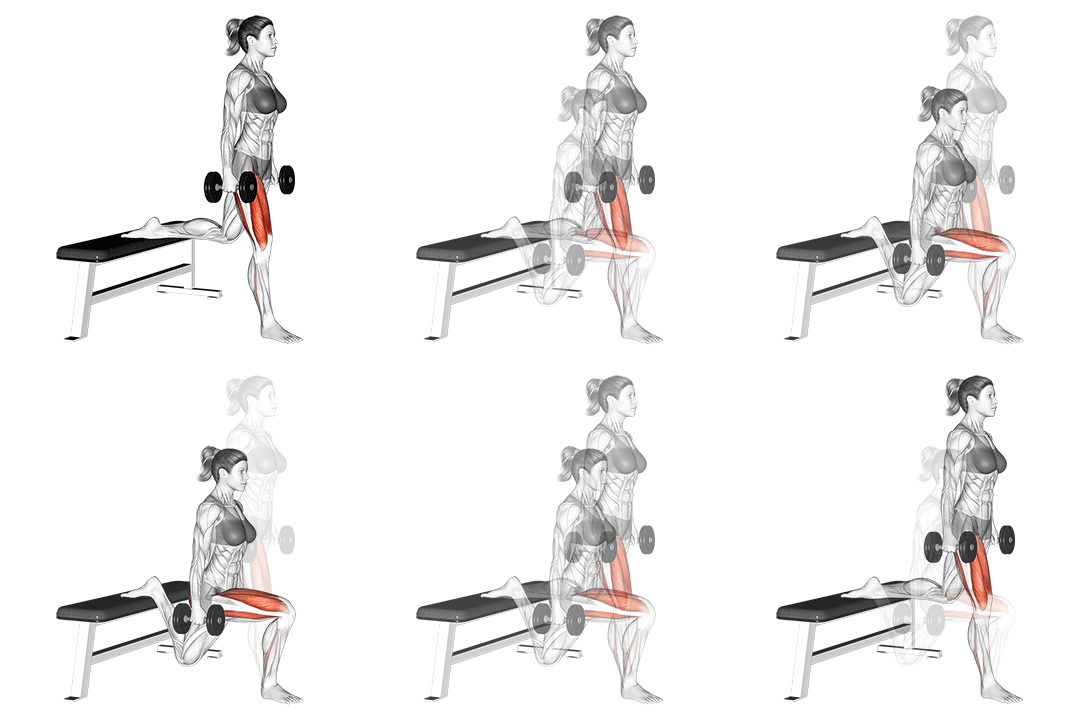
The Dumbbell Bulgarian Split Squat holds dumbbells at both sides during the rep. The bilateral hand position allows heavier total loading than the goblet variation while keeping the spine in a neutral position throughout the lift.
This is the most common loaded version for intermediate lifters. Most can work with 25 to 60 pounds per dumbbell for sets of 8 to 12 reps. The strength gains transfer well to bilateral squatting and athletic performance, which makes it valuable as either a primary leg exercise or as accessory work.
Bulgarian Jump Squat

The Bulgarian Jump Squat performs the bodyweight Bulgarian split squat with explosive vertical jumps from the bottom of each rep. The plyometric demand develops single-leg power and athletic performance.
Use jump variations for strength-power transfer rather than pure mass-building. Three sets of 4 to 8 explosive reps per leg produces meaningful single-leg power gains without the recovery cost of heavy loaded variations. Land softly and absorb the impact with bent legs rather than locking out hard.
How To Program Bulgarian Split Squats
Bulgarian split squats fit several roles in any program: primary leg exercise on bodyweight or unilateral days, accessory work after heavy bilateral squatting, or strength-power training with the jump variation. The right rep counts and frequency depend on which role they are filling.
As a primary leg exercise, run them for 3 to 4 working sets of 8 to 12 reps per leg. As accessory work after heavy bilateral squats, 3 sets of 10 to 15 reps per leg works well. As power training with the jump variation, 3 sets of 4 to 8 explosive reps per leg with full recovery between sets. Train them once or twice per week depending on overall leg volume.
For broader leg programming, see our best dumbbell leg workouts and best kettlebell leg workouts. For other unilateral lifts, see our how to grow your glutes guide.
Final Thoughts
The Bulgarian split squat is one of the most effective single-leg exercises that exists, but only when performed correctly. Get the form right first with chair-supported and bodyweight versions before adding load. The lift exposes weakness clearly: poor balance, weak glutes, tight hip flexors, and asymmetric leg strength all show up as form breakdowns at heavy loads.
Stay patient with progression. Most lifters who plateau on Bulgarian split squats fail because they jumped to heavy loaded versions before the bodyweight version felt clean. The lifters who get the most from this exercise spend the time mastering the pattern at light load and then add weight slowly over months. The legs respond to consistent, clean training over time.
Frequently Asked Questions
How heavy should I Bulgarian split squat?
Most intermediate lifters work with 25 to 60 pounds per dumbbell for sets of 8 to 12 reps. Advanced lifters use 60 to 100+ pounds per dumbbell. Pure strength training with heavier load (70 to 100 percent bodyweight per leg in goblet position) works for 4 to 6 reps. The right weight is whatever allows clean form through the full range with one or two reps in reserve.
Are Bulgarian split squats better than regular squats?
Different goals favor different exercises. Bulgarian split squats produce more direct unilateral leg loading and catch strength imbalances bilateral squats hide; regular squats allow heavier total loading and produce more pure strength gain at maximum effort. Most well-designed programs use both: bilateral squats for strength foundation, Bulgarian split squats for unilateral development and balance.
How many reps should I do?
For pure strength, 4 to 8 reps per leg with heavier loads. For muscle growth, 8 to 12 reps with moderate loads. For endurance and conditioning, 12 to 20 reps with lighter loads. Most lifters do well with 8 to 12 reps per leg as the primary working range and occasional sessions in the lower or higher rep ranges for variety.
Why do my Bulgarian split squats feel so unbalanced?
The Bulgarian split squat is one of the most balance-demanding exercises in any program because the back leg provides almost no support. Most lifters need 2 to 4 weeks of consistent practice (with chair support and bodyweight versions) before balance feels reasonable. Weak hip stabilizers (gluteus medius) also contribute to balance issues; adding banded glute work to the warm-up often helps.
Should the back foot be flat or just toes on the bench?
Either works, with slightly different effects. Toes-on-bench (foot pointing down) is the classic Bulgarian setup and produces more direct front-leg loading. Foot flat on bench (sole down) reduces some of the rear-leg stretch and can feel more comfortable for lifters with tight hip flexors. Try both and pick whichever feels stronger for your individual hip mobility.