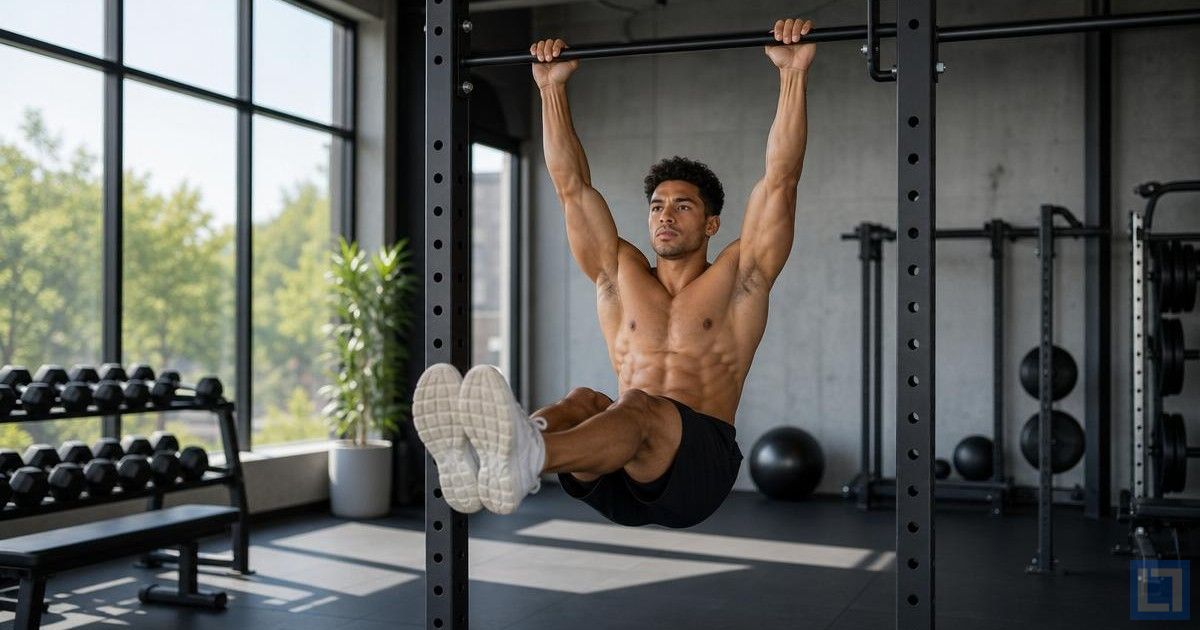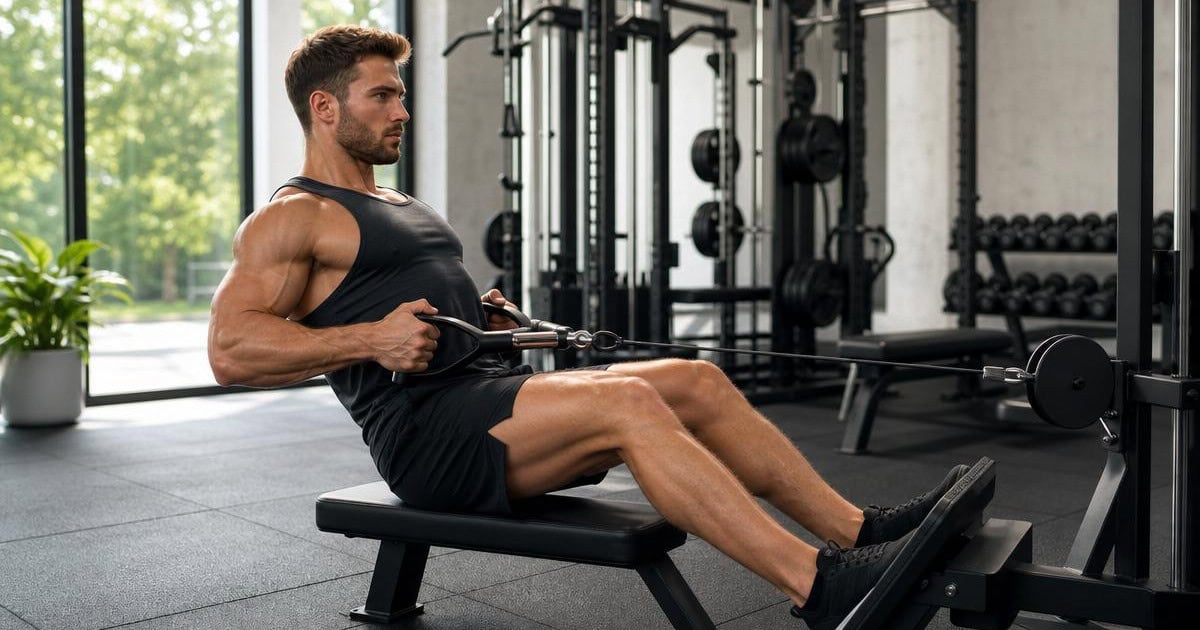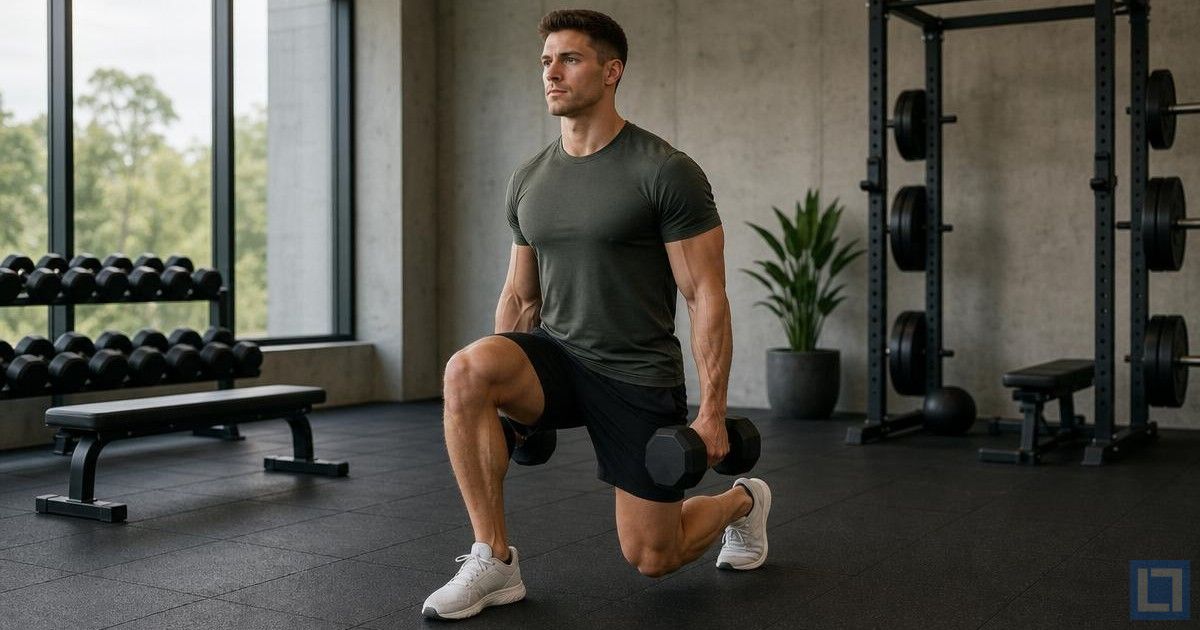
Dumbbells are uniquely effective for leg training because they unlock unilateral movement patterns that bilateral barbell work cannot replicate. The best dumbbell leg workouts use single-leg variations to catch strength imbalances, load each side independently, and train the smaller stabilizing muscles around the hip and ankle that bilateral squats hide.
Below are ten effective dumbbell leg exercises, all single-leg variations covering the squat, hinge, lunge, and isolation patterns. Together they form a complete lower-body program that produces more balanced development than barbell-only training typically delivers.
Dumbbell Decline Lying Leg Curl

The Dumbbell Decline Lying Leg Curl lies face-down on a decline bench and curls a dumbbell held between the feet up toward the glutes. The decline angle stretches the hamstrings deeper than a flat lying leg curl, which produces a stronger hypertrophy stimulus on each rep.
For lifters without a leg curl machine, the dumbbell version is the cleanest substitute. The added decline angle gives the hamstrings a longer range of motion and more loaded stretch than the flat version, which is particularly useful for hypertrophy. It is also more accessible than the Nordic hamstring curl, which requires significantly more strength to perform with bodyweight.
Lie face-down on the decline bench with a dumbbell secured between the feet. Curl the heels toward the glutes by squeezing the hamstrings. Lower under control, resisting the descent. Avoid letting the lower back arch as the heels approach the glutes.
Dumbbell Lying Leg Curl

The Dumbbell Lying Leg Curl lies face-down on a flat bench (or floor) and curls a dumbbell held between the feet up toward the glutes. It is the most accessible dumbbell hamstring isolation exercise and a strong substitute for the leg curl machine.
Most leg programs over-emphasize quad work and under-train the hamstrings. The dumbbell lying leg curl fixes that without needing any machine. The hamstrings recover quickly and respond well to higher rep ranges (12 to 20), which makes this exercise a strong finisher for legs day.
Lie face-down with a dumbbell between the feet. Curl the heels toward the glutes by squeezing the hamstrings. Lower under control. Use moderate weight; the gripping demand on the feet caps how heavy you can comfortably go.
Dumbbell Single Leg Split Squat

The Dumbbell Single Leg Split Squat (Bulgarian split squat) holds dumbbells at the sides while one foot is elevated behind on a bench, performing a stationary split squat. It is one of the most effective unilateral leg exercises in any program.
Bulgarian split squats catch strength imbalances that bilateral squats hide and produce more balanced lower-body development. They also load the front leg significantly more than a regular split squat would, which makes them a strong leg-day movement when squat racks are not available or when the lower back needs a break.
Set the rear foot on a bench at roughly knee height. Step forward far enough that the front shin can stay vertical at the bottom. Drop straight down by bending the front knee. Drive through the front heel to stand. The rear foot is just for balance; the front leg does the work.
Dumbbell Single Leg Squat

The Dumbbell Single Leg Squat (pistol squat with dumbbells) holds dumbbells while squatting on one leg with the other leg extended forward. The unilateral position demands significant strength, balance, and mobility, making it one of the more demanding leg exercises in any program.
Bodyweight pistol squats are a milestone in calisthenics. Adding dumbbells progresses the move further, loading the working leg with more total weight than bodyweight alone provides. For lifters who have mastered the bodyweight version, the dumbbell variation is the next progression for unilateral leg strength.
Hold dumbbells at the sides for counterbalance. Lift one leg straight forward and squat down on the other. Lower as far as control allows, then drive back up through the heel of the standing foot. This is an advanced movement that requires significant single-leg strength to perform cleanly.
Dumbbell Single Stiff Leg Deadlift

The Dumbbell Single Stiff Leg Deadlift performs a single-leg Romanian deadlift with a dumbbell in one or both hands. Standing on one leg, you hinge at the hip with a straight spine while the other leg lifts back as a counterweight, lowering the dumbbell toward the floor.
Single-leg deadlifts are one of the most effective ways to train the posterior chain unilaterally. The hamstring, glute, and lower back all work together to control the hinge while the standing-leg stabilizers fight to keep balance. The carryover to running, jumping, and any single-leg athletic movement is excellent.
Stand on one leg with a dumbbell in the opposite hand. Hinge at the hip while keeping a slight bend in the standing knee. The trailing leg lifts straight back as the torso lowers. Drive the hips forward to stand back up. Keep the back flat throughout.
Dumbbell Single Leg Hip Thrust

The Dumbbell Single Leg Hip Thrust positions the upper back on a bench, places a dumbbell across the hips, and thrusts the hips upward using one leg at a time. The single-leg position doubles the load on the working glute compared to a bilateral hip thrust, making it one of the most direct glute-loading exercises in any program.
Hip thrusts are one of the most effective glute mass-builders available, and the single-leg version intensifies the demand significantly. For lifters chasing visible glute development, the dumbbell single-leg hip thrust deserves regular inclusion in leg or glute-focused training.
Set the upper back across a bench with the working foot planted and the other leg extended. Hold the dumbbell across the hips. Drive the hips up by squeezing the working glute hard at the top. Lower under control. Switch sides after the set.
Dumbbell Single Leg Step Up
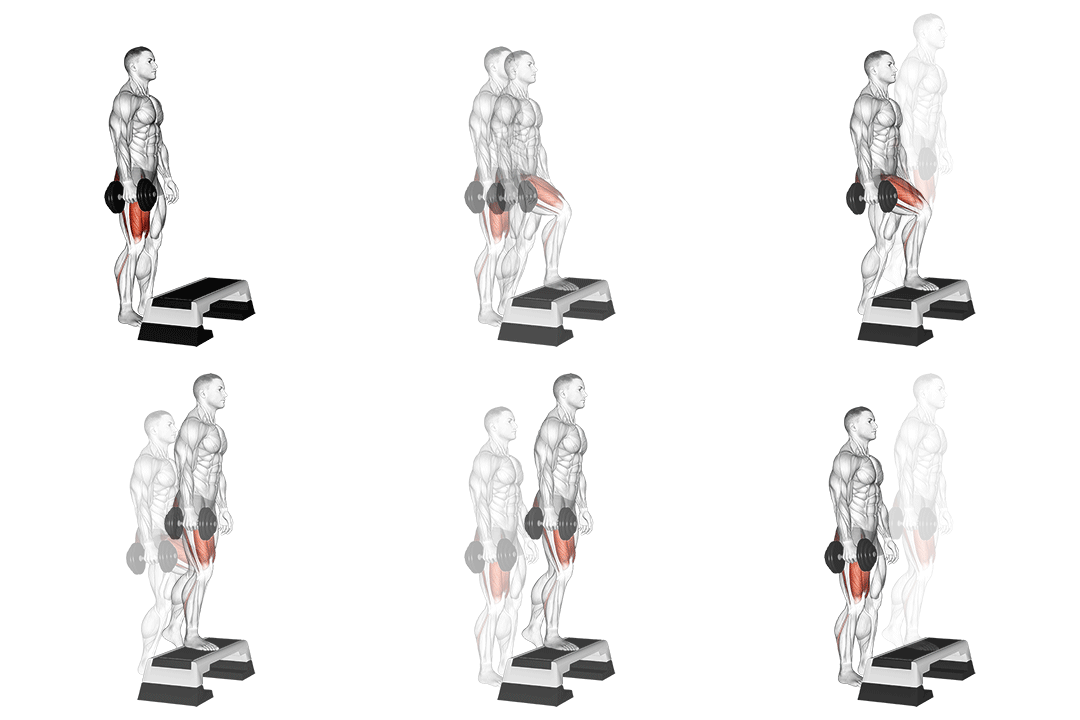
The Dumbbell Single Leg Step Up holds dumbbells at the sides and steps up onto a sturdy bench or box with one foot at a time, driving up to full extension before stepping down. It loads the quads, glutes, and hamstrings unilaterally with significant range of motion.
Step-ups are one of the simplest unilateral leg exercises and one of the most effective for general leg development. The height of the step changes the difficulty: knee-high steps are demanding for most lifters, hip-high steps are advanced. The dumbbell version adds load progression beyond the bodyweight version.
Set a sturdy bench or box. Step up with one foot driving through the heel until the working leg locks out at the top. Step down under control. Keep the chest up; avoid leaning forward as the step gets tall.
Dumbbell Single Leg Calf Raise

The Dumbbell Single Leg Calf Raise stands on one foot on the edge of a step, holds a dumbbell in the same-side hand, and raises and lowers through the calf range. Single-leg loading allows for heavier total work per calf than bilateral calf raises do.
Calves are notoriously stubborn for many lifters, and standard bilateral calf raises often fail to deliver enough load per calf to drive growth. The single-leg version doubles the load on the working calf, which produces a much stronger growth stimulus per rep.
Stand on one foot with the ball of the foot on the edge of a step. Hold a dumbbell in the same-side hand for balance and load. Lower the heel below the step level for a deep stretch, then raise up onto the toes. Squeeze hard at the top before lowering.
Dumbbell Single Leg Deadlift
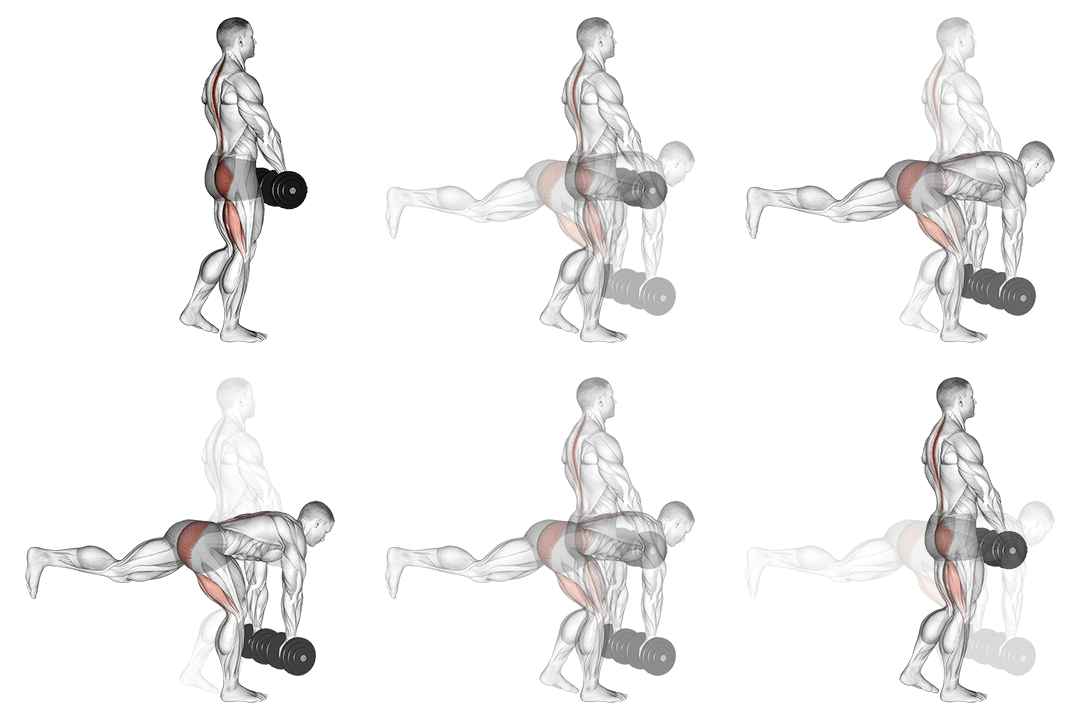
The Dumbbell Single Leg Deadlift hinges on one leg with a dumbbell in the opposite hand. The trailing leg lifts straight back as the dumbbell lowers toward the floor, stretching the hamstring and glute on the standing leg deeply before the hip drives forward to stand.
Single-leg deadlifts catch strength imbalances and train balance in addition to strength. They are also excellent for rehabbing injured legs because the unilateral loading lets you train each side at the load it can handle without the dominant side compensating.
Stand on one leg with a dumbbell in the opposite hand. Hinge at the hip with a slight standing-knee bend. The trailing leg lifts straight back; the dumbbell stays close to the front leg as it lowers. Drive the hips forward to stand. Keep the back flat throughout.
Dumbbell Single Leg Glute Bridge

The Dumbbell Single Leg Glute Bridge lies on the floor with one foot planted, holds a dumbbell across the hips, and thrusts the hips upward using one leg at a time. It is essentially a single-leg version of the glute bridge with added load.
For lifters without a bench (which the hip thrust requires), the floor-based single-leg glute bridge fills the same role. The shorter range of motion makes it slightly less effective than the hip thrust, but the unilateral loading still drives strong glute development. Include it in any home program where bench space is limited.
Lie on the floor with one foot planted and the other leg extended or knee held to the chest. Hold the dumbbell across the hips. Drive up by squeezing the working glute hard. Lower under control. Switch sides after the set.
How To Program These Workouts
A productive dumbbell leg session pulls four to five exercises from the list above, organized by movement pattern: one squat (Bulgarian split squat or pistol squat), one hinge (single-leg RDL or single stiff-leg deadlift), one accessory (step-up or hip thrust), one hamstring isolation (lying leg curl), and one calf piece (single-leg calf raise).
Train legs two to three sessions per week. Single-leg work tends to be slightly easier on the lower back than heavy bilateral squatting because the loads are smaller per side, which lets some lifters train more frequently than with barbell work. Heavier single-leg sessions still need at least one rest day between them.
For broader leg programming with bigger compound lifts, see our best dumbbell workouts collection. To browse the dumbbell exercise library, explore our dumbbell exercises collection.
Final Thoughts
The best dumbbell leg workouts deliver something barbell training cannot: balanced unilateral loading that catches strength imbalances every lifter develops without realizing it. Combined with the freedom of dumbbells (no rack required, smaller spaces work fine, easier on the lower back), they make for one of the most efficient leg training systems available.
Start with the Bulgarian split squat, the single-leg deadlift, and the dumbbell lying leg curl. Add the hip thrust and step-up as your single-leg strength improves. The pistol squat is the long-term goal that takes most lifters months or years of progression to achieve cleanly.
Frequently Asked Questions
Can dumbbells build big legs?
Yes, especially for beginners and intermediates. The challenge with dumbbell-only leg training is the load capacity: most lifters eventually reach a point where the dumbbells they own are no longer heavy enough for some movements. At that point, adding heavier dumbbells (or pairing with occasional barbell work) becomes necessary for continued growth.
Are single-leg exercises better than bilateral?
Both have value. Single-leg work catches strength imbalances and produces more balanced development, but bilateral work allows heavier total loading and trains the legs to push as a unit. The best long-term programs combine both, with single-leg work as accessory and rehab and bilateral work as the heaviest compound stimulus.
How often should I train legs with dumbbells?
Two to three times per week works for most lifters. Single-leg work recovers slightly faster than bilateral squatting because the loads are smaller per side. Most lifters do well with two heavier sessions per week and one lighter accessory session if they want extra volume.
Do I need heavy dumbbells for these exercises?
Moderately heavy dumbbells are enough for most. Bulgarian split squats, hip thrusts, and step-ups can use 30 to 60 pound dumbbells per side for most intermediate lifters. Single-leg deadlifts and pistol squats often work better with lighter loads (15 to 30 pounds per side) because balance and form are the limiters more than raw strength.
How long until I see leg results?
Strength gains show up within 2 to 4 weeks of consistent training. Visible muscle growth typically takes 8 to 12 weeks combined with adequate calorie intake. Single-leg work produces noticeable improvements in balance and stability within the first few weeks, often before any visible muscle changes appear.