The long head of the bicep is the outer portion of the muscle that produces the visible bicep peak. Strong long head development creates the high, defined bicep peak that defines an athletic-looking arm, and the visible difference between trained and untrained long heads is dramatic in any flexed-arm pose. The long head loads most heavily when the elbow is positioned behind the body or fully overhead, which is the opposite of standard standing curls (where the elbow stays at the side). The best long head bicep exercises emphasize these loading positions through incline curls, drag curls, and overhead variations.
Below are ten effective long head bicep exercises that cover incline curls (the foundational long head exercise), drag curls (which keep the elbows pulled back behind the body), overhead curls (extreme long head stretch), spider curls (alternate angle loading), hammer curls (neutral grip emphasis), and band-based variations for home training. Together they form a complete long head training program that produces visible bicep peak development over months of consistent practice.
Dumbbell Incline Curl

The Dumbbell Incline Curl sits back on an incline bench (set to 30 to 45 degrees) with arms hanging straight down at the sides and curls the dumbbells up. The incline position pulls the elbows behind the body, which puts the long head of the bicep into a stretched position that loads it heavily.
For long head bicep development, the incline curl is one of the most effective exercises that exists. The behind-the-body elbow position elongates the long head and produces stronger growth in the muscle that gives the bicep its peak appearance. Run it for 3 to 4 sets of 8 to 12 reps as the primary long head exercise.
Set an incline bench to 30 to 45 degrees. Sit back with dumbbells at the sides, palms facing forward. Curl the dumbbells up toward the shoulders by bending at the elbows. Keep the elbows behind the body throughout (do not let them swing forward). Lower under control to full extension.
Dumbbell Incline Alternate Bicep Curl

The Dumbbell Incline Alternate Bicep Curl performs the incline curl with one arm at a time rather than both simultaneously. The alternating pattern allows higher loading per arm than bilateral incline curls and catches strength imbalances.
For unilateral long head training, the alternating incline curl produces stronger per-rep stimulus than bilateral variations because each arm works independently. The pattern fits well as a variation in any well-rounded long head program. Run it for 3 sets of 8 to 12 reps per arm.
Set an incline bench to 30 to 45 degrees. Sit back with dumbbells at the sides, palms facing forward. Curl one dumbbell up toward the shoulder while the other arm stays at full extension. Lower under control. Curl the opposite arm. Continue alternating throughout the set.
Cable Overhead Curl
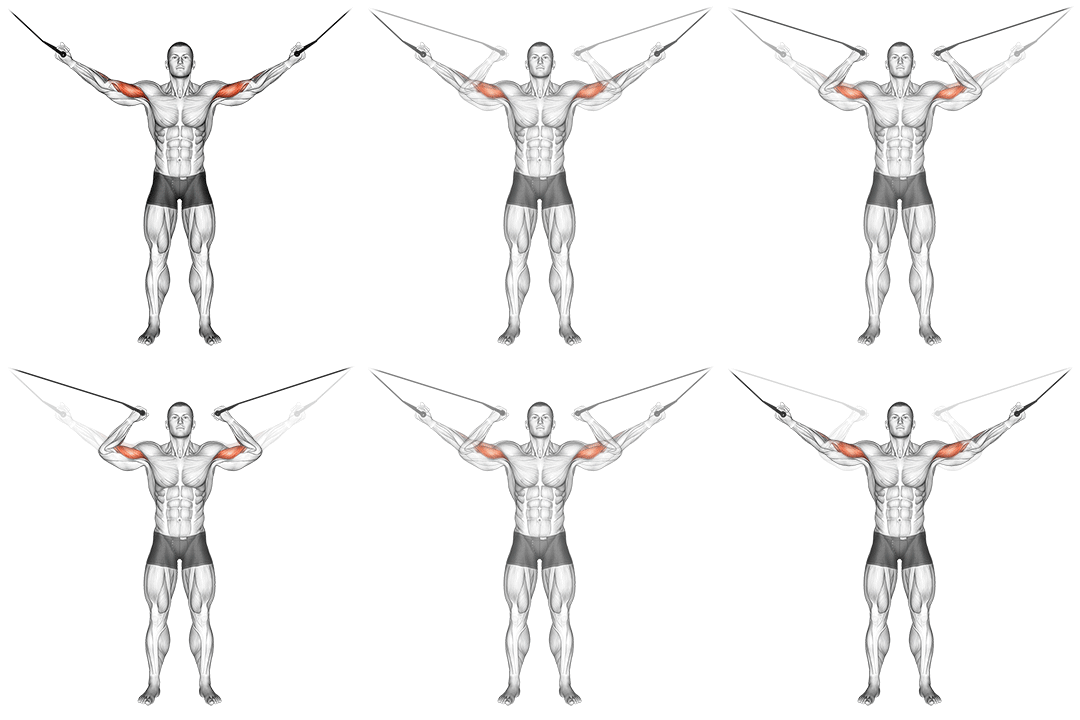
The Cable Overhead Curl uses two cable handles set at high pulleys and performs the curl with arms positioned overhead, curling the hands toward the head. The overhead position fully elongates the long head and produces extreme contraction at the top of every rep.
For peak long head contraction, the cable overhead curl is one of the most effective exercises that exists. The overhead position fully stretches the long head, and the cable provides constant tension throughout the rep. Run it for 3 sets of 10 to 12 reps as accessory work after primary heavy bicep training.
Set two cable handles to high pulleys on opposite sides of a cable station. Stand in the center facing the station with each hand gripping a handle, arms extended overhead. Curl the hands toward the head by bending at the elbows. Squeeze the biceps hard at the top. Extend back to the start.
Barbell Drag Curl

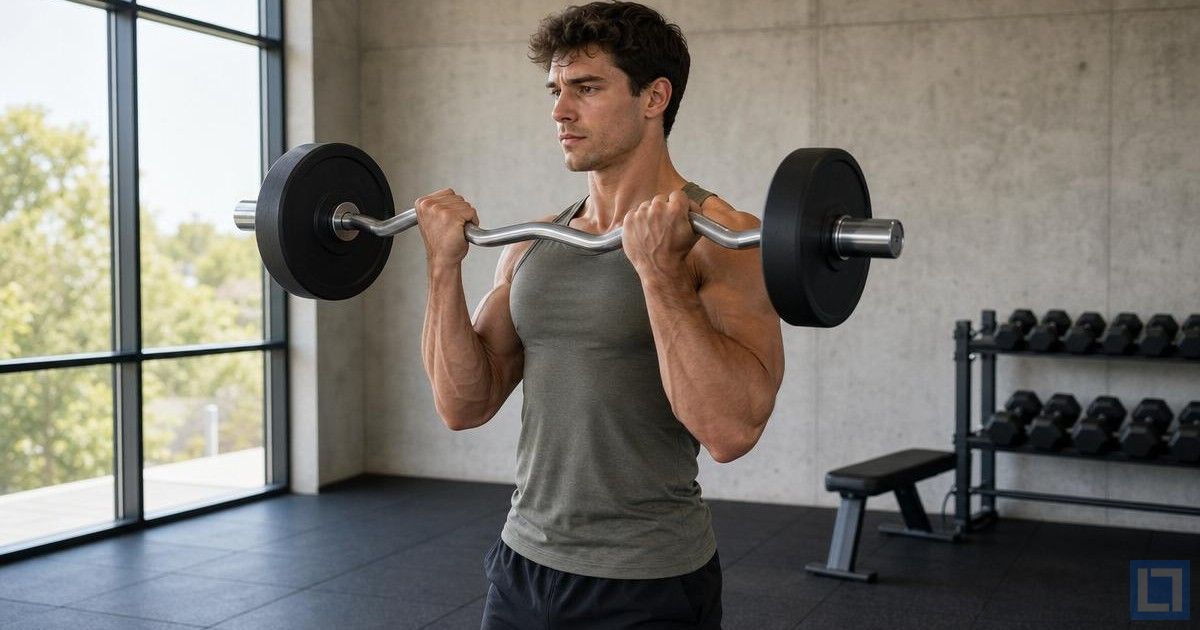
The Barbell Drag Curl holds a barbell with hands shoulder-width apart and curls the bar up while keeping the elbows pulled back behind the body. The dragging motion (the bar travels close to the body rather than out in front) produces stronger long head loading than standard barbell curls.
The drag curl is named because the bar drags up the front of the body throughout the rep. The pattern eliminates the front delt cheating that standard barbell curls produce and forces the biceps (particularly the long head) to do all the work. Run it for 3 sets of 8 to 12 reps as a variation in any well-rounded bicep program.
Stand tall with a barbell held at the front of the thighs. Curl the bar up while keeping the elbows pulled behind the body. The bar travels in a straight vertical line close to the chest rather than swinging out forward. End the curl when the bar reaches mid-chest level. Lower under control.
EZ-Bar Drag Bicep Curl

The EZ-Bar Drag Bicep Curl performs the drag curl pattern using an EZ curl bar rather than a straight barbell. The angled grip position reduces wrist strain compared to the straight bar while preserving the long head emphasis of the drag curl.
For lifters who experience wrist discomfort during standard barbell drag curls, the EZ-bar version is the appropriate alternative. The angled grip allows the wrists to rest in a more natural position while still hitting the long head heavily. Run it for 3 sets of 8 to 12 reps.
Stand tall with an EZ curl bar held at the front of the thighs, hands gripping the angled positions. Curl the bar up while keeping the elbows behind the body. The bar travels in a straight vertical line close to the chest. Lower under control.
Dumbbell Drag Bicep Curl

The Dumbbell Drag Bicep Curl performs the drag curl pattern with dumbbells rather than a barbell. The dumbbell version allows independent arm motion and slightly different loading than the barbell variations.
For variety in long head training, the dumbbell drag curl produces slightly different stimulus than barbell variations. The independent arm motion catches strength imbalances and the wrist position can be adjusted independently for each arm. Run it for 3 sets of 8 to 12 reps as a variation.
Stand tall with dumbbells held at the front of the thighs, palms facing forward. Curl the dumbbells up while keeping the elbows pulled behind the body. The dumbbells travel in a straight vertical line close to the chest. Lower under control.
Barbell Spider Curl

The Barbell Spider Curl lies face-down on an incline bench with arms hanging straight down off the top of the bench and curls a barbell up toward the chest. The face-down position pulls the elbows out in front of the body rather than behind, which still loads the long head differently than incline curls.
Spider curls produce strong bicep development through a different angle than incline curls. The hanging-arm position eliminates body sway entirely and forces the biceps to do all the work. Spider curls hit the short head of the bicep more than long head, but pair well with incline curls for complete bicep development. Run it for 3 sets of 10 to 12 reps.
Set an incline bench to 30 to 45 degrees. Lie face-down with the chest supported on the bench and arms hanging straight down off the top edge. Hold a barbell with palms facing forward. Curl the bar up toward the chest by bending at the elbows. Squeeze the biceps hard at the top. Lower under control.
Dumbbell Hammer Curl

The Dumbbell Hammer Curl holds dumbbells with palms facing each other (neutral grip) and curls them up toward the shoulders. The neutral grip emphasizes the brachialis and long head of the bicep along with the brachioradialis in the forearm.
For complete arm development, hammer curls complement standard bicep curls by adding loading on the brachialis (which sits underneath the bicep and contributes to overall arm thickness). The exercise also hits the long head heavily through the neutral grip position. Run it for 3 sets of 8 to 12 reps.
Stand tall with dumbbells held at the sides, palms facing each other (neutral grip). Curl the dumbbells up toward the shoulders by bending at the elbows. Keep the palms facing each other throughout the rep. Lower under control.
Band Cross Chest Biceps Curl

The Band Cross Chest Biceps Curl uses a resistance band anchored at the side and performs a curl that crosses the body, pulling the band hand toward the opposite shoulder. The cross-body motion hits the long head heavily through the angled curl pattern.
For at-home long head training, the band cross-chest curl produces unique stimulus that few other home exercises can match. The cross-body angle changes the loading on the long head and adds slight rotational demand. Run it for 3 sets of 10 to 12 reps per arm as accessory work.
Anchor a resistance band at hip height on one side. Stand sideways to the anchor with the working arm furthest from the anchor. Hold the band end with that hand. Curl the hand across the body toward the opposite shoulder, fighting the band tension. Lower under control. Switch sides.
Band One Arm Overhead Biceps Curl

The Band One Arm Overhead Biceps Curl anchors a resistance band overhead and performs a curl with the arm starting fully extended overhead and curling toward the head. The overhead position fully elongates the long head and produces extreme stretch loading.
For peak long head training at home, the band overhead curl is the most direct equivalent to gym-based cable overhead curls. The overhead stretch position produces stronger long head activation than standard standing curls. Run it for 3 sets of 10 to 12 reps per arm as a variation in any home program.
Anchor a resistance band overhead at a high anchor point. Stand facing the anchor with one hand gripping the band end, arm extended overhead. Curl the hand toward the head by bending at the elbow. Squeeze the bicep hard. Extend back to the overhead position. Switch arms.
How To Program These Workouts
A productive long head session pulls four to six exercises from the list above. A balanced session includes one heavy incline curl variation (incline curl or alternate incline curl), one drag curl variation (barbell or EZ-bar drag curl), one overhead exercise (cable overhead curl or band overhead curl), and one accessory exercise (hammer curl, spider curl, or cross-chest curl). Run primary work for 3 to 4 sets of 8 to 12 reps; accessory work for 3 sets of 10 to 12 reps.
Train long head 1 to 2 times per week as part of broader bicep training. The long head recovers within 48 to 72 hours of moderate training. Most well-designed bicep programs include dedicated long head work in nearly every bicep session, which means 8 to 12 weekly sets of incline-curl-style exercises specifically. The standard standing curls that most lifters default to emphasize the short head; long head work requires deliberate exercise selection.
For broader bicep programming, see our best dumbbell bicep workouts and how to build bigger biceps. For at-home arm work, see our best resistance band arm workouts.
Final Thoughts
The best long head bicep exercises produce visible bicep peak development through dedicated training that standard standing curls cannot match. The combination of incline curls, drag curls, overhead variations, and complementary hammer and spider curls covers every major angle for long head development. For lifters who want the high, defined bicep peak that defines a strong-looking arm, dedicated long head training is one of the most effective options available.
Stay focused on elbow position. The most common long head training mistake is letting the elbows drift forward during curls, which shifts loading from the long head to the short head and reduces the targeted stimulus. The fix: keep the elbows pulled back behind the body during incline and drag curls. The position should feel slightly uncomfortable initially because the long head stretches significantly; this stretch is the loading position that drives long head growth. Lifters who maintain strict elbow position produce stronger long head development than those who let the elbows drift forward.
Frequently Asked Questions
What’s the difference between long head and short head?
The long head is the outer portion of the bicep (away from the body) and produces the visible bicep peak. The short head is the inner portion (toward the body) and contributes more to overall bicep thickness from the front view. The two heads load differently: long head loads heavier when the elbow is behind the body (incline curls) or overhead (cable overhead curls); short head loads heavier when the elbow is in front of the body (preacher curls, spider curls).
How do I get a higher bicep peak?
The bicep peak comes from long head development. Standard standing curls primarily develop the short head; getting a higher peak requires dedicated long head training through incline curls, drag curls, overhead variations, and hammer curls. Most lifters with low bicep peaks have under-developed long heads relative to short heads; 12 to 16 weeks of dedicated long head work usually produces visible peak improvements.
How often should I train long head?
1 to 2 times per week works for most lifters as part of broader bicep training. The long head recovers within 48 to 72 hours of moderate training. Most successful programs include 8 to 12 weekly sets of long head-specific work split across the bicep training sessions.
What’s the best long head exercise?
The dumbbell incline curl is the most effective single long head exercise for most lifters. The behind-the-body elbow position fully elongates the long head and produces stronger growth per rep than standing curls. The cable overhead curl comes second for the maximum-stretch position. Most well-designed programs use both as primary long head exercises.
Why do my biceps not have a peak?
Two main reasons: under-developed long head and genetics. Most under-peaked biceps come from training only standing curls (which emphasize the short head) and skipping long head-specific work. Add 8 to 12 weekly sets of incline curls, drag curls, or overhead curls and most lifters see visible peak improvement within 12 to 16 weeks. Some lifters also have genetic factors (bicep insertion points) that limit peak appearance regardless of training; for these lifters, focusing on overall bicep size produces better visual results than chasing the peak shape.