Bigger biceps are one of the most universal physique goals in lifting, partly because they are visible in nearly every shirt and partly because they grow quickly when trained correctly. The biceps respond well to direct work, recover fast, and have multiple distinct heads that respond to different exercise angles. Despite all of that, plenty of lifters spin their wheels on bicep training for years without seeing meaningful arm growth.
This guide covers what actually works: the heavy compound and curl variations that drive most bicep growth, how to hit the long head, short head, and brachialis for complete arm development, the volume and frequency that produces results, and the common mistakes that quietly stall progress for months at a time.
What You’re Actually Building
The biceps brachii is a two-headed muscle running from the shoulder blade to the forearm. The two heads (long head and short head) start at different points on the shoulder blade but both insert into the same tendon at the forearm. The long head sits on the outside of the arm and contributes to the “bicep peak” most lifters chase; the short head sits on the inside of the arm and contributes to overall bicep thickness when viewed from the front.
Underneath the biceps sits the brachialis, a muscle that lifters often forget exists. The brachialis is the actual “pusher” that lifts the biceps higher when developed, creating a thicker, more visible upper arm. Building visible biceps means training all three: the long head for the peak, the short head for thickness, and the brachialis for the push that makes the whole arm look bigger.
For more on the muscle structure itself, browse our biceps exercise collection.
The Heavy Compounds That Drive Bicep Growth
Direct curls dominate any serious bicep program, but compound pulling exercises drive significant bicep growth on their own and create the foundational arm strength that direct curls build on top of. Pick one heavy pulling compound and one foundational curl as the anchors of your bicep program and progress them consistently.
Barbell Curl

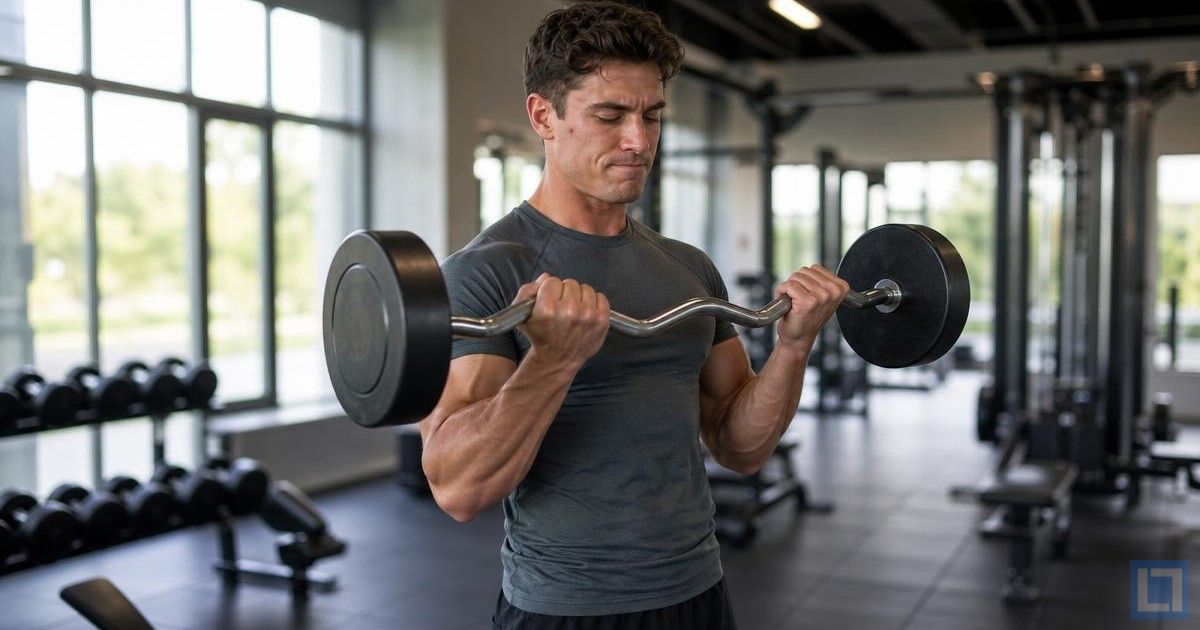
The Barbell Curl is the single most effective bicep mass-builder. Standing with a barbell in both hands at the thighs, you curl the bar up toward the shoulders. The barbell allows heavier loading than dumbbells and produces a strong contraction at the top, which is exactly what the biceps respond to for growth.
Run the barbell curl as the heaviest direct bicep movement in any program. Keep the elbows pinned to the sides through the entire rep. Avoid swinging the bar up using body momentum. Lower under control to full extension between reps. The barbell curl handles strength loading; the dumbbell variations handle the angle work.
Pull Up

The Pull Up is the king of vertical pulling and one of the most underrated bicep mass-builders in any program. Hanging from a bar with an underhand or neutral grip, you pull the body up until the chin clears the bar. The biceps work as the secondary mover behind the lats, but the load (your full bodyweight) is significant enough to drive serious growth.
Most lifters underestimate how much the pull-up contributes to arm size. The chin-up variation (palms-toward-you grip) shifts even more emphasis to the biceps. Adding weighted pull-ups to a program produces visible arm growth on top of the back development they already drive.
Dumbbell Biceps Curl

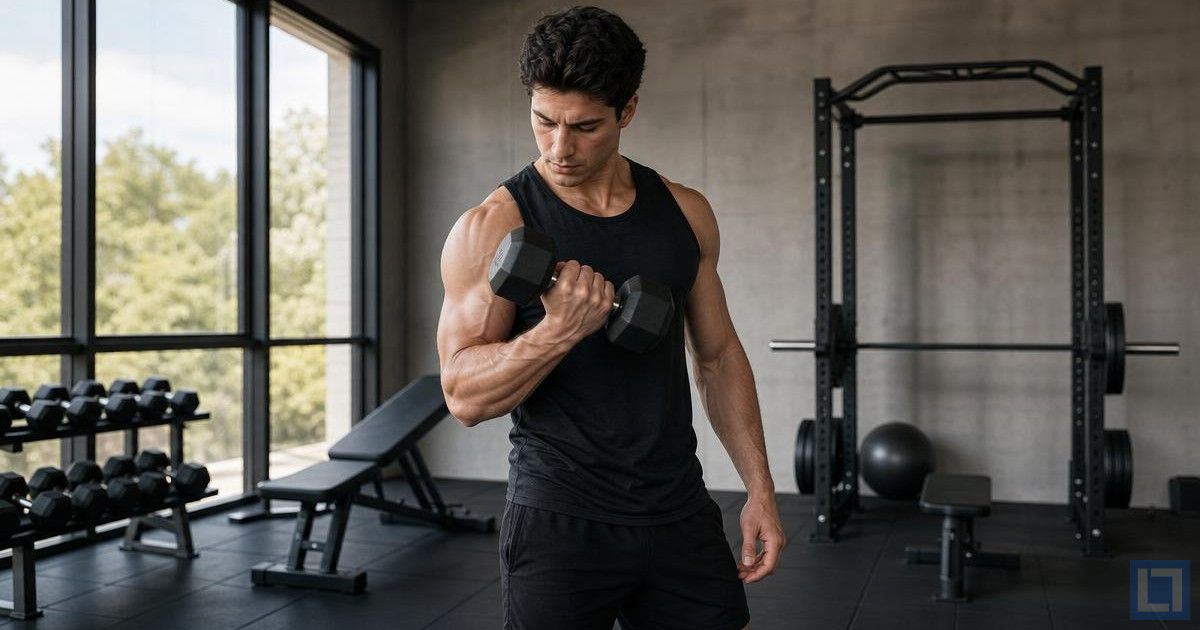
The Dumbbell Biceps Curl performs a curl with dumbbells instead of a barbell. The independent dumbbells allow each arm to work on its own, which catches strength imbalances bilateral barbell curls hide and produces more even arm development.
Dumbbell curls also allow wrist rotation through the rep (supinating from a neutral grip at the bottom to a fully supinated grip at the top), which adds a stronger contraction than the fixed grip of a barbell. Run them as the second curl variation after barbell curls or as the heavier curl on lighter days.
Hitting Every Part of the Arm
Compound pulling and basic curls build the bulk of the biceps, but specialized variations fill in specific regions and drive the kind of complete arm development most lifters want. The exercises below target the long head, short head, and brachialis specifically.
Dumbbell Hammer Curl

The Dumbbell Hammer Curl uses a neutral grip (palms facing each other) instead of a supinated curl grip. The neutral grip emphasizes the brachialis and the brachioradialis (upper forearm), building visible arm thickness that standard curls cannot match.
Hammer curls are the most efficient way to train the brachialis directly. Most lifters chase bicep peak with curl variations but ignore the brachialis, which is what actually pushes the biceps up and creates a thicker overall arm. Include hammer curls in any program where total arm size is the goal.
Dumbbell Incline Alternate Bicep Curl

The Dumbbell Incline Alternate Bicep Curl performs alternating curls while reclined on an incline bench. The incline position pulls the elbows behind the body, which lengthens the bicep long head and produces a much deeper stretch than standing curls allow.
Stretched-position curl variations like the incline curl are some of the most effective for long-head development. The deep stretch under load is one of the strongest signals the biceps respond to for growth. For lifters chasing the bicep peak specifically, the incline curl belongs in regular rotation.
EZ Barbell Preacher Curl

The EZ Barbell Preacher Curl performs a curl with the upper arms pinned against a preacher bench. The preacher position takes the shoulder out of the equation completely and forces the biceps to do all the work, with no body sway or momentum possible.
The preacher angle pushes the elbows forward, which emphasizes the bicep short head and trains the lower portion of the bicep through a strict range of motion. The EZ bar grip is more wrist-friendly than a straight bar, which lets you load the curl heavier without joint stress. Run preacher curls as the third curl variation in a bicep-focused day.
How Much Volume Builds Bigger Biceps
Most lifters can grow their biceps meaningfully on 8 to 16 working sets per week, with 10 to 12 sets being a strong middle target. Less than 8 sets is rarely enough to drive visible growth past the beginner stage; more than 16 sets becomes harder to recover from than it is worth, particularly because the biceps also receive significant indirect work during back training.
Spread that volume across two to three sessions per week rather than cramming it all into one bicep day. The biceps recover within 24 to 48 hours of moderate training, so frequent training produces faster growth than infrequent high-volume sessions. A typical setup hits biceps directly twice per week with 5 to 8 sets each session.
Rep ranges should vary across the program. Heavy curl work (barbell curls, weighted chin-ups) responds well to 6 to 10 reps for both strength and size. Moderate-load curls (dumbbell, hammer, preacher) work best in the 8 to 12 rep range. Specialized stretch-position work (incline curls) responds particularly well to higher reps (12 to 15) where contraction quality matters more than maximum load.
The Mistakes That Stall Bicep Growth
Most lifters who fail to grow their biceps are making one or more of the same handful of mistakes. The list below covers the issues that come up most often.
Cheating with body momentum is the most common mistake. Swinging the torso to use hip drive and shoulder swing on every curl turns a bicep exercise into a back exercise. The biceps barely work because the load is being moved by other muscles. Lower the weight to whatever you can curl strictly, with the elbows pinned to the sides and no body sway through the rep.
Skipping the brachialis is the second most common mistake. Almost every bicep program emphasizes the bicep peak (long head) and ignores the underlying brachialis. The result is a bicep that looks reasonably developed from one angle but lacks the thickness that comes from a fully developed brachialis underneath. Hammer curls and reverse curls fix this gap.
Insufficient stretch is the third mistake. The biceps grow fastest when stretched fully under load. Cutting curls short at the bottom (not letting the bar fully extend) reduces the growth stimulus significantly. Lower the load if needed to reach a full stretch on every rep, and add stretch-position variations like incline curls to ensure the biceps see deep stretch loading regularly.
Ignoring back training is the fourth mistake. The biceps are the secondary mover in nearly every back exercise, and lifters who skip pull-ups, chin-ups, and rows miss out on a huge chunk of indirect bicep volume. A complete bicep program runs heavy back training alongside direct arm work; the two combine to produce more growth than either alone.
Putting It All Together
A productive bicep program runs the heavy compounds first when fresh and the isolation work after. A typical bicep-focused day might look like this: warm up with light dumbbell curls for 2 sets of 15, then run barbell curls for 4 working sets of 8, dumbbell curls for 3 sets of 10, hammer curls for 3 sets of 12, and incline curls for 2 sets of 15. Total volume across the session: 12 working sets.
For session-level bicep programming, see our best dumbbell bicep workouts and how to do a pull up guides.
Final Thoughts
Building bigger biceps is straightforward but requires consistency. Pick one heavy pulling compound (pull-ups or chin-ups), one foundational curl (barbell or dumbbell), and one or two specialized angle exercises (hammer, incline, or preacher curl). Train them consistently with progressive overload over months. Pay attention to the small things: full range of motion, no body sway, deep stretches, and indirect bicep volume from back training.
Most lifters fail not because their program failed but because they got bored and switched it constantly. The lifters who end up with the best arm development are the ones who stuck with the same handful of curl variations for years and slowly got stronger on each one. There is no shortcut around that.
Frequently Asked Questions
How long does it take to build noticeably bigger biceps?
Most lifters see meaningful bicep growth within 8 to 12 weeks of consistent training combined with adequate calories and protein. Visible changes show up earlier (within 4 to 6 weeks) for beginners. Advanced lifters take longer because they have less room left for novel growth, often 6 to 12 months for a visible inch of arm size.
How often should I train biceps?
Two to three times per week works for most lifters. The biceps recover within 24 to 48 hours of moderate training, so spacing direct work twice per week produces faster growth than a single high-volume session. Indirect bicep work from back training adds to that frequency without requiring separate recovery time.
Barbell or dumbbell curls for bigger biceps?
Both, with the barbell curl as the heavier strength compound and dumbbell variations handling the angle and unilateral work. The barbell allows heavier loading; the dumbbells allow wrist rotation and independent arm work that produces more balanced development. The best programs use both rather than choosing.
Do I need to do hammer curls?
Yes, if you want a complete arm. Standard curls work the biceps but barely touch the brachialis underneath. Without dedicated brachialis work (hammer curls or reverse curls), the brachialis stays under-developed even as the biceps grow, which limits how thick the upper arm can look. Hammer curls are the simplest fix.
Are pull-ups really as effective as direct bicep work?
For total arm growth, pull-ups (especially chin-ups with an underhand grip) are essentially as effective as the barbell curl. The bicep is the secondary mover in pulling exercises, but the load (full bodyweight or weighted bodyweight) is significant enough to drive serious bicep growth. Many lifters get more arm development from heavy chin-up training than from any single curl variation.