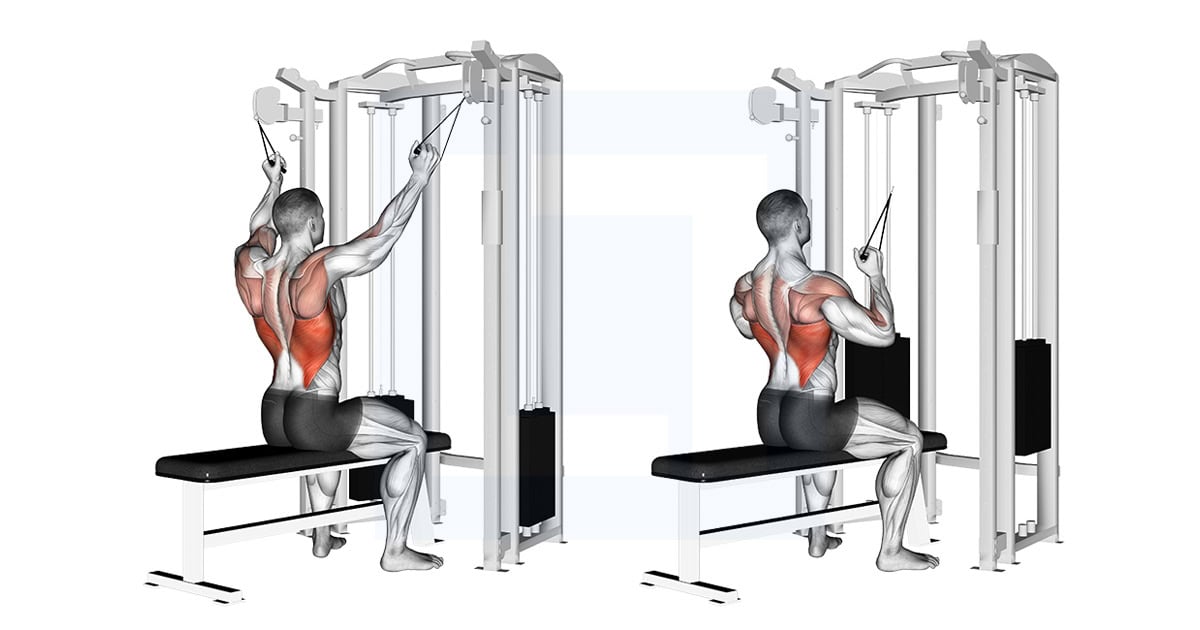
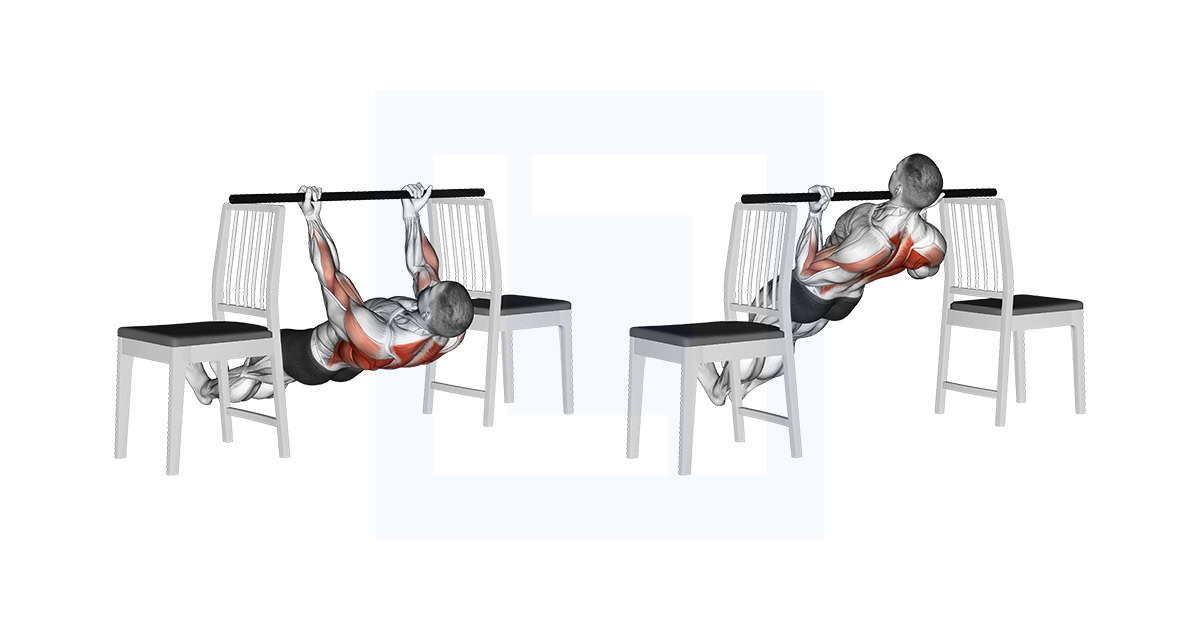
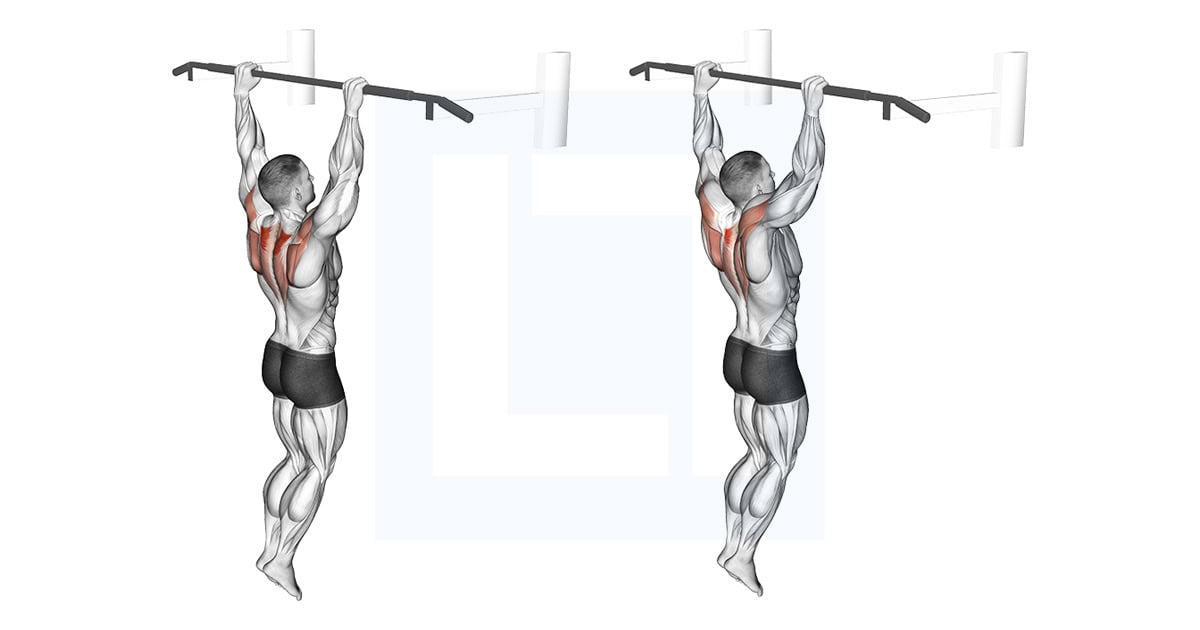
Pull Up
Description
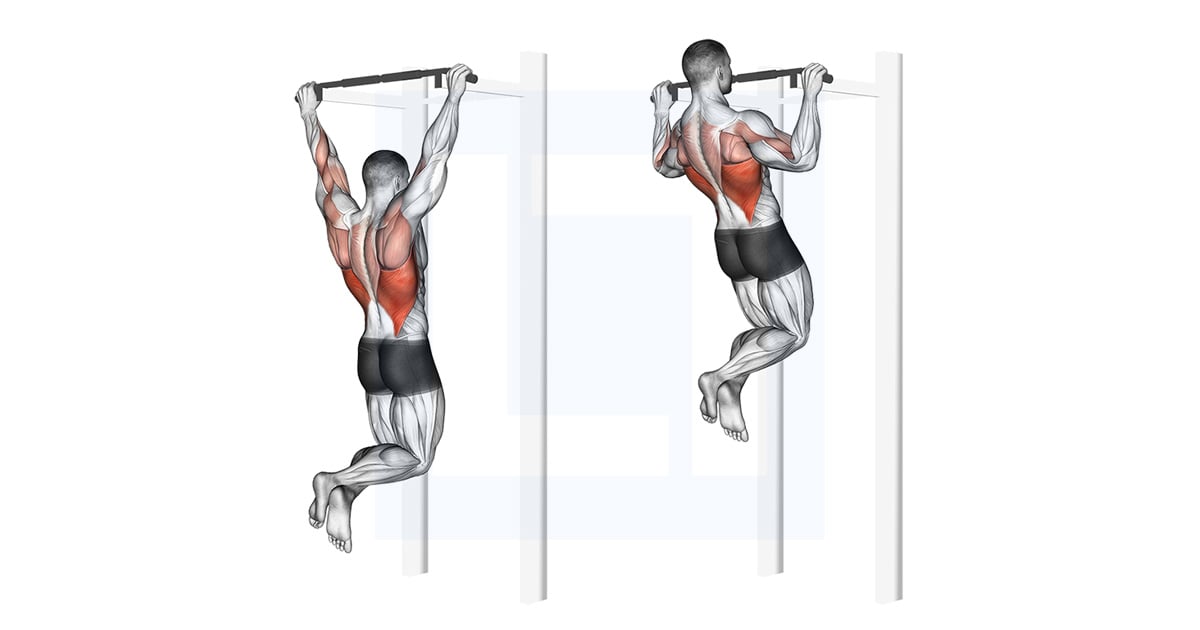
The pull-up is a vertical pulling exercise where you hang from an overhead bar with an overhand grip and pull your body up until your chin clears the bar. It is one of the most effective bodyweight movements for developing the lats, upper back, and biceps, and it remains a benchmark of upper-body strength.
Muscle Group
Equipment Required
Pull Up Instructions
- Reach up and grip a sturdy pull-up bar with an overhand grip, hands slightly wider than shoulder-width apart. Wrap your thumbs around the bar.
- Hang from the bar with arms fully extended and feet off the floor. Cross your ankles behind you for stability.
- Set your starting position by pulling your shoulder blades down and back, away from your ears. Your chest should rise slightly.
- Drive your elbows down and back toward your hips to pull your chest up to the bar. Avoid kipping or swinging.
- Continue until your chin is clearly over the bar. Pause briefly at the top with your shoulder blades pinned together.
- Lower yourself under control to a full hang with arms completely straight. Do not drop down; the eccentric builds strength.
- Repeat for the desired number of reps. Quality reps with a full range of motion are far more valuable than partial-rep volume.
Pull Up Form & Visual

Pull Up Benefits
- Builds size and strength in the lats, upper back, and biceps
- Improves grip strength and shoulder stability
- Bodyweight movement that transfers to climbing, gymnastics, and athletics
- One of the strongest predictors of upper-body strength relative to bodyweight
- Can be progressed indefinitely by adding weight
Pull Up Muscles Worked
- Latissimus dorsi
- Trapezius (lower and middle fibers)
- Rhomboids
- Biceps brachii
- Brachialis and brachioradialis
- Forearms and grip
- Core (stabilizers)
Pull Up Variations & Alternatives
- Chin-Up
- Wide-Grip Pull-Up
- Neutral-Grip Pull-Up
- Commando Pull-Up
- Assisted Pull-Up
- Weighted Pull-Up
- Negative (Eccentric-Only) Pull-Up
- L-Sit Pull-Up
- Archer Pull-up
- Suspender Pull Up