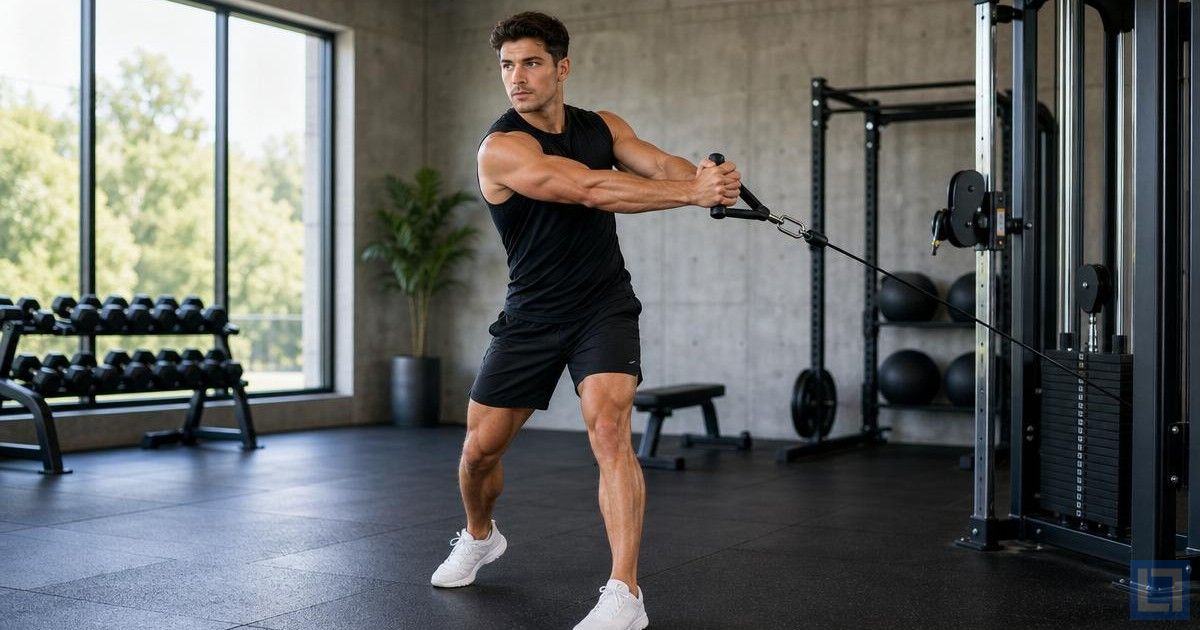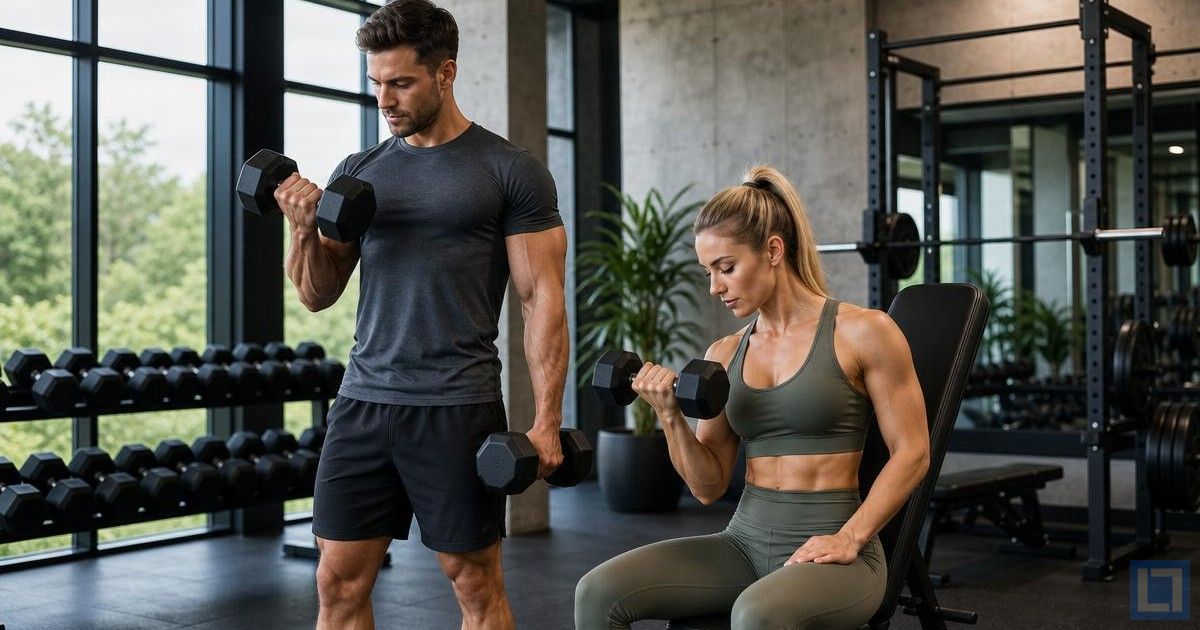
Dumbbells are the gold standard for bicep training. The best dumbbell bicep workouts let each arm work independently, allow natural wrist supination, and unlock a wide variety of curl variations that hit the biceps from every angle. The result is more complete arm development than barbell or machine work alone can deliver.
Below are ten effective dumbbell bicep exercises ranging from foundational standard curls to specialized variations targeting the long head, the brachialis, and the bicep peak. For broader arm-day programming, see our best bicep workouts and best dumbbell arm workouts guides. To browse the full equipment library, explore our dumbbell exercises collection.
Dumbbell Biceps Curl

The Dumbbell Biceps Curl is the most common bicep exercise in all of strength training, and for good reason. Standing with a dumbbell in each hand, you curl the dumbbells up to shoulder level by bending only at the elbows. The independent dumbbells allow natural wrist supination and a longer range of motion than a barbell, making this the foundational bicep mass builder.
No bicep program is complete without standard curls. The dumbbell version is generally preferred over the barbell version because each arm has to do its own work, eliminating the strength imbalances that can develop when both arms move together. The supination at the top also gives the biceps a stronger contraction.
Curl with the elbows pinned to the sides. Avoid swinging or using momentum. The descent matters as much as the ascent. Lower the weight under control rather than letting it drop, which is where most of the growth stimulus happens.
Dumbbell Waiter Biceps Curl

The Dumbbell Waiter Biceps Curl holds a single dumbbell horizontally with both hands cupping the head of the dumbbell, palms up. The waiter-tray grip locks the wrists and forces the biceps to do all the lifting work. It is one of the strictest curl variations available.
Wrist involvement is one of the most common ways the biceps get cheated on standard curls. The waiter grip removes that completely, which is why the loads will feel heavier than they look. Use this variation when you want to make sure the biceps are doing the work without any contribution from the forearms or wrists.
Hold the dumbbell tight between both palms. Curl using only the biceps; the wrists do not move at any point in the rep. Light weight goes a long way here.
Dumbbell Biceps Curl Reverse
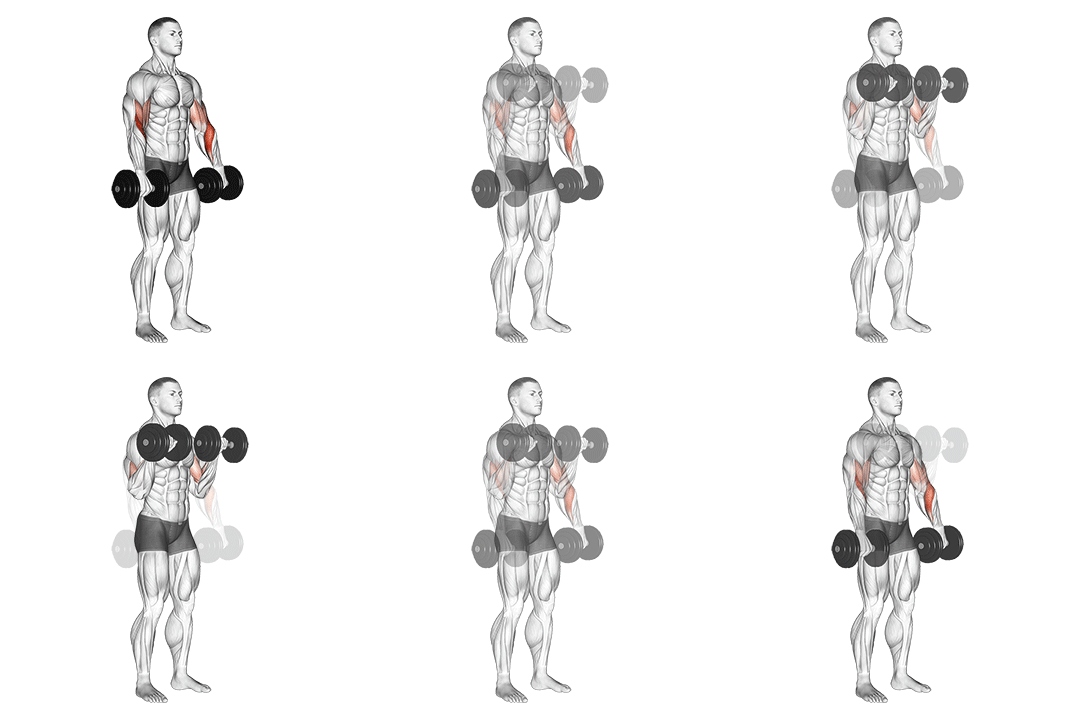
The Dumbbell Reverse Curl is a forearm and brachialis exercise performed with dumbbells held in an overhand grip, palms facing the body throughout the curl. The reversed grip shifts emphasis from the biceps brachii to the brachialis and forearm extensors, building visible arm thickness.
The brachialis is the muscle underneath the biceps that, when developed, pushes the biceps up and creates a thicker overall arm. Reverse curls are one of the few exercises that hit it directly. They also build the often-neglected forearm extensors, which round out the look of the arm from every angle.
Use lighter weights than you would on standard curls. The pronated grip is mechanically weaker, so what feels like too light a load on standard curls will feel right on reverse curls. Curl strictly without letting the wrists curl back to assist.
Dumbbell Incline Alternate Bicep Curl

The Dumbbell Incline Alternate Bicep Curl is performed lying back on an incline bench while curling the dumbbells one arm at a time. The incline angle stretches the biceps fully at the bottom while the alternating pattern doubles the time under tension on each side. It is a strong choice for bicep hypertrophy.
The incline position pulls the elbows behind the body, which puts the long head of the biceps under a deeper stretch than any standing curl variation. Stretched-position work has been shown in research to be particularly effective for muscle growth. Incline curls take direct advantage of that.
Set the bench between 45 and 60 degrees. Let the arms hang fully at the bottom for a complete stretch before curling. Alternate arms one rep at a time rather than curling both together, since the alternating pattern lets the working arm produce more force per rep.
Dumbbell Drag Bicep Curl

The Dumbbell Drag Bicep Curl, sometimes just called the drag curl, pulls the dumbbells up along the sides of the body while keeping the elbows back behind the trunk. The dragging motion isolates the long head of the biceps and minimizes front delt involvement, making it a strong choice for bicep peak development.
Standard curls let the front delts contribute to the rep by pulling the elbows forward at the top. Drag curls eliminate that by forcing the elbows back, which keeps tension squarely on the biceps. The trade-off is a shorter range of motion, but the bicep involvement is purer.
Drag the dumbbells straight up the body rather than curling them out and up. The elbows go behind the back as the bell rises rather than coming forward. Use less weight than on standard curls because the leverage is significantly worse here.
Dumbbell Biceps Curl Squat
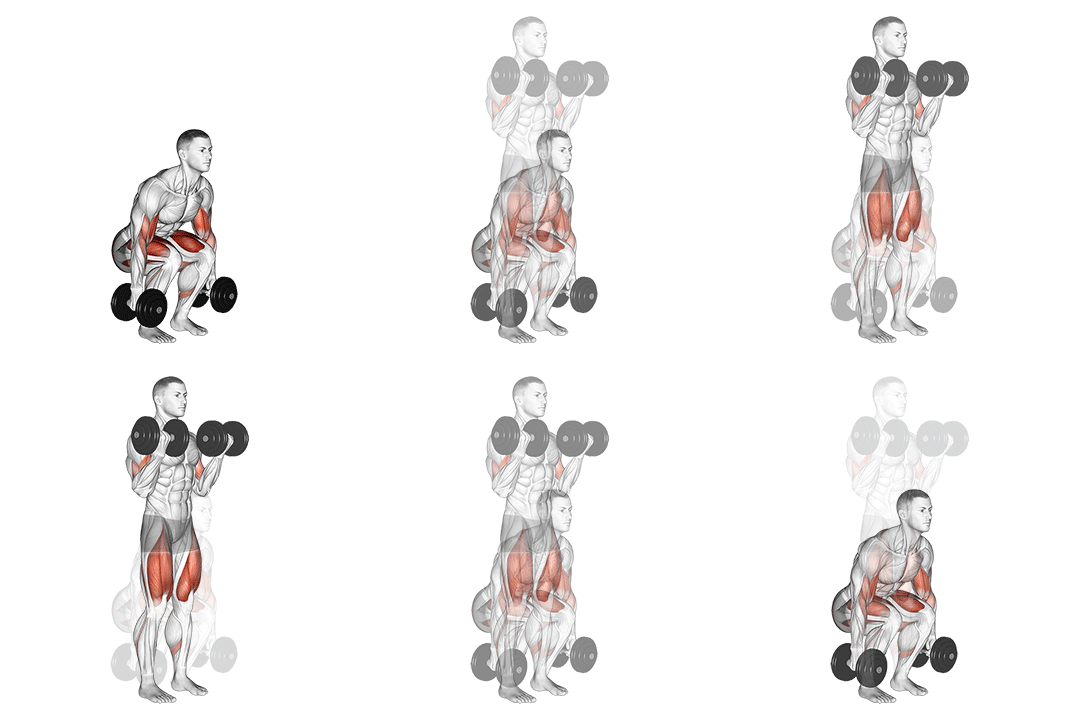
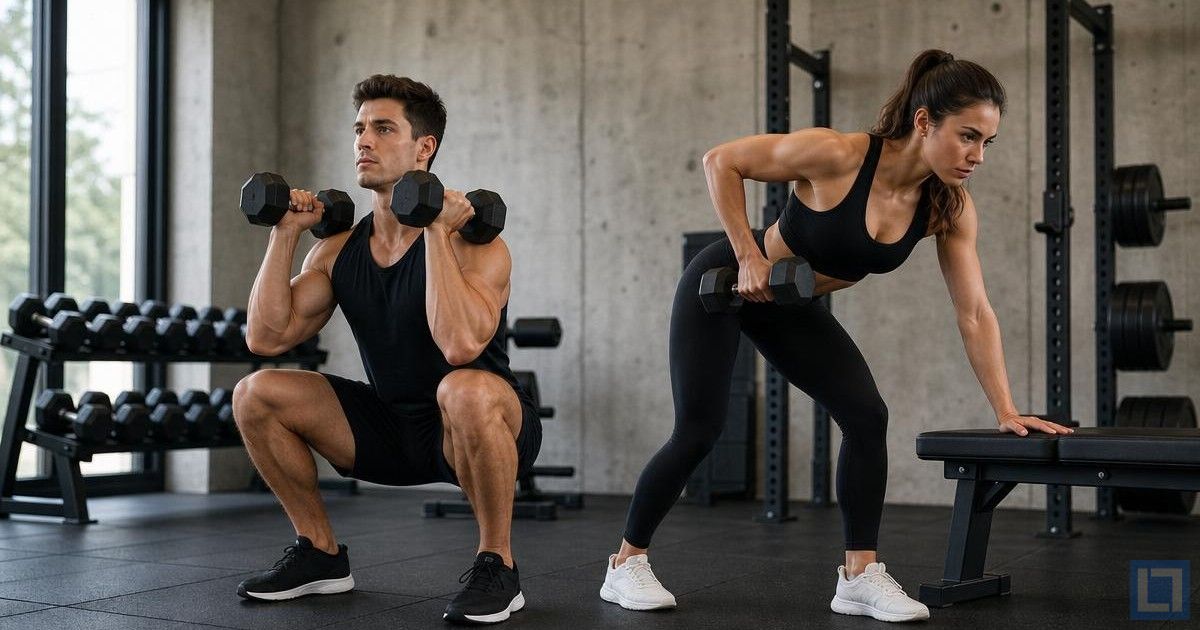
The Dumbbell Bicep Curl Squat is a compound combination exercise where you perform a bicep curl at the top of a squat. Holding dumbbells at your sides, you squat down, and as you stand, curl the dumbbells to your shoulders. It is a time-efficient full-body exercise that builds arms, legs, and conditioning at once.
The combo move works well at the end of a workout when you want to drive heart rate and finish off the arms simultaneously. It is not a strength-priority bicep exercise, since the load is capped at whatever you can curl. But as a conditioning piece with a bicep stimulus attached, it is excellent.
Lead with the squat, finish with the curl. Time it so the curl peaks just as you reach the top of the squat. Use moderate weights; the squat will be the easy part for most lifters but the cumulative fatigue ramps fast.
Dumbbell Standing Biceps Curl To Shoulder Press

The Dumbbell Standing Biceps Curl To Shoulder Press combines a bicep curl with an overhead press performed standing. After curling the dumbbells to the shoulders, you press them overhead. The standing position adds core and lower back engagement to the combo movement.
Like other curl-to-press combos, this exercise is a strong choice when you want efficiency. You get bicep work, shoulder work, and core stability training in one rep. The main trade-off is that the load gets limited by the press, since shoulders are typically the weaker link.
Curl with strict bicep form, then press cleanly overhead. The two phases should be distinct rather than blended together. Lower under control on the way back down rather than dropping the weight after each press.
Dumbbell Seated Biceps Curl To Shoulder Press

The Dumbbell Seated Biceps Curl To Shoulder Press combines two movements into one combo. After completing a bicep curl, you transition into an overhead press without lowering the weight. The combo trains biceps, shoulders, and triceps in one efficient sequence.
The seated version differs from the standing one mainly in that the core and lower back are out of the equation. That makes the seated version better when the goal is to isolate the upper body work without leg or trunk involvement. Many lifters can also handle slightly heavier weights seated than standing.
Sit upright with the back against a bench. Curl, then press. Keep the wrists straight throughout to avoid forearm involvement. The lockout should be clean overhead with the biceps next to the ears.
Dumbbell Biceps Curl with Overhead Extension on Stability Ball

The Dumbbell Biceps Curl with Overhead Extension on Stability Ball combines a curl with an overhead tricep extension while seated on a stability ball. The lifter curls dumbbells up, then presses them overhead and lowers them behind the head. The unstable ball adds core demand on top of the arm work.
This is more of a finisher than a primary mass-builder. The combination of curl and overhead extension hits both the biceps and triceps in one rep, which works well as a final arm pump at the end of a session. The stability ball is optional; the same combo on a regular bench works fine too.
Pick a load light enough to do both halves cleanly. The triceps are typically the limiter on the overhead extension portion, so use that as the gauge for what weight to choose. Move slowly to keep the ball stable.
Dumbbell High Curl
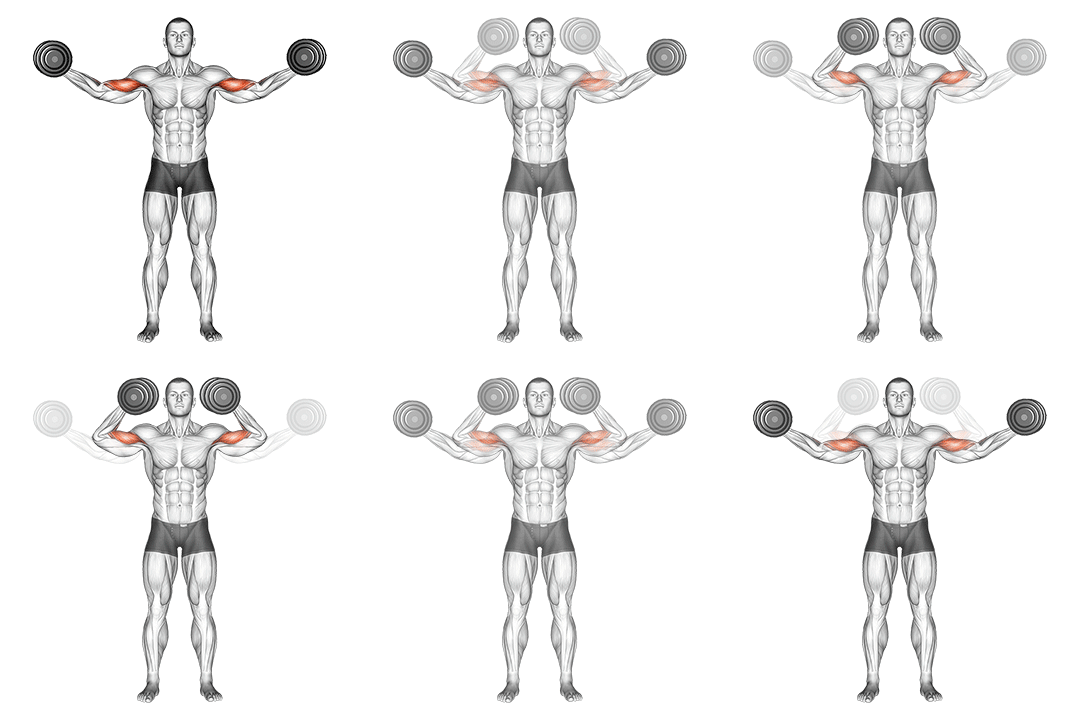
The Dumbbell High Curl is a bicep curl performed with the elbows elevated to shoulder height, curling the dumbbells toward the head. The elevated arm position provides a unique stimulus and a strong peak contraction at the top, mimicking the front double-bicep pose in bodybuilding. It is an effective finishing exercise.
Most curl variations stop loading the biceps near the top of the rep because the elbow is past the point where the biceps can produce much force. High curls flip that around: the load gets heaviest at the top of the rep, where the biceps are at their shortest and most contracted. That makes them especially good for building the bicep peak.
Lift the elbows to shoulder height first and keep them there throughout the set. Curl the dumbbells toward the head rather than the shoulders. Use light weights; this is harder than it looks.
How To Program These Workouts
A solid bicep day picks four to five exercises rather than running through all ten. A balanced split is one heavy compound curl (standard curl), one stretched-position movement (incline curl), one peak-focused variation (drag curl or high curl), and one brachialis or forearm exercise (reverse curl, waiter curl). Optionally finish with a combo move like the curl-to-press for cardio.
Train the biceps directly two to three times per week. They recover faster than larger muscle groups and respond well to higher frequency. If your training split already includes plenty of pulling movements like rows and pull-ups, count those toward total bicep volume so you do not over-train them.
For more on bicep development specifically, see our how often can you work out biceps and workouts for wider biceps guides.
Final Thoughts
The best dumbbell bicep workouts go far beyond basic standing curls. The variety of grip positions, body angles, and ranges of motion that dumbbells allow makes them the most versatile bicep tool available. Mix the basics with stretched-position work and peak-contraction movements to develop the biceps fully.
Stay strict on form. Bicep curls are easy to cheat with body sway and momentum, and the biceps are easy to under-stimulate when the rest of the body helps lift the weight. Pick a weight that lets you do clean reps for the full set, and progress the load only when the form holds across every rep.
Frequently Asked Questions
How heavy should my dumbbells be for bicep curls?
Pick a weight that lets you complete clean sets in your target rep range with one or two reps left in the tank at the end. For most lifters, that means 15 to 35 pounds for standard curls in the 8 to 12 rep range. Lighter for incline curls, drag curls, and any strict-form variation. Heavier for shorter-range movements like high curls.
How often should I train biceps?
Two to three direct bicep sessions per week works well for most lifters, though anything up to four can be productive if recovery is good. Total weekly bicep volume matters more than session count: aim for somewhere between 12 and 20 working sets per week, including both direct curl work and indirect work from rows and pull-ups.
Are dumbbell curls better than barbell curls?
For most lifters, yes. Dumbbells allow each arm to work independently, support natural wrist rotation through the rep, and eliminate the strength imbalances that develop with bilateral barbell work. Barbells let you load slightly heavier overall, but the trade-offs in form quality and balanced development usually favor dumbbells.
Should I curl with palms up or palms in (hammer grip)?
Both. The supinated (palms up) curl emphasizes the biceps brachii. The neutral or hammer grip emphasizes the brachialis and the brachioradialis. Including both grips in your program builds a more complete arm than either grip alone. Reverse curls (palms down) round out the set by hitting the brachialis and forearm extensors directly.
Will dumbbell curls give me bigger biceps?
Yes, when paired with progressive overload, adequate volume, and good nutrition. The biceps grow in response to mechanical tension over time, and dumbbell curls deliver that tension directly. Expect visible changes within 8 to 12 weeks of consistent training combined with sufficient calories and protein.