Big shoulders define the entire upper body silhouette. Well-developed deltoids produce the broad shoulder caps that create the V-taper look most lifters want, and the visible difference between trained and untrained shoulders is dramatic in any short-sleeve setting. The shoulders also load heavily during nearly every upper-body exercise (chest pressing hits the front delts, rowing hits the rear delts), which means shoulder development affects performance on every other lift. Despite this importance, most lifters build unbalanced shoulders by emphasizing pressing exercises while neglecting the lateral raise and rear delt work that produces shoulder width.
This guide covers shoulder anatomy and the three deltoid heads that determine appearance, the training principles that drive shoulder hypertrophy, the foundational pressing and isolation exercises, and programming strategies that produce visible shoulder growth over months of consistent practice. Building bigger shoulders requires more than just heavy pressing; balanced development across all three deltoid heads produces the strongest visual results and the healthiest shoulder joints.
Shoulder Anatomy: The Three Deltoid Heads
The deltoid muscle has three distinct heads that contribute differently to overall shoulder appearance and function. Complete shoulder development requires training each head with appropriate volume.
The front (anterior) deltoid sits on the front of the shoulder. It loads heavily during pressing exercises (bench press, overhead press) and front raises. Most lifters develop strong front delts naturally from chest day and shoulder pressing work; over-emphasis on this head produces the unbalanced “round-shouldered” look that pulls the shoulders forward.
The side (medial) deltoid sits on the outside of the shoulder. It produces shoulder width directly and is the primary muscle responsible for the V-taper appearance. The side delt loads heavily during lateral raises and upright rows but receives minimal stimulus from standard pressing exercises, which is why most lifters underdevelop this head.
The rear (posterior) deltoid sits on the back of the shoulder. It produces visible thickness from the back view and contributes to the rounded “boulder shoulder” appearance from the side view. The rear delt loads heavily during reverse flies, rear delt rows, and face pulls but receives minimal stimulus from standard pressing exercises.
The Principles Of Shoulder Growth
Building bigger shoulders follows several principles that produce visible growth when combined consistently. Most lifters who fail to grow their shoulders fail because they ignore one or more of these principles.
Train all three deltoid heads. The biggest mistake in shoulder training is over-emphasizing the front delt through pressing while neglecting the side and rear delts. Most under-developed shoulders come from this imbalance; the fix is including dedicated lateral raise work for side delts and rear delt rows or face pulls for rear delts in nearly every shoulder session.
Use sufficient volume. Shoulder growth requires 16 to 24 weekly working sets across all three deltoid heads. The side delts in particular respond to high volume; most lifters who underdevelop their shoulder width do less than 8 weekly sets of dedicated side delt work. The fix: program 8 to 12 weekly sets of side delt work specifically, in addition to pressing and rear delt work.
Use moderate weight with strict form. The shoulders are smaller muscles that respond best to strict form rather than heavy weight with body swing. Most failed shoulder training comes from using too much weight on lateral raises and rear delt work, which shifts loading from the target deltoid head to the larger surrounding muscles (traps, lats). The fix: use weights light enough to maintain strict form throughout the rep.
Train shoulders 2 to 3 times per week. The shoulders recover within 48 to 72 hours of moderate training, but they get significant indirect work from chest, back, and arm training, which means dedicated shoulder work compounds with other upper-body sessions. Most successful programs include one focused shoulder session per week alongside the indirect work, or split shoulder volume across two upper-body days.
Foundational Pressing Exercises
Heavy pressing produces the strongest single shoulder mass-builder, primarily for the front delts but also loading the side and rear delts as secondary movers. The exercises below cover the foundational pressing patterns that every shoulder program needs.
Barbell Standing Shoulders Press

The Barbell Standing Shoulders Press stands tall and presses a barbell from shoulder level to overhead lockout. The standing position adds significant core engagement and produces the strongest possible loading of the entire shoulder complex.
The standing barbell press is the gold standard shoulder mass-builder. The exercise produces broader athletic carryover than seated pressing variations and allows the heaviest possible loading. Run it for 4 to 5 sets of 5 to 8 reps as the primary shoulder exercise. Heavy standing press should anchor the start of every shoulder day in any strength-focused program.
Dumbbell Incline Shoulders Press

The Dumbbell Incline Shoulders Press performs an overhead press from a slightly inclined seated position rather than fully upright. The angle changes the loading slightly and reduces lower-back stress compared to fully upright seated presses.
The dumbbell incline press complements barbell standing presses by adding unilateral loading and a different angle. The dumbbell version also catches strength imbalances that barbell pressing can mask. Run it for 3 to 4 sets of 8 to 10 reps as secondary pressing work.
Dumbbell Arnold Press
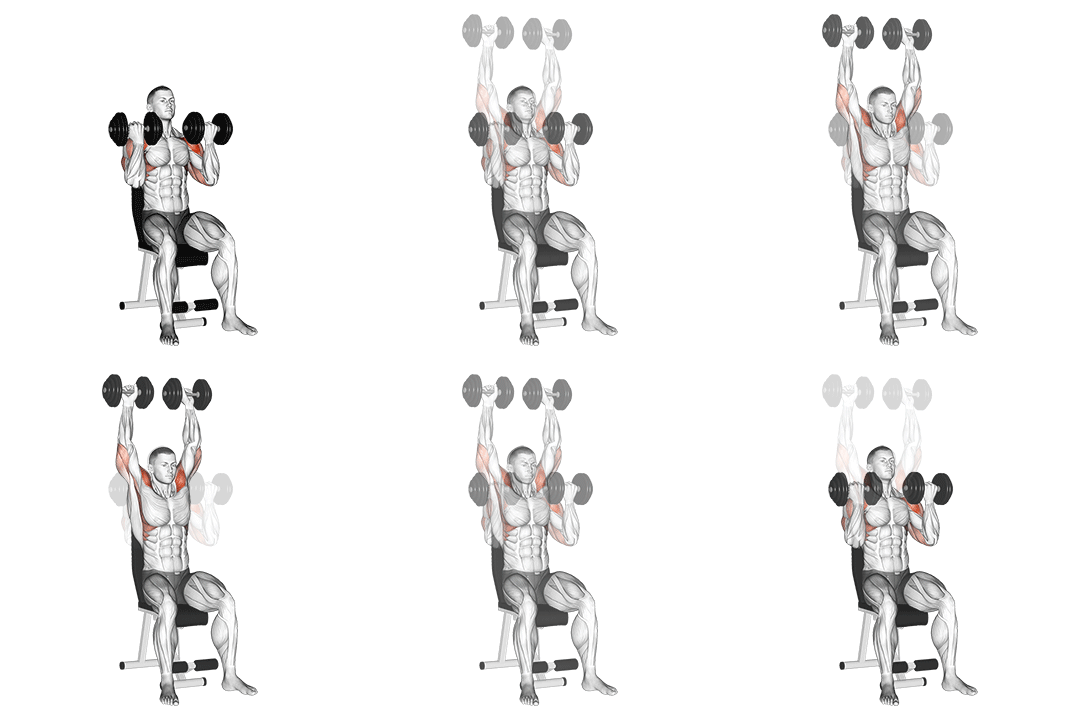
The Dumbbell Arnold Press starts with palms facing the body and rotates the arms during the press so the palms face forward at the top. The combined press and rotation hits the front and side delts simultaneously, which produces broader stimulus per rep than standard overhead pressing.
Named after Arnold Schwarzenegger, the Arnold press is one of the most efficient combined shoulder exercises that exists. The rotation pattern produces stronger total shoulder development per rep than standard pressing. Run it for 3 sets of 8 to 10 reps as variation in any well-rounded shoulder program.
Side Delt Isolation: The Key To Width
Side delts produce shoulder width more than any other muscle. Most lifters who fail to develop wide shoulders skip dedicated side delt work; the fix is including lateral raise variations in nearly every shoulder session.
Dumbbell Lateral Raise

The Dumbbell Lateral Raise holds dumbbells at the sides and lifts them out laterally to shoulder height. The exercise targets the side deltoids directly through their primary shoulder abduction function and is the foundational side delt exercise.
For shoulder width specifically, the dumbbell lateral raise is the most effective single exercise. The pattern hits the medial deltoid heads with maximum efficiency, and lighter weight done strict produces stronger development than heavier weight done sloppy. Run it for 3 to 4 sets of 12 to 15 reps as primary side delt work in nearly every shoulder session.
Barbell Upright Row

The Barbell Upright Row holds a barbell at the front of the body and pulls it upward toward the chin by raising the elbows out and up. While not a pure lateral raise, the exercise loads the side delts heavily as primary movers alongside the upper traps.
The upright row complements pure lateral raises by loading the side delts through a slightly different motion. Use a wider grip and pull only to chest level (not chin level) to reduce shoulder impingement risk. Run it for 3 sets of 8 to 12 reps as accessory side delt work.
Rear Delt Work: The Forgotten Head
Rear delts produce visible thickness from the back view and contribute to balanced shoulder appearance from every angle. Most lifters underdevelop rear delts because pressing exercises do not load them; dedicated rear delt work fixes this gap.
Dumbbell Rear Delt Row

The Dumbbell Rear Delt Row hinges over and pulls dumbbells out wide to the sides, with the elbows tracking up and out rather than back along the body. The wide pulling pattern emphasizes the rear delts heavily compared to standard rows.
The rear delt row is one of the most effective rear delt exercises that exists. The wide pulling pattern shifts loading away from the lats (which standard rows emphasize) onto the rear delts and rhomboids. Run it for 3 sets of 10 to 12 reps as primary rear delt work in any shoulder session.
Bodyweight Shoulder Work
For lifters without weights or as accessory work in any shoulder program, bodyweight pressing produces real shoulder development. The exercises below complement loaded training by adding stability demand and accessibility.
Pike Push Up

The Pike Push Up sets up in an inverted V position with the hips piked toward the ceiling and presses the head toward the floor. The vertical pressing pattern emphasizes the shoulders heavily and serves as the foundational bodyweight shoulder exercise.
For lifters who cannot access barbells or dumbbells, pike push-ups produce the strongest possible bodyweight shoulder loading. The pattern also serves as the entry point to harder progressions like handstand push-ups for advanced bodyweight athletes. Run it for 3 sets of 8 to 12 reps.
Shoulder Mobility And Recovery
Heavy shoulder training produces significant tightness in the surrounding musculature, which can limit further training and contribute to chronic shoulder issues over time. The exercises below complement strength work by maintaining range of motion.
Standing Shoulder Circling

The Standing Shoulder Circling stands tall and rotates the shoulders in large circles, first forward and then backward. The dynamic motion warms up the shoulder joint through full ranges of motion.
Daily shoulder circling for 30 to 60 seconds prevents the chronic tightness that aggressive shoulder training produces. Use it as a warm-up drill before every shoulder session and as a daily mobility habit. The 30 to 60-second investment prevents the shoulder issues that limit long-term progression.
How To Program For Bigger Shoulders
Shoulder programming follows a structure designed to build all three deltoid heads with appropriate volume and frequency. The framework below produces consistent growth for most lifters who follow it for 12+ weeks.
Train shoulders 2 to 3 times per week. Most lifters do well with one focused shoulder session per week (6 to 8 exercises) plus the indirect shoulder work from chest day, back day, and arm day. Lifters with stagnant shoulder growth often benefit from splitting volume across two upper-body days for higher total weekly sets.
Run 16 to 24 weekly working sets across all shoulder exercises, distributed roughly: 4 to 6 sets pressing (front delt primary), 8 to 12 sets side delt isolation (lateral raise variations, upright rows), and 4 to 6 sets rear delt work (rear delt rows, reverse flies, face pulls). Adjust the distribution based on which heads need more development; lifters with strong front delts should reduce pressing volume and increase side and rear delt work.
Progress shoulder exercises slowly. Shoulders are smaller muscles that respond to consistent strict-form training rather than aggressive load increases. Adding 2.5 pounds to lateral raises every 2 to 3 weeks produces stronger long-term gains than chasing big jumps that force compensation patterns. Lifters who progress slowly produce stronger shoulder development than those who chase weights at any cost.
For specific shoulder programming, see our best dumbbell shoulder workouts and best at home shoulder workouts. For broader information, see our best rear delt exercises and best side delt exercises.
Final Thoughts
Building bigger shoulders is one of the most visually impactful upgrades a lifter can make. The visible difference between balanced and unbalanced shoulders is dramatic, and the shoulder development affects every other muscle group through stronger pressing and pulling performance. The training is straightforward; the volume distribution and consistency are what most lifters miss.
Stay focused on balanced development across all three deltoid heads. The most common shoulder training mistake is over-emphasizing pressing (which builds front delts) while skipping side delt and rear delt work. The fix: include dedicated lateral raise and rear delt work in nearly every shoulder session. Lifters who train all three heads with appropriate volume produce the V-taper look most lifters want; lifters who only press end up with thick front delts and underdeveloped sides and backs that limit the visual impact regardless of total shoulder size.
Frequently Asked Questions
Why won’t my shoulders grow?
The three most common reasons are insufficient side delt volume (less than 8 weekly sets of dedicated lateral raise work), too much weight with poor form on isolation exercises, and over-emphasis on pressing exercises that build front delts but neglect side and rear delts. Fix all three and most lifters see noticeable shoulder growth within 8 to 12 weeks. Genetics also play a role; some lifters develop shoulders faster than others, but most under-developed shoulders come from training mistakes rather than poor genetics.
How often should I train shoulders?
Two to three times per week works for most lifters. The shoulders recover within 48 to 72 hours of moderate training and get significant indirect work from chest day, back day, and arm day. Most successful programs include one focused shoulder session per week plus the indirect work, or split shoulder volume across two upper-body days for higher total weekly sets.
What’s the best shoulder exercise?
The standing barbell press is the most effective single shoulder mass-builder for most lifters. The combination of heavy bilateral loading and full-body bracing demand produces stronger shoulder development per rep than most other exercises. The dumbbell lateral raise comes second for shoulder width specifically. Most well-designed programs use both as primary shoulder exercises alongside rear delt work.
How long until I see shoulder growth?
Most lifters with consistent shoulder training see meaningful strength improvements within 4 to 6 weeks. Visible width changes typically appear after 8 to 12 weeks of dedicated practice with appropriate side delt volume. Major changes (significantly broader shoulder appearance) take 6 to 12 months of consistent training. The timeline matches general muscle growth; consistent training over months produces visible results.
Should I do shoulder day or include shoulders in another day?
Either approach works. Dedicated shoulder day allows higher per-session volume (6 to 8 shoulder exercises) but reduces frequency to once per week. Including shoulders in another day (typically as part of push day in a PPL split) reduces per-session volume but allows twice-weekly frequency. Most lifters past the beginner stage do better with twice-weekly shoulder training (PPL split or upper/lower split) than once-weekly dedicated shoulder days.