Building a stronger lower back requires specific training that combines heavy compound hip-hinge lifts (deadlift, Romanian deadlift, good morning) for the strength foundation that builds raw lower back capacity, posterior chain accessory work (glute-ham raise, back extension) for additional volume that compound lifts cannot fully provide, and stability training (superman, bird dog) for the deep core and back muscles that protect the spine during heavy loading. The combination of these three training modalities produces stronger and more resilient lower back development than any single approach. Most lifters can build measurable lower back strength gains within 8 to 12 weeks of consistent training, with continued progressive overload producing strength development for years of dedicated practice. A strong lower back is also one of the most injury-protective adaptations a lifter can build, because it supports virtually every other lift.
This guide covers ten proven lower back strength exercises that work together as a complete strength-development program. The exercises cover heavy compound hip-hinge lifts (barbell deadlift, Romanian deadlift, good morning, dumbbell Romanian deadlift), partial-range heavy loading (rack pull), posterior chain accessory work (glute-ham raise, lever back extension), foundational stability (superman, bird dog), and explosive conditioning (kettlebell swing). Together they hit every major aspect of lower back strength development. The protocol below explains how to organize these exercises into a training program that produces strength gains within 8 to 12 weeks of consistent training while protecting the spine through proper progression.
Barbell Deadlift

The Barbell Deadlift starts with the barbell on the floor and lifts it to standing position by hinging at the hips and extending through the legs. The exercise produces extreme posterior-chain loading and is the foundational lower-back strength builder.
For lower back strength development, the deadlift is non-negotiable. The pattern hits the entire posterior chain (erector spinae, glutes, hamstrings) under heavy progressive load. The lower back works isometrically throughout to maintain spinal position. Run it for 4 to 5 sets of 3 to 6 reps as primary heavy lower back strength work in any program.
Stand with feet hip-width with the barbell over the middle of the feet. Hinge at the hips and bend the knees to grip the bar with shoulder-width grip. Drive through the legs and pull the bar up close to the body until standing fully upright. Reverse the motion under control. Reset before each rep.
Barbell Romanian Deadlift

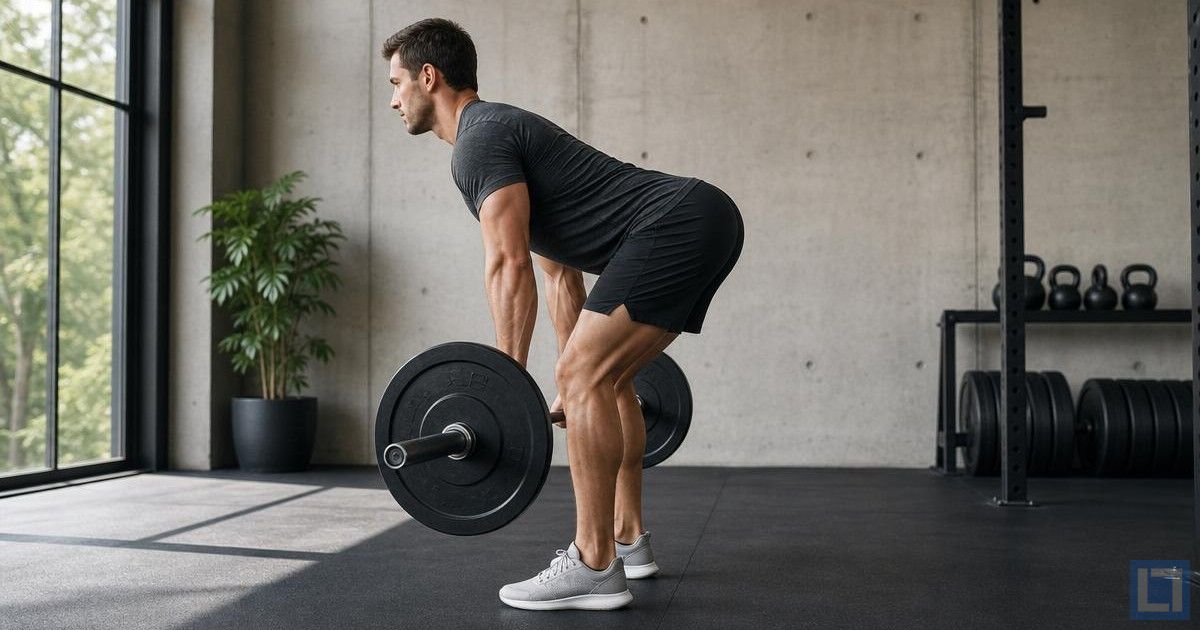
The Barbell Romanian Deadlift hinges at the hips with minimal knee bend and lowers the barbell to mid-shin level by stretching the hamstrings, then drives back to standing through hip extension. The pattern emphasizes the lower back, glutes, and hamstrings through pure hip-hinge motion.
For lower back strength development, the Romanian deadlift is one of the most direct lower back strength builders that exists. The pure hip-hinge motion hits the lower back through controlled eccentric loading. Run it for 4 sets of 6 to 8 reps as primary lower back hip-hinge work alongside heavy deadlifts.
Stand with feet hip-width holding a barbell at hip level with shoulder-width grip. Hinge at the hips while keeping a slight bend in the knees, lowering the barbell to mid-shin level by stretching the hamstrings and lower back. Drive back to standing by extending the hips. Maintain neutral spine throughout.
Barbell Good Morning

The Barbell Good Morning holds a barbell across the upper back like a back squat and hinges at the hips, lowering the upper body forward toward parallel before driving back to standing. The pattern produces direct lower-back loading with minimal leg involvement.
For lower back strength development, the good morning is one of the most direct lower-back-loading exercises that exists. The pattern isolates the lower back as the primary mover through the hip-hinge motion. Run it for 3 to 4 sets of 6 to 8 reps as direct lower back strength work. Use moderate loads.
Set up under a barbell on a squat rack with the bar across the upper back. Step back to clear the rack. Stand with feet hip-width and a slight bend in the knees. Hinge at the hips to lower the upper body forward toward parallel to the floor. Drive back to standing by extending the hips. Maintain neutral spine throughout.
Dumbbell Romanian Deadlift
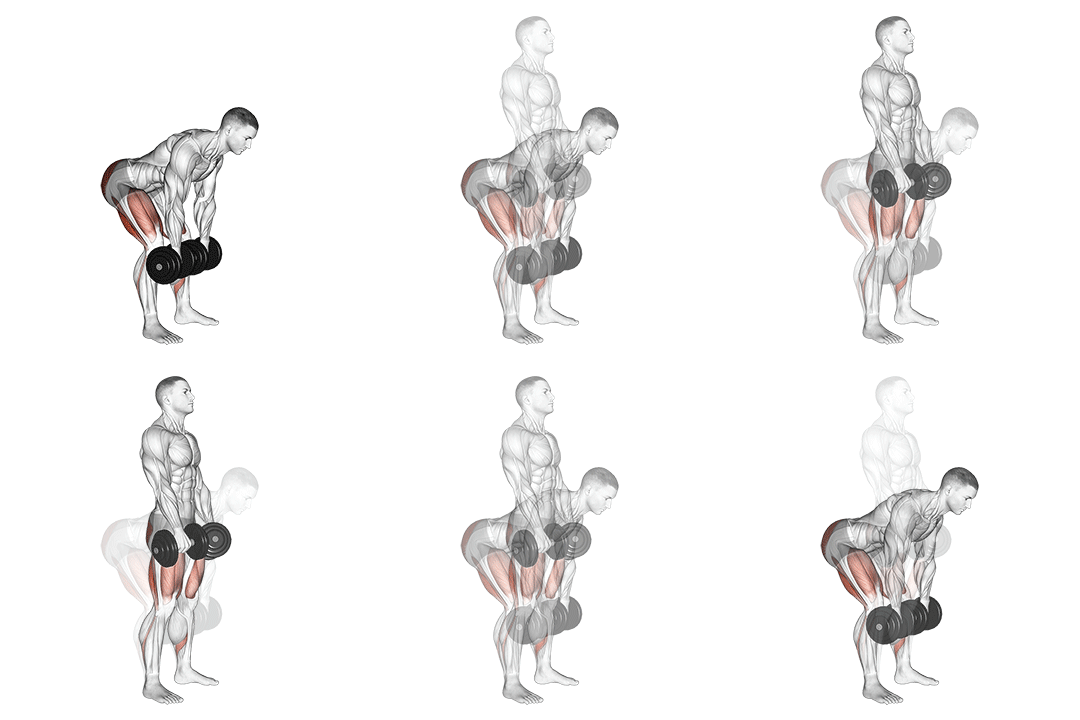
The Dumbbell Romanian Deadlift hinges at the hips while holding dumbbells at the sides and lowers them along the legs to mid-shin level. The pattern produces the same hip-hinge loading as barbell RDLs with more accessibility and less lower-back stress.
For lower back strength development, the dumbbell Romanian deadlift is the foundational hip-hinge exercise for accessible loading. The pattern hits the lower back through controlled hip-hinge motion. Run it for 3 to 4 sets of 8 to 10 reps as accessible lower back hip-hinge work.
Stand with feet hip-width holding dumbbells at the sides with arms extended. Hinge at the hips while keeping a slight bend in the knees, lowering the dumbbells along the legs to mid-shin level. Drive back to standing by extending the hips. Maintain neutral spine throughout.
Barbell Rack Pull

The Barbell Rack Pull lifts a barbell from elevated pins (typically just below knee level) using deadlift mechanics. The shorter range of motion enables heavier loading than full deadlifts, which produces strong lower back strength stimulus.
For lower back strength development, the rack pull enables heavier loading than full deadlifts because the shorter range eliminates the most difficult position. The pattern hits the lower back through heavy loading at the lockout position. Run it for 3 to 4 sets of 4 to 6 reps as heavy partial-range lower back work.
Set up a barbell on rack pins at just below knee level. Stand with feet hip-width and grip the bar with shoulder-width grip. Drive through the legs to lift the bar to standing position. Lower under control to the pins. Reset before each rep. Use heavier loads than full deadlifts due to the shorter range.
Glute Ham Raise

The Glute Ham Raise sets up on a glute-ham developer (or floor with anchored feet) and performs raise motions by extending the body from a kneeling/extended position. The pattern produces extreme hamstring and lower back loading.
For lower back strength development, the glute-ham raise is one of the most demanding posterior-chain exercises that exists. The pattern combines hamstring and lower back loading through dual-purpose hip and knee extension. Run it for 3 sets of 6 to 10 reps as advanced posterior chain work.
Set up on a glute-ham developer with the feet anchored under the foot pads and the thighs supported. Lower the upper body from kneeling position by hinging at the hips and knees. Drive back up by contracting the hamstrings and lower back. Use bodyweight initially, add weight as strength builds.
Lever Back Extension

The Lever Back Extension uses a back extension machine with a leverage-style design to perform back extensions against weighted resistance. The pattern produces direct lower back loading through pure spinal extension.
For lower back strength development, the back extension machine is the foundational direct lower-back exercise. The pattern hits the erector spinae through pure extension under controlled loading. Run it for 3 to 4 sets of 8 to 12 reps as direct lower back strength work alongside compound lifts.
Set up at a back extension machine with the upper body angled forward and feet locked under the foot pads. Place the hips on the support pad. Extend the back by lifting the upper body from the hinged position to alignment with the legs. Lower under control. Add weight by holding a plate at the chest as strength builds.
Superman

The Superman lies face-down on the floor and lifts the arms and legs simultaneously off the floor by contracting the lower back and posterior chain. The pattern produces strong lower-back and erector spinae loading without equipment.
For lower back strength development, the superman is the foundational equipment-free lower-back exercise. The pattern hits the lower back muscles (erectors, multifidus) through pure extension. Run it for 3 sets of 12 to 15 reps as accessible lower-back work that fits any setting.
Lie face-down on the floor with arms extended forward overhead and legs straight. Lift the arms, chest, and legs off the floor simultaneously by contracting the lower back. Hold the contracted position briefly. Lower under control to the floor. Maintain controlled tempo throughout.
Bird Dog
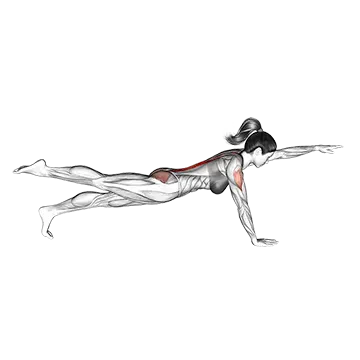
The Bird Dog sets up in a quadruped position (hands and knees on the floor) and extends the opposite arm and leg simultaneously while maintaining trunk stability. The pattern produces strong combined back and core stability work.
For lower back strength development, the bird dog is one of the foundational back stability exercises. The pattern hits the deep back muscles (multifidus, erectors) through anti-rotation and extension demands. Run it for 3 sets of 8 to 10 reps per side as deep back stability work.
Set up on hands and knees with hands shoulder-width and knees hip-width. Extend one arm forward while simultaneously extending the opposite leg back. Hold the extended position briefly while maintaining a stable, level trunk. Return to the start. Switch sides on each rep.
Kettlebell Swing

The Kettlebell Swing hinges at the hips and swings the kettlebell from between the legs up to chest level using hip drive. The pattern produces strong posterior-chain loading combined with cardiovascular demand.
For lower back strength development, the kettlebell swing builds explosive hip-hinge strength that translates to deadlift performance. The pattern hits the lower back through repeated dynamic hip extension. Run it for 4 sets of 15 to 20 reps as explosive posterior-chain conditioning work.
Stand with feet shoulder-width and a kettlebell positioned 1 to 2 feet in front. Hinge at the hips and grip the kettlebell with both hands. Hike the kettlebell back between the legs. Drive the hips forward explosively, swinging the kettlebell up to chest level. Let the kettlebell swing back down between the legs into the next rep.
How To Program These Workouts
A productive lower back strength program organizes these exercises across 2 weekly posterior-chain sessions. A standard structure: Day 1 (heavy strength: barbell deadlift 5×3 to 5, barbell good morning 3×6 to 8, lever back extension 3×10 to 12, bird dog 3×8 to 10 per side), Day 2 (varied strength and accessory: barbell Romanian deadlift 4×6 to 8, dumbbell Romanian deadlift 3×8 to 10, glute-ham raise 3×6 to 10, kettlebell swing 4×15 to 20, superman 3×12 to 15). The two sessions cover 28 to 33 total working sets per week dedicated to posterior chain development with progressive overload focus on the heavy compound lifts.
Train lower back strength sessions 2 times per week with full rest days between sessions. The lower back recovers within 48 to 96 hours of heavy training, which means more recovery is needed than other muscle groups. Most successful programs include 2 weekly posterior-chain sessions: one heavy strength session (3 to 6 rep ranges with progressive overload focus on deadlifts) and one varied accessory session (6 to 12 rep ranges with Romanian deadlifts, back extensions, and glute-ham raises). Higher frequencies (3+ heavy posterior chain sessions per week) typically produce accumulated fatigue and elevated injury risk; the 2-session structure produces strong development with adequate recovery.
For broader programming, see our how to build a bigger back and best compound exercises for strength. For Romanian deadlift technique, see our how to do a romanian deadlift.
Final Thoughts
Building a stronger lower back delivers real strength development and injury protection through training that combines heavy compound hip-hinge lifts, posterior chain accessory work, and stability training. The combination of deadlifts, Romanian deadlifts, good mornings, glute-ham raises, back extensions, supermans, and bird dogs covers every major aspect of lower back strength development and produces broader results than single-exercise training. For lifters who want serious lower back strength gains, want injury-resistant strength foundations that support every other lift, or have stalled on lower back development with general training, dedicated lower back strength work following the structure outlined here is one of the most effective approaches available.
Stay focused on form quality on every rep, especially on heavy hip-hinge lifts. The most common lower back training mistake is allowing the lower back to round during deadlifts, Romanian deadlifts, or good mornings, which dramatically increases injury risk while reducing the loading on the target muscles. The fix: maintain neutral spine position throughout every rep by bracing the core hard and keeping the chest up. If form breaks down at heavier loads, drop weight rather than continuing with rounded back. Quality reps with neutral spine produce strong development without injury; rounded-back reps under heavy load produce both reduced gains and significantly elevated injury risk.
Frequently Asked Questions
How long does it take to build a stronger lower back?
Most lifters see measurable lower back strength gains within 8 to 12 weeks of consistent training. Progress is typically faster for beginners (8 to 10 weeks for noticeable strength gains) than advanced lifters (12 to 16 weeks for measurable gains). Faster progress requires consistent training (2 weekly posterior-chain sessions), progressive overload (increasing weights or reps over time), adequate recovery (48 to 72 hours between heavy sessions), and quality movement patterns. Lifters in caloric deficits experience slower lower back development than those eating at maintenance or surplus.
Are deadlifts safe for the lower back?
Deadlifts are safe and beneficial for most healthy lifters when performed with proper form. The exercise actually strengthens and protects the lower back when programmed appropriately. Most lower back injuries during deadlifts come from poor form (rounded lumbar spine), excessive loading too quickly (jumping to heavy weights without progression), or training through pain rather than the exercise itself. Lifters with existing lower back issues should consult medical professionals and progress slowly through Romanian deadlifts and back extensions before attempting heavy conventional deadlifts.
How often should I train lower back?
Twice per week with full rest days between sessions works for most lifters. The lower back recovers within 48 to 96 hours of heavy training, which requires more recovery than other muscle groups. Most successful programs include 2 weekly posterior-chain sessions: one heavy strength session and one varied accessory session. Higher frequencies (3+ heavy sessions per week) typically produce accumulated fatigue and elevated injury risk.
Romanian deadlift vs conventional deadlift for lower back?
Both produce strong lower back development with different emphases. Conventional deadlifts produce maximum strength loading through the entire posterior chain. Romanian deadlifts emphasize the lower back and hamstrings specifically through pure hip-hinge motion with reduced leg involvement. Most successful programs include both: conventional deadlifts as the heavy strength compound (3 to 5 rep ranges) and Romanian deadlifts as the hip-hinge specialty exercise (6 to 8 rep ranges) for complete lower back development.
Can I build a stronger lower back with bodyweight only?
Yes for beginners, with limitations for advanced lifters. Bodyweight exercises (superman, bird dog, glute-ham raise on the floor) produce strong foundational lower back strength for the first 3 to 6 months of training. Advanced lower back strength development requires progressive overload through weighted compound lifts (deadlifts, Romanian deadlifts, good mornings) that bodyweight cannot replicate. Most successful programs include both: bodyweight stability work for the foundation and weighted compound lifts for continued strength development.