
The Romanian deadlift is one of the most effective hamstring and glute exercises ever invented. Unlike the conventional deadlift, which pulls the bar off the floor, the RDL starts at the standing position and lowers the bar with controlled hip-hinge mechanics. The result is a movement that loads the entire posterior chain (hamstrings, glutes, lower back) under deeper stretch than conventional deadlifts can match.
This guide covers exactly how to set up the Romanian deadlift, the common form mistakes that limit hamstring growth and risk lower-back issues, the easier kettlebell and dumbbell progressions for beginners, and the advanced single-leg variations that keep the lift challenging at every level.
What Is A Romanian Deadlift
The Romanian deadlift (RDL) is a hip-hinge exercise that targets the posterior chain through controlled lowering and lifting of a load while keeping the legs nearly straight. Where the conventional deadlift starts with the bar on the floor and includes significant knee bend at the bottom, the RDL starts standing and uses a much smaller knee bend throughout. The bar travels from the standing position down to roughly mid-shin (or wherever hamstring flexibility allows) and back up.
The exercise gets its name from Romanian weightlifters who used it as an assistance lift in the 1980s. It became popular in Western strength training during the 1990s and is now a staple of nearly every serious strength and physique program. The combination of deep hamstring stretch, glute loading, and lower-back stability training makes it one of the most efficient single exercises for the entire posterior chain.
The Anatomy Of A Proper Romanian Deadlift
A proper RDL looks deceptively simple but contains several precise positioning details that determine whether the exercise hits the hamstrings effectively or wastes effort on poor mechanics. Five elements matter most.
Knee position: the knees stay slightly bent throughout the entire rep, with no further bending or straightening during the movement. Most lifters either lock the knees completely (which puts dangerous stress on the hamstring tendons) or let the knees bend significantly (which turns the RDL into a quarter-squat). The slight static knee bend is critical.
Hip-hinge mechanics: the movement happens at the hips, not the back. Push the hips backward as far as flexibility allows while keeping the spine in a neutral position. The chest stays tall and the shoulders stay back; the upper body simply tilts forward as the hips travel back.
Bar path: the bar travels in a straight line down the legs, staying close to the body throughout. Many lifters let the bar drift forward, which loads the lower back significantly more than the hamstrings. Keep the bar within an inch of the legs through the entire rep.
Back position: the spine stays in a neutral position throughout the rep, neither rounded nor hyper-extended. The natural curve of the lower back stays the same from the standing position to the bottom of the rep. If the lower back rounds during the descent, the rep should stop at that point.
Range of motion: the bar lowers to roughly mid-shin or wherever hamstring flexibility allows while maintaining a flat back. Most beginners cannot reach the floor without rounding the back, which is fine; the lift is about hamstring stretch, not floor contact.
The Standard Barbell Romanian Deadlift

The Barbell Romanian Deadlift is the standard version. Set up with feet shoulder-width and the bar held at the front of the thighs. Hinge at the hips with a flat back, lowering the bar in a path close to the legs until hamstring tightness limits further descent. Reverse by driving the hips forward to standing.
Most experienced lifters can RDL 70 to 100 percent of their conventional deadlift weight with clean form. Beginners typically start with 40 to 60 percent. The lift responds well to progressive overload; adding 5 to 10 pounds every week or two for several months produces consistent hamstring and glute growth.
The Most Common RDL Mistakes
Most lifters who fail to feel their hamstrings work during RDLs are making one or more of the same handful of mistakes. The list below covers what to fix.
Bending the knees too much is the most common mistake. Lifters who bend the knees significantly during the descent turn the RDL into a quarter-squat, which loads the quads and lower back instead of the hamstrings. The fix: set a slight knee bend at the start (5 to 10 degrees) and hold that exact angle throughout the entire rep.
Letting the back round is the second mistake. As the hamstrings tighten during the descent, many lifters lose their flat back position and round the lower spine to reach further down. This kills the hamstring stimulus and loads the lower-back discs dangerously. The fix: stop the rep at whatever depth allows a flat back, even if that means much less range than other lifters use.
Letting the bar drift forward is the third mistake. The bar should travel in a straight line down the legs, staying within an inch of the body. Lifters who let the bar drift forward add significant lower-back loading and reduce hamstring engagement. The fix: actively pull the bar back toward the body throughout the descent.
Going too heavy too soon is the fourth mistake. The RDL exposes hamstring weakness and lower-back stability issues that other lifts hide. Lifters who jump to heavy loads before mastering the pattern end up with hurt lower backs and minimal hamstring growth. The fix: start with 40 to 50 percent of conventional deadlift weight and progress slowly over months as form quality improves.
Beginner Progressions Before The Barbell RDL
Lifters who cannot yet hinge cleanly should not load the pattern with heavy barbell weight. The progressions below build the hinge mechanics and hamstring strength to perform a clean barbell RDL over a few weeks of consistent practice.
Kettlebell Romanian Deadlift

The Kettlebell Romanian Deadlift uses a single kettlebell held with both hands instead of a barbell. The lighter load (typically 16 to 32 kg) is plenty to teach the hinge pattern, and the kettlebell’s closer-to-body position makes it easier to keep the bar path correct.
Build to 3 sets of 10 to 15 reps with a moderate kettlebell before progressing to dumbbells or barbell. Focus on hinge mechanics rather than load: the kettlebell version is meant to teach the pattern, not maximize hamstring strength.
Dumbbell Romanian Deadlift
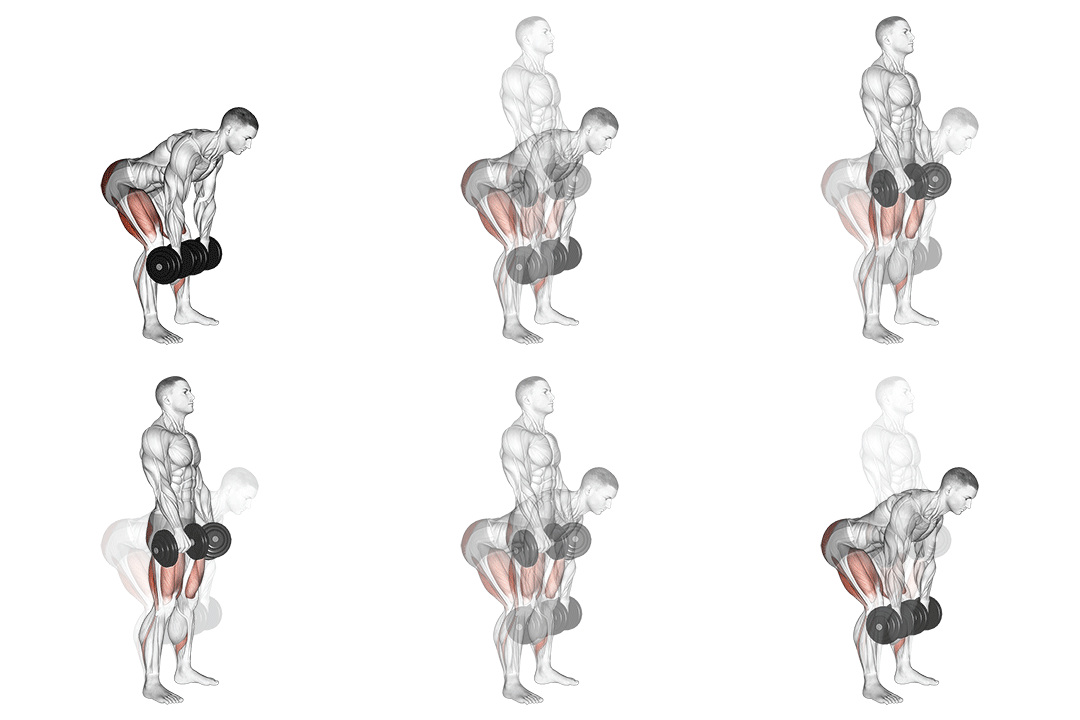
The Dumbbell Romanian Deadlift holds dumbbells at the sides instead of a barbell in front. The dumbbells stay close to the legs naturally and load the hinge pattern with appropriate weight for most beginners. The dumbbell version is the right call for lifters who have mastered the kettlebell variation but want heavier total loading.
Most intermediate lifters can dumbbell RDL with 40 to 60 pounds per hand for 10 to 12 reps with clean form. Once that load feels manageable, the barbell version becomes the next progression. The dumbbell variation also remains useful long-term as a higher-rep accessory after heavier barbell work.
Advanced RDL Variations
Lifters who have mastered the standard barbell RDL eventually benefit from harder variations. The variations below add unilateral loading, range of motion, or different loading angles that continue progressing hamstring and glute development past the standard barbell version.
Cable Romanian Deadlift

The Cable Romanian Deadlift uses a low-anchored cable attached to a straight bar or rope. The cable tension stays constant throughout the rep, which produces stronger contraction at the top of the movement than free-weight RDLs (where gravity unloads the muscle at lockout).
The cable version is excellent as a follow-up exercise after heavier barbell RDLs are done. Run it for 3 sets of 10 to 15 reps with moderate weight, focusing on the squeeze at the top.
Single-Leg Romanian Deadlift

The Single Leg Romanian Deadlift performs the RDL while balancing on one leg, with the opposite leg extending back as a counterweight. The unilateral pattern catches strength imbalances and demands significantly more hamstring activation per leg than bilateral variations.
Single-leg RDLs require significantly less load than bilateral versions because each leg supports the entire body. Most lifters use 30 to 50 percent of their bilateral RDL weight on each side. The balance demand also adds significant core and hip stability work.
How To Program RDLs
RDLs fit several roles in any program: primary hamstring builder, deadlift assistance, glute developer, and lower-back resilience builder. The right rep counts and frequency depend on which role they are filling.
As a primary hamstring builder, run RDLs as the first leg exercise on hamstring-focused days. Three to four sets of 6 to 10 reps with 80 to 90 percent effort produces strong growth. As deadlift assistance on a powerlifting program, run them on non-deadlift days with moderate weight (60 to 75 percent of conventional deadlift) for 3 sets of 6 to 8. As accessory work on general programs, 3 sets of 8 to 12 reps fits in any leg or back day.
For broader leg programming, see our best dumbbell leg workouts and how to grow your glutes guide.
Final Thoughts
Learning how to do a Romanian deadlift properly is one of the highest-leverage skills any lifter can develop. The exercise builds the entire posterior chain (hamstrings, glutes, lower back) more efficiently than nearly any other single movement, and clean form transfers directly to better deadlifts, squats, and athletic performance. Get the hinge mechanics right first with kettlebells or dumbbells, then progress to the barbell version once the pattern is solid.
Stay patient with the load. The RDL is one of the lifts that exposes weakness most clearly: poor hamstring flexibility, weak lower-back endurance, and asymmetric leg strength all show up as form breakdowns at heavy loads. Lifters who spend the time mastering the pattern at moderate weight progress past those who jump to heavy loads quickly. The hamstrings respond to consistent, clean training over months and years.
Frequently Asked Questions
What’s the difference between an RDL and a stiff-leg deadlift?
The RDL keeps a slight knee bend throughout and starts from the standing position; the stiff-leg deadlift uses a fully straight knee and typically starts from the floor. Both target the posterior chain, but the RDL is generally safer because the knee bend reduces hamstring tendon stress, and the standing start allows better setup for hinge mechanics.
How heavy should I RDL?
Most lifters can RDL 70 to 100 percent of their conventional deadlift weight with clean form once technique is solid. Beginners typically start with 40 to 60 percent. The right weight is whatever allows clean reps in your target rep range with one or two reps in reserve and no form breakdown. Adding 5 to 10 pounds every week or two for several months produces consistent strength gains.
How often should I do RDLs?
Once or twice per week is typical for most programs. The hamstrings recover within 48 to 72 hours of moderate training, but heavy RDLs combined with squat and deadlift work add significant total posterior chain volume. One heavy RDL session per week plus one lighter accessory session works well; programming both as heavy sessions usually produces too much fatigue.
Should I touch the floor with the bar on RDLs?
No. The RDL is about hamstring stretch, not floor contact. Lower the bar to whatever depth allows a flat back; for most lifters, this means stopping at mid-shin or just below the knees. Lifters with exceptional hamstring flexibility can sometimes reach the floor without rounding, but most cannot, and forcing the depth produces form breakdowns that hurt the lower back.
Why do my lower back hurts after RDLs?
Lower back pain after RDLs typically comes from three issues: rounding the back during the descent, letting the bar drift forward, or going too heavy before the pattern is solid. The fix is usually to drop the load by 30 to 50 percent and rebuild the technique with focus on hip-hinge mechanics, flat back position, and bar path close to the legs. Most form-related lower-back issues resolve within a few weeks of dialed-back training.