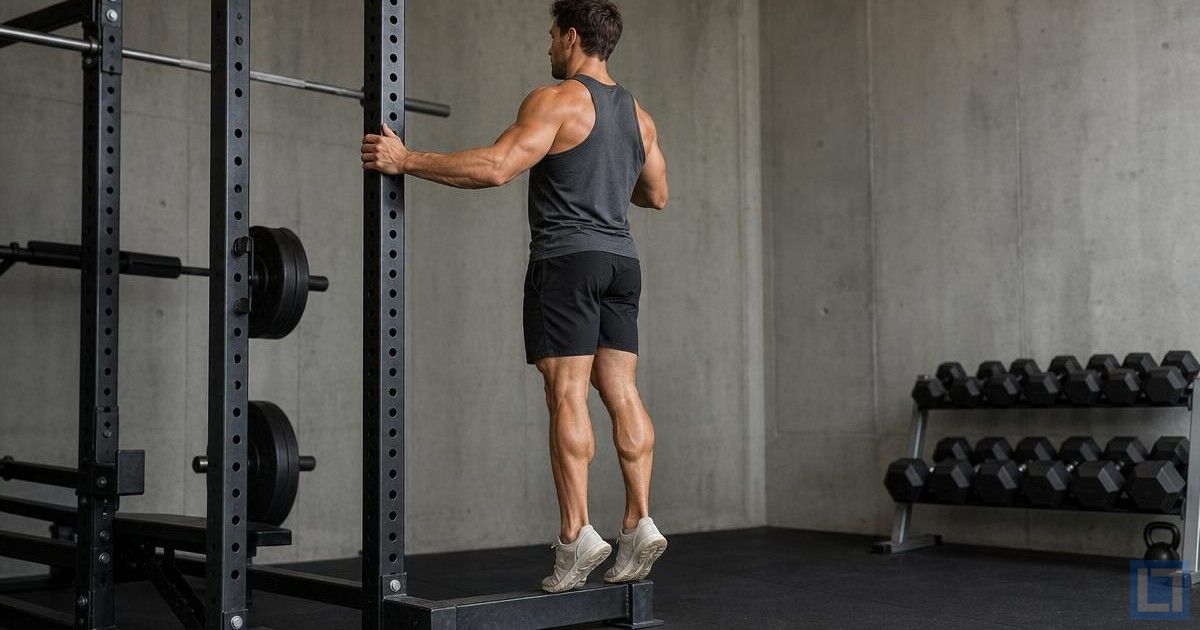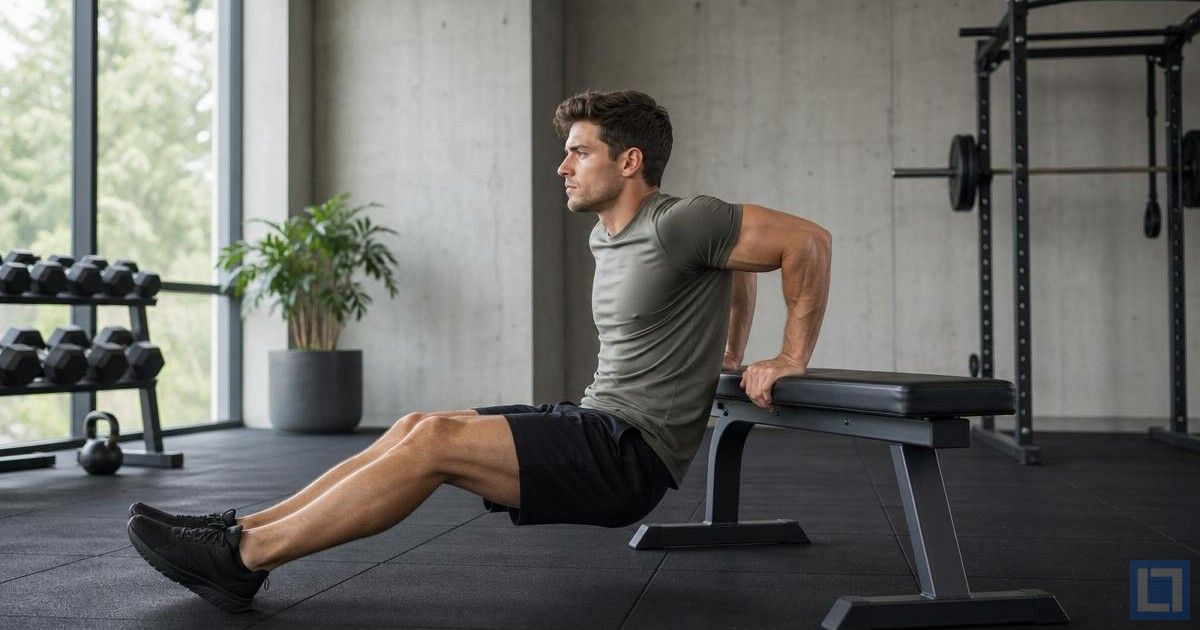
The triceps make up roughly 60 to 70 percent of the upper arm, which means they contribute more to overall arm size than the biceps despite getting less attention in most training programs. The lifters with the biggest, most impressive arms are the ones who train triceps with the same volume and intensity as biceps, not the ones who build arms through curls alone. Understanding tricep anatomy and training principles is the difference between sleeves that fit normally and sleeves that need to be cut up the side.
This guide covers tricep anatomy and the three heads that determine arm shape, the training principles that drive tricep growth, the foundational tricep exercises and the angles each one targets, and programming strategies that produce visible arm growth over months of consistent practice. The training is straightforward; the volume and consistency are what most lifters miss.
Tricep Anatomy And The Three Heads
The triceps consist of three heads (hence the name “tri-ceps”): the long head, the lateral head, and the medial head. Each head originates at a different location and contributes to overall arm shape differently. Complete tricep development requires training all three heads with appropriate volume.
The long head is the largest of the three and originates at the scapula (shoulder blade). It crosses both the shoulder and elbow joints, which means it loads most heavily during overhead movements where the arm is fully extended overhead. The long head produces the visible mass that fills the back of the upper arm.
The lateral head sits on the outside of the upper arm and produces the visible “horseshoe” shape from the side. It originates at the upper humerus (above the elbow) and loads most heavily during pressing movements with the elbow tucked in. The lateral head determines how thick the arm appears from the front and side views.
The medial head sits on the inside of the upper arm beneath the long head. It originates at the lower humerus and loads during nearly all tricep movements, but particularly during heavy pressing. The medial head provides the underlying density that supports overall arm thickness.
The Principles Of Tricep Growth
Tricep training follows several principles that produce visible growth when combined consistently. Most lifters who fail to grow triceps fail because they ignore one or more of these principles.
Train all three heads with separate exercises. Different exercises load different tricep heads. Overhead extensions load the long head heavily; close-grip pressing emphasizes the lateral and medial heads; pushdowns hit the medial and lateral heads. Most lifters do mostly one or two exercises that target the same heads repeatedly, which produces uneven development. The fix: include at least one overhead exercise, one pressing exercise, and one isolation exercise in every tricep workout.
Use sufficient volume. Most under-developed triceps come from insufficient volume. Effective tricep growth requires 12 to 20 weekly working sets across all exercises; lifters who do only 4 to 8 weekly sets typically see limited growth. Spread the volume across two to three sessions per week rather than cramming it into one session.
Mix rep ranges. The triceps respond well to both heavy loading (5 to 8 reps with significant weight) and higher rep ranges (10 to 20 reps). Heavy loading produces the strength gains that allow heavier loads on compound pressing exercises (bench press, overhead press); higher reps produce the metabolic stress and pump that drive direct muscle growth. Mixing both rep ranges across sessions produces stronger total development than either alone.
Use full range of motion. Most lifters cut range of motion on tricep exercises to allow heavier loads, which kills the effective stimulus. The fix: use weights light enough to lock out completely at the top of every rep and lower fully under control. Full range of motion produces stronger tricep growth than heavier weight with partial reps.
The Foundational Tricep Exercises
The exercises below cover all three tricep heads and form the foundation of any tricep mass-building program. Most well-designed tricep workouts pull three to four exercises from this list and run them for the prescribed sets and reps.
Barbell Lying Triceps Extension Skull Crusher

The Barbell Lying Triceps Extension Skull Crusher lies flat on a bench with a barbell or EZ curl bar held above the chest, then lowers the bar toward the forehead by bending at the elbows. The exercise hits all three tricep heads through full elbow extension.
The skull crusher is one of the most effective single tricep mass-builders that exists. The combination of heavy loading and full range of motion produces stronger growth per rep than most other tricep exercises. Run it for 3 to 4 sets of 8 to 12 reps as the primary tricep mass exercise on arm day.
Dumbbell Pronate Grip Triceps Extension

The Dumbbell Pronate Grip Triceps Extension lies flat with dumbbells held in pronated grip (palms facing the feet) and performs an extension motion. The pronated grip changes the muscle recruitment slightly compared to the standard neutral-grip skull crusher.
For variety in tricep training, the pronated-grip version produces slightly different muscle recruitment than standard skull crushers. The grip change can break through plateaus that traditional tricep work creates over time, and the dumbbell version allows each arm to work independently. Run it for 3 sets of 10 to 12 reps as accessory work.
Overhead Extensions For The Long Head
Most tricep programs underdevelop the long head because the standard pressing-and-pushdown approach hits primarily the lateral and medial heads. Adding dedicated overhead extension work fills this gap and produces the long-head growth that makes the arm look full from the back view.
Overhead Triceps Extension With Bed Sheet

The Overhead Triceps Extension with Bed Sheet uses a folded bed sheet anchored to a door and performs an overhead extension pattern with the sheet providing isometric resistance. The improvised setup produces strong tricep loading without any equipment beyond what most homes already have.
For travelers and lifters in extremely minimal-equipment situations, the bed sheet variation produces real overhead tricep loading without specialized gear. The tensile strength of folded fabric provides plenty of resistance for tricep work. Run it for 3 sets of 12 to 15 reps as accessory work in any minimal-equipment program.
Pushdown And Kickback Variations
Cable pushdowns and kickbacks isolate the triceps directly through their primary extension function. Both movement patterns produce stronger tricep loading per rep than compound pressing because they eliminate chest and shoulder involvement entirely.
Cable Triceps Pushdown On Floor

The Cable Triceps Pushdown on Floor kneels on the floor in front of a cable station with a high pulley attachment and pushes the bar or rope down by extending the elbows. The kneeling position eliminates body sway and forces strict tricep isolation.
Cable pushdowns are one of the most consistent tricep mass-builders that exists. The constant tension throughout the rep produces stronger contraction at the bottom (where the triceps are most contracted) than free-weight extensions, which often lose tension at the lockout. Run it for 3 to 4 sets of 12 to 15 reps as a finisher after heavier pressing or extension work.
Band Triceps Kickback

The Band Triceps Kickback hinges over and uses a resistance band anchored at a low point to perform a kickback motion. The band tension increases through the rep, which loads the lockout position (where the tricep is most contracted) most heavily.
For at-home tricep training, band kickbacks produce nearly identical stimulus to dumbbell kickbacks while requiring less equipment. The accommodating resistance pattern (lighter at the start, heavier at the lockout) actually produces stronger contraction at the peak than dumbbell variations because it matches the natural strength curve of the tricep extension. Run it for 3 sets of 12 to 15 reps.
How To Program For Tricep Growth
Tricep programming follows a structure designed to maximize total volume across the three heads while integrating with the indirect work that comes from chest and shoulder pressing. The framework below produces consistent growth for most lifters who follow it for 12+ weeks.
Train triceps two to three times per week. Heavier work (skull crushers, close-grip presses) once or twice per week. Higher-rep work (pushdowns, kickbacks, isolation) two to three times per week. Spread the volume across multiple sessions to drive faster growth than once-weekly high-volume sessions.
Run 12 to 20 weekly working sets across all tricep exercises. Most lifters who fail to grow triceps do less than 8 weekly sets; the productive range is 12 to 20 sets per week, split across two to three sessions. This volume includes both direct tricep work (extensions, pushdowns) and indirect work from heavy bench pressing and overhead pressing.
Hit all three heads with separate exercises. Every tricep workout should include at least one overhead exercise (long head), one pressing or skull crusher (lateral and medial heads), and one isolation exercise like pushdowns or kickbacks (medial and lateral heads). Including all three patterns produces fuller, more balanced tricep development than emphasizing only one or two patterns.
For more arm programming, see our best dumbbell tricep workouts and how to build bigger biceps. For broader compound training that hits the triceps as secondary movers, see our best compound exercises for strength.
Final Thoughts
Building bigger triceps is one of the most efficient physique upgrades a lifter can make. The triceps make up the majority of the upper arm, so dedicated tricep work produces visible arm growth faster than any other arm-training approach. The combination of heavy compound pressing, overhead extension work, and isolation exercises across all three heads delivers complete tricep development that fills out sleeves and changes the entire upper-body appearance.
Stay consistent with high volume. Most lifters who fail to build big triceps fail because they treat tricep training as an afterthought to chest and shoulder days rather than as dedicated work. The fix: program triceps with the same intentionality as any other muscle group. 12 to 20 weekly working sets across two to three focused sessions for 12 to 16 weeks produces visible growth for most lifters with appropriate nutrition.
Frequently Asked Questions
Why won’t my triceps grow?
The three most common reasons are insufficient volume (less than 8 weekly working sets), insufficient variety (only one or two exercises that hit the same head repeatedly), and partial range of motion (cutting reps short to allow heavier weight). Fix all three and most lifters see noticeable growth within 8 to 12 weeks. Genetics also play a role, but most under-developed triceps come from training mistakes rather than poor genetics.
Are triceps bigger than biceps?
Yes for most lifters. The triceps make up roughly 60 to 70 percent of the upper arm volume; the biceps make up the remaining 30 to 40 percent. This means dedicated tricep work produces visible arm growth faster than dedicated bicep work. Lifters with the biggest, most impressive arms typically have well-developed triceps that contribute most of the arm size.
How often should I train triceps?
Two to three times per week works for most lifters. The triceps recover within 48 to 72 hours of moderate training, but they get significant indirect work from chest day and shoulder day, which means dedicated tricep work compounds quickly with other upper-body training. Most productive programs do one heavier tricep session and one to two lighter sessions per week.
What’s the best tricep exercise for mass?
The barbell lying triceps extension (skull crusher) is the most effective single tricep mass-builder for most lifters. The combination of heavy loading and full range of motion produces stronger growth per rep than most other tricep exercises. Close-grip bench pressing comes second, followed by overhead extensions for long-head development. Most well-designed programs use all three.
Do compound exercises like bench press build triceps?
Yes, partially. Heavy bench pressing and overhead pressing produce significant indirect tricep loading because the triceps work as primary movers during the lockout portion of these lifts. However, compound exercises alone rarely produce maximum tricep growth because they emphasize the lateral and medial heads while underdeveloping the long head. Adding dedicated overhead extension work and isolation exercises produces fuller tricep development than compound pressing alone.