Strength training is built on a small handful of compound lifts. The lifts that produce the most strength per rep, recruit the most muscle mass, and transfer best to athletic and real-world performance are the same lifts that have anchored every serious strength program for the past hundred years. The best compound exercises for strength are not exotic, they are not new, and they are not optional in any program built for getting strong.
This guide covers the eight foundational compound lifts that drive most of the strength development in any well-designed program. For each one we cover what the lift trains, why it matters, and how to perform it correctly. Master these eight movements and you have the foundation that every more specialized program builds on.
What Makes A Compound Exercise
A compound exercise is any movement that involves motion at two or more joints, which means it recruits multiple major muscle groups simultaneously. The squat involves the hip, knee, and ankle joints and recruits the quads, glutes, hamstrings, calves, and lower back. The bench press involves the shoulder, elbow, and wrist joints and recruits the chest, front delts, and triceps. Compound lifts produce coordinated muscle recruitment that isolation exercises cannot match.
The strength advantage of compound lifts comes from this multi-joint recruitment. The body can produce more total force when multiple muscle groups work together, which means compound lifts allow heavier total loading than isolation exercises. Heavier loading drives more strength adaptation per rep, which is why compound lifts produce strength gains so much faster than isolation work for any program built around getting strong.
The Foundational Squat

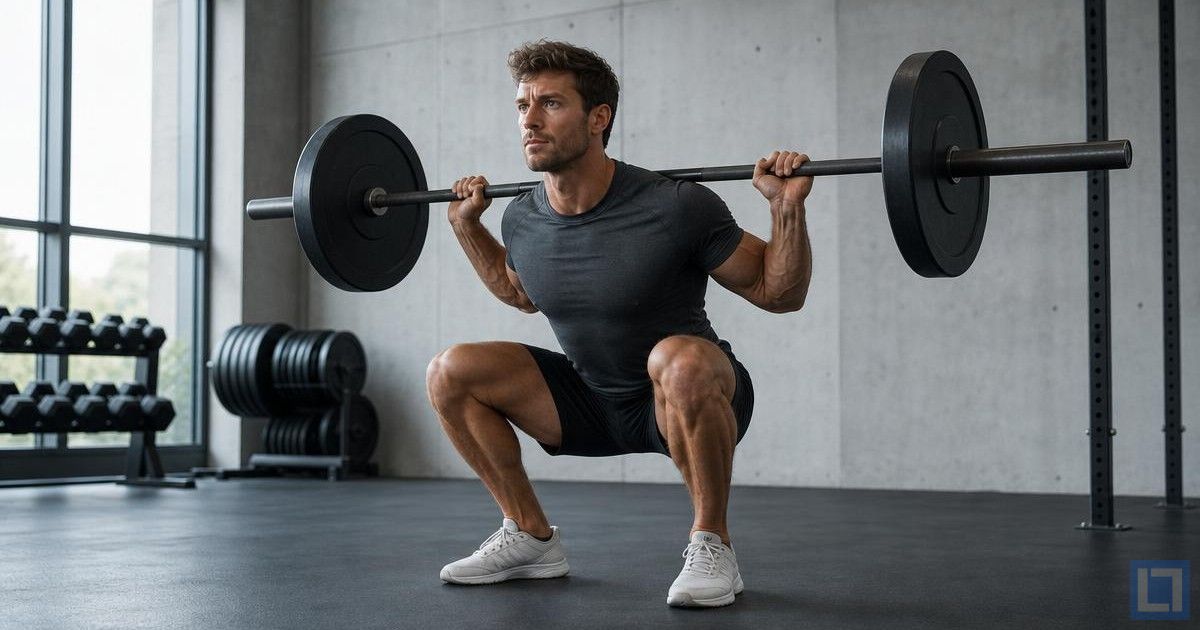
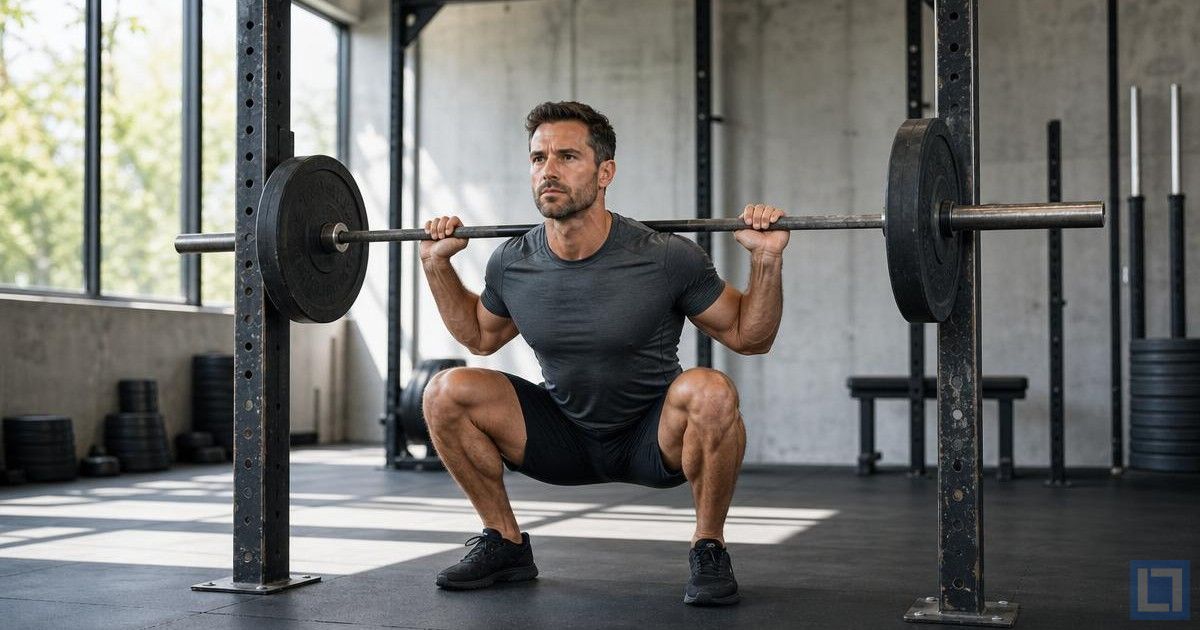
The Barbell Squat is the foundational lower-body compound exercise. With a barbell across the upper back, you squat to roughly parallel depth or below, then drive back to standing. The squat trains the quads, glutes, hamstrings, and lower back as a coordinated unit and serves as the most direct measure of total lower-body strength.
No serious strength program runs without heavy squatting. The bilateral compound load builds the entire lower body in one movement, and the technique demands transfer directly to the deadlift and overhead pressing patterns. Train it 1 to 2 times per week in the 3 to 6 rep range with progressively heavier loads over months and years.
The Deadlift

The Barbell Deadlift is the most direct test of full-body pulling strength that exists. Standing in front of a loaded barbell, you grip the bar, drive through the floor, and pull the bar to standing position with knees and hips locked out. The deadlift trains the entire posterior chain (lower back, glutes, hamstrings) along with the upper back, traps, and grip.
The deadlift produces more total-body strength gain per rep than any other exercise that exists. The recruitment patterns hit nearly every major muscle group from the calves to the upper traps. Train it 1 time per week in the 3 to 5 rep range; deadlifts recover slowly, and twice-weekly heavy deadlift training burns most lifters out within a few months.
The Bench Press

The Barbell Bench Press is the foundational upper-body compound exercise. Lying flat on a bench, you lower the bar to the chest and press it back to lockout. The bench press trains the chest, front delts, and triceps as a coordinated unit and serves as the standard measure of upper-body pressing strength.
The bench press is the most universally programmed upper-body strength lift. The technique demands proper shoulder blade retraction, foot positioning, and bar path control, all of which take time to master at heavy loads. Run it for 4 to 5 sets in the 3 to 6 rep range as the primary upper-body strength lift.
The Overhead Press

The Barbell Standing Military Press is the king of vertical pressing. Standing with a barbell at the shoulders, you press it overhead to lockout while keeping the body rigid. The military press trains the shoulders, triceps, and upper chest along with significant core and lower-body bracing demand.
The overhead press is one of the most under-programmed strength lifts in modern training. The bench press has largely replaced the standing press as the primary upper-body lift, but the standing press produces stronger total-body strength because the body has to brace against the overhead load. Run it for 3 to 4 sets in the 5 to 8 rep range as the primary vertical pressing exercise.
The Bent Over Row

The Barbell Bent Over Row hinges at the hips with a barbell in the hands and rows the bar to the lower chest or upper abdomen. The row trains the lats, mid-back, rear delts, and biceps simultaneously and serves as the primary horizontal pulling exercise in any compound-focused program.
Strong rowing strength supports the deadlift directly: the same muscles (lats, mid-back, lower back) that bent rows train are the muscles that hold the back rigid during heavy deadlifts. Rows also balance the heavy pressing volume that strength programs accumulate. Run them for 3 to 4 sets in the 6 to 10 rep range.
The Pull-Up

The Pull Up is the most direct measure of bodyweight pulling strength. Hanging from a bar with an overhand grip, you pull the body up until the chin clears the bar. The pull-up trains the lats, biceps, mid-back, and core simultaneously and complements bent rows by adding vertical pulling alongside horizontal pulling.
Both pulling functions (vertical and horizontal) need direct work for complete back development. Pull-ups specifically build the lat width that bent rows do not target as effectively. Adding weight via a dip belt or a dumbbell between the feet keeps the exercise progressing for years past basic bodyweight reps.
The Romanian Deadlift

The Barbell Romanian Deadlift is a hip-hinge variation that targets the posterior chain through controlled lowering of a barbell from the standing position. The RDL trains the hamstrings, glutes, and lower back through a deeper stretch than conventional deadlifts allow.
The RDL is one of the most valuable assistance lifts for both the conventional deadlift and the squat. The hamstring strength built from RDLs improves the deadlift lockout and the bottom of the squat directly. Run it for 3 sets in the 6 to 10 rep range as primary hamstring work or as deadlift assistance.
The Dip

The Triceps Dip is performed on parallel bars (or bench edges) with the body upright, lowering until the upper arms are roughly parallel to the floor and pressing back to lockout. The dip trains the chest, triceps, and front delts simultaneously and serves as one of the most effective bodyweight pressing exercises that exists.
Dips complement the bench press by hitting the lower chest and triceps from a different angle. Adding weight via a dip belt produces strength gains that rival bench press progress for many lifters. The dip is one of the most under-programmed compound exercises in modern training despite being one of the most effective.
How To Program Compound Exercises For Strength
A compound-focused strength program covers all major movement patterns: bilateral squat, hinge, horizontal press, vertical press, horizontal pull, and vertical pull. The eight lifts above cover all of these patterns and form the complete foundation of any strength program. Beginners can run them in a 3-day full-body structure (Monday/Wednesday/Friday with squat, bench, deadlift as the anchor lifts and rotating in the others). Intermediates often shift to a 4-day upper/lower or push/pull/legs structure for higher per-session focus.
Use rep ranges of 3 to 6 for the heavy compounds when strength is the primary goal. Lower reps with heavier loads produce faster strength gains than higher rep work. Add load slowly: 5 pounds per week on upper-body lifts, 5 to 10 pounds per week on lower-body lifts, until progress slows. Then switch to longer progression cycles where load increases happen every two to four weeks.
For session-level programming, see our best powerlifting program and best upper lower split routine guides.
Final Thoughts
The best compound exercises for strength have not changed in a hundred years. The squat, deadlift, bench press, overhead press, row, pull-up, RDL, and dip have anchored every serious strength program from old-school weightlifting clubs to modern powerlifting and strength sport programming. The lifters who get genuinely strong are the ones who master these eight movements, add load slowly over years, and resist the temptation to chase exotic variations.
Stay focused on the foundation. Most lifters who fail to build real strength fail because they spread their effort across too many exercises and never develop mastery on any of them. The opposite approach (picking the eight lifts above and working them obsessively for years) produces the strongest version of any lifter. Strength is built through repetition, not novelty. Pick the lifts, learn them perfectly, and add load.
Frequently Asked Questions
What’s the difference between compound and isolation exercises?
Compound exercises involve motion at multiple joints and recruit multiple major muscle groups simultaneously (squat, deadlift, bench press, etc.). Isolation exercises involve motion at one joint and target one specific muscle (bicep curl, leg extension, lateral raise). Compound exercises produce more strength gain per rep because of the multi-joint recruitment; isolation exercises target specific muscles for development that compound work alone may not achieve.
How many compound exercises should be in a strength program?
Most well-designed programs use 4 to 8 compound lifts as the foundation, with 2 to 4 isolation exercises added for muscle balance and weak point work. The classic powerlifting program uses 3 (squat, bench, deadlift) plus 2 to 4 assistance compounds. The classic strongman program uses 5 to 7. The classic bodybuilding program uses 4 to 6 compounds plus heavy isolation work. The number depends on the goal.
Can I get strong without barbells?
Yes for beginners and intermediates, with diminishing returns for advanced lifters. Dumbbells, kettlebells, and bodyweight movements produce real strength gains for years before lifters bump up against the load ceiling barbells eventually surpass. Advanced lifters chasing maximum strength sometimes benefit from adding barbell work, but consistent training with any free-weight tool produces meaningful strength gains.
How often should I train compound exercises?
Most strength programs train each compound lift 1 to 2 times per week. Heavy squats and deadlifts typically run 1 time per week due to slower recovery; bench press and overhead press often run twice per week. Total weekly volume across all compounds matters more than session count: 12 to 20 working sets per major lift per week is the productive range for most lifters.
What rep ranges produce the most strength?
The 3 to 6 rep range produces the fastest pure strength gains for most lifters. Lower reps with heavier loads (1 to 3) develop maximum-effort strength but recover slowly and require careful programming. Higher reps (8 to 12) build muscle that supports strength but produces strength gains at a slower rate per session. The 3 to 6 range balances strength gain, muscle growth, and recovery for most programs.