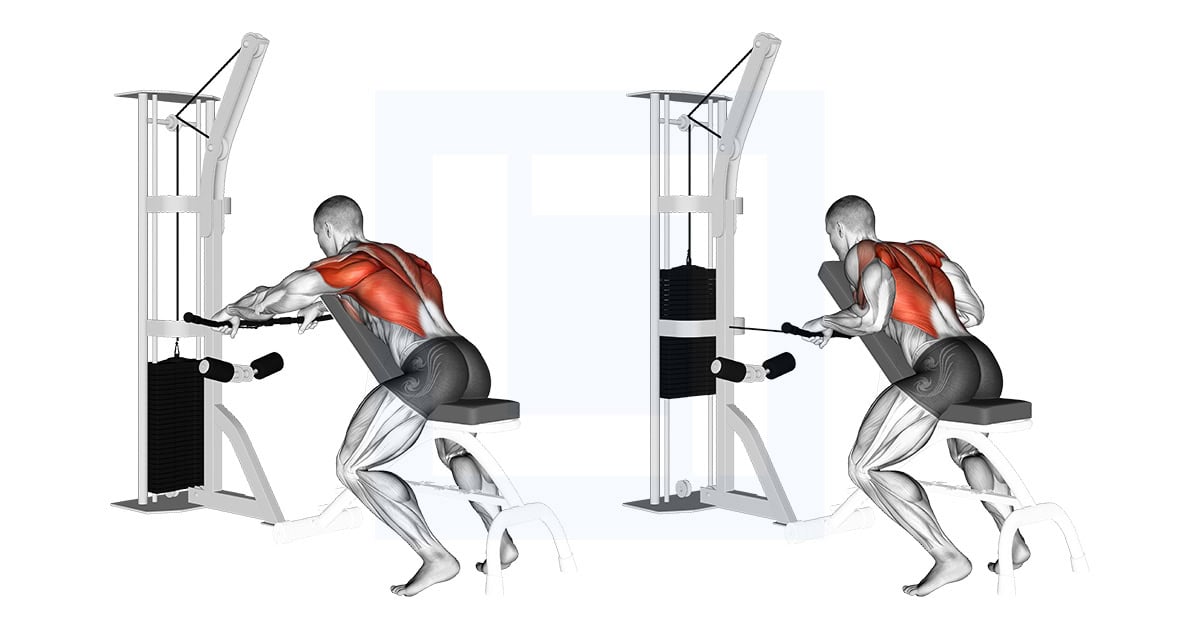
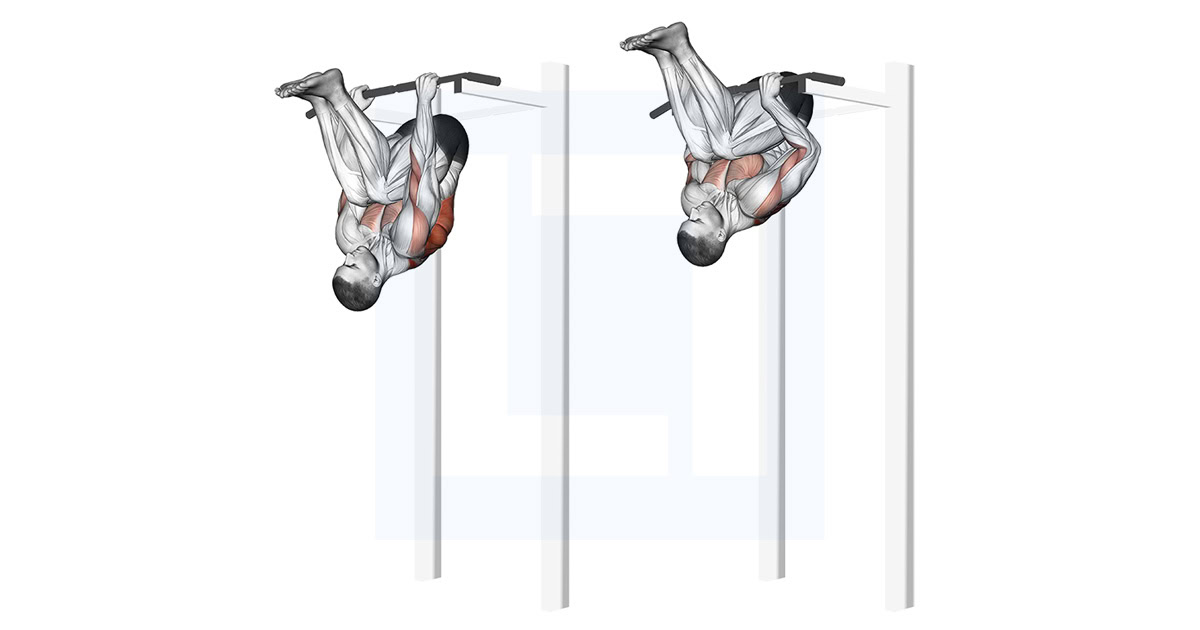
Barbell Bent Over Row

Description
The barbell bent over row is a horizontal pulling exercise where you hinge at the hips with a loaded barbell and row it to your torso. It builds size and strength throughout the entire back — lats, rhomboids, traps, and rear delts — and serves as one of the best mass-building exercises for the upper body. It also builds the core and lower-back endurance through the static hold position.
Muscle Group
Equipment Required
Barbell Bent Over Row Instructions
- Stand with feet hip-width apart in front of a loaded barbell on the floor.
- Hinge at the hips and bend your knees slightly to grip the bar with hands just outside your knees, using a double-overhand grip.
- Stand up with the bar, then hinge forward at the hips again until your torso is roughly 45 degrees from horizontal — not parallel to the floor (that puts more strain on the lower back).
- Let the bar hang at arm’s length just below your knees. Brace your core, pull your shoulders down and back, and lock in your back angle.
- Pull the bar to your lower chest or upper abdomen by driving your elbows up and back. Squeeze your shoulder blades together at the top.
- Pause briefly with the bar against your body, then lower it under control back to the start position.
- Maintain the same torso angle throughout the entire set — do not rock or use momentum.
- Repeat for the desired number of reps, then lower the bar to the floor between sets if needed.
Barbell Bent Over Row Form & Visual

Barbell Bent Over Row Benefits
- Builds the entire back: lats, rhomboids, traps, rear delts
- Develops grip strength and biceps as secondary movers
- Strengthens the lower back and core through the isometric hold
- Carries over to deadlift lockout and posture
- Allows heavy loading for serious back development
- One of the best mass-building exercises for the upper body
Barbell Bent Over Row Muscles Worked
- Latissimus dorsi
- Trapezius (middle and lower fibers)
- Rhomboids
- Posterior deltoid
- Biceps brachii and brachialis
- Erector spinae (isometric)
- Forearms and grip
- Core (stabilizer)
Barbell Bent Over Row Variations & Alternatives
- Barbell Pendlay Row
- Dumbbell Bent Over Row
- Barbell One-Arm Bent Over Row
- Reverse-Grip Barbell Row (Yates Row)
- Wide-Grip Barbell Row
- Underhand-Grip Bent Over Row
- Pause Barbell Row
- Dumbbell One-Arm Bent Over Row
- Smith Bent Over Row
- Kettlebell Bent Over Row