The kettlebell swing is one of the most efficient single exercises ever invented. The combination of explosive hip drive, posterior chain loading, and cardiovascular response produces strength, power, and conditioning adaptations simultaneously in one continuous motion. Despite its effectiveness, the swing is more technical than it looks; most lifters who try the exercise without coaching develop bad habits that limit results and increase injury risk.
This guide covers exactly how to set up the kettlebell swing, the common form mistakes that kill the exercise, the progressions that build the swing pattern from scratch, and the advanced variations that keep the exercise challenging at every level. The technique is the difference between a swing that builds power and conditioning and one that just produces a sore lower back.
What Is A Kettlebell Swing
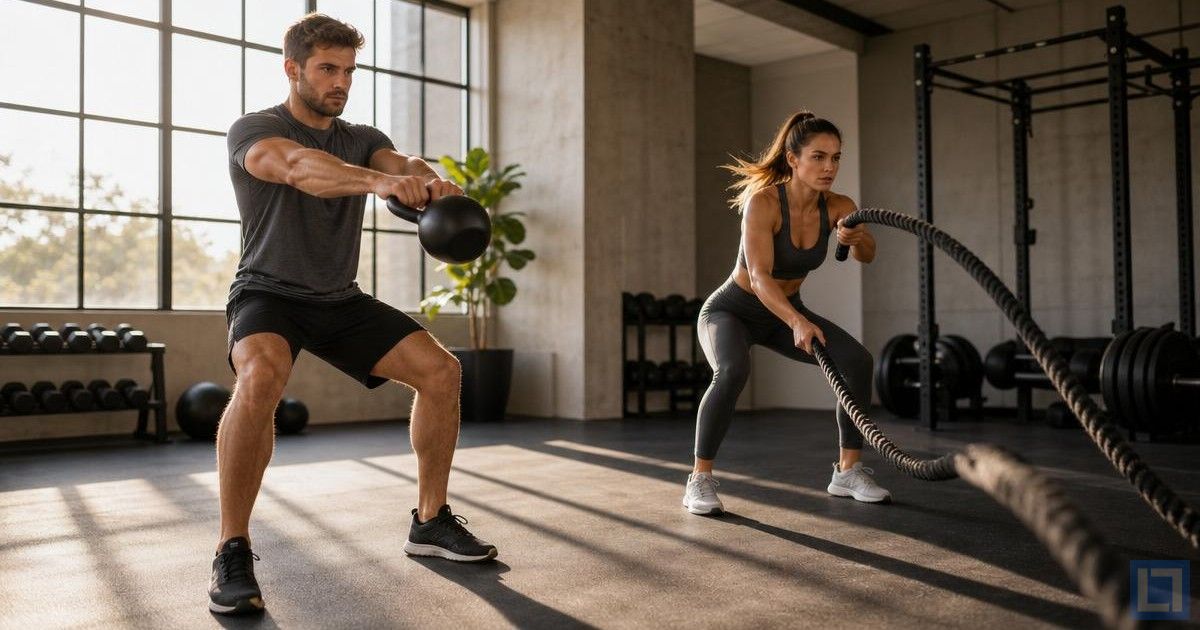
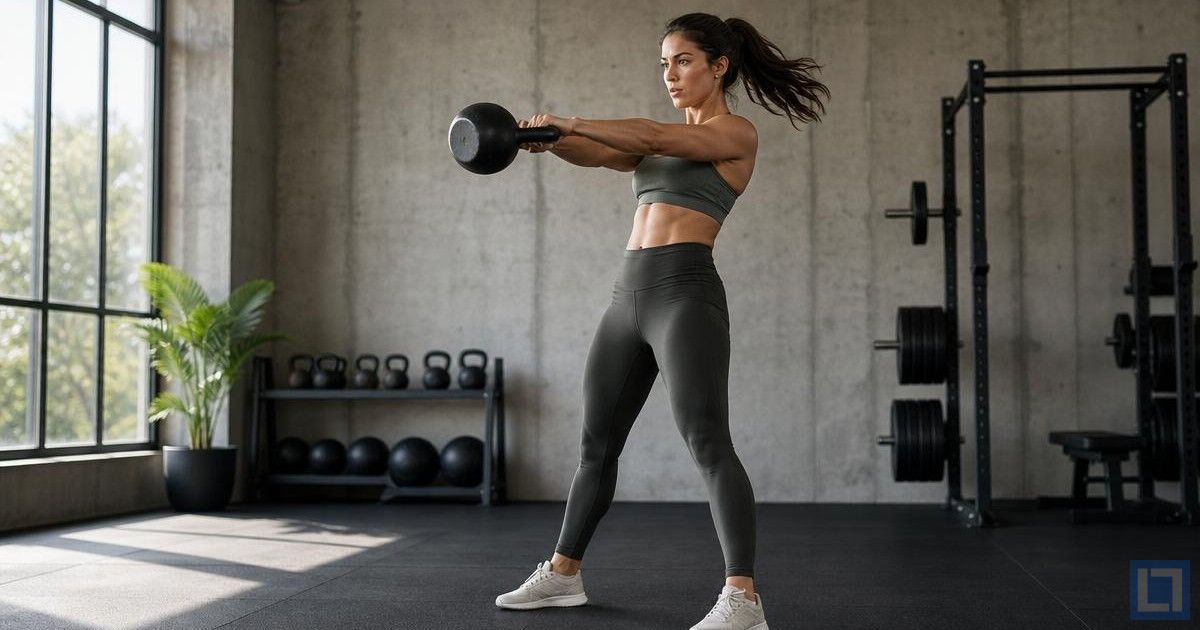
The kettlebell swing is a ballistic hip-hinge exercise where a kettlebell is swung from between the legs to chest height (Russian style) or fully overhead (American style) using explosive hip drive. The motion looks like a hybrid between a deadlift and a vertical jump: the legs and hips explode forward and upward to launch the kettlebell, and the arms simply guide the bell along its trajectory rather than lifting it.
The exercise originated in Russian kettlebell sport (Girevoy Sport) and was popularized in Western strength training by Pavel Tsatsouline in the early 2000s. It has since become one of the most widely-practiced exercises in CrossFit, kettlebell training, and general strength and conditioning programs because of its unique combination of explosive strength, conditioning, and minimal equipment requirements.
The Anatomy Of A Proper Kettlebell Swing
A proper kettlebell swing has several precise positioning details that determine whether the exercise produces strong results or wastes effort. Five elements matter most.
Hip-hinge mechanics. The swing is a hip-hinge motion, not a squat. The hips travel back as the bell swings between the legs, and forward as the bell swings up. The knees only bend slightly. Most lifters who struggle with swings turn the exercise into a squat by bending the knees too much, which kills the hip drive and shifts loading to the quads.
Spinal position. The spine stays neutral throughout the swing. Flat back, chest up, neck in line with the spine. Most beginner technique mistakes involve rounding the back at the bottom (which loads the lumbar spine dangerously) or hyperextending at the top (which compresses the lumbar spine). Neither extreme is safe at heavy loads.
Hip drive timing. The hips drive the bell, not the arms. At the bottom of the swing, the lifter snaps the hips forward explosively while the arms stay relaxed and simply ride along. The bell reaches chest height (or higher) entirely from the momentum of the hip drive, with no arm pulling involved.
Bell trajectory. The kettlebell follows a clean arc with the wrists staying neutral throughout. The bell does not rise above the head height (in Russian-style swings) or it travels overhead in a controlled arc (in American-style). The trajectory looks like a pendulum swinging from the hips, not like a kettlebell being thrown.
Breathing pattern. Inhale at the bottom of the swing as the bell travels back. Exhale forcefully as the hips drive forward and the bell rises. The breathing pattern increases trunk pressure during the explosive phase, which protects the lumbar spine and improves power output. Lifters who hold their breath throughout swings typically gas out faster and produce less power per rep.
The Standard Kettlebell Swing

The Kettlebell Swing is the foundational version of the exercise. With a kettlebell held in both hands, you hinge at the hips and swing the bell back between the legs, then drive the hips forward explosively to swing the bell to chest height. The classic Russian-style chest-height swing produces explosive hip drive without the technical demands of overhead variations.
Build a base of 5 sets of 15 to 20 clean reps with a moderate-weight bell (16 to 24 kg for most men, 12 to 16 kg for most women) before progressing to harder variations. The standard swing pattern carries over to every other kettlebell exercise that uses hip drive, so mastering it first builds the foundation for the entire kettlebell training system.
The Most Common Kettlebell Swing Mistakes
Most lifters who fail to feel the swing in their hips and posterior chain are making one or more of the same handful of mistakes. The list below covers what to fix.
Squatting instead of hinging. The most common mistake is bending the knees too much and turning the swing into a quad-dominant squat. The fix: focus on hip-hinge mechanics by sending the hips back rather than down. The knees only bend slightly throughout the swing.
Lifting the bell with the arms. The second most common mistake is using arm strength to lift the kettlebell, which produces weak, slow swings and exhausts the shoulders before the hips do any work. The fix: relax the arms completely and let the hip drive launch the bell. The arms only guide the trajectory, not lift the weight.
Rounded back at the bottom. As fatigue accumulates, many lifters let the lower back round at the bottom of the swing, which loads the lumbar spine in a vulnerable position. The fix: maintain a flat back throughout. If the back wants to round, the load is too heavy or the hip-hinge depth needs to decrease.
Overextending at the top. Some lifters drive the hips so far forward that the lower back hyperextends at the top of the swing, which compresses the lumbar spine. The fix: stop the hip drive when the hips are fully extended (glutes squeezed hard), not when the lower back is bent backward. The body should look like a vertical line at the top, not an arch.
Beginner Progressions Before The Standard Swing
Lifters who struggle with the hip-hinge mechanics of the standard swing should not push through poor reps; bad form establishes bad patterns that get harder to fix later. The progressions below build the hip-hinge pattern over a few weeks of consistent practice.
Start with the kettlebell deadlift. Practice picking the kettlebell up from the floor with a hip-hinge pattern (flat back, hips back, drive through the floor) for 3 sets of 8 to 12 reps. The slow controlled deadlift teaches the hinge mechanics that the explosive swing demands.
Progress to the kettlebell Romanian deadlift. Hold the bell standing and lower it under control to mid-shin or wherever hamstring flexibility allows. The RDL builds the eccentric loading pattern that the bottom of the swing demands.
Practice swings with reduced range. Once the hinge pattern feels solid, perform swings that stop at hip height (not chest height). The reduced range lets beginners feel the hip drive without worrying about the bell trajectory or shoulder mobility limitations.
Advanced Swing Variations
Lifters who have mastered the standard chest-height swing benefit from variations that add new training stimuli. The variations below introduce unilateral loading, overhead range of motion, and accommodating resistance.
Kettlebell Single Arm Swing

The Kettlebell Single Arm Swing performs the swing pattern with one hand instead of both. The unilateral grip catches strength imbalances and adds significant core demand because the body has to brace against the asymmetric load on every rep.
Single-arm swings are one of the most underrated kettlebell variations that exist. The unilateral loading forces the entire core to engage to prevent the body from twisting toward the loaded side, which produces stronger functional core work than bilateral swings. Run them for 3 to 4 sets of 12 to 15 reps per side after mastering the bilateral pattern.
Kettlebell Full Swing

The Kettlebell Full Swing performs the swing motion all the way overhead rather than stopping at chest height. The kettlebell travels through a full range of motion from between the legs to fully overhead, which adds significant shoulder loading on top of the standard hip-hinge mechanics.
The American-style overhead swing is the cornerstone of CrossFit kettlebell programming. The combination of explosive hip drive and overhead loading hits the posterior chain, shoulders, and core simultaneously. It is more technical than the standard swing and requires solid shoulder mobility; build the standard swing first before progressing to the overhead version.
Kettlebell Banded Swing

The Kettlebell Banded Swing adds a resistance band attached to the kettlebell at one end and anchored to a fixed point at the other. The band tension increases as the kettlebell swings up, which adds significantly more loading at the top of the swing than a standard swing.
The accommodating resistance pattern (lighter at the bottom, heavier at the top) trains the lockout portion of the hip extension more effectively than constant-load variations. The band also speeds up the eccentric portion, which trains the body to absorb force quickly. Use it as a strength variation after the standard swing is mastered.
How To Program Kettlebell Swings
Kettlebell swings fit several roles in any program: primary explosive exercise, conditioning finisher, or dedicated swing-focused session. The right rep counts and frequency depend on which role they are filling.
As primary strength work, use heavier weight for lower reps: 5 sets of 8 to 12 reps with a heavy bell. As conditioning, use moderate weight for higher reps: 5 to 10 sets of 20 to 30 reps with shorter rest. As a dedicated swing session, run high-volume protocols like 10 sets of 10 reps every minute on the minute (10×10 EMOM), or the classic Russian protocol of 10 minutes of continuous swings with brief rest as needed.
Train swings two to four times per week. Swings recover faster than heavier strength work because the loads are typically moderate. Most lifters do well with three sessions per week (Monday/Wednesday/Friday) with rest days between for recovery.
For more swing-focused programming, see our best kettlebell swing workouts. For broader kettlebell programming, see our best kettlebell workouts and best full body kettlebell workouts.
Final Thoughts
The kettlebell swing is one of the most efficient exercises that exists when performed correctly. The combination of explosive hip drive, posterior chain loading, and cardiovascular response produces results that few other exercises can match in similar time. Master the hip-hinge mechanics first, then progress through reps, weight, and variations over months of consistent practice.
Stay focused on hip drive. The most common technique mistake lifters make is using arm strength to lift the bell rather than letting the hip drive launch it. The arms should feel like ropes attaching the kettlebell to the body; all the power comes from the hips. Once the hip drive is dialed in, swings become both more effective and easier to perform at high volume.
Frequently Asked Questions
What kettlebell weight should I start with?
Most beginner men start with 16 kg (35 pounds) and most beginner women start with 8 to 12 kg (18 to 26 pounds). Once the standard chest-height swing feels manageable for sets of 20 reps, progress to 20 or 24 kg (men) or 12 to 16 kg (women). Strong intermediate male lifters typically work with 24 to 32 kg for swings; advanced lifters use 32+ kg.
How many swings should I do per workout?
Workouts vary widely. A simple structure runs 5 sets of 15 to 25 reps for 75 to 125 total swings. The classic Russian protocol does 10 sets of 10 reps with short rest periods. CrossFit-style workouts often do continuous swing sets for 30 seconds to 2 minutes. Total volume of 100 to 200 swings per workout is typical for general fitness; competitive kettlebell sport athletes go far higher.
Are swings safe for the lower back?
Yes, when performed with proper hip-hinge technique. The most common back-strain cause is using the lower back to lift the bell rather than driving through the hips. Lifters with existing lower-back issues should master the kettlebell deadlift and Romanian deadlift first to dial in the hinge pattern before progressing to full-speed swings.
What’s the difference between a Russian and American swing?
The Russian swing stops the bell at chest height with arms parallel to the floor; the American swing continues the bell all the way overhead. Russian swings produce more posterior chain loading per rep; American swings add overhead shoulder work. Most strength and conditioning programs use Russian swings as the standard; CrossFit programs typically use American swings.
How often should I do kettlebell swings?
Two to four times per week works for most lifters. Swings recover quickly because the loads are moderate. Daily swing practice is feasible for advanced lifters as long as total volume stays moderate (50 to 100 swings per session for daily training). Single high-volume sessions (200+ swings) need 48+ hours of recovery before the next swing session.