A strong core does more than look good. It stabilizes everything you do, from heavy compound lifts to swinging a golf club to picking up a child without tweaking your back. The best kettlebell ab workouts deliver that kind of functional strength better than most other equipment because the offset weight forces your core to stabilize on every rep, even during exercises that look like they target other muscles.
Below are ten effective kettlebell ab and core exercises, each one bringing something different to the table. Some are direct ab loaders like weighted sit-ups and Russian twists. Others, like windmills and rotational deadlifts, train the core through movement patterns your body actually has to perform in the real world. Mix and match these into your routine to build a complete and resilient core.
Kettlebell Russian Twist

The Kettlebell Russian Twist is one of the most effective ways to load up an oblique-focused movement. You sit balanced on your tailbone with your knees bent and feet either lifted or planted, holding a kettlebell at your chest. From there, you rotate your torso side to side, touching the kettlebell to the floor on each side.
Adding a kettlebell to the standard Russian twist progresses the movement significantly. Bodyweight twists become easy fast, but loading the rotation forces your obliques to actually work hard against resistance. The result is real strength gain in muscles that often get neglected by traditional crunches and planks.
Focus on rotating from your trunk rather than swinging your arms. Move with control on each rep, especially as you start to fatigue. Quality reps will build more strength than speed.
Kettlebell Dead Bug

The Kettlebell Dead Bug is an advanced progression of the bodyweight dead bug, adding external load by holding a kettlebell locked out overhead. The weight pulls your arms toward the floor, creating a much greater anti-extension demand on the core throughout each rep.
Dead bugs are one of the smartest core exercises out there because they train the abs to do their actual job: prevent unwanted spinal extension. Layering a kettlebell on top forces your core to work harder to keep your lower back pressed flat against the floor as you alternate leg extensions.
Keep the kettlebell stable directly over your shoulders the entire time. If your lower back starts arching off the floor, lighten the load or shorten the range of motion until you can hold position throughout the set.
Kettlebell Sit Up

The Kettlebell Sit Up takes the classic sit-up and adds direct loading by holding a kettlebell at your chest or extended overhead. The added weight increases the demand on the rectus abdominis and hip flexors, building visible ab strength and size beyond what bodyweight sit-ups can achieve.
Where bodyweight sit-ups become an endurance exercise after the first few minutes, weighted sit-ups stay within strength and hypertrophy territory. That makes them a much better tool if you are trying to actually build the abs rather than just burn them out.
Anchor your feet under something heavy or have a partner hold them. Sit up under control and resist the way down rather than just dropping back to the floor. The lowering portion is where most of the muscle-building work happens.
Kettlebell Sit Up Press

The Kettlebell Sit Up Press combines a full sit-up with an overhead press at the top. Lying on your back with a kettlebell at your chest, you sit up and press the kettlebell overhead once you reach the top position. The combo trains the abs through the sit-up and the shoulders through the press in a single repetition.
It is a useful movement when you want to get more done in less time. Pairing two patterns into one exercise saves training minutes and forces your core to stabilize an overhead load at the most challenging position. Just be aware that the press caps the load at whatever your weakest link can handle, so the sit-up portion will feel relatively easy compared to a pure weighted sit-up.
Keep the press strict at the top. Lockout fully overhead before you start lowering yourself back down, and make sure the kettlebell stays stable throughout the descent.
Kettlebell Single Arm Sit Up

The Kettlebell Single Arm Sit Up is a Turkish get-up style move where a kettlebell is held locked out overhead with one arm during a full sit-up. The combination challenges the core to work through a sit-up while one shoulder stabilizes the kettlebell vertically overhead.
Holding load on one side creates an anti-rotation demand that the standard sit-up does not have. Your obliques have to fight to keep your trunk square as you sit up, which is exactly the kind of demand most real-world and athletic movements impose.
Pick a manageable weight. The sit-up itself is not the limiter here, the overhead lockout is. Eyes track the kettlebell throughout the rep so the arm stays vertical and the shoulder stays packed.
Kettlebell Standing Slingshots

Kettlebell Standing Slingshots, also known as body passes or halos, involve passing a kettlebell around your body in a horizontal circle. Holding the kettlebell in front of you, you swing it around behind your back and return it to the front in a continuous circular motion.
The exercise trains shoulder mobility, core stability, and grip endurance simultaneously. Your core fires constantly to resist getting pulled in the direction of the moving load, which is a more realistic core demand than holding a static plank.
Use slingshots as a warm-up, an active recovery between heavier sets, or as a finisher at the end of a session. Pass the kettlebell smoothly without letting it dictate your stance, your hips and shoulders should stay square through the entire circle.
Kettlebell Pirate Ships

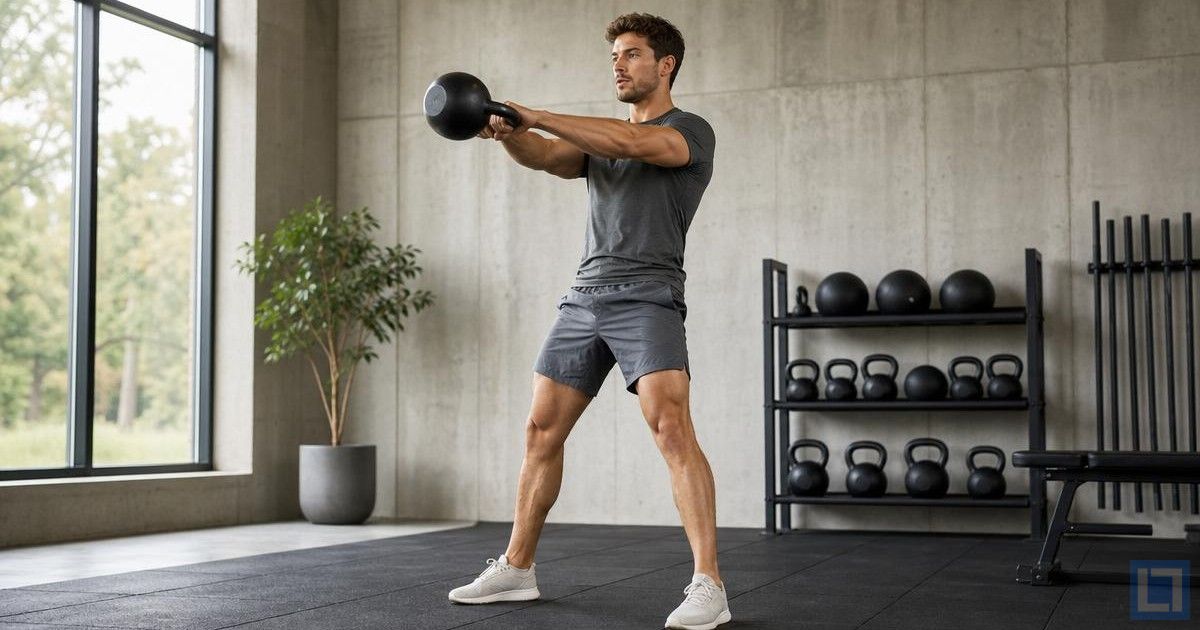
Kettlebell Pirate Ships, also called lateral swings or pendulum swings, swing a kettlebell in a horizontal arc from side to side at hip height. The lateral swing pattern targets the obliques, the hip rotators, and total-body coordination, making it a complete oblique-focused movement.
Most kettlebell swing variations move the load forward and back. Pirate ships flip the plane and load lateral motion instead, which most lifters never train directly. That makes them a strong choice when you are trying to round out a core program that already includes plenty of crunching and twisting.
Generate the swing from your hips, not your arms. The arms just carry the bell side to side while your hips and core do the work. Keep the bell low and let the momentum move with you rather than against you.
Kettlebell Lunge With Twist

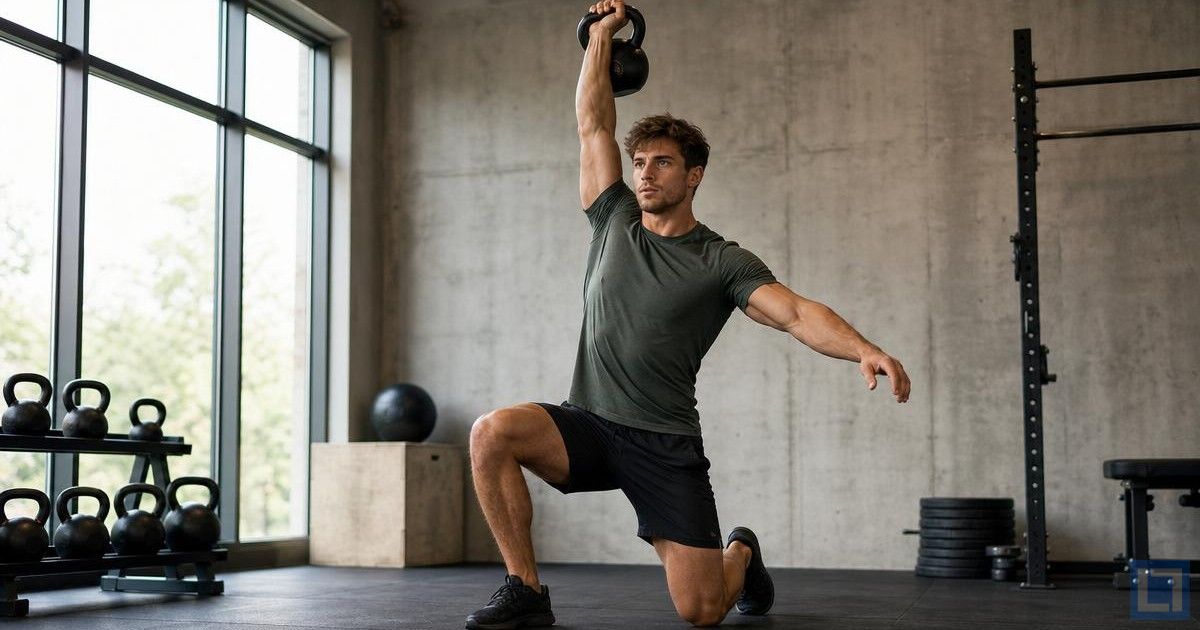
The Kettlebell Lunge With Twist combines a forward or reverse lunge with a torso rotation at the bottom position. Holding a kettlebell at your chest, you twist toward the front leg at the bottom of the lunge, engaging the obliques while building leg strength.
The standout benefit here is that your core is being trained while loaded under a single-leg movement. That replicates how the core actually works during athletic movements like throwing, swinging, or change-of-direction running, more so than any seated or floor-based ab exercise can.
Twist toward the front leg, not away from it. Keep the kettlebell tight to your chest as you rotate, otherwise the momentum of the load swinging out can pull you off balance and turn the lunge sloppy.
Kettlebell Advanced Windmill

The Kettlebell Advanced Windmill is a progression of the standard kettlebell windmill, often performed with the kettlebell balanced bottoms-up (handle down, bell up) overhead, or with two kettlebells. The bottoms-up grip demands intense shoulder stability through the windmill movement, building advanced strength and control.
Windmills are one of the few drills that hit the obliques, hip mobility, and shoulder stability all in one shot. The advanced bottoms-up version pushes shoulder stability requirements through the roof, which carries over to overhead pressing, kettlebell sport, and any movement where your shoulder needs to lock in under load.
This is not a starter movement. Get comfortable with the regular windmill first, then progress. Move slowly and stop the set the moment your form starts breaking down.
Kettlebell Rotational Deadlift

The Kettlebell Rotational Deadlift combines a single-leg deadlift pattern with a torso rotation. As you stand up from the deadlift, you rotate the kettlebell across your body, building hip drive linked to core rotation. It is a strong movement for athletes whose sport demands power transfer through the trunk.
Rotational power is hugely undertrained in most strength programs. Linking it to a hinge pattern teaches your core to do something it actually has to do in real life: transfer force from the legs through a rotating torso into the upper body. Throwers, swingers, and combat athletes especially benefit.
Start light. The rotation can pull you off balance fast if you bring too much weight too soon. Set up on one leg, hinge to the kettlebell, and rotate your torso through as you stand. Eyes follow the bell across the body.
How To Program These Workouts
You do not need all ten of these in a single session. Pick three to four exercises and rotate through them at the end of your strength training, or run them as a standalone core circuit two or three times a week.
A useful split is one direct ab loader (Russian twist, sit-up, or dead bug), one rotational or oblique movement (pirate ships, lunge with twist, or rotational deadlift), and one stability move (windmill or single arm sit up). That gives you anti-extension, anti-rotation, and rotational training in a single session, which covers everything the core actually has to do.
Keep the load honest. Form should never break down for the sake of weight. If a kettlebell is making your lower back arch on a dead bug, drop down a size. The point of loaded core work is to make stability harder, not to set personal records.
Final Thoughts
The best kettlebell ab workouts go beyond the typical crunch-and-plank routine you see in most gym programs. Loading the core with a kettlebell lets you actually build strength and size in muscles that bodyweight work alone tends to neglect. Whether your goal is visible abs, a stronger trunk for heavier lifts, or better athletic performance, the ten exercises here will get you there.
Start with the ones that match your current ability, work on your form, and progress the load as you get stronger. Consistency over weeks and months is what builds real results, not any single workout.
Frequently Asked Questions
How heavy should my kettlebell be for ab workouts?
Start lighter than you think. A kettlebell that is too heavy will force compensations and put your lower back at risk on movements like the Russian twist and sit-up. For most people, 12 to 20 pounds (around 6 to 9 kg) is a good starting point for direct ab loading, with heavier weights reserved for movements like the rotational deadlift where the legs share the load.
How often can I train my abs with kettlebells?
Two to four sessions per week works for most people. The abs recover relatively quickly compared to larger muscle groups, but they still need rest days to grow. If you train heavy core work after every leg or back day, you will get plenty of stimulus without overtraining.
Can kettlebell ab workouts replace traditional ab exercises?
They can be the foundation, but variety still helps. Bodyweight movements, hanging exercises, and machine-based core work all train the core in slightly different ways. Kettlebell-loaded work is excellent for building actual strength, but combining it with bodyweight stability work and pure isolation exercises gives you the most complete result.
Will kettlebell ab workouts help me get visible abs?
Building the abs is one piece of the puzzle. Loaded core work like the exercises above will absolutely thicken and strengthen the rectus abdominis and obliques, which makes them more visible at any body fat level. Whether they actually show through depends on your overall body composition, which is driven primarily by nutrition, not abs exercises.
Are these exercises safe for beginners?
The Russian twist, sit-up, and standing slingshots are beginner-friendly with a light load. The dead bug, lunge with twist, and pirate ships work for intermediate lifters. Save the windmill, single arm sit-up, and rotational deadlift for after you have built a base of core strength and shoulder stability with the simpler movements.