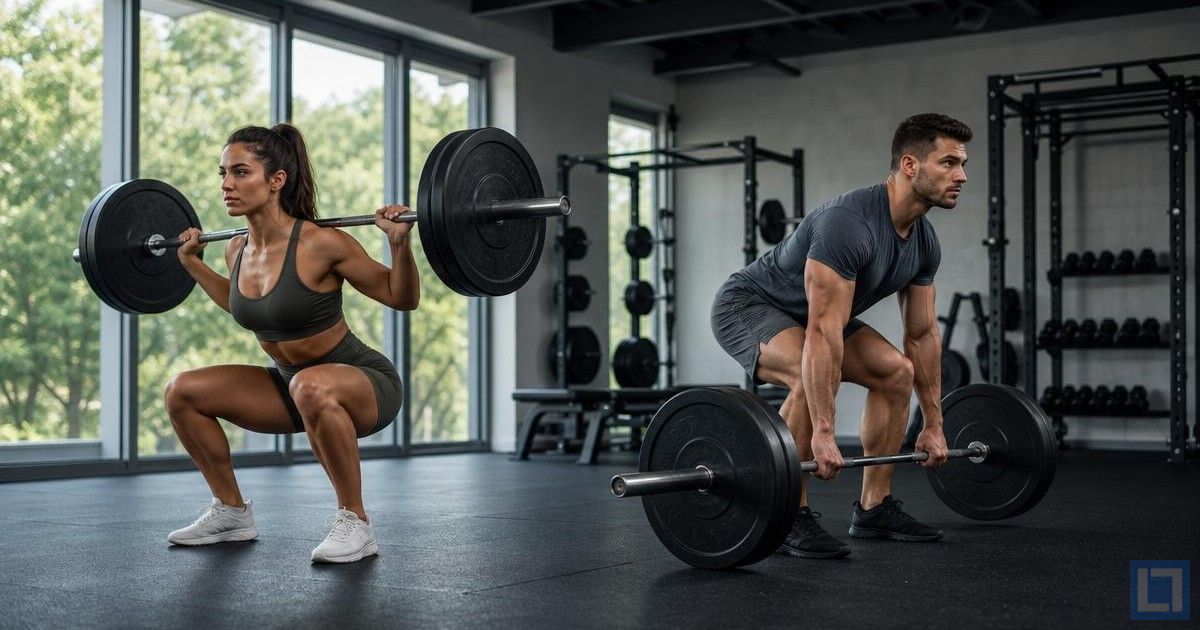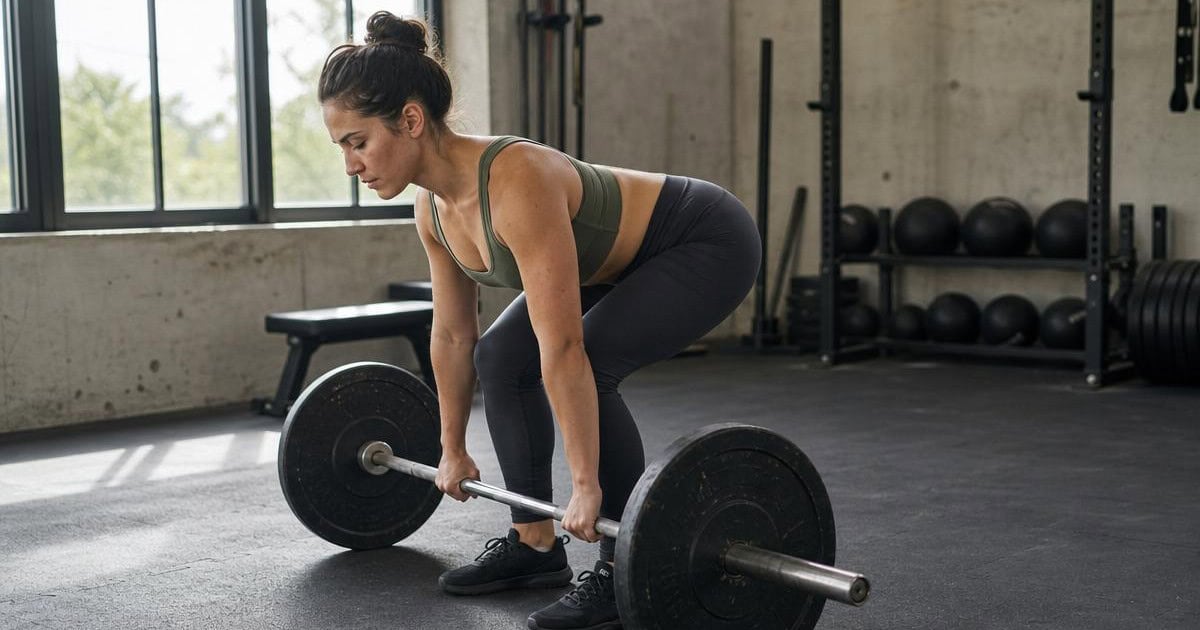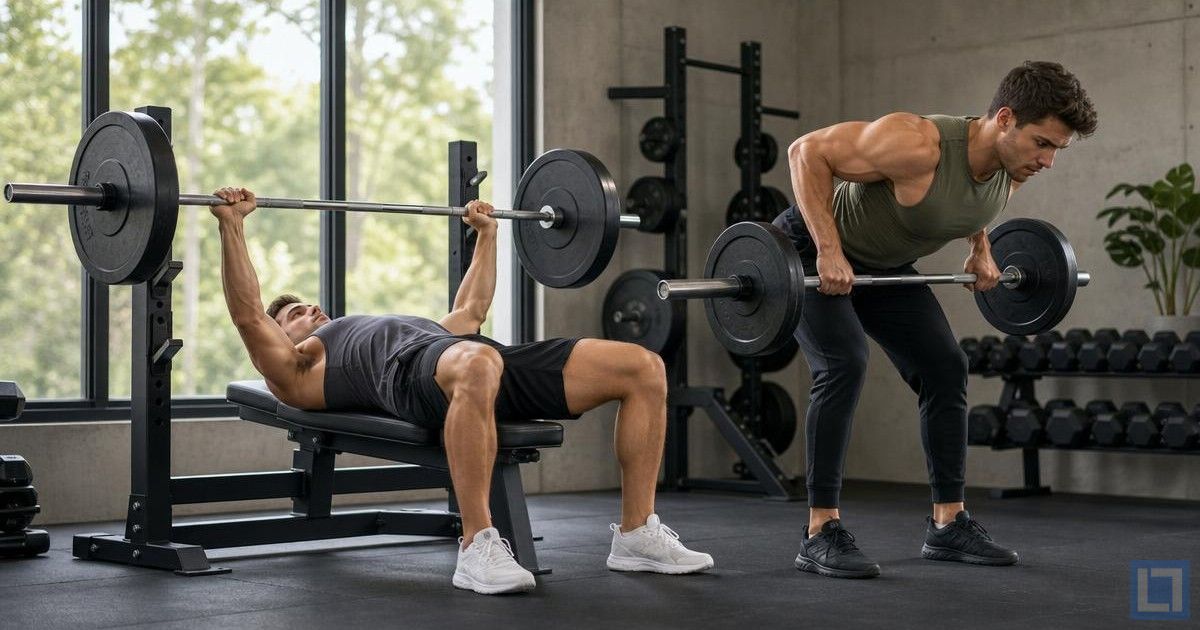
Bodybuilding training produces real muscle development through progressive overload on compound exercises combined with targeted isolation work that hits every major muscle group. The format works particularly well for muscle building because it combines the heavy compound loading needed for maximum mass stimulus (bench press, squat, deadlift, row) with the isolation work needed to address muscle groups that compounds partially miss (lateral raises for side delts, leg extensions for quads, flys for chest, curls for biceps). Most lifters who consistently train with proper bodybuilding programming see measurable muscle development within 12 to 16 weeks. The combination of compound and isolation work, appropriate volume in the 8 to 15-rep range for hypertrophy, and consistent progressive overload over time produces the foundation of effective bodybuilding training.
Below are ten effective bodybuilding exercises that cover heavy compound chest work (bench press, incline bench press), heavy compound legs (squat), heavy compound back (deadlift, bent over row), hamstring and glute work (Romanian deadlift), bicep isolation (barbell curl), shoulder width (lateral raise), quad isolation (leg extension), and chest isolation (dumbbell fly). Together they form the foundation of a complete bodybuilding training program that hits every major muscle group with both compound mass-building work and targeted isolation. Programmed across appropriate weekly splits (push/pull/legs, upper/lower, or body-part splits), these exercises produce strong combined muscle development.
Barbell Bench Press

The Barbell Bench Press performs horizontal pressing motion with a barbell while lying on a flat bench. The pattern is the foundational chest exercise that builds the chest, front delts, and triceps under heavy compound loading.
For bodybuilding programs, the bench press is one of the foundational chest-building exercises. The pattern hits the chest through the heaviest possible horizontal pressing under heavy compound loading. Run it for 4 sets of 6 to 10 reps as primary chest mass-building work in any bodybuilding chest day.
Set up on a flat bench with feet planted firmly on the floor and shoulder blades retracted. Grip the barbell slightly wider than shoulder-width. Unrack the bar and hold it over the chest. Lower the bar to the lower chest under control. Press back to lockout by driving the bar up and slightly back. Maintain consistent bar path and tight body position throughout.
Barbell Squat

The Barbell Squat performs squat motion with a barbell across the upper back. The pattern is the foundational lower-body exercise that builds the quads, glutes, hamstrings, and core under heavy compound loading.
For bodybuilding programs, the barbell squat is one of the most effective lower-body mass-building exercises that exists. The pattern hits the quads, glutes, and hamstrings through heavy compound loading. Run it for 4 sets of 6 to 10 reps as primary lower-body mass-building work in any bodybuilding leg day.
Set up under a barbell positioned across the upper back at chest height in a squat rack. Step back to clear the rack with feet shoulder-width and toes pointing slightly out. Squat down by sitting the hips back and bending the knees, descending until the hip crease is below the knees. Drive back to standing through the heels while keeping the chest up.
Barbell Deadlift

The Barbell Deadlift performs hip-hinge motion to lift a barbell from the floor to standing. The pattern is the foundational total-body exercise that builds the back, glutes, hamstrings, and forearms under heavy loading.
For bodybuilding programs, the deadlift is one of the most effective back, glute, and hamstring mass-building exercises that exists. The pattern hits the entire posterior chain through heavy compound loading. Run it for 3 sets of 5 to 8 reps as primary back and posterior-chain mass-building work in any bodybuilding back day.
Set up with feet hip-width and a loaded barbell on the floor close to the shins. Hinge at the hips and bend the knees to grip the bar with hands just outside the legs. Drive through the legs and pull the bar up close to the body until standing fully upright with shoulders back. Reverse the motion under control. Maintain neutral spine throughout.
Barbell Bent Over Row

The Barbell Bent Over Row performs horizontal pulling motion with a barbell while bent over at the hips. The pattern is the foundational back-thickness exercise that builds the lats, rhomboids, middle traps, and rear delts.
For bodybuilding programs, the bent over row is one of the most effective back-thickness exercises that exists. The pattern hits the lats, rhomboids, and middle traps through heavy horizontal pulling. Run it for 4 sets of 6 to 10 reps as primary back-thickness mass-building work in any bodybuilding back day.
Set up with feet shoulder-width and a barbell on the floor. Hinge at the hips to lower the upper body to roughly 45 degrees while keeping the back flat. Grip the barbell with hands shoulder-width (overhand grip). Pull the bar to the lower chest by retracting the shoulder blades and driving the elbows back. Lower under control. Maintain bent-over position throughout.
Barbell Incline Bench Press

The Barbell Incline Bench Press performs pressing motion on an inclined bench (typically 30 to 45 degrees) to emphasize the upper chest. The pattern produces stronger upper-chest loading than flat bench press.
For bodybuilding programs, the incline bench press is the foundational upper-chest exercise. The pattern hits the upper chest that flat bench press partially neglects. Run it for 4 sets of 8 to 10 reps as primary upper-chest mass-building work in any bodybuilding chest day alongside flat bench press.
Set up an adjustable bench at 30 to 45 degrees. Lie on the bench with feet planted firmly on the floor and shoulder blades retracted. Grip the barbell slightly wider than shoulder-width. Unrack the bar and hold it over the upper chest. Lower the bar to the upper chest under control. Press back to lockout. Maintain consistent bar path throughout.
Dumbbell Romanian Deadlift
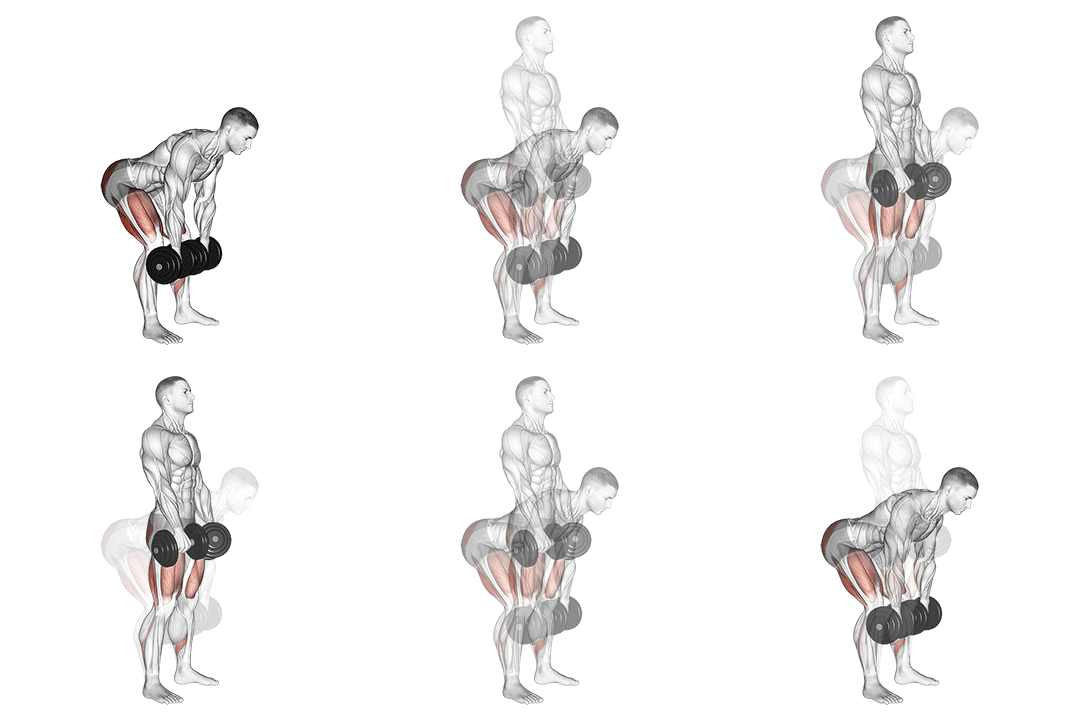
The Dumbbell Romanian Deadlift performs hip-hinge motion with dumbbells held at the sides, emphasizing the hamstrings and glutes through the eccentric loading. The dumbbell version allows for greater range of motion than barbell variations.
For bodybuilding programs, the dumbbell RDL is one of the most effective hamstring and glute mass-building exercises that exists. The pattern hits the hamstrings and glutes through hip hinge with strong eccentric loading. Run it for 3 sets of 8 to 12 reps as primary hamstring and glute work in any bodybuilding leg day.
Stand with feet hip-width and dumbbells held at the front of the thighs. Hinge at the hips by sending them backward while keeping the back flat and the dumbbells close to the legs. Lower until feeling a strong hamstring stretch. Drive back to standing by extending through the hips and squeezing the glutes. Maintain dumbbell contact with legs throughout.
Barbell Curl

The Barbell Curl performs bicep curl motion with a barbell, isolating the biceps through pure elbow flexion under heavy loading. The pattern is the foundational bicep mass-building exercise.
For bodybuilding programs, the barbell curl is the foundational bicep exercise. The pattern hits the biceps through heavy isolation loading. Run it for 4 sets of 8 to 12 reps as primary bicep mass-building work in any bodybuilding arm day.
Stand tall with feet shoulder-width and a barbell held at thigh level with underhand grip. Curl the bar up by flexing at the elbows while keeping the elbows pinned at the sides. Squeeze the biceps hard at the top. Lower under control to full extension. Maintain strict form without using body sway to swing the weight.
Dumbbell Lateral Raise

The Dumbbell Lateral Raise performs side delt isolation by raising dumbbells out to the sides until parallel with the floor. The pattern is the foundational side delt exercise that builds shoulder width.
For bodybuilding programs, the lateral raise is one of the most effective side delt isolation exercises that exists. The pattern hits the side delts that contribute to broad shoulder appearance. Run it for 4 sets of 10 to 15 reps as primary side delt mass-building work in any bodybuilding shoulder day.
Stand with feet shoulder-width and dumbbells held at the sides. Raise the dumbbells out to the sides by lifting through the side delts until the arms are parallel with the floor (or slightly higher). Pause briefly at peak contraction. Lower under control. Maintain slight elbow bend throughout to reduce joint strain.
Lever Leg Extension

The Lever Leg Extension performs knee extension motion on a machine, isolating the quadriceps through pure knee extension under controlled loading. The pattern is the foundational quad isolation exercise.
For bodybuilding programs, the leg extension is the foundational quad isolation exercise. The pattern hits the quads through pure knee extension. Run it for 3 sets of 10 to 15 reps as quad isolation work in any bodybuilding leg day alongside compound squat work.
Set up on a leg extension machine with the knee joint aligned with the machine axis and the shin pad positioned at the top of the ankles. Extend the knees fully by lifting the pad up to lock out. Squeeze the quads hard at peak contraction. Lower under control through full range. Maintain back contact with the seat throughout.
Dumbbell Fly

The Dumbbell Fly performs chest fly motion with dumbbells while lying on a flat bench. The pattern produces direct chest isolation through pure horizontal adduction with strong chest stretch.
For bodybuilding programs, the dumbbell fly is one of the most effective chest isolation exercises that exists. The pattern hits the chest through pure horizontal adduction with strong stretch loading. Run it for 3 sets of 10 to 12 reps as chest isolation work in any bodybuilding chest day after compound pressing.
Lie on a flat bench with feet planted firmly on the floor. Hold dumbbells over the chest with palms facing each other and a slight elbow bend. Lower the dumbbells out to the sides in a wide arc until feeling a strong chest stretch. Squeeze the chest to bring the dumbbells back together at the top. Maintain consistent elbow bend throughout.
How To Program These Workouts
A productive bodybuilding program organizes these exercises across appropriate weekly splits. A common 4-day split: Day 1 (Chest/Triceps): bench press, incline bench press, dumbbell fly. Day 2 (Back/Biceps): deadlift, bent over row, barbell curl. Day 3 (Shoulders): overhead pressing plus lateral raise. Day 4 (Legs): squat, Romanian deadlift, leg extension. Run heavy compounds (bench, squat, deadlift, row) for 4 sets of 6 to 10 reps; secondary compounds (incline bench, RDL) for 3 to 4 sets of 8 to 12 reps; isolation work (curl, lateral raise, leg extension, fly) for 3 to 4 sets of 10 to 15 reps. Total weekly volume covers 80 to 120 working sets across all muscle groups.
Train bodybuilding sessions 4 to 6 times per week with at least one rest day per week. The combination of compound and isolation work across appropriate splits produces strong but recoverable training stimulus. Most successful bodybuilding programs include 4 to 5 weekly sessions of 60 to 90 minutes each. The format works particularly well when paired with appropriate nutrition (caloric surplus for muscle building, sufficient protein at 0.8 to 1.0 grams per pound of bodyweight), adequate sleep (7 to 9 hours per night), and progressive overload tracked through training logs over time.
For broader bodybuilding programming, see our best workouts for hypertrophy and best workouts for muscle building. For specific body-part work, see our best chest exercises.
Final Thoughts
The best workouts for bodybuilders deliver real muscle development through progressive overload on compound exercises combined with targeted isolation work that hits every major muscle group. The combination of heavy compound mass-building work, secondary compound exercises, and isolation work covers every major muscle group and produces broader development than single-modality training. For lifters who specifically prioritize muscle building, want to build a balanced and aesthetic physique, or want training that translates to bodybuilding competition prep, dedicated bodybuilding training is one of the most effective approaches available.
Stay focused on progressive overload and proper form. The most common bodybuilding training mistake is either chasing weight at the expense of form (which reduces muscle stimulus and increases injury risk) or staying too light to drive real progressive overload over time. The fix: prioritize strict form on every set, while gradually increasing either weight or reps over weeks and months to drive progressive overload. Quality reps with strict form and consistent progressive overload produce stronger muscle development than ego-driven heavy weights with poor form. The muscles respond to progressive overload, time-under-tension, and consistent training over months and years.
Frequently Asked Questions
How often should bodybuilders train?
Four to six times per week works for most natural bodybuilders. The combination of compound and isolation work across appropriate splits produces strong but recoverable training stimulus. Most successful programs include 4 to 5 weekly sessions of 60 to 90 minutes each, organized as push/pull/legs, upper/lower, or body-part splits. Daily training (7 sessions per week) typically produces accumulated fatigue without proportional gains for natural lifters.
What’s the best split for bodybuilding?
Different splits work for different lifters and schedules. Common effective options include push/pull/legs (3 to 6 sessions per week), upper/lower (4 sessions per week), and body-part splits (5 sessions per week). The push/pull/legs split offers good balance between training frequency and muscle group recovery. Body-part splits maximize per-session volume per muscle group. Most lifters should test 1 to 2 splits over 12 to 16 weeks each to find what works best for their schedule and recovery.
How long should bodybuilding workouts be?
Sixty to ninety minutes per session works for most lifters. The format includes 4 to 6 exercises across compound and isolation work, which requires 60 to 90 minutes for proper sets, rest periods (90 seconds to 3 minutes between heavy sets), and warm-ups. Shorter sessions (45 to 60 minutes) work for higher-frequency programs (5 to 6 sessions per week); longer sessions (2+ hours) typically produce diminishing returns through accumulated fatigue.
How much volume do bodybuilders need?
Most natural lifters benefit from 10 to 20 working sets per muscle group per week, distributed across 2 sessions of that muscle group per week. The optimal volume depends on training experience, recovery capacity, and exercise selection. Beginners can grow on 8 to 12 weekly sets per muscle; intermediate lifters typically need 12 to 16 sets; advanced lifters may need 16 to 20+ sets per muscle group per week to continue progressing. Always prioritize quality over quantity.
Are compound exercises enough for bodybuilding?
No, most successful bodybuilding programs combine compound and isolation work. Compound exercises (bench, squat, deadlift, row) build the foundation of total muscle mass and strength but partially neglect specific muscles (side delts, biceps, quads in isolation, chest stretch). Isolation work (lateral raises, curls, leg extensions, flys) addresses these specific muscles for balanced and complete development. The optimal program includes 60 to 70 percent compound work and 30 to 40 percent isolation work for most lifters.