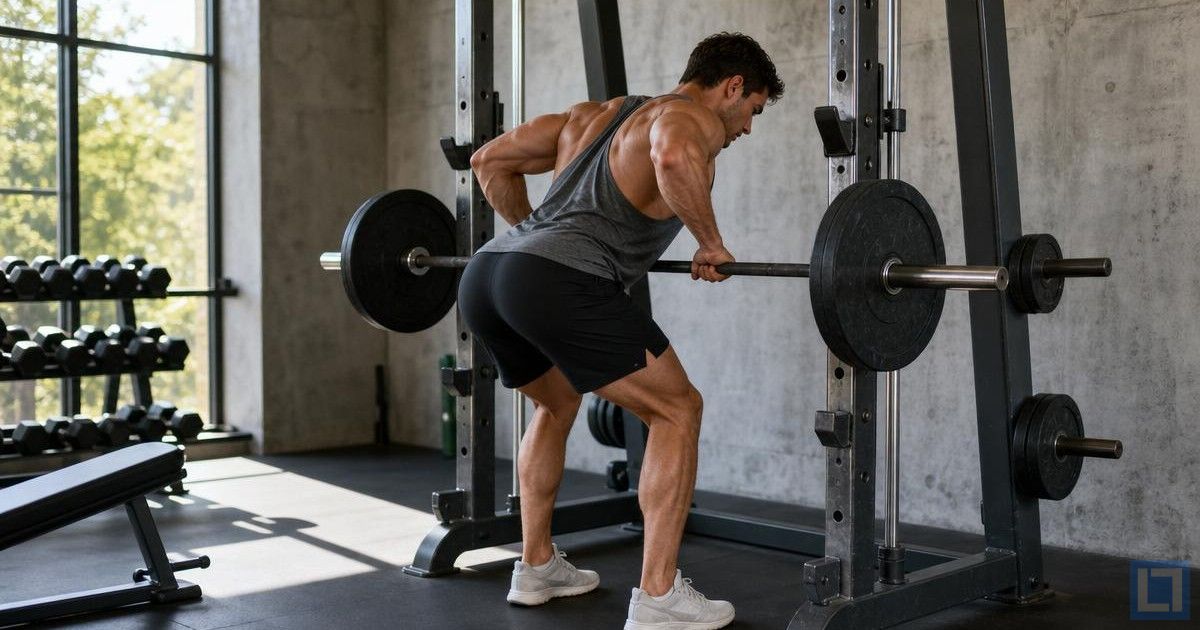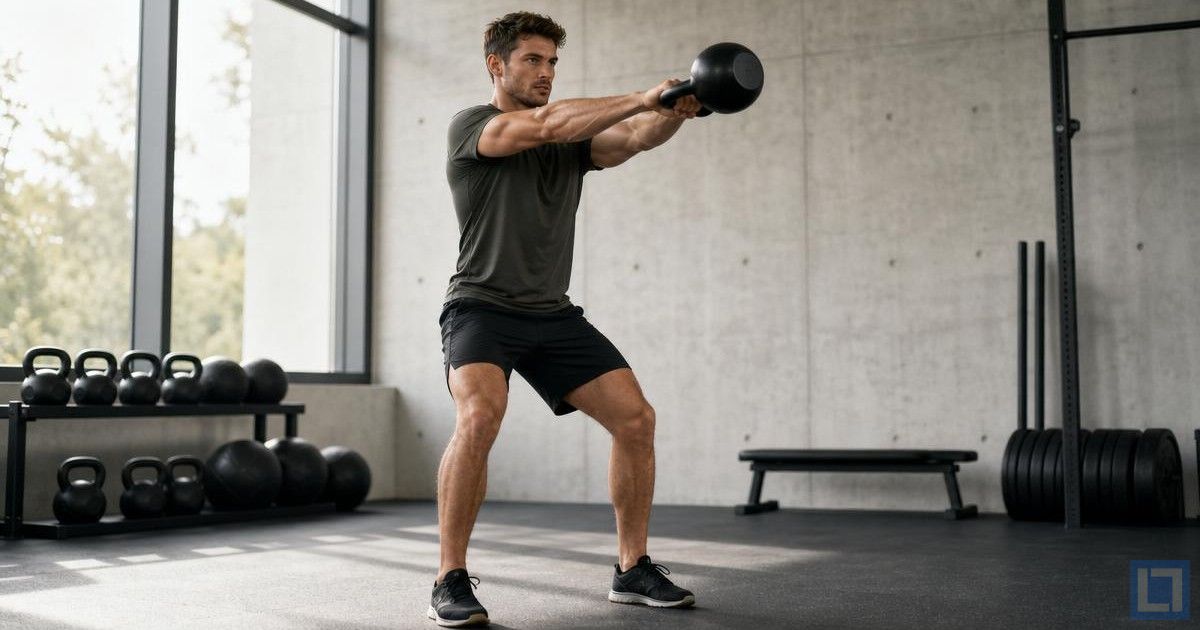
Ten-minute kettlebell workouts produce real strength and conditioning gains through high-density training that fits any schedule. The format works because kettlebells are uniquely suited for compressed training: ballistic exercises (jerks, swings, snatches) drive heart rate up rapidly, compound exercises (sumo deadlift, double jerk) work multiple muscle groups per rep, and complex patterns (windmill, angled press) develop multiple training qualities simultaneously. A focused 10-minute kettlebell session 4 to 5 times per week produces stronger fitness adaptations than longer infrequent sessions for most general fitness goals.
Below are ten effective 10-minute kettlebell exercises that cover heavy pulling (sumo deadlift, rotational deadlift), pressing (seated press, double jerk, angled press), unilateral work (step-up, windmill), chest isolation (floor fly), core training (Russian twist), and stability (overhead carry). Together they form a complete 10-minute kettlebell training program. Pull 4 to 5 exercises per session and rotate the selection across sessions for complete training.
Kettlebell Floor Fly

The Kettlebell Floor Fly lies on the back with kettlebells held above the chest and lowers them out to the sides in a fly motion until the elbows touch the floor. The pattern isolates the chest through pure horizontal adduction.
For 10-minute kettlebell sessions, the floor fly produces strong chest isolation in minimal time. The compressed format favors the floor fly because no bench setup is required. Run it for 2 to 3 sets of 10 to 12 reps as direct chest work.
Lie flat on the back with kettlebells held above the chest, arms slightly bent. Lower the kettlebells out to the sides in a wide arc until the elbows touch the floor. Squeeze the chest to bring the kettlebells back to the start. Maintain the slight elbow bend throughout.
Kettlebell Step Up

The Kettlebell Step Up holds kettlebells at the sides and steps up onto a sturdy box or bench, driving up through the standing leg before stepping back down. The unilateral pattern produces strong single-leg loading.
For 10-minute kettlebell sessions that include unilateral leg work, the step-up is one of the most accessible variations that exists. The pattern fits the compressed time format because each rep produces strong loading. Run it for 2 to 3 sets of 8 to 10 reps per leg.
Hold kettlebells at the sides. Stand in front of a sturdy box or bench. Step up onto the box with one foot, driving through the heel to push the body up. Step back down under control. Alternate sides on each rep or set.
Kettlebell Advanced Windmill

The Kettlebell Advanced Windmill holds a kettlebell pressed overhead and rotates the trunk while reaching toward the floor with the opposite hand. The pattern produces strong shoulder stability, oblique loading, and hip mobility.
For 10-minute kettlebell sessions, the windmill fits naturally as a mobility-loaded exercise that combines shoulder stability with core training. The compressed format benefits from exercises that hit multiple training qualities per rep. Run it for 2 to 3 sets of 5 to 8 reps per side.
Press a kettlebell overhead with one arm. Rotate the feet so the kettlebell-side foot points outward. Hinge at the hips, rotating the trunk and reaching toward the inside of the front foot with the free hand while keeping the kettlebell pressed overhead. Return to standing. Switch sides between sets.
Kettlebells Sumo Deadlift

The Kettlebells Sumo Deadlift takes a wide stance with kettlebells positioned between the legs and lifts them by extending through the hips and legs. The wide stance produces strong inner-thigh and posterior-chain loading.
For 10-minute kettlebell sessions, the sumo deadlift is the cornerstone heavy pulling exercise. The wide-stance pattern hits the inner thighs, glutes, and hamstrings simultaneously. Run it for 2 to 3 sets of 6 to 10 reps as primary pulling work.
Take a wide stance with toes pointed slightly outward. Place kettlebells between the legs. Hinge at the hips and bend the knees to grip the bells. Drive through the legs and hips to stand fully upright. Lower under control by hinging back at the hips.
Kettlebell Overhead Carry

The Kettlebell Overhead Carry holds a kettlebell pressed overhead and walks for distance or time while maintaining the locked-out position. The exercise produces extreme shoulder stability and core demand.
For 10-minute kettlebell sessions, the overhead carry produces unique core and shoulder stability development that pure strength exercises cannot match. The pattern fits short sessions because brief carries (15 to 30 seconds) produce strong stimulus. Run it for 2 to 3 sets of 20 to 30-second carries per side.
Press a kettlebell overhead with one arm to full lockout. Maintain the locked-out position throughout. Walk forward at a steady pace while keeping the kettlebell directly overhead. Brace the core hard to prevent the kettlebell from drifting forward or back. Switch sides between sets.
Kettlebell Seated Press

The Kettlebell Seated Press sits on a bench or floor and presses a kettlebell overhead from the rack position to lockout. The seated position eliminates leg drive and isolates the shoulder for strict pressing work.
For 10-minute kettlebell sessions that include direct shoulder pressing, the seated press is one of the most effective shoulder isolation exercises that exists. The seated position prevents momentum and produces strict shoulder loading in minimal time. Run it for 2 to 3 sets of 6 to 10 reps per side.
Sit on a bench with feet planted. Hold a kettlebell at the shoulder in the rack position with palm facing the body. Press the kettlebell straight up to lockout overhead. Lower under control to the rack position. Complete all reps on one side before switching.
Kettlebell Double Jerk

The Kettlebell Double Jerk lifts two kettlebells from the rack position to overhead lockout using a quick dip-and-drive motion. The explosive pattern allows heavier overhead loading than strict pressing.
For 10-minute kettlebell sessions that include explosive overhead work, the double jerk produces shoulder development with significant cardiovascular demand per rep. The two-kettlebell loading produces strong bilateral shoulder work in minimal time. Run it for 2 to 3 sets of 5 to 8 reps as explosive overhead work.
Stand with two kettlebells in the rack position at the shoulders. Quick dip at the knees, then drive explosively upward through the legs while pressing the kettlebells overhead. Catch the kettlebells overhead with arms locked out. Lower to the rack position. Repeat.
Kettlebell Russian Twist

The Kettlebell Russian Twist sits on the floor with a kettlebell held at the chest and twists the trunk side-to-side. The continuous rotation hits the obliques throughout the entire set.
For 10-minute kettlebell sessions, the Russian twist produces strong rotational core loading. The pattern fits naturally as core work between higher-intensity exercises. Run it for 2 sets of 16 to 20 total reps with moderate weight.
Sit on the floor with knees bent. Lean back slightly to engage the abs and lift the feet off the floor for added difficulty. Hold a kettlebell at the chest with both hands. Twist the trunk to bring the kettlebell to one side, then to the other side. Continue alternating throughout the set.
Kettlebell Rotational Deadlift

The Kettlebell Rotational Deadlift performs a deadlift while rotating the trunk to one side at the top of the rep. The rotational component adds oblique work to the standard hip-hinge pattern.
For 10-minute kettlebell sessions that include combined movement patterns, the rotational deadlift produces stronger oblique loading than straight-line deadlifts. The pattern translates well to athletic rotational movements. Run it for 2 sets of 6 to 8 reps per side.
Stand with feet shoulder-width and a kettlebell between the legs. Hinge at the hips and bend the knees to grip the kettlebell with both hands. Drive through the legs to stand. At the top of the rep, rotate the trunk to one side. Lower while rotating back to center. Alternate sides.
Kettlebell Angled Press
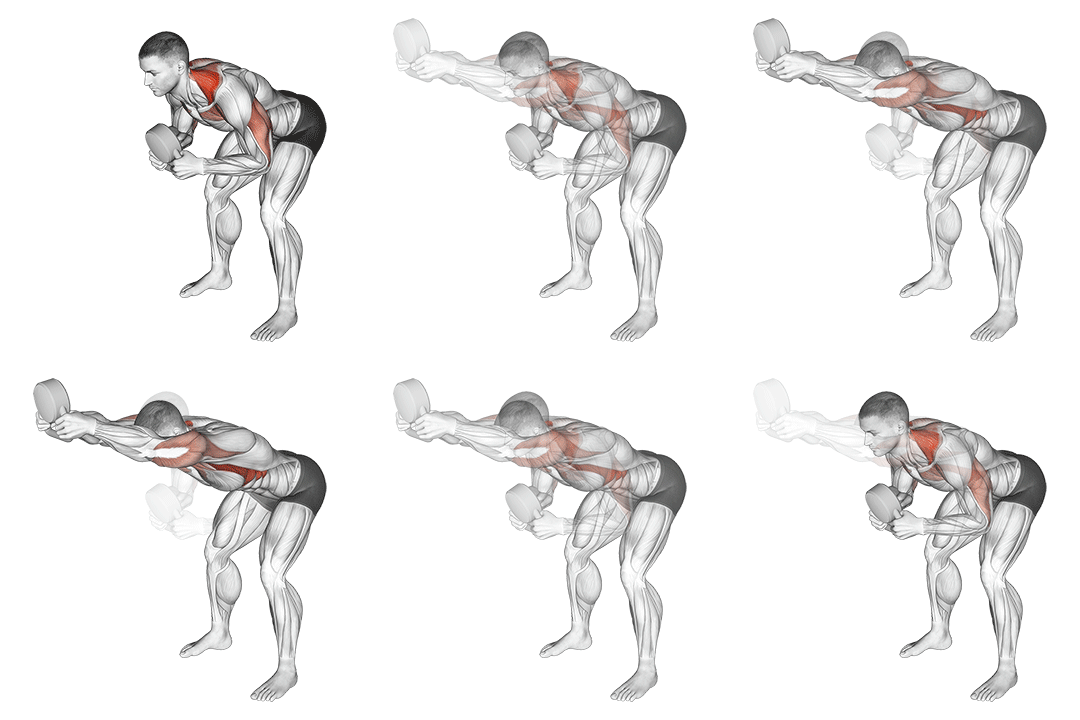
The Kettlebell Angled Press kneels on one knee and presses a kettlebell overhead while maintaining a slight rotational angle of the trunk. The half-kneeling position with angled press produces strong shoulder stability demand.
For 10-minute kettlebell sessions that include shoulder accessory work, the angled press produces unique shoulder loading that translates to functional positions. The half-kneeling base eliminates leg drive. Run it for 2 sets of 5 to 8 reps per side.
Kneel on one knee with the other leg forward at 90 degrees. Hold a kettlebell at the same-side shoulder of the kneeling leg. Press the kettlebell up at a slight angle while keeping the body stable through the half-kneeling position. Lower to the rack. Switch sides between sets.
How To Program These Workouts
A productive 10-minute kettlebell workout uses circuit-style organization. A standard 10-minute structure: 4 to 5 exercises performed for 30 to 45 seconds each with 15 to 30 seconds rest between exercises, repeated for 2 rounds. The continuous pacing produces strong metabolic stress alongside the strength loading. The format fits naturally as a morning routine, lunch break workout, or daily training habit because the 10-minute commitment removes most scheduling barriers.
Train 10-minute kettlebell sessions 4 to 5 times per week. The compressed format produces moderate volume per session, which allows higher frequency than 60-minute body-part programs. Most successful programs include 4 to 5 sessions per week alongside dedicated strength training or recovery days. Daily training is feasible with appropriate exercise variety between sessions.
For longer kettlebell sessions, see our 20 minute kettlebell workouts and 30 minute kettlebell workouts. For broader programming, see our best kettlebell workouts.
Final Thoughts
The best 10-minute kettlebell workouts deliver real strength and conditioning through compressed training that fits any schedule. The combination of foundational kettlebell compounds, unilateral work, core training, and stability exercises produces broader fitness adaptations per minute than longer body-part-focused sessions. For trainees who want serious kettlebell training without 30 to 60-minute time commitments, this format is one of the most effective sustainable options available.
Stay focused on quality over volume. The most common 10-minute kettlebell training mistake is rushing through reps to fit more exercises into the time format, which produces sloppy form and reduced training stimulus. The fix: pick 4 to 5 exercises and execute every rep with strict form and full range of motion. Quality reps in 10 minutes produce stronger results than rushed sloppy execution. The compressed format works because of strict execution; that execution is what drives the training adaptations.
Frequently Asked Questions
Are 10 minute kettlebell workouts effective?
Yes, very effectively. The compressed format provides enough time to hit major movement patterns (pulling, pressing, unilateral work, core) in a focused session. Most lifters who consistently do 4 to 5 10-minute kettlebell sessions per week see meaningful strength and conditioning improvements within 4 to 6 weeks. The format works particularly well for sustainability because the 10-minute commitment fits any schedule.
How many kettlebells do I need for 10 minute workouts?
One or two kettlebells covers most exercises in this list. A single moderate-weight kettlebell (16 to 20 kg or 35 to 44 pounds for most men, 8 to 12 kg or 18 to 26 pounds for most women) handles unilateral exercises and most ballistic work. A second matching kettlebell allows bilateral exercises (double jerk, double sumo deadlift) and broader exercise selection.
How often should I do 10 minute kettlebell workouts?
Four to five times per week works for most lifters. The compressed format produces moderate fatigue per session, which allows higher frequency than longer programs. Most successful programs include 4 to 5 sessions per week alongside dedicated strength training or recovery days. Daily training is feasible with appropriate exercise variety.
10 minute or 30 minute kettlebell workouts?
Different formats serve different goals. 10-minute sessions work well for daily training, sustainability, and busy schedules. 30-minute sessions allow more per-exercise volume and stronger single-session stimulus. Most general trainees do better with 10 to 20-minute sessions training more frequently; competitive kettlebell sport athletes often benefit from longer technique-focused sessions.
Can beginners do 10 minute kettlebell workouts?
Yes with appropriate exercise selection. Beginners should start with the simpler kettlebell exercises (sumo deadlift, goblet squat, kettlebell row) before progressing to more advanced patterns (windmill, jerk, snatch). The 10-minute format scales naturally as fitness builds; most beginners can progress through the full exercise list within 6 to 8 weeks of consistent training.