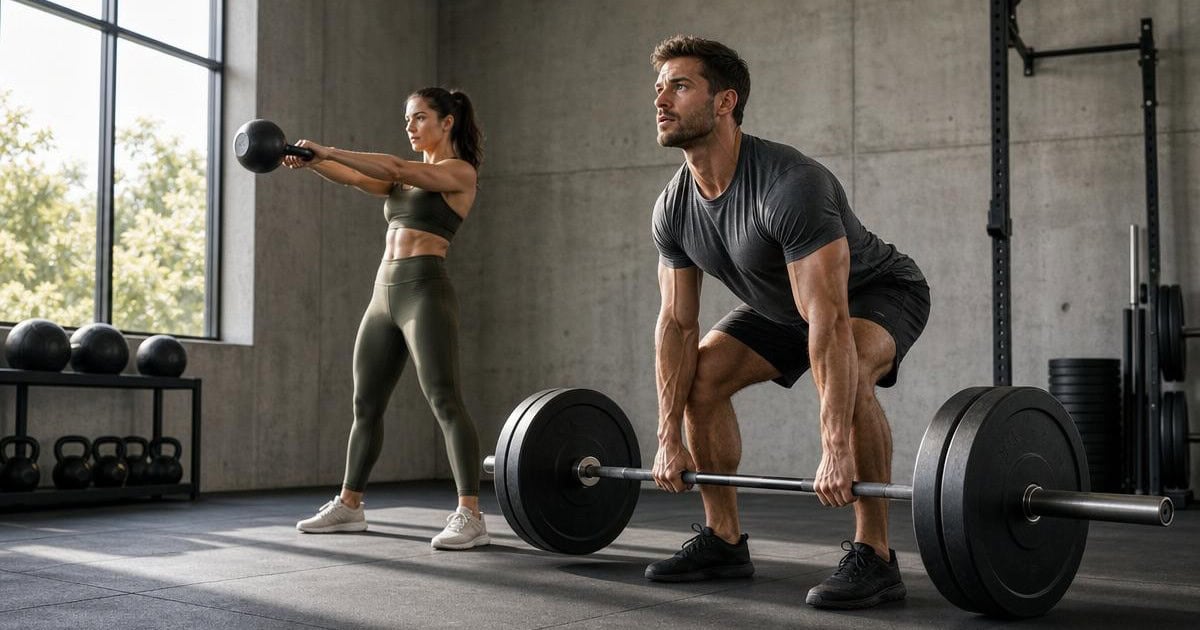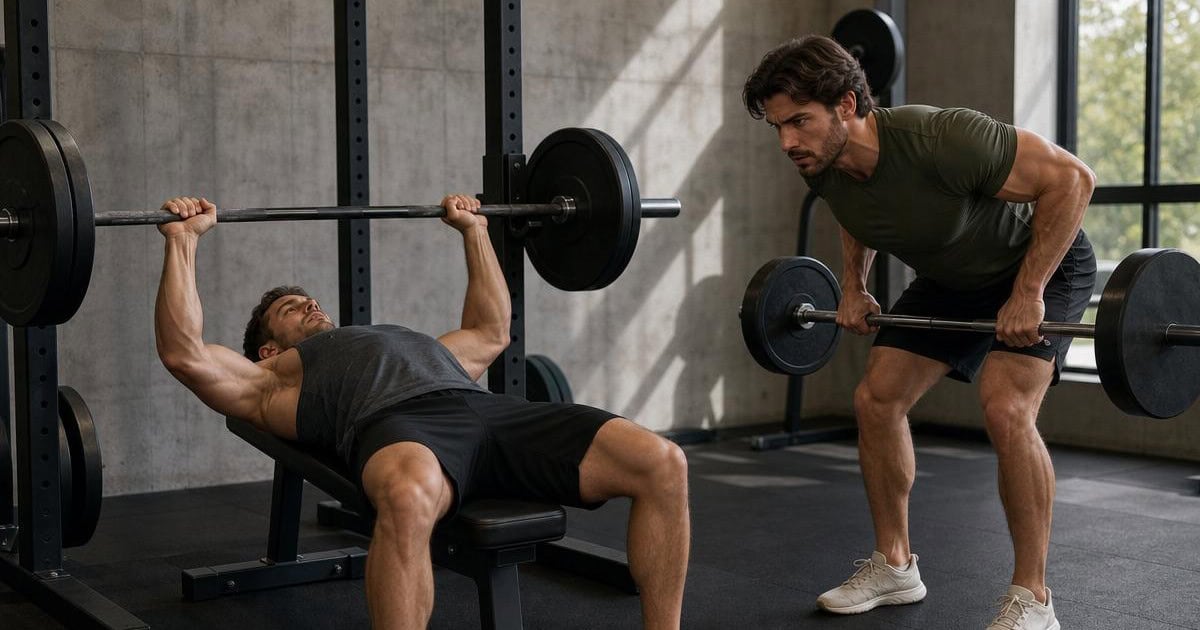
Building muscle through hypertrophy training requires understanding the principles that produce muscle growth (hypertrophy is driven primarily by mechanical tension produced by heavy progressive loading, metabolic stress from moderate-to-high volume training, and muscle damage from varied training stimulus – the integration of these three factors over consistent training time produces maximum muscle growth) and the training principles that develop hypertrophy specifically: heavy compound lifts as the foundation (squats, bench press, deadlifts, rows, overhead press) for compound mass stimulus across multiple muscle groups, dedicated isolation work for individual muscle development (lateral raises, curls, etc.), unilateral training for complete development addressing asymmetries, varied training stimulus through different exercises and modalities, progressive overload over time (gradually increasing weights, reps, or sets), adequate volume distributed across muscle groups (10 to 20 working sets per muscle group per week is the typical hypertrophy range), proper rep ranges (typically 6 to 15 reps for most hypertrophy work, with some heavy work in the 4 to 6 range), and adequate recovery between sessions. Most lifters who want maximum hypertrophy benefit from training each muscle group 2 times per week with appropriate volume distribution.
Below are ten of the most effective exercises for hypertrophy training, covering the foundational compound lifts (barbell squat, barbell bench press, barbell deadlift, barbell bent over row, barbell seated overhead press), unilateral leg work (dumbbell Bulgarian split squat), posterior chain (barbell Romanian deadlift), variation pressing (dumbbell bench press), bicep isolation (barbell curl), and shoulder isolation (dumbbell lateral raise). Together they form a complete hypertrophy program covering all major muscle groups. A 60 to 90-minute session pulled from this list, performed 4 to 5 times per week (or split as upper/lower or push/pull/legs across multiple sessions), produces strong hypertrophy development for any lifter focused on building muscle mass. Combined with progressive overload, adequate volume, proper nutrition (caloric surplus and adequate protein), and consistent training, these exercises form the foundation of effective hypertrophy training.
Barbell Squat

The Barbell Squat performs back squats. The compound pattern is foundational for hypertrophy.
For hypertrophy, the back squat produces extreme compound loading critical for lower-body mass. Run it for 4 sets of 6 to 12 reps as primary lower-body hypertrophy work.
Set up a barbell on a rack at upper back height. Position the bar across the upper back. Step back with feet shoulder-width. Squat down by bending the knees and hips. Lower until the thighs are parallel to the floor. Drive back up through the heels. The pattern is foundational for hypertrophy – heavy back squats produce extreme compound loading on the legs (quads, glutes, hamstrings) and core through the heaviest possible squat pattern. Most lifters with the most developed lower bodies have built them on consistent heavy back squat training. The compound nature trains multiple muscle groups simultaneously while producing the foundational lower-body mass stimulus.
Barbell Bench Press

The Barbell Bench Press performs flat bench press. The pattern is foundational for upper-body hypertrophy.
For hypertrophy, the bench press produces extreme compound chest, shoulder, and tricep loading. Run it for 4 sets of 6 to 12 reps as primary chest hypertrophy work.
Lie on a flat bench with the eyes directly under the barbell. Grip the bar with hands wider than shoulder-width. Unrack the bar and position it over the chest. Lower the bar to the chest by bending the elbows. Press the bar back up by extending the arms. The pattern is foundational for upper-body hypertrophy – heavy bench press produces extreme compound chest, anterior delt, and tricep loading. Most lifters with the most developed upper bodies have built substantial chest, shoulder, and tricep mass through heavy bench press training. The compound nature trains multiple muscle groups while producing foundational upper-body mass.
Barbell Deadlift

The Barbell Deadlift performs barbell deadlifts. The pattern produces extreme posterior chain hypertrophy.
For hypertrophy, the deadlift produces extreme compound posterior chain loading. Run it for 3 to 4 sets of 5 to 8 reps as primary posterior chain hypertrophy work.
Stand with feet hip-width with a barbell on the floor over the mid-foot. Hinge at the hips and bend the knees to grip the bar. Drive through the heels while extending the hips and knees to lift the bar from the floor. Stand fully tall at the top. Lower under control. The pattern produces extreme compound loading on the entire posterior chain – the deadlift trains hamstrings, glutes, erector spinae, lats, and traps simultaneously through heavy compound loading. Most lifters with the most developed posterior chains have built them on consistent heavy deadlift training. Combined with squats, deadlifts produce complete lower-body and posterior chain hypertrophy.
Barbell Bent Over Row

The Barbell Bent Over Row performs barbell rows. The pattern produces compound back hypertrophy.
For hypertrophy, the bent-over row produces extreme compound back loading. Run it for 4 sets of 6 to 10 reps as primary back hypertrophy work.
Stand with feet hip-width holding a barbell at the front of the thighs with overhand grip. Hinge forward at the hips with a flat back so the torso is at about 45 degrees. Pull the bar to the lower chest by retracting the shoulder blades and pulling the elbows back. The lats, rhomboids, mid traps, and rear delts work hard. Squeeze the shoulder blades hard at peak. Lower under control. The pattern produces compound back loading – heavy rowing produces substantial mass stimulus across the back muscles (lats, rhomboids, mid traps, rear delts) through the horizontal pulling pattern. Critical for back hypertrophy because the back is one of the largest muscle groups requiring substantial volume and varied training stimulus.
Barbell Seated Overhead Press

The Barbell Seated Overhead Press performs strict overhead press. The pattern produces compound delt hypertrophy.
For hypertrophy, the overhead press produces extreme compound delt and tricep loading. Run it for 4 sets of 6 to 10 reps as primary delt hypertrophy work.
Sit on a bench with the back firmly against an upright pad. Grip a barbell slightly wider than shoulder-width with overhand grip. Unrack the bar to shoulder height. Press the bar straight overhead by extending the arms. Lower under control. The pattern produces extreme compound delt and tricep loading – heavy overhead pressing produces substantial mass stimulus on the anterior delts, medial delts, and triceps through the heaviest possible vertical pressing pattern. Critical for shoulder hypertrophy because compound pressing loads the delts with the heaviest possible weights while training multiple muscle groups.
Dumbbell Bulgarian Split Squat
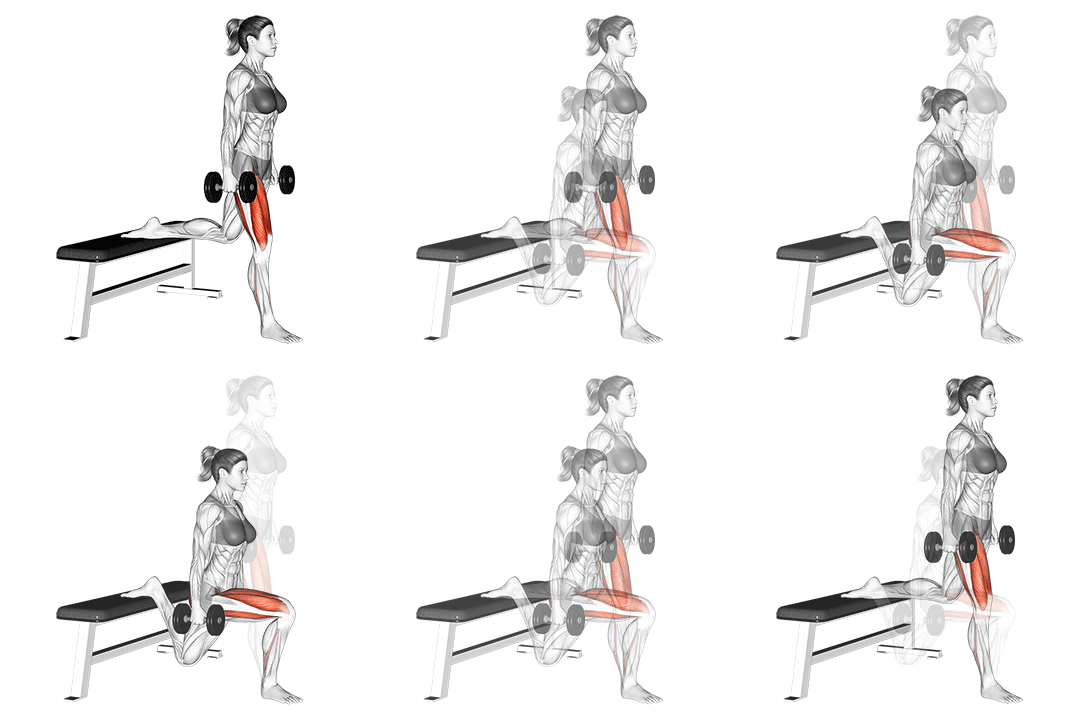
The Dumbbell Bulgarian Split Squat performs Bulgarian split squats. The unilateral pattern produces direct quad and glute hypertrophy.
For hypertrophy, Bulgarian split squats produce direct unilateral quad and glute loading. Run it for 3 sets of 8 to 12 reps per leg as unilateral leg hypertrophy work.
Stand 2 to 3 feet in front of a bench. Place the top of the rear foot on the bench behind. Hold dumbbells in each hand at the sides. Squat down by bending the front knee deeply. Lower until the front thigh is parallel to the floor. Drive back up through the front heel. The pattern hits each leg individually with full loading – critical for hypertrophy because unilateral training produces complete leg development that addresses left/right asymmetries common with bilateral-only training. Combined with squats and deadlifts, Bulgarian split squats produce complete lower-body hypertrophy.
Barbell Romanian Deadlift

The Barbell Romanian Deadlift performs Romanian deadlifts. The hip-hinge pattern produces extreme hamstring and glute hypertrophy.
For hypertrophy, the RDL produces extreme posterior chain loading through hip-hinge. Run it for 3 to 4 sets of 8 to 12 reps as posterior chain hypertrophy.
Stand with feet hip-width holding a barbell at the front of the thighs. Hinge at the hips by sending them backward while keeping the back flat and legs nearly straight. Lower the barbell along the legs until the hamstrings stretch deeply. Drive back to standing by extending the hips. The pattern produces extreme hamstring and glute loading – the RDL specifically targets the hamstrings through deep stretch and the glutes through hip extension. Critical for posterior chain hypertrophy because regular deadlifts emphasize lockout work while RDLs emphasize the stretched portion that produces maximum hamstring growth.
Dumbbell Bench Press

The Dumbbell Bench Press performs dumbbell bench press. The pattern produces chest hypertrophy with deeper range of motion.
For hypertrophy, the dumbbell bench press produces chest loading through deeper range. Run it for 3 sets of 8 to 12 reps as chest hypertrophy variation.
Lie on a flat bench holding dumbbells at chest level with palms facing forward. Press the dumbbells up by extending the arms while bringing the dumbbells slightly toward the centerline at the top. Lower under control to deep stretch position at the chest. The pattern produces chest loading through deeper range of motion than barbell bench – the dumbbells can travel deeper than the bar, producing greater chest stretch and contraction. Combined with barbell bench press, dumbbell bench press produces complete chest development through varied loading patterns and ranges of motion.
Barbell Curl

The Barbell Curl performs barbell curls. The pattern produces direct bicep hypertrophy.
For hypertrophy, the barbell curl produces direct bicep isolation. Run it for 3 to 4 sets of 8 to 12 reps as primary bicep hypertrophy work.
Stand with feet hip-width holding a barbell at the front of the thighs with underhand grip. Curl the barbell up to the shoulders by flexing at the elbows while keeping the upper arms stationary at the sides. The biceps work hard. Squeeze hard at peak contraction. Lower under control. The pattern produces direct bicep isolation – the most fundamental bicep mass exercise. Combined with hammer curls and other bicep work, barbell curls form the foundation of bicep hypertrophy. Most lifters with the most developed biceps have built them on consistent heavy barbell curl training plus varied accessories.
Dumbbell Lateral Raise

The Dumbbell Lateral Raise performs lateral raises. The pattern produces direct medial delt hypertrophy.
For hypertrophy, the lateral raise produces direct medial delt isolation. Run it for 4 sets of 10 to 15 reps as primary medial delt hypertrophy work.
Stand with feet hip-width holding dumbbells at the sides with palms facing the body. Lift the dumbbells out to the sides by abducting the arms until they reach shoulder height. Keep slight bend in the elbows throughout. Squeeze the medial delts hard at peak. Lower under control. The pattern produces direct medial delt isolation – the most important medial delt exercise for hypertrophy. The medial delts are critical for shoulder width that defines the V-taper, and lateral raises produce the most direct medial delt mass stimulus. Combined with overhead pressing and rear delt work, lateral raises ensure complete delt hypertrophy.
How To Program These Workouts
Productive hypertrophy programming structures these exercises across multiple sessions per week. Common splits include: 1) Upper/Lower (4-day): upper days include bench press, overhead press, rows, lateral raises, curls; lower days include squat, deadlift, RDL, Bulgarian split squat. 2) Push/Pull/Legs (3 to 6 days): push includes bench press, overhead press, lateral raises; pull includes deadlift, rows, curls; legs include squat, RDL, Bulgarian split squat. 3) Full body (3 to 4 days): each session covers compound lifts plus accessories. Run heavy compound work for 3 to 4 sets of 5 to 10 reps with progressive overload, accessory compound work for 3 to 4 sets of 8 to 12 reps, isolation work for 3 to 4 sets of 10 to 15 reps. Total weekly volume per muscle group should be 10 to 20 working sets distributed across 2 weekly training sessions per muscle group.
Train hypertrophy 4 to 5 times per week with proper periodization. Most successful hypertrophy programs structure work as: 1) consistent training schedule with each muscle group hit 2 times per week, 2) progressive overload over time (gradually adding weight, reps, or sets), 3) varied training stimulus through different exercises and rep ranges, 4) adequate volume (10 to 20 working sets per muscle group per week), 5) deload weeks every 4 to 8 weeks for recovery, 6) proper nutrition (caloric surplus of 200 to 500 calories above maintenance plus adequate protein – 0.8 to 1.0+ grams per pound of bodyweight), 7) adequate sleep and recovery. Combined with consistent training over months and years, dedicated hypertrophy training produces measurable muscle growth. Beginners often see 1 to 2 pounds of muscle per month; intermediate and advanced lifters typically gain less due to slower progression.
For broader programming, see our best workouts for muscle gain and how to build a v-taper. For specific work, see our how to build bigger arms.
Final Thoughts
The best workouts for hypertrophy deliver real muscle growth through training that targets the foundational principles of muscle development: heavy compound lifts for compound mass stimulus, dedicated isolation work for individual muscle development, unilateral training for complete development, varied training stimulus, progressive overload over time, adequate volume distributed across muscle groups, proper rep ranges, and adequate recovery. The combination of squats, bench press, deadlifts, rows, overhead press, Bulgarian split squats, RDLs, dumbbell bench press, barbell curls, and lateral raises covers every major muscle group with the most efficient compound and isolation patterns possible and produces broader muscle, strength, and athletic development than partial training would suggest. Most lifters who consistently apply these principles see measurable hypertrophy within 12 to 16 weeks – including increased muscle mass, more developed physique, increased strength, and the integrated muscle development that defines well-developed bodies. For lifters seeking maximum muscle growth, dedicated comprehensive hypertrophy training is one of the most effective interventions available.
Stay focused on progressive overload as the priority for hypertrophy progression. The most common mistake lifters make in hypertrophy training is training without progressive overload (using the same weights for the same reps without progressing) – which produces muscle maintenance rather than growth. The fix: prioritize progressive overload through one of these methods – 1) adding weight (most fundamental), 2) adding reps at the same weight, 3) adding sets, 4) reducing rest periods, 5) improving form/range of motion. Combined with adequate volume (10 to 20 working sets per muscle group per week), proper nutrition (caloric surplus plus adequate protein), and consistent training over time, progressive overload produces the hypertrophy that maintenance training never achieves. Hypertrophy is built through the integration of progressive overload plus volume plus nutrition plus consistency over time.
Frequently Asked Questions
How can I build muscle mass?
Heavy compound lifts plus dedicated isolation plus progressive overload plus adequate nutrition. Heavy compound lifts (squats, bench press, deadlifts, rows, overhead press) produce foundational mass stimulus across multiple muscle groups. Dedicated isolation work (lateral raises, curls) develops individual muscles. Progressive overload (gradually adding weight, reps, or sets) drives continued growth. Combined with proper nutrition (caloric surplus plus 0.8 to 1.0+ grams of protein per pound of bodyweight), adequate volume (10 to 20 working sets per muscle group per week), and consistent training, these form the foundation of hypertrophy development.
What’s the best rep range for hypertrophy?
6 to 15 reps for most hypertrophy work. Research consistently shows hypertrophy occurs across a wide rep range when training to or near failure. Most successful hypertrophy programs use: 4 to 6 reps for heavy compound work (some sets), 6 to 10 reps for primary compound work (most sets), 10 to 15 reps for accessory and isolation work. Combined with progressive overload and adequate volume, training across multiple rep ranges produces complete muscle development. Pure low-rep (1 to 3) work emphasizes strength over hypertrophy; pure high-rep (20+) work emphasizes endurance over hypertrophy.
How often should I train each muscle group?
2 times per week for optimal hypertrophy. Research consistently shows training each muscle group 2 times per week produces faster hypertrophy than once-per-week training. Most successful programs structure work as upper/lower (4-day) or push/pull/legs (3 to 6 days) splits that hit each muscle 2 times per week with appropriate volume. Total weekly volume should be 10 to 20 working sets per muscle group distributed across the 2 weekly sessions. Once-per-week training produces hypertrophy but slower than 2x weekly frequency.
How long does it take to build muscle?
12 to 16 weeks for measurable improvement, ongoing for substantial development. Beginners often see 1 to 2 pounds of muscle gain per month with proper training and nutrition. Intermediate lifters typically gain 0.5 to 1 pound per month. Advanced lifters typically gain 0.25 to 0.5 pounds per month. Substantial muscle development requires years of consistent training plus proper nutrition. Most lifters who consistently apply hypertrophy principles see measurable changes in muscle size and strength within 12 to 16 weeks.
Do I need to eat a lot to build muscle?
Yes – caloric surplus plus adequate protein is essential for substantial hypertrophy. Building muscle requires positive energy balance (caloric surplus of typically 200 to 500 calories above maintenance) plus adequate protein (0.8 to 1.0+ grams per pound of bodyweight). Without sufficient calories and protein, hypertrophy is severely limited regardless of training. Beginners can sometimes build muscle while losing fat through ‘recomposition’ but advanced lifters require dedicated bulking phases for substantial muscle gain. Combined with proper training and recovery, adequate nutrition is foundational for hypertrophy.