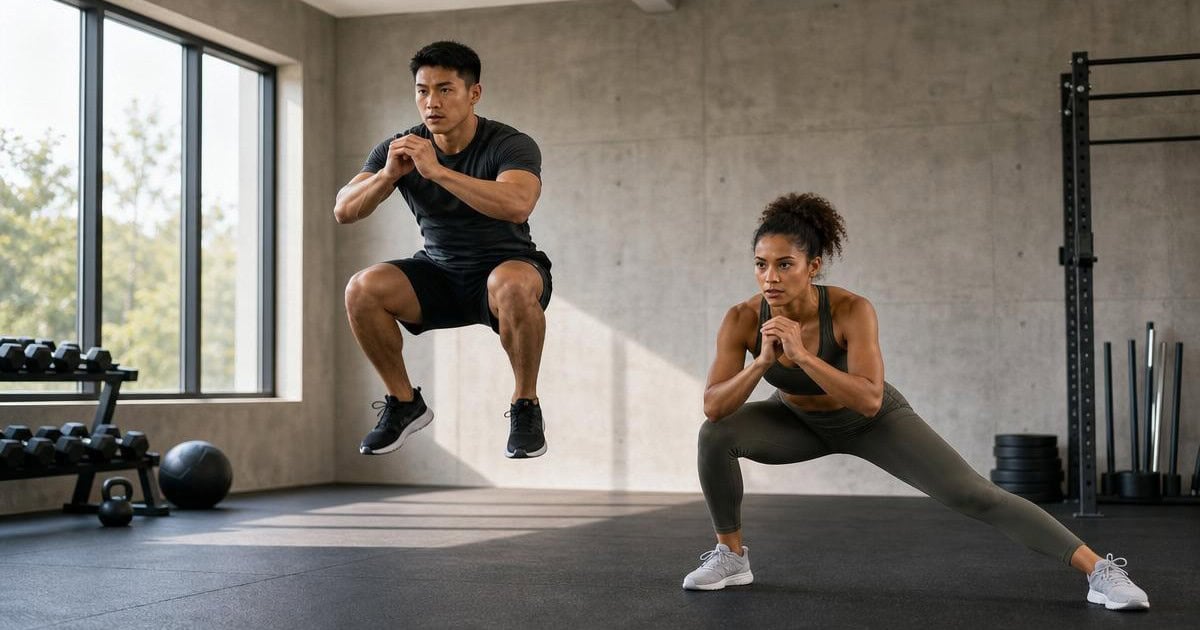
Bodyweight tricep training produces real tricep development through patterns that load the triceps effectively without weights: dip variations for compound mass loading, close-grip and diamond push-ups for tricep emphasis, overhead extensions for long-head stretched-position work, and unilateral progressions like archer push-ups for advanced strength. The format works particularly well for triceps because the muscle responds to compound pressing that bodyweight delivers easily (dips, push-ups) while also benefiting from overhead positioning that bodyweight overhead extensions can achieve through creative use of bars and supports. Most lifters who consistently train bodyweight tricep work 1 to 2 times per week alongside compound pushing movements (or even alone for home-only training) see measurable tricep development, improved push-up endurance, better lockout strength on pressing movements, and stronger arms within 8 to 12 weeks. The combination of compound pressing, isolation work, long-head emphasis, and progressive unilateral work produces broader tricep development than dumbbell extensions alone for many lifters.
Below are ten effective bodyweight tricep exercises that cover compound pressing (triceps dip, triceps dip floor, decline diamond push-up, elevated push-up), long-head emphasis (overhead triceps extension), tricep isolation (kneeling tricep extension), unilateral strength (one-side archer push-up), and advanced progressions (impossible dips, Korean dips, combined push-up and dip). Together they form a complete bodyweight tricep program that hits all three tricep heads through every available bodyweight pattern. A 25 to 35-minute session pulled from this list, performed 1 to 2 times per week, produces strong tricep development for home or limited-equipment training.
Triceps Dip

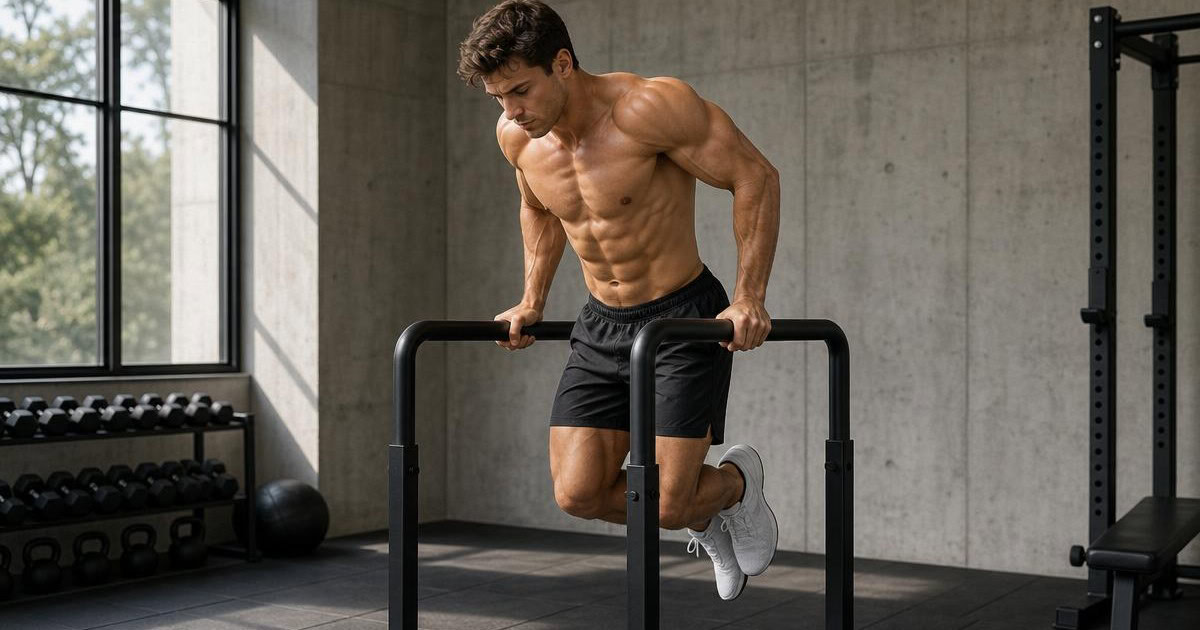
The Triceps Dip performs full-bodyweight dips between parallel bars or sturdy supports, lowering the body until the upper arms are parallel to the floor. The pattern produces strong tricep loading combined with lower chest and shoulder work.
For bodyweight tricep training, the triceps dip is the most foundational tricep mass-building exercise. The pattern hits all three tricep heads through compound pressing motion that loads the triceps with full bodyweight. Run it for 4 sets of 6 to 12 reps as primary tricep mass work in any bodyweight tricep session.
Position between two parallel bars (or sturdy elevated surfaces) at a height where the body can hang without touching the floor. Grip the bars with arms extended and body upright. Keep the elbows pinned close to the body (not flared) to maximize tricep recruitment over chest. Lower the body by bending the elbows until the upper arms are parallel to the floor. Drive back up by extending the elbows. The strict elbow position drives tricep loading.
Triceps Dip Floor

The Triceps Dip Floor (also called bench dip) performs dips with the hands on a bench or sturdy surface and feet on the floor. The pattern produces strong tricep loading accessible without parallel bars.
For bodyweight tricep training, the floor or bench dip is the most accessible tricep mass exercise. The pattern hits the triceps through compound pressing motion using only a bench or sturdy chair. Run it for 3 to 4 sets of 10 to 15 reps as accessible tricep mass work.
Sit on a sturdy bench or chair with hands gripping the edge near the hips. Slide the hips off the bench so the arms support the body weight, with feet on the floor and legs extended (or bent for easier variation). Lower the body by bending the elbows until the upper arms approach parallel to the floor. Drive back up by extending the elbows. Keep the elbows pointing back (not out to the sides) to maximize tricep recruitment.
Decline Diamond Push-Up

The Decline Diamond Push-Up combines a decline push-up position (feet elevated) with a diamond hand position (thumbs and index fingers touching). The pattern produces strong tricep loading through the close grip and increased upper-body angle.
For bodyweight tricep training, the decline diamond push-up is one of the most effective tricep push-up variations. The pattern hits the triceps through close-grip pressing with elevated feet that increases shoulder loading. Run it for 3 sets of 8 to 12 reps as advanced tricep push-up work.
Place the feet on an elevated surface (a sturdy bench or block 12 to 18 inches high). Position the hands directly under the chest with thumbs and index fingers forming a diamond shape. Lower the body by bending the elbows, keeping the elbows close to the body. The chest should descend toward the diamond shape. Drive back up by extending the elbows. The combination of decline angle and close grip produces strong tricep loading.
Bodyweight Overhead Triceps Extension

The Bodyweight Overhead Triceps Extension performs overhead extension motion using a sturdy fixed object (rail or bar) for resistance. The pattern produces strong long-head tricep loading without weights.
For bodyweight tricep training, the overhead extension produces strong long-head loading through stretched-position work. The long head contributes most to overall tricep mass. Run it for 3 sets of 10 to 15 reps as long-head emphasis work.
Stand facing a sturdy fixed bar or rail at chest height. Grip the bar overhand with hands shoulder-width and walk back so the arms are extended overhead at an incline. The body should be at an angle with arms straight. Bend the elbows to lower the head between the arms (or until the forehead approaches the bar). Extend the arms back to starting by straightening the elbows. The overhead position hits the long head specifically.
Bodyweight Kneeling Triceps Extension

The Bodyweight Kneeling Triceps Extension performs kneeling tricep extensions using a sturdy support (rail or bench) for resistance. The pattern produces strong tricep isolation through pure elbow extension.
For bodyweight tricep training, the kneeling tricep extension produces strong tricep isolation. The pattern hits the triceps through pure elbow flexion and extension. Run it for 3 sets of 10 to 12 reps as tricep isolation work.
Kneel on a soft surface facing a sturdy bench or low support. Place the elbows on the bench with the upper arms parallel to the floor and the forearms extended forward. The body forms an angle from knees to elbows. Lower the body by bending the elbows to bring the head toward the support. Extend the arms back by straightening the elbows, returning to starting position. Maintain elbow position pinned to the bench throughout.
Elevated Push Up

The Elevated Push Up performs push-ups with the feet on an elevated surface (decline angle). The increased shoulder loading shifts more work to the triceps and upper chest.
For bodyweight tricep training, the elevated push-up produces stronger tricep loading than standard push-ups through the increased shoulder angle. The pattern hits the triceps through compound pressing with elevated feet. Run it for 3 sets of 10 to 15 reps as compound tricep work.
Place the feet on an elevated surface (a sturdy bench or step 6 to 18 inches high). Position the hands shoulder-width on the floor. Lower the body by bending the elbows, keeping them at about 45 degrees from the torso (not flared wide). Drive back up by extending the elbows. The decline angle increases tricep and upper chest loading. Use higher elevation for greater difficulty.
One Side Archer Push Up

The One Side Archer Push Up performs push-ups with most of the body weight loaded on one arm, the other arm extended out to the side. The pattern produces strong unilateral pressing loading that builds toward one-arm push-ups.
For bodyweight tricep training, the archer push-up produces strong unilateral tricep and chest loading. The pattern is one of the best progressions toward eventual one-arm push-ups. Run it for 3 sets of 5 to 8 reps per side as advanced unilateral pressing work.
Start in a high plank position with hands wider than shoulder-width. Lower the body by bending one arm while keeping the other arm extended straight out to the side (the working arm bends, the non-working arm stays straight as a brace). Most of the body weight is supported by the working arm. Drive back up by extending the working elbow. Switch sides between sets. The unilateral loading produces strong tricep work.
Impossible Dips

The Impossible Dips perform dips with the feet elevated on a far support and the hands on a near support, creating an extreme leverage position. The pattern produces extreme tricep loading and is one of the most demanding bodyweight tricep exercises.
For bodyweight tricep training, impossible dips are an elite-level tricep exercise that combines bench dip mechanics with extreme leverage. The pattern hits the triceps through demanding loading. Run it for 3 sets of 5 to 10 reps as advanced tricep work.
Set up two parallel sturdy supports (benches or boxes) about 4 to 5 feet apart. Position the hands on one support and the feet on the other (heels resting on the far support). The body forms a straight line between the supports with arms extended and supporting most of the body weight. Lower the body by bending the elbows until the upper arms are parallel to the floor. Drive back up by extending the elbows. Build up to this gradually.
Korean Dips

The Korean Dips perform dips with the body inclined back rather than upright, with the hands on a low support behind the body. The pattern produces strong tricep loading through unique angle that emphasizes the long head.
For bodyweight tricep training, Korean dips produce strong long-head tricep loading through the unique back-leaning position. The pattern hits the triceps from an angle that standard dips do not match. Run it for 3 sets of 6 to 10 reps as advanced tricep variation work.
Position behind a low sturdy support (parallel bars positioned low, or stacked plates). Grip the support behind the body with arms extended and palms facing back. Lean the torso back at about a 45-degree angle with feet planted on the floor in front. Lower the body by bending the elbows, leaning further back. Drive back up by extending the elbows while maintaining the leaned-back position. The unique angle produces strong long-head loading.
Push Up and Triceps Dip on Parallel Bars

The Push Up and Triceps Dip on Parallel Bars combines push-up motion with dip motion using parallel bars. The pattern produces combined chest and tricep loading through alternating compound pressing.
For bodyweight tricep training, the combined push-up and dip produces strong combined tricep and chest loading. The pattern hits the triceps through dual compound pressing patterns. Run it for 3 sets of 5 to 8 reps of each motion as combined upper body work.
Position between two parallel bars at chest height. Begin in a high plank position with hands gripping the bars. Perform a push-up: lower the chest between the bars and drive back up. From the top, immediately transition into a dip position by walking the feet back to hang from the bars. Perform a dip: lower the body and drive back up. Return to the push-up position. Continue alternating. The combined motion produces strong upper body work.
How To Program These Workouts
A productive bodyweight tricep session pulls 5 to 6 exercises from the list above based on training goals and available equipment. A common session: triceps dip (4 sets x 6 to 12), decline diamond push-up (3 sets x 8 to 12), elevated push-up (3 sets x 10 to 15), bodyweight overhead triceps extension (3 sets x 10 to 15), bodyweight kneeling triceps extension (3 sets x 10 to 12). For advanced focus: impossible dips, Korean dips, one-side archer push-up, push-up and triceps dip on parallel bars combo. Run compound mass work for 3 to 4 sets of 6 to 15 reps, isolation work for 3 sets of 10 to 15 reps, and advanced progressions for 3 sets of 5 to 10 reps. Total session covers 14 to 20 working sets focused on tricep development.
Train bodyweight tricep work 1 to 2 times per week as part of broader pushing-day or home-training programming. The triceps recover reasonably quickly but accumulate fatigue from compound pressing work (push-ups, dips, presses) that already activates them substantially. Most successful programs include bodyweight tricep work either: 1) at the end of a pressing day (after compound presses), 2) on a dedicated arm day with bicep work, or 3) as a complete tricep session for home-only training. Keep tricep training time under 30 to 35 minutes per session. Progress through bodyweight variations by adding sets, reducing rest, or progressing to harder exercises (impossible dips, archer push-ups).
For broader tricep programming, see our how to build bigger triceps and best at home tricep workouts. For specific arm work, see our best bodyweight arm workouts.
Final Thoughts
The best bodyweight tricep workouts deliver real tricep development through patterns that effectively load the triceps without external resistance. The combination of compound pressing, long-head emphasis, isolation work, and advanced progressions covers every functional pattern of the tricep and produces broader development than dumbbell extensions alone for many lifters. For lifters who want to train triceps effectively at home with no equipment, want to build push-up and dip endurance, want to progress toward advanced bodyweight skills (one-arm push-ups, advanced dip variations), or want to break through plateaus in tricep development, dedicated bodyweight tricep work is one of the most effective options available.
Stay focused on elbow position and progressive difficulty. The most common bodyweight tricep training mistakes include flaring the elbows during dips and push-ups (which shifts work to chest and shoulders rather than triceps) and not progressing the difficulty over time (which produces stagnant results). The fix: keep elbows pointing back (not out to the sides) on every dip and close-grip push-up, and progress the difficulty by adding sets, reducing rest periods, increasing decline angle, or progressing to harder variations (archer push-ups, impossible dips, Korean dips). Quality reps with progressive overload produce stronger tricep development than mindless volume.
Frequently Asked Questions
Can you build triceps with bodyweight only?
Yes effectively for most lifters. The bodyweight tricep exercises in this list produce real tricep development through compound pressing (dips, push-ups), long-head emphasis (overhead extensions), and unilateral progressions (archer push-ups). Many lifters build excellent triceps through dedicated bodyweight training. Most successful programs include bodyweight work alongside loaded work when both are accessible, but bodyweight alone produces strong development for lifters with limited equipment access.
Are dips or push-ups better for triceps?
Both for complete tricep development. Dips produce strong tricep loading through compound pressing with full bodyweight resistance, working all three tricep heads. Close-grip and diamond push-ups produce tricep loading with less total resistance but allow greater rep volume. Most successful bodyweight tricep programs include both: dips as primary mass-building work and push-up variations as volume work. The combination produces broader tricep development than either alone.
How often should I train triceps with bodyweight?
One to two bodyweight tricep sessions per week works for most lifters. The triceps recover reasonably quickly but accumulate fatigue from compound pressing work (push-ups, dips, presses) that already activates them substantially. Most successful programs include bodyweight tricep work either at the end of a pressing day, on a dedicated arm day, or twice per week with one heavier session and one lighter pump-focused session.
What’s the most effective bodyweight tricep exercise?
The triceps dip is the most foundational and effective. It produces strong tricep loading through compound pressing motion with full bodyweight resistance, hitting all three tricep heads. Most successful programs include dips as primary mass-building work. Other strong choices include diamond push-ups (close-grip emphasis), elevated push-ups (decline pressing), and overhead extensions (long-head emphasis). Most successful bodyweight tricep programs include 4 to 6 different exercises across compound, isolation, and progression patterns.
Can bodyweight tricep exercises replace dumbbell extensions?
For some lifters yes, for others as a complement. Bodyweight tricep exercises produce real tricep development through compound pressing patterns plus long-head emphasis through overhead extensions and progressions. Lifters who can not access dumbbells or cables (home training, travel, recovery from injury) can build excellent triceps through dedicated bodyweight training. Lifters with full equipment access typically include both for maximum development.