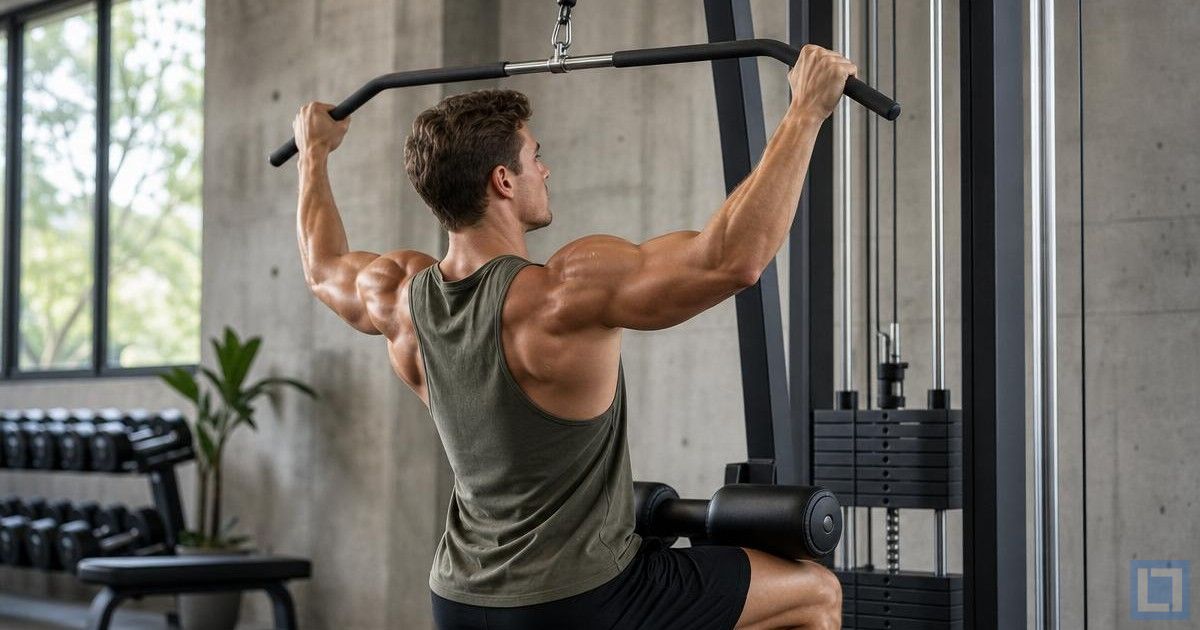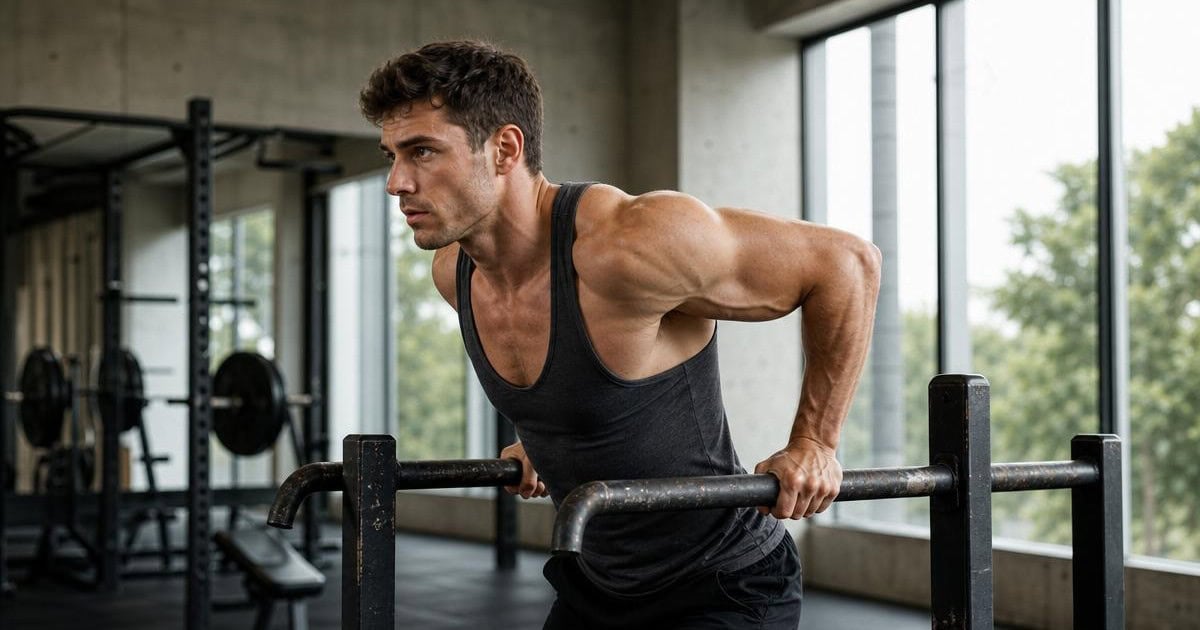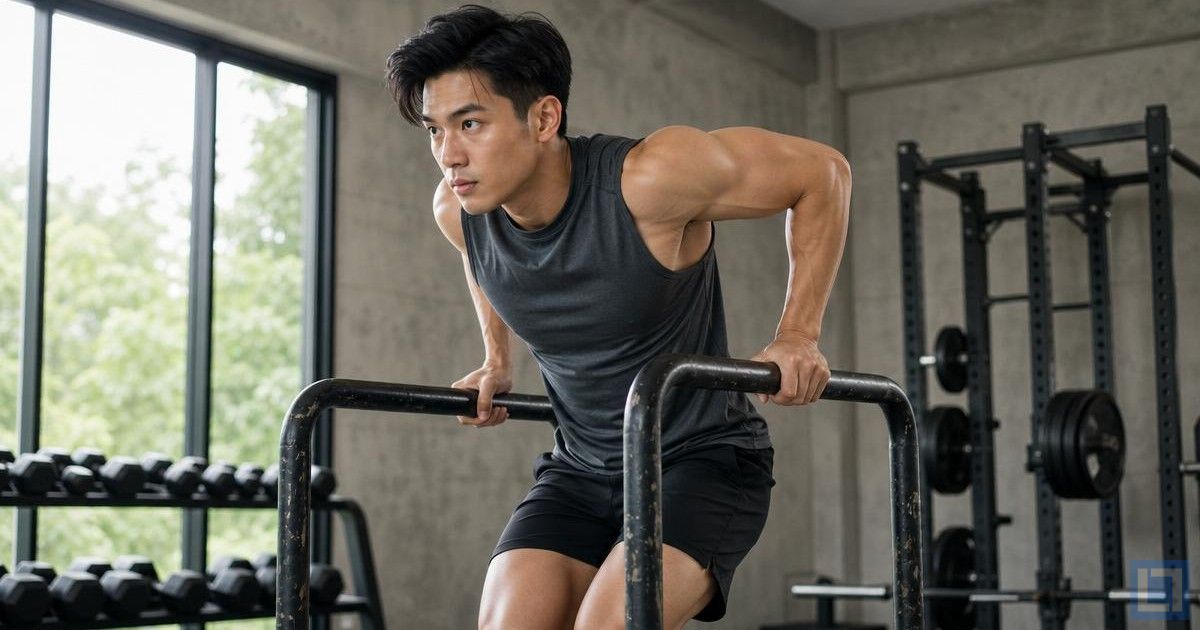
Bodyweight arm training produces real bicep and tricep development through equipment-free exercises that work the arms through their primary movement patterns. The format works because the biceps respond to pulling exercises (chin-ups, close-grip pull-ups, inverted rows) and the triceps respond to pressing exercises (dips, diamond push-ups, close-grip push-ups, tricep extensions), all of which can be performed effectively using just body weight. The combination of pulling exercises for biceps and pressing/extension exercises for triceps covers both major arm muscle groups with progressive variations that scale from beginner to advanced.
Below are ten effective bodyweight arm exercises that cover bicep work (chin-up, close-grip chin-up, close-grip pull-up, inverted row), tricep pressing (triceps dip, diamond push-up, close-grip push-up, triceps dip floor), and tricep extension work (bodyweight overhead extension, bodyweight kneeling extension). Together they form a complete bodyweight arm training program that fits in any setting from home to travel hotel rooms. A 30 to 45-minute session pulled from this list produces strong arm stimulus across both biceps and triceps.
Chin Up

The Chin Up grips an overhead bar with palms facing the body (underhand grip) and pulls the body up until the chin clears the bar. The reverse grip emphasizes the biceps more heavily than overhand pull-ups, making it the foundational bodyweight bicep exercise.
For bodyweight arm training, the chin-up is the foundational bicep mass-builder. The pattern combines pulling with bicep peak contraction at the top, which produces stronger bicep loading than any other bodyweight exercise. Run it for 4 to 5 sets of 5 to 10 reps as primary bicep work in every bodyweight arm session.
Hang from an overhead bar with palms facing the body (underhand grip), hands shoulder-width apart. Pull the body up by driving the elbows down until the chin clears the bar. Squeeze the biceps hard at the top. Lower under control to a full hang.
Close Grip Chin Up

The Close Grip Chin Up performs chin-ups with hands placed close together on the bar. The narrower grip increases the bicep range of motion and produces stronger bicep peak contraction at the top.
For bodyweight bicep training, the close-grip chin-up produces stronger bicep loading than standard-grip chin-ups. The narrower grip biases loading even more heavily toward the biceps. Run it for 3 to 4 sets of 5 to 8 reps as primary bicep peak work.
Hang from an overhead bar with palms facing the body and hands placed close together (4 to 6 inches apart). Pull the body up by driving the elbows down until the chin clears the bar. Squeeze the biceps hard at the top. Lower under control to a full hang.
Close Grip Pull-up

The Close Grip Pull-up performs pull-ups with palms facing away and hands placed close together on the bar. The narrower grip allows greater range of motion and produces strong bicep involvement alongside back work.
For combined bodyweight back-and-bicep training, the close-grip pull-up produces strong loading on both muscle groups. The pattern works as a complement to chin-ups by changing the grip orientation. Run it for 3 sets of 6 to 10 reps as combined work.
Hang from an overhead bar with palms facing away and hands placed close together. Pull the body up by driving the elbows down and back. Continue until the chin clears the bar. Lower under control. The closer grip produces a slightly different pulling angle than wide variations.
Triceps Dip

The Triceps Dip supports the body between two parallel bars and lowers the body by bending the elbows, then presses back to lockout. The exercise produces strong tricep, lower chest, and front delt loading and is the foundational bodyweight tricep exercise.
For bodyweight tricep training, the dip is the strongest tricep-builder that exists. The pattern hits the triceps through full elbow extension under significant body weight loading. Run it for 4 to 5 sets of 6 to 12 reps as primary tricep work in every bodyweight arm session.
Support the body between parallel bars with arms locked out, body upright. Lower the body by bending the elbows until the upper arms are parallel to the floor (or as deep as shoulder mobility allows). Press back to lockout by extending the elbows. Maintain upright torso throughout.
Diamond Push Up

The Diamond Push Up performs push-ups with hands placed close together so the thumbs and index fingers form a diamond shape. The extreme close-grip position maximizes tricep loading.
For bodyweight tricep training that complements dips, the diamond push-up produces extreme tricep loading from a different pressing angle. The pattern hits the triceps with extreme intensity. Run it for 3 sets of 8 to 12 reps as advanced tricep push work.
Set up in a push-up position with hands placed together so the thumbs and index fingers form a diamond shape directly under the chest. Lower the chest to the diamond by bending the elbows. Press back to lockout. The extreme close-grip position increases tricep loading significantly.
Close Grip Push Up

The Close Grip Push Up performs push-ups with hands placed close together. The narrower grip biases loading toward the triceps more heavily than standard push-ups, making it accessible bodyweight tricep work.
For accessible bodyweight tricep training, the close-grip push-up produces strong tricep loading without requiring full diamond push-up strength. The pattern hits the triceps significantly. Run it for 3 to 4 sets of 8 to 12 reps as foundational bodyweight tricep work.
Set up in a push-up position with hands placed close together (shoulder-width or narrower). Lower the chest to the floor by bending the elbows; keep the elbows tucked close to the body throughout. Press back to lockout, focusing on tricep extension. Keep the body straight.
Inverted Row

The Inverted Row sets up under a bar (or sturdy table or low bar) and pulls the chest up to the bar using a horizontal pulling motion while the body remains in a straight line. The pattern produces strong horizontal pulling work and indirect bicep loading.
For bodyweight back-and-bicep work, the inverted row complements chin-ups by adding horizontal pulling. The pattern hits the biceps through pulling alongside strong back loading. Run it for 3 to 4 sets of 8 to 12 reps as horizontal pull and accessory bicep work.
Set up under a bar at hip-to-waist height. Grip the bar with shoulder-width grip and palms facing away. Hang under the bar with the body in a straight line, heels on the floor. Pull the chest up to the bar by retracting the shoulder blades and bending the elbows. Lower under control.
Triceps Dip Floor

The Triceps Dip Floor sits on the floor with hands placed behind the body and feet planted, then dips down by bending the elbows. The floor variation works without parallel bars and provides accessible bodyweight tricep loading.
For accessible bodyweight tricep training that requires no equipment, the floor dip produces strong tricep loading without parallel bar access. The pattern fits naturally into home or travel training. Run it for 3 sets of 10 to 15 reps as accessible bodyweight tricep work.
Sit on the floor with feet planted and hands placed behind the body, fingers pointing toward the body. Lift the hips off the floor with arms supporting body weight. Lower the body by bending the elbows until the upper arms are parallel to the floor. Press back to lockout. Maintain hip elevation throughout.
Bodyweight Overhead Triceps Extension

The Bodyweight Overhead Triceps Extension uses a sturdy elevated surface (table, bar, or other anchor point) and performs an overhead tricep extension by lowering the body forward into a tricep stretch position before pressing back. The pattern hits the long head of the triceps through the overhead position.
For long-head tricep development without weights, the bodyweight overhead extension is one of the most direct exercises that exists. The overhead position emphasizes the long head specifically. Run it for 3 sets of 8 to 12 reps as long-head tricep work.
Stand facing a sturdy elevated bar or surface (waist to chest height). Grip the bar with hands close together. Walk the feet back so the body angles forward. Bend at the elbows to lower the head toward the bar (the upper arms angle forward overhead). Extend the elbows to press back to the start.
Bodyweight Kneeling Triceps Extension

The Bodyweight Kneeling Triceps Extension kneels on the floor and performs a tricep extension by lowering the body forward (similar to a skull crusher) while bending only at the elbows. The pattern produces strong tricep loading without equipment.
For bodyweight tricep training that mimics skull crushers, the kneeling extension produces strong tricep loading through pure elbow extension. The kneeling position allows progressive loading by leaning further forward. Run it for 3 sets of 8 to 12 reps as bodyweight tricep work.
Kneel on the floor with hands placed in front of the body, slightly wider than shoulder-width. Lean forward and bend at the elbows to lower the body forward (like a skull crusher motion). Extend the elbows to press back to the start. The upper arms remain stationary; only the elbows move.
How To Program These Workouts
A productive bodyweight arm session pulls six to eight exercises from the list above. A balanced session includes one chin-up variation (chin-up or close-grip chin-up), one pull-up variation (close-grip pull-up), one inverted row, one dip variation (triceps dip), one diamond push-up or close-grip push-up, one tricep extension (bodyweight overhead or kneeling extension), and one floor dip. Run chin-ups and pull-ups for 4 to 5 sets of 5 to 10 reps; dips for 4 sets of 6 to 12 reps; push-ups for 3 sets of 8 to 12 reps; extensions for 3 sets of 8 to 12 reps.
Train bodyweight arm sessions 2 to 3 times per week. The bodyweight format produces moderate joint stress, which allows higher frequency than barbell-heavy programs. Most lifters do well with 2 to 3 dedicated arm sessions per week alongside chest, back, and leg training. The arms also get significant indirect work from any chest pressing or back pulling, which means dedicated arm sessions can be moderate-volume to avoid overtraining.
For broader arm programming, see our how to build bigger biceps and how to build bigger triceps. For specific bicep work, see our best long head bicep exercises.
Final Thoughts
The best bodyweight arm workouts deliver real arm development through equipment-free training that scales from beginner to advanced through progressive variations. The combination of bicep pulling exercises (chin-ups, close-grip variations, inverted rows) and tricep pressing/extension exercises (dips, diamond push-ups, tricep extensions) covers both major arm muscle groups and produces complete development. For lifters who want serious arm training without weights, want to supplement weighted training with bodyweight work, or need effective arm workouts in any setting, this format is one of the most effective options available.
Stay focused on the connection between bicep pulling and tricep pressing. The most common bodyweight arm training mistake is over-emphasizing one direction (only push-ups for triceps, or only chin-ups for biceps) and missing balanced development. The fix: include both pulling and pressing exercises in every session, with appropriate volume distributed across both. Most lifters need 12 to 16 weekly sets per arm muscle group for significant development; bodyweight arm training provides plenty of options to hit that volume range across multiple weekly sessions.
Frequently Asked Questions
Can I build big arms with only bodyweight?
Yes for general arm development. The combination of progressive bodyweight training (chin-ups, dips, diamond push-ups), appropriate volume, and consistent nutrition produces real arm development for years of consistent practice. Advanced lifters chasing maximum arm size eventually benefit from heavy weighted curls and tricep extensions that allow loads bodyweight cannot match, but consistent bodyweight arm training produces measurable development at every level.
How often should I do bodyweight arm workouts?
Two to three times per week works for most lifters. The bodyweight format produces moderate joint stress, which allows higher frequency than barbell-heavy programs. Most successful programs include 2 to 3 dedicated arm sessions per week alongside chest, back, and leg training. The arms also get significant indirect work from chest and back training, which limits how much direct arm work is needed.
Chin-ups or curls for biceps?
Chin-ups produce stronger overall bicep development through bodyweight loading and combined back work. Curls produce stronger isolation through pure bicep loading without back involvement. For bodyweight training, chin-ups are non-negotiable as the foundational bicep exercise. Lifters with weight access often combine both: chin-ups for foundational mass and curls for direct isolation. Bodyweight-only practitioners can substitute inverted rows and progress to harder chin-up variations.
Dips or push-ups for triceps?
Dips produce stronger overall tricep development through bodyweight loading at the bottom of the rep where the triceps work hardest. Diamond push-ups produce strong tricep loading through close-grip pressing without requiring parallel bars. Most successful bodyweight tricep training includes both: dips as the primary heavy compound and diamond push-ups for additional volume. Lifters without dip station access can use the floor dip variation.
How long until I see arm results from bodyweight training?
Most lifters feel meaningful arm strength improvements within 4 to 6 weeks of consistent bodyweight arm training. Visible arm development appears within 8 to 12 weeks combined with appropriate nutrition. Major arm changes (significantly bigger biceps and triceps) take 6 to 12 months of dedicated practice. Year-over-year arm growth continues for the first 5 to 8 years of training before the rate naturally slows.