Machine quad training produces real quad development through patterns that load the quads with the unique advantages machines offer: fixed bar paths and braced positions that allow quad-focused loading without stabilizer demands, easy progressive overload through pin-stack or plate adjustments, the ability to load the quads from multiple angles (Smith squats, hack squats, leg presses, leg extensions), and reduced spinal loading on certain machine setups (belt squats) that allow productive training for lifters with back limitations. The format works particularly well for quads because machines allow aggressive quad-focused setups (forward knee position on Smith squats, heavy loading on leg presses, direct isolation on leg extensions) that free-weight programs cannot match without significant stabilizer fatigue. Most lifters who consistently train machine quad work 1 to 2 times per week alongside compound free-weight movements see measurable quad development, improved squat performance, better quad sweep, and stronger lockout strength within 8 to 12 weeks. The combination of Smith squat variations, leg press patterns, hack squat work, and direct isolation produces broader quad development than free-weight-only programs for many lifters.
Below are ten effective machine quad exercises that cover Smith machine squat variations (Smith squat, Smith front squat, Smith hack squat, Smith split squat, Smith sumo squat), leg press patterns (Smith leg press, sled 45 leg press), hack squat machine work (lever hack squat), direct quad isolation (lever leg extension), and spinal-friendly loading (lever belt squat). Together they form a complete machine quad program that hits the quads through every available machine pattern. A 30 to 45-minute session pulled from this list, performed 1 to 2 times per week, produces strong quad development that complements free-weight squats and lunges.
Smith Squat

The Smith Squat performs squats on a Smith machine with the bar fixed in vertical guide rails. The fixed bar path produces strong quad loading with reduced stabilizer demands, ideal for quad-focused training.
For machine quad training, the Smith squat is one of the most foundational quad exercises that exists. The fixed bar path allows aggressive forward knee position that emphasizes quads. Run it for 4 sets of 8 to 12 reps as primary mass-building work in any machine quad session.
Position the bar across the upper traps on a Smith machine. Stand with feet placed slightly forward of the body (in front of the bar) to allow forward knee tracking. Squat down by bending the knees and pushing them forward over the toes while the bar tracks straight down the rails. Descend to at least thigh-parallel. Drive back to standing through the heels. The forward foot position and fixed bar path produce strong quad loading.
Smith Front Squat
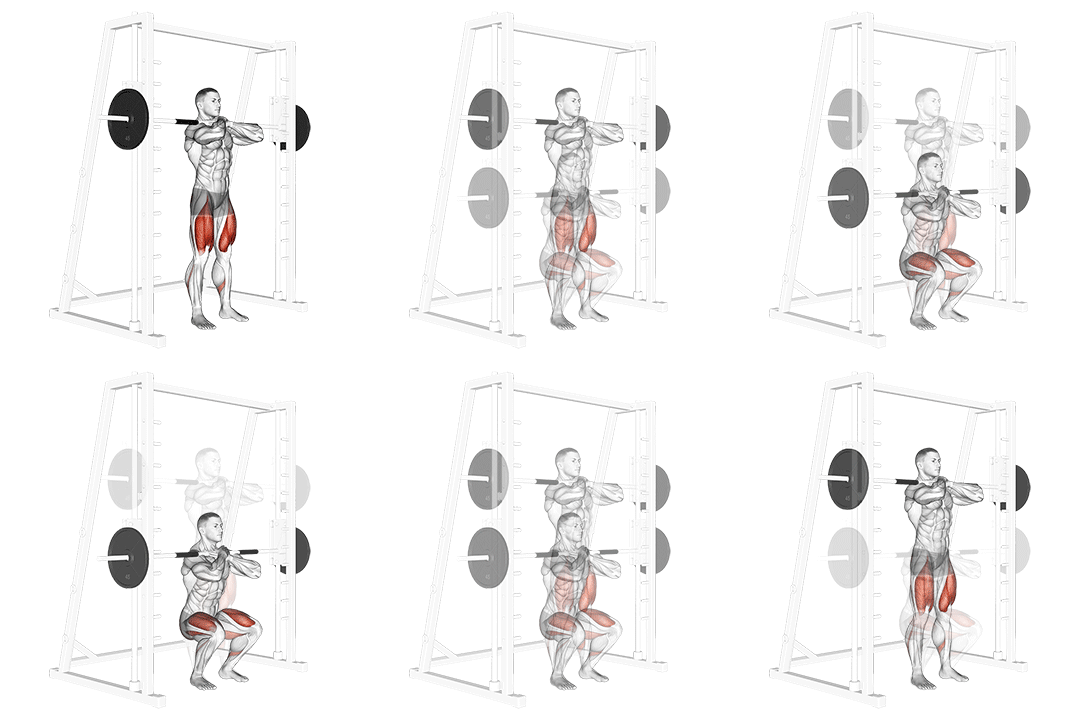
The Smith Front Squat performs front squats on a Smith machine with the bar held in front rack position at the shoulders. The pattern produces extreme quad loading through upright torso positioning combined with the fixed bar path.
For machine quad training, the Smith front squat produces extreme quad loading. The combination of front rack positioning (which keeps the torso upright) plus fixed bar path produces maximum quad emphasis. Run it for 3 sets of 8 to 12 reps as primary quad-emphasis work.
Set up at a Smith machine. Position the bar in front rack position at the shoulders (bar resting on the front delts with elbows pointed forward). Stand with feet shoulder-width. Squat down by bending the knees while keeping the torso upright. The front rack position naturally keeps the torso vertical, emphasizing quad loading. Descend to at least thigh-parallel. Drive back to standing through the heels.
Smith Leg Press

The Smith Leg Press performs leg press motion using a Smith machine setup. The pattern produces strong combined quad and glute loading through pushing motion.
For machine quad training, the Smith leg press produces combined quad and glute work. The pattern hits the quads through pushing motion against the fixed bar. Run it for 3 sets of 10 to 15 reps as combined quad and glute work.
Lie on the floor under a Smith machine. Place both feet on the bar at hip-width. Unrack the bar and press it up by extending the legs (similar to a leg press motion). Lower the bar by bending the knees toward the chest in a controlled tempo. Drive back up by extending the legs. The pattern produces strong quad loading through the pushing motion. Use a moderate weight that allows full controlled range.
Smith Hack Squat

The Smith Hack Squat performs hack squats with the body leaned slightly forward on a Smith machine. The pattern produces strong quad loading through the unique leaned-back position.
For machine quad training, the Smith hack squat produces strong quad-emphasis loading. The leaned-forward position with feet slightly forward produces extreme quad loading. Run it for 3 sets of 8 to 12 reps as quad-emphasis work.
Position the bar across the upper traps on a Smith machine. Stand with feet placed slightly forward of the body and lean the torso back slightly against the bar. Squat down by bending the knees while the bar tracks straight down. The leaned-back position with feet forward shifts loading aggressively to the quads. Descend to thigh-parallel or slightly below. Drive back to standing through the heels.
Smith Split Squat

The Smith Split Squat performs split squats on a Smith machine with the bar across the upper traps. The fixed bar path allows aggressive quad-focused depth without balance demands.
For machine quad training, the Smith split squat produces strong unilateral quad loading. The fixed bar path eliminates balance demands so the quads work through full range of motion. Run it for 3 sets of 8 to 12 reps per leg as unilateral quad work.
Position the bar across the upper traps on a Smith machine. Step into a split stance with one foot forward and one back. Drop straight down by bending both knees until the back knee approaches the floor. The fixed bar path keeps the body stable, allowing focus on quad loading. Drive back to standing through the front heel. Switch legs between sets. The pattern produces strong unilateral quad work without the balance demands of dumbbell or barbell split squats.
Smith Sumo Squat

The Smith Sumo Squat performs sumo squats on a Smith machine with feet wider than shoulder-width. The wide stance plus fixed bar path produces combined quad, glute, and adductor loading.
For machine quad training, the Smith sumo squat produces combined quad and adductor loading through the wide stance. The pattern hits the quads while adding inner thigh work. Run it for 3 sets of 10 to 15 reps as combined quad and adductor work.
Position the bar across the upper traps on a Smith machine. Stand with feet wider than shoulder-width and toes pointing slightly out (sumo stance). Squat down by bending the knees while keeping the back flat. The wide stance combined with fixed bar path produces strong combined work. Drive back to standing through the heels. The wide foot position hits both quads and adductors.
Lever Leg Extension

The Lever Leg Extension performs knee extensions on a leg extension machine. The pattern produces direct quad isolation through pure knee extension against constant machine resistance.
For machine quad training, the leg extension is the most direct quad isolation exercise that exists. The pattern hits the quads through pure knee extension. Run it for 4 sets of 12 to 15 reps as primary quad isolation work.
Sit in a leg extension machine with the back against the pad and the lower legs positioned under the roller pad. Adjust the machine so the knees are aligned with the pivot point. Extend the legs by straightening the knees against the resistance. Squeeze the quads hard at full extension. Lower under control. The pattern produces clean quad isolation. Most lifters perform leg extensions at the end of a leg session as a finishing exercise.
Lever Belt Squat
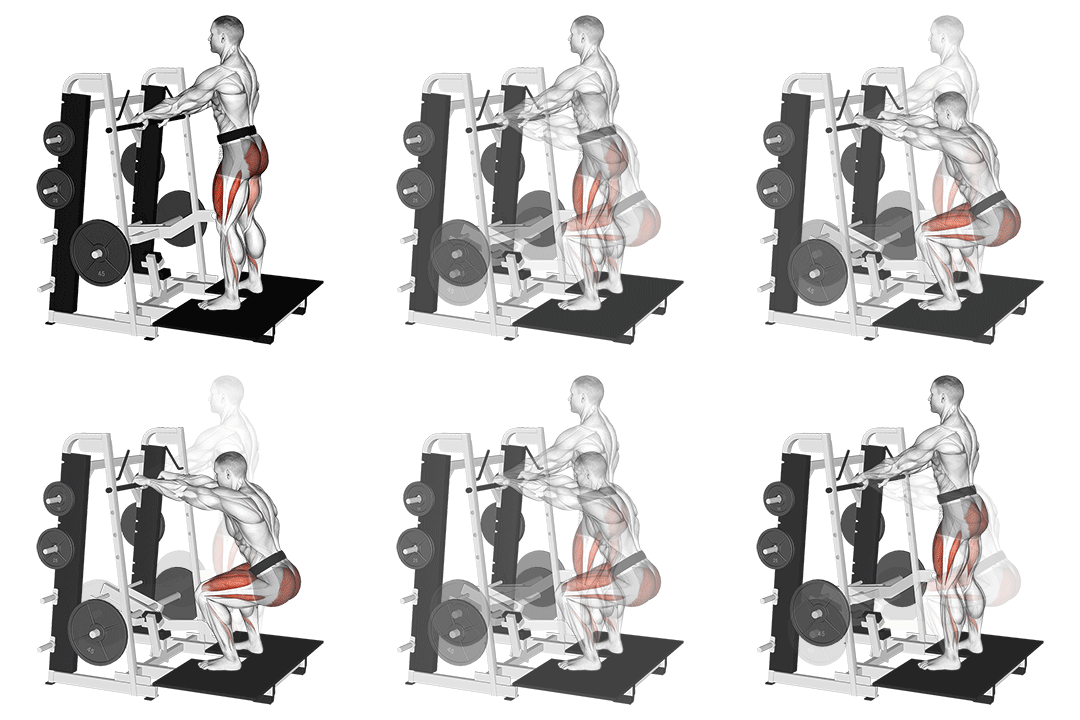
The Lever Belt Squat performs squat motion with a belt around the hips and weight loaded through the belt rather than on the back. The pattern produces strong quad loading without spinal compression.
For machine quad training, the belt squat produces strong quad loading without spinal loading. The pattern is ideal for lifters with back limitations or for high-volume quad work. Run it for 3 sets of 10 to 15 reps as combined quad work without spinal stress.
Set up a belt squat machine with the appropriate weight. Secure the belt around the hips. Stand on the foot platform with feet shoulder-width. Squat down by bending the knees while the weight pulls down through the belt. Descend to thigh-parallel or below. Drive back to standing through the heels. The belt-loaded position produces quad loading without compressing the spine, making the exercise ideal for high volume or for lifters with back issues.
Sled 45 Leg Press
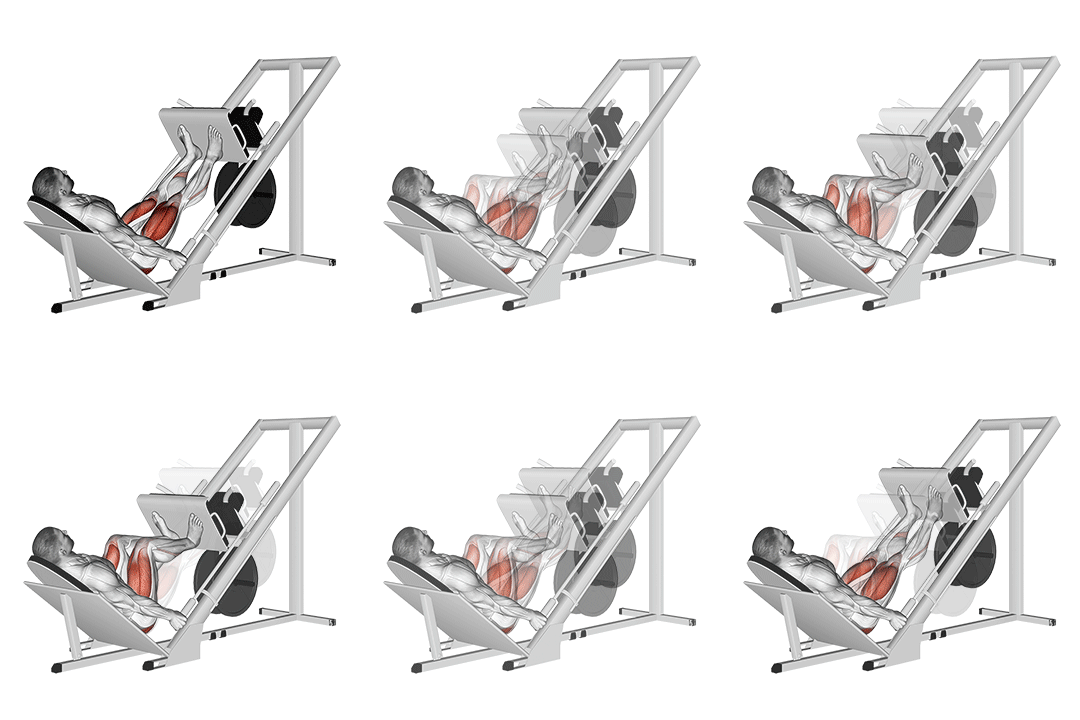
The Sled 45 Leg Press performs leg press motion at a 45-degree angle on a sled-style leg press machine. The pattern produces strong combined quad, glute, and hamstring loading through heavy compound pushing.
For machine quad training, the 45-degree leg press is the foundational heavy compound machine exercise. The pattern allows extreme quad loading through compound pushing. Run it for 3 to 4 sets of 8 to 15 reps as primary heavy quad work.
Sit in a 45-degree leg press machine with the back against the pad. Place both feet on the platform at shoulder-width with the toes pointing slightly out. Unrack the platform and lower it by bending the knees toward the chest. Lower until the thighs reach about 90 degrees with the platform (or less for limited range). Drive the platform back up by extending the legs through the heels. The pattern allows extreme quad loading through compound pushing.
Lever Hack Squat

The Lever Hack Squat performs hack squat motion on a hack squat machine with the back braced against a pad. The pattern produces strong quad-emphasis loading with balanced loading.
For machine quad training, the hack squat machine produces strong quad-emphasis loading. The braced back position eliminates balance demands so the quads work through full range. Run it for 3 sets of 8 to 12 reps as primary quad-emphasis work.
Set up in a hack squat machine with the back and shoulders pressed against the pads. Place feet on the platform at shoulder-width or slightly narrower for more quad emphasis. Unrack the platform and squat down by bending the knees. Descend to at least thigh-parallel. Drive back to standing through the heels. The hack squat machine produces strong quad loading with balanced posterior chain involvement. Many lifters use it as a primary heavy quad movement.
How To Program These Workouts
A productive machine quad session pulls 5 to 6 exercises from the list above based on training goals. A common balanced session: sled 45 leg press (heavy compound), Smith squat (mass), lever hack squat (quad-emphasis), Smith split squat (unilateral), lever leg extension (isolation finisher). For heavy strength focus: Smith squat, sled 45 leg press, lever hack squat, lever belt squat, Smith front squat. Run heavy compound work for 3 to 4 sets of 6 to 12 reps, mass work for 3 sets of 8 to 12 reps, unilateral work for 3 sets of 8 to 12 reps per leg, and isolation work for 3 to 4 sets of 12 to 15 reps. Total session covers 14 to 20 working sets focused on quad development.
Train machine quad work 1 to 2 times per week as part of broader lower-body programming. The quads recover from training in 48 to 72 hours but accumulate fatigue from compound work and from running/sprinting. Most successful programs include machine quad work either: 1) on a dedicated leg day after compound free-weight squats (machines as accessory work), 2) on a quad-focused day with machines as primary movements, or 3) split across 2 leg days with one heavy free-weight day and one machine-focused volume day. Keep training time under 35 to 45 minutes per session. Machines allow productive higher rep ranges due to reduced stabilizer fatigue.
For broader leg programming, see our best leg workouts for mass and how to grow your quads. For specific leg press work, see our best leg press workouts.
Final Thoughts
The best machine quad workouts deliver real quad development through patterns that effectively load the quads with the unique advantages machines offer: fixed bar paths, braced positions, easy progressive overload, and reduced stabilizer demands that free up the quads to work through full productive ranges. The combination of Smith squat variations, leg press patterns, hack squats, direct isolation, and spinal-friendly loading covers every functional pattern of the quad and produces broader development than free-weight-only programs for many lifters. For lifters who want measurable quad size and strength improvements, want to add high-volume work without excessive stabilizer fatigue, want to train productively with back limitations through belt squat options, or want to break through plateaus in quad development, dedicated machine quad work is one of the most effective options available.
Stay focused on full range of motion and proper foot positioning. The most common machine quad training mistakes include using partial range of motion on leg presses and machine squats (which limits quad loading) and improper foot positioning for the goal (foot position high or low changes quad/glute emphasis). The fix: descend to at least thigh-parallel on every Smith squat, hack squat, and leg press rep, and use foot positioning that emphasizes quads (slightly forward and feet placed slightly low on the leg press platform). Quality reps with full range and proper foot positioning produce stronger quad development than ego-driven heavy weights with partial reps.
Frequently Asked Questions
Are machines effective for building quads?
Yes very effectively. Machines produce real quad development through Smith squat variations (mass), leg press patterns (compound pushing), hack squats (quad-emphasis), direct isolation (leg extensions), and spinal-friendly loading (belt squats). The fixed bar paths and braced positions allow quad-focused loading without stabilizer fatigue, producing strong growth stimulus. Most successful quad programs include machine work alongside free-weight squats and lunges. Many lifters build excellent quads with machines as primary movements.
Smith squat or barbell squat for quads?
Both effective; choose based on goals. Barbell squats produce maximum compound loading and require significant stabilizer recruitment, ideal for foundational strength development and full posterior chain involvement. Smith squats allow more aggressive quad-focused setups (forward foot position) and reduced stabilizer demands, ideal for high-volume quad work and quad-emphasis training. Most successful programs include both: barbell squats as primary heavy work and Smith squats as accessory or quad-focused work. The combination produces broader quad development than either alone.
How heavy should machine quad work be?
Heavy for compound machine work, moderate for isolation. Compound machine work like leg presses and Smith squats can use heavy weights (often 200 to 600+ pounds for advanced lifters on leg presses). Hack squats and Smith squats use heavy to moderate weights based on the lifter’s foundation. Isolation work like leg extensions uses moderate weights (50 to 150 pounds for most lifters) because the position requires control. Most successful programs progressively load all exercises until 8 to 15 reps becomes challenging, then increase weight.
How often should I train quads with machines?
One to two machine quad sessions per week works for most lifters. The quads recover from training in 48 to 72 hours but accumulate fatigue from compound work and from running/sprinting. Most successful programs include machine quad work either on a dedicated leg day after compound free-weight squats, on a quad-focused day with machines as primary movements, or split across 2 leg days. Three or more weekly heavy quad sessions typically produces overuse injuries rather than accelerated growth.
Are leg extensions bad for the knees?
Generally safe with proper form, despite outdated reputation. Older fitness wisdom claimed leg extensions were dangerous for the knees due to the perceived shear force. More recent research and clinical practice show leg extensions are generally safe and effective when performed with controlled tempo, appropriate weight, and full range of motion. Most successful quad programs include leg extensions as primary isolation work. Lifters with existing knee issues should consult appropriate medical professionals, but the exercise itself is not inherently knee-damaging.