Bodyweight trap training produces real trap development and improved shoulder health through patterns that load the traps effectively without weights: shrug variations for upper trap loading, Y and T raise patterns for middle and lower trap work, W raise variations for combined trap and rotator cuff loading, and scapular control exercises like scapula dips and elevation/depression that improve overall scapular mechanics. The format works particularly well for traps because the muscle has three functional regions (upper, middle, lower) that each respond to different angles and loading patterns, and bodyweight progressions allow precise scapular control work that’s difficult with heavier loaded variations. Most lifters who consistently train bodyweight trap work 1 to 2 times per week alongside compound pulling movements see measurable trap development, improved posture, better scapular control during compound lifts, and reduced shoulder/neck issues from forward-head posture within 6 to 10 weeks. The combination of shrugs, Y/T raises, W raises, and scapular control work produces broader trap development than shrugs-only programs for many lifters.
Below are ten effective bodyweight trap exercises that cover upper trap loading (bodyweight shrug, inverted shrug, scapula dips, scapula elevation depression), lower trap work (prone Y raise, prone single arm trap raise, standing Y raise), middle trap loading (standing T raise, floor T raise), and combined trap and external rotation (standing W raise). Together they form a complete bodyweight trap program that hits all three trap regions. A 15 to 25-minute session pulled from this list, performed 1 to 2 times per week, produces strong trap development for posture, scapular control, and overall back development.
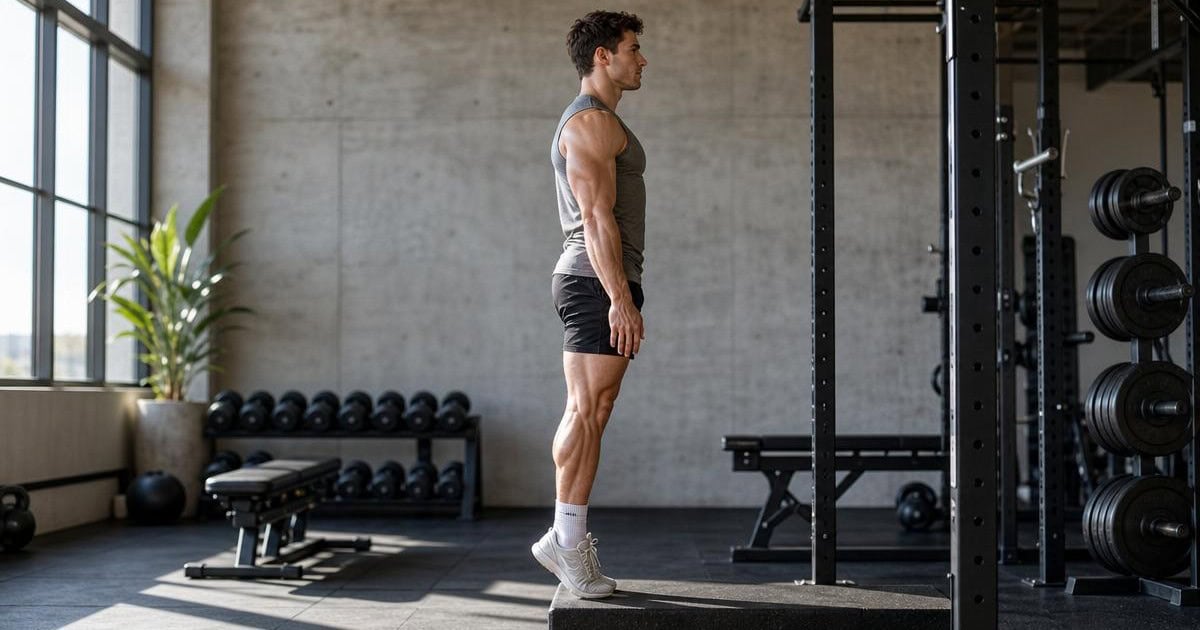
Bodyweight Shrug

The Bodyweight Shrug performs shoulder shrugs without external resistance, focusing on full-range scapular elevation. The pattern produces direct upper trap loading through pure shoulder elevation.
For bodyweight trap training, the bodyweight shrug is the foundational upper trap exercise. The pattern hits the upper traps through pure scapular elevation. Run it for 3 sets of 15 to 20 reps with controlled tempo as primary upper trap work.
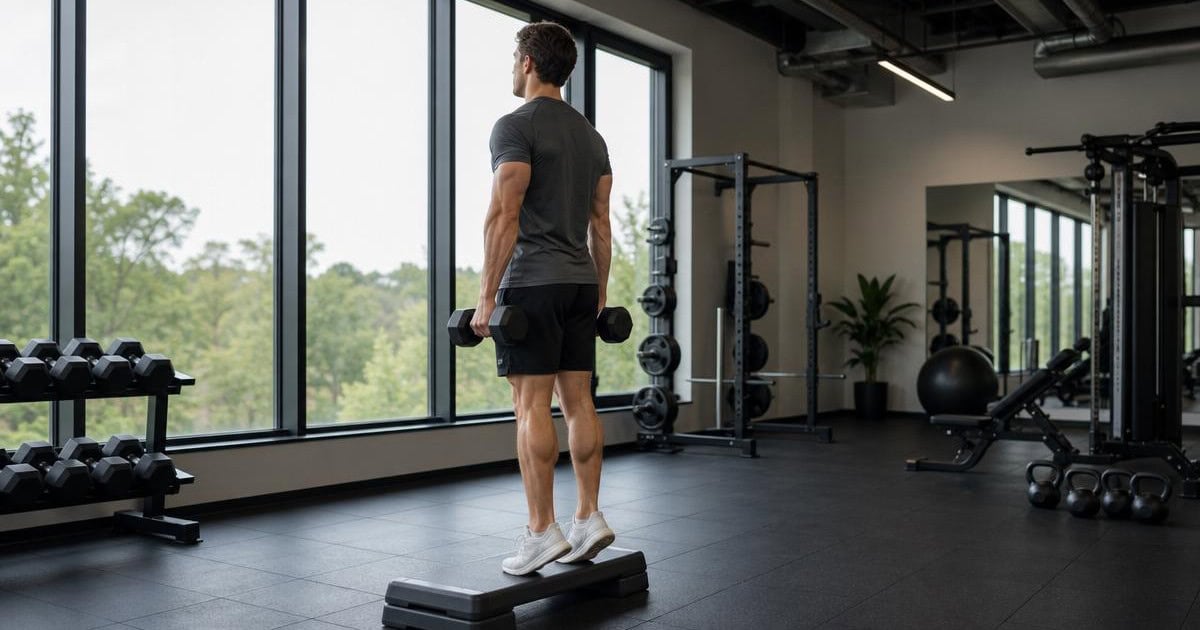
Stand with feet hip-width and arms hanging at the sides. Without bending the elbows or rotating the shoulders, lift the shoulders straight up toward the ears (shrug them up). Pause briefly at the top with shoulders elevated. Lower under control by allowing the shoulders to drop fully. The motion is small but effective when performed with strict form. Use slow controlled tempo to maximize trap loading without weights.
Prone Y Raise

The Prone Y Raise performs shoulder raises lying face-down on the floor with arms extended in a Y shape. The pattern produces strong combined lower trap and posterior shoulder loading.
For bodyweight trap training, the prone Y raise is one of the most effective lower trap exercises that exists. The pattern hits the lower traps through controlled raises in the Y position. Run it for 3 sets of 10 to 15 reps as primary lower trap work.
Lie face-down on the floor with arms extended overhead in a Y shape (palms facing each other or down, hands wider than shoulders forming a Y with the body). Lift the arms up off the floor by squeezing the lower traps and shoulder blades. Hold briefly at the top. Lower under control. The Y position produces strong lower trap recruitment specifically.
Standing T Raise

The Standing T Raise performs lateral arm raises while bent forward, with arms forming a T shape with the body. The pattern produces strong middle trap and rear delt loading.
For bodyweight trap training, the standing T raise produces strong combined middle trap and rear delt loading. The pattern hits the middle traps through scapular retraction. Run it for 3 sets of 12 to 15 reps as middle trap and rear delt work.
Stand with feet hip-width and hinge forward at the hips with a flat back. Let the arms hang straight down. Raise the arms out to the sides until they form a T shape with the body (parallel to the floor). Squeeze the shoulder blades together hard at the top. Lower under control. The bent-over position emphasizes the middle traps and rear delts through the gravity-loaded raise.
Inverted Shrug

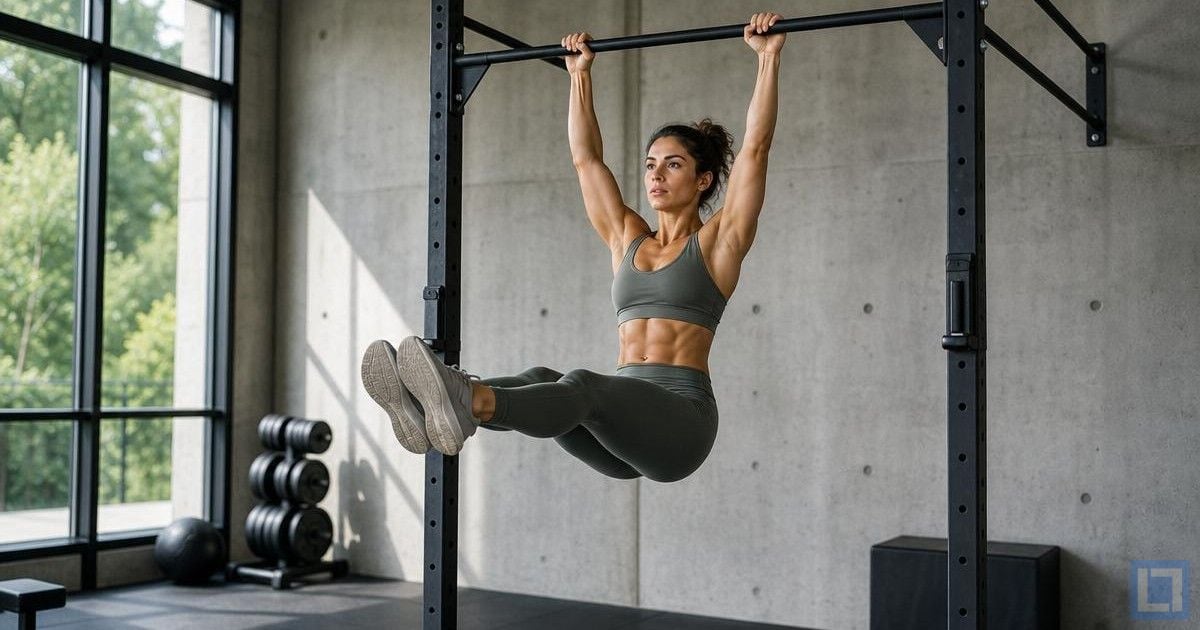
The Inverted Shrug performs shrug motion in an inverted position from a pull-up bar or rings. The pattern produces strong combined trap and pulling loading through scapular elevation while hanging.
For bodyweight trap training, the inverted shrug produces strong upper trap loading combined with grip work. The pattern hits the traps through full bodyweight loading via the pull-up bar. Run it for 3 sets of 8 to 12 reps as combined trap and grip work.
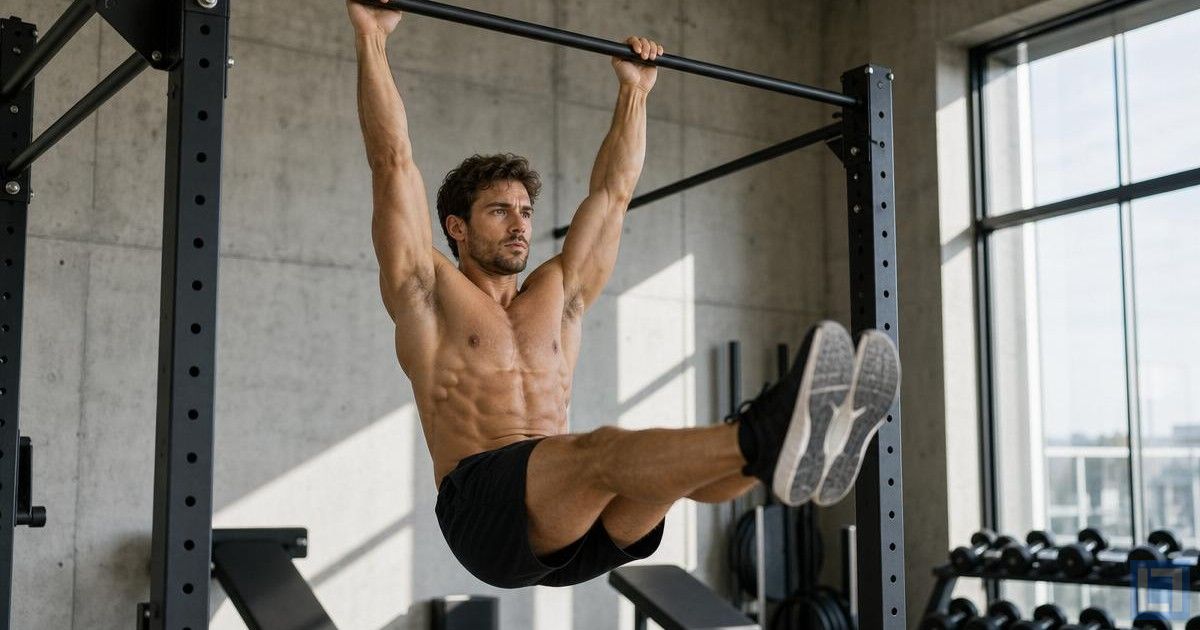
Hang from a pull-up bar with both hands using an overhand grip. Without bending the elbows, shrug the shoulders down by pulling the shoulder blades down (the body rises slightly). Hold briefly at the top with shoulders pulled down. Allow the shoulders to elevate fully (the body lowers slightly back to passive hang). The inverted shrug produces strong scapular control and trap work plus grip endurance.
Scapula Dips

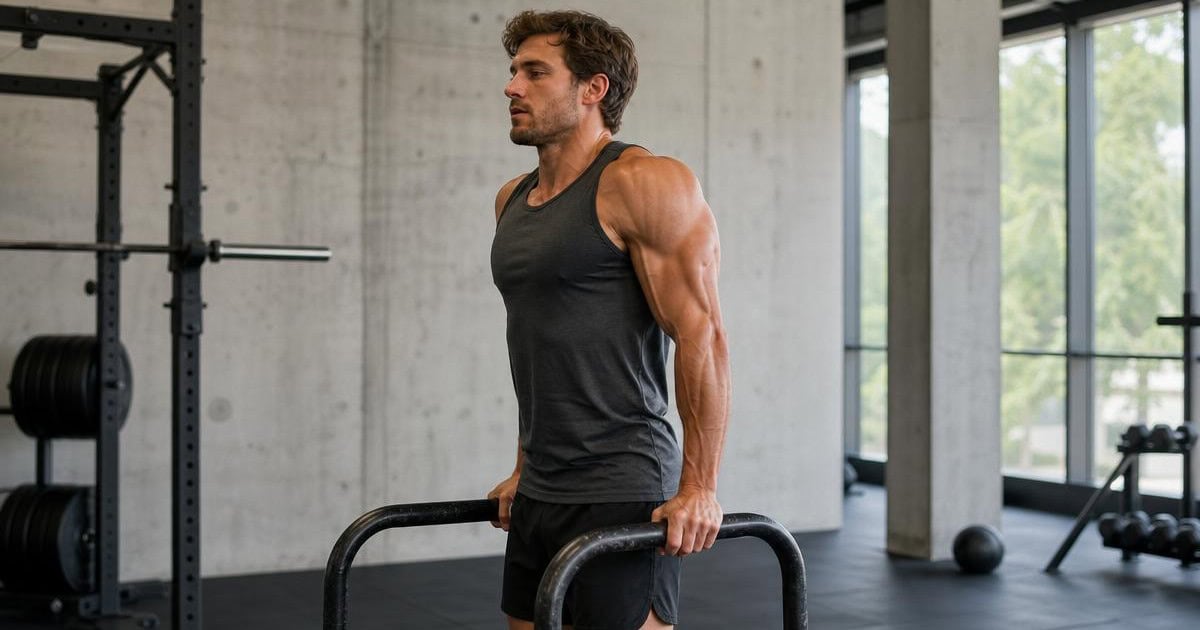
The Scapula Dips perform scapular elevation and depression motion in dip position with bent or straight arms. The pattern produces strong combined trap and chest loading through scapular control.
For bodyweight trap training, the scapula dips produce strong scapular control work. The pattern hits the traps through scapular depression in support position. Run it for 3 sets of 8 to 12 reps as combined scapular control work.
Set up in a dip position on parallel bars with arms straight (top of a dip). Without bending the elbows, allow the shoulders to elevate (the body sinks slightly into the bars). Then drive the shoulders down by pulling the shoulder blades down (the body rises slightly out of the bars). The motion is small but effective. The scapular control produced transfers to better dip and pressing performance plus trap development.
Floor T-raise

The Floor T-Raise performs T raises lying face-down on the floor with arms extended out to the sides. The lying position eliminates lower-body involvement and isolates the middle traps.
For bodyweight trap training, the floor T raise produces clean middle trap isolation. The lying position removes compensation. Run it for 3 sets of 12 to 15 reps as middle trap isolation work.
Lie face-down on the floor with arms extended out to the sides at shoulder height (forming a T shape with the body). The palms can face down or thumbs up. Lift the arms up off the floor by squeezing the shoulder blades together. Hold briefly at the top. Lower under control. The lying position keeps the focus on pure middle trap and rear delt work.
Standing W Raise

The Standing W Raise performs lateral arm raises with elbows bent at 90 degrees, forming a W shape with the body. The pattern produces strong combined middle trap and external rotation loading.
For bodyweight trap training, the standing W raise produces combined middle trap and external rotation work. The pattern hits the traps through retraction plus shoulder external rotation. Run it for 3 sets of 12 to 15 reps as combined upper back work.
Stand with feet hip-width and hinge forward slightly at the hips. Bend the elbows to 90 degrees with the upper arms parallel to the floor (forming a W shape with the body). Lift the arms back behind the body by retracting the shoulder blades and externally rotating the shoulders. Squeeze the upper back hard at the top. Lower under control. The W position emphasizes the middle traps and external rotators.
Scapula Elevation Depression

The Scapula Elevation Depression performs controlled shoulder blade elevation and depression motion. The pattern produces direct upper trap and lower trap loading through pure scapular movement.
For bodyweight trap training, scapula elevation/depression produces direct trap work through pure scapular control. The pattern hits both upper and lower traps. Run it for 3 sets of 10 to 15 reps as foundational scapular control work.
Stand with feet hip-width and arms hanging at the sides. Without bending the elbows or moving the arms, focus only on the shoulder blades. Elevate the shoulders straight up (engaging upper traps). Then depress the shoulders down (engaging lower traps). Continue alternating slowly with strict scapular control. The pattern teaches isolated scapular movement that improves all upper-body lifting performance.
Prone Single Arm Trap Raise
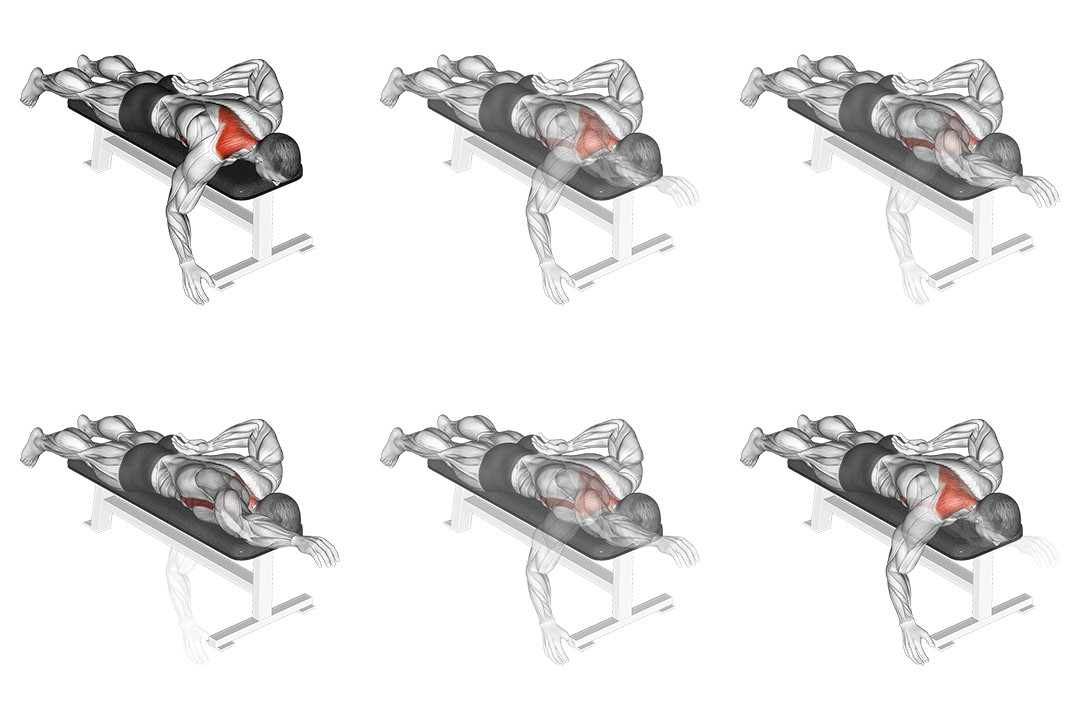
The Prone Single Arm Trap Raise performs unilateral trap raises lying face-down with one arm extended. The unilateral pattern allows greater concentration on each trap individually.
For bodyweight trap training, the prone single arm trap raise produces unilateral trap isolation. The pattern allows concentrated work on each side individually. Run it for 3 sets of 10 to 12 reps per arm as unilateral trap work.
Lie face-down on the floor with one arm extended overhead in a Y position and the other arm at the side. Lift the extended arm up off the floor by squeezing the lower trap and shoulder blade. Hold briefly at the top. Lower under control. Switch arms between sets. The unilateral position addresses left-right imbalances and produces strong concentrated lower trap work.
Standing Y Raise

The Standing Y Raise performs Y-position arm raises while bent forward. The pattern produces combined lower trap and posterior shoulder loading from a standing position.
For bodyweight trap training, the standing Y raise produces strong combined lower trap and shoulder work. The pattern hits the lower traps and posterior shoulders through the Y angle. Run it for 3 sets of 12 to 15 reps as combined lower trap work.
Stand with feet hip-width and hinge forward at the hips with a flat back. Let the arms hang down. Raise the arms forward and slightly out (forming a Y shape with the body when viewed from the side). Squeeze the lower traps and shoulder blades hard at the top. Lower under control. The Y angle produces strong lower trap recruitment specifically.
How To Program These Workouts
A productive bodyweight trap session pulls 5 to 6 exercises from the list above based on training goals. A common balanced session: bodyweight shrug (upper traps), prone Y raise (lower traps), standing T raise (middle traps), standing W raise (combined), scapula elevation depression (foundational). For posture focus: prone Y raise, prone single arm trap raise, standing Y raise, floor T raise, standing W raise (these emphasize middle and lower traps that resist forward-head posture). Run shrug work for 3 sets of 15 to 20 reps with controlled tempo, Y/T/W raise work for 3 sets of 12 to 15 reps, and scapular control work for 3 sets of 10 to 15 reps. Total session covers 12 to 18 working sets focused on trap development.
Train bodyweight trap work 1 to 2 times per week as part of broader pulling-day, posture, or recovery programming. The traps are involved in nearly every upper-body movement, so they accumulate substantial fatigue from compound pulling and pressing work. Most successful programs include bodyweight trap work either: 1) at the end of a back day after compound pulls, 2) on a dedicated posture and scapular health day, or 3) as warm-up activation before lifting sessions. Keep training time under 20 to 25 minutes per session. Bodyweight trap work pairs particularly well with chest stretching for posture correction.
For broader trap programming, see our best trap workouts and how to build bigger traps. For specific posture work, see our best posture workouts.
Final Thoughts
The best bodyweight trap workouts deliver real trap development and improved scapular mechanics through patterns that effectively load all three trap regions (upper, middle, lower) without external resistance. The combination of shrugs, Y/T/W raises, scapula dips, and scapular control work covers every functional pattern of the traps and produces broader development than shrugs-only programs. For lifters who want to improve forward-head posture from prolonged sitting, want to build the lower traps that often go undertrained in typical programs, want to enhance scapular control for compound lifting, or want to add accessible trap work to a balanced training program, dedicated bodyweight trap work is one of the most effective options available.
Stay focused on slow controlled tempo and middle/lower trap work. The most common bodyweight trap training mistakes include rushing through reps without full scapular control (which limits trap loading) and over-prioritizing upper trap work via shrugs while skipping middle and lower trap work (which reinforces typical trap imbalances). The fix: use slow controlled tempo on every rep with deliberate scapular movement, and prioritize Y, T, and W raise work that emphasizes the often-undertrained middle and lower traps. Quality reps with proper scapular mechanics produce stronger trap development than mindless volume.
Frequently Asked Questions
Can you build traps with bodyweight only?
Yes effectively for development of all three trap regions. While bodyweight shrugs alone produce limited upper trap loading, the combination of bodyweight shrugs (with controlled tempo), Y/T/W raises (for middle and lower traps), scapula dips (for scapular control), and inverted shrugs (for grip-loaded upper traps) produces real trap development. Most successful bodyweight trap programs combine these exercises into balanced sessions. Lifters with access to weights can progress to dumbbell or barbell shrugs for additional upper trap mass, but bodyweight work develops the scapular control that supports all upper-body lifting.
Are Y raises or T raises better for traps?
Both for complete trap development. Y raises emphasize the lower traps through the overhead arm angle. T raises emphasize the middle traps through the lateral arm angle. Most successful trap programs include both: Y raises (3 sets of 12 to 15) for lower trap mass and T raises (3 sets of 12 to 15) for middle trap mass. The combination produces broader trap development than either alone. Many lifters add W raises as well for combined trap and rotator cuff work.
How often should I train traps with bodyweight?
One to two sessions per week works for most lifters. The traps are involved in nearly every upper-body movement, so they accumulate substantial fatigue from compound pulling and pressing work. Most successful programs include bodyweight trap work either at the end of a back day, on a dedicated posture and scapular health day, or as warm-up activation. Some lifters benefit from daily light bodyweight trap work for posture correction. Three or more weekly heavy trap sessions can produce overuse issues.
Will bodyweight trap workouts fix forward head posture?
Yes substantially when consistent. Forward head posture (common from prolonged sitting and screen work) is largely caused by weak middle and lower traps combined with tight chest muscles. Bodyweight trap workouts that emphasize middle and lower trap work (Y raises, T raises, W raises) plus chest stretching can significantly improve posture within 8 to 12 weeks of consistent practice. Most successful posture programs include 3 to 4 weekly sessions of trap and posture work, plus mindful posture awareness throughout daily activities.
What’s the most effective bodyweight trap exercise?
Depends on which trap region you’re targeting. For upper traps: bodyweight shrugs with slow controlled tempo. For middle traps: standing T raise or floor T raise. For lower traps: prone Y raise. For combined trap and shoulder health: standing W raise. For scapular control: scapula elevation depression. Most successful bodyweight trap programs include 4 to 6 exercises per session covering multiple trap regions. The combination produces broader development than focusing on any single exercise.