Machine chest training produces real chest development through patterns that load the chest with the unique advantages machines offer: lever chest press machines (flat, incline, decline) for compound chest mass work with full machine stability, Smith machine bench press variations (flat, incline, decline) for compound pressing with bar stability that eliminates balance concerns, dedicated chest fly machines (pec deck, incline fly, seated fly) for direct chest isolation through pure adduction motion that compound exercises miss, and inner chest press patterns for emphasized inner chest loading. The format works particularly well for chest because the muscle group has multiple regions (upper chest by clavicular fibers, mid chest, lower chest by sternal fibers, inner chest) that each respond well to specific machine angle variations, and machines deliver dedicated patterns for each region with the bar stability and isolation focus that free-weight alternatives cannot always match. Most lifters who consistently train machine chest work 1 to 2 times per week alongside compound free-weight pressing movements (or even alone for machine-emphasis training) see measurable chest development across all chest regions, improved pressing performance through accessory work, better chest isolation through dedicated fly machines, stronger overall chest, and stronger pressing performance within 8 to 12 weeks. The combination of lever press variations, Smith machine press variations, dedicated fly machines, and inner chest work produces broader chest development than free-weight-only programs.
Below are ten effective machine chest exercises that cover lever press variations (lever chest press, lever incline chest press, lever decline chest press), Smith machine press variations (Smith bench press, Smith incline bench press, Smith decline bench press), dedicated fly machines (lever pec deck fly, lever incline fly, lever seated fly), and inner chest emphasis (machine inner chest press). Together they form a complete machine chest program that hits all chest regions. A 25 to 35-minute session pulled from this list, performed 1 to 2 times per week, produces strong chest development for any commercial gym training.
Lever Chest Press

The Lever Chest Press performs chest press on a lever chest press machine. The pattern produces compound chest mass work with full machine stability.
For machine chest training, the lever chest press is the foundational compound machine chest exercise. The pattern hits chest through compound pressing with stability. Run it for 4 sets of 8 to 12 reps as primary chest mass work in any machine chest session.
Sit on a lever chest press machine with the back firmly against the pad and feet planted on the floor. Grip the handles at chest height. Press the handles forward by extending the arms while keeping the elbows tracking under control. The chest works hard through the press while the triceps work through the lockout. The lever machine’s fixed path eliminates lateral instability and allows focus on chest loading. Squeeze the chest hard at peak contraction at full extension. Lower the handles under control to chest level. The pattern is foundational for compound chest mass with machine stability.
Lever Incline Chest Press
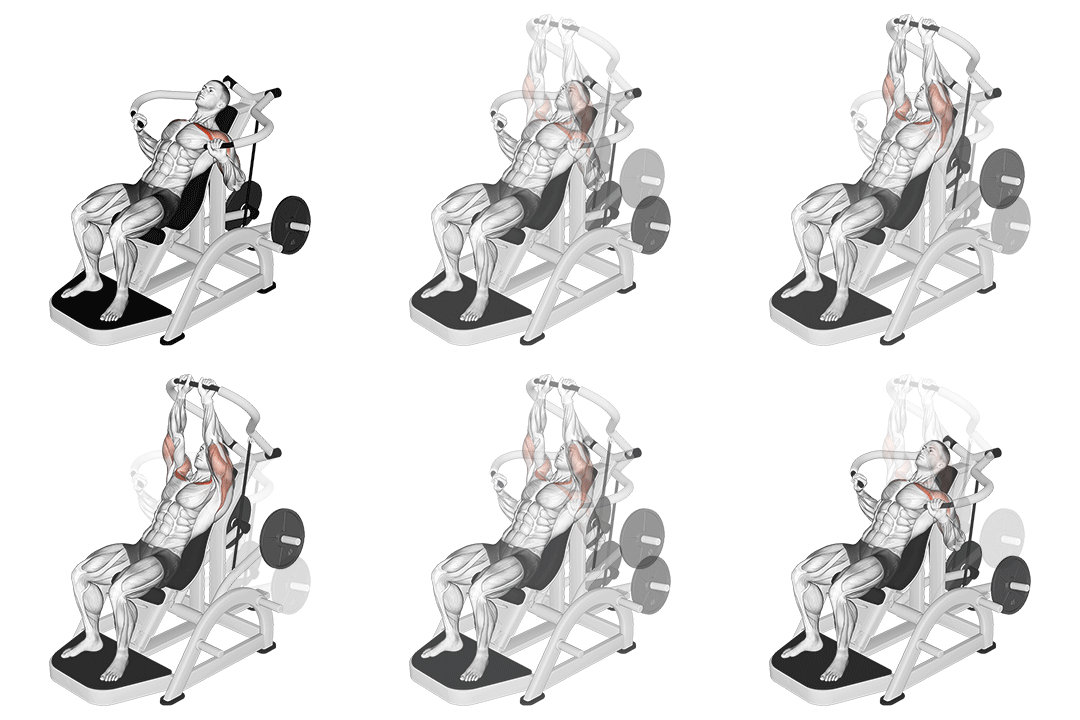
The Lever Incline Chest Press performs incline chest press on a lever incline machine. The angled position emphasizes the upper chest through compound pressing.
For machine chest training, the lever incline chest press produces upper chest emphasis. The incline angle hits the upper chest. Run it for 3 to 4 sets of 8 to 12 reps as upper chest mass work.
Sit on a lever incline chest press machine with the back firmly against the angled pad. The angled seat positions the body so the press goes up and forward at an incline angle. Grip the handles. Press the handles forward and slightly up by extending the arms. The upper chest works hard through the angled press motion. The lever machine adds stability while the angle emphasizes the upper chest. Squeeze the chest hard at peak contraction. Lower under control. The pattern produces strong upper chest emphasis with machine stability advantages.
Lever Decline Chest Press

The Lever Decline Chest Press performs decline chest press on a lever decline machine. The angled position emphasizes the lower chest through compound pressing.
For machine chest training, the lever decline chest press produces lower chest emphasis. The decline angle hits the lower chest. Run it for 3 sets of 8 to 12 reps as lower chest work.
Sit on a lever decline chest press machine with the back firmly against the pad and the seat angled to position the body in a decline orientation. Grip the handles. Press the handles forward and slightly down by extending the arms. The lower chest works hard through the angled press motion. The lever machine adds stability while the decline angle emphasizes the lower chest fibers. Squeeze the chest hard at peak contraction. Lower under control. The pattern produces lower chest emphasis with machine stability advantages.
Smith Bench Press

The Smith Bench Press performs bench press in a Smith machine. The fixed bar path produces compound chest work with bar stability advantages.
For machine chest training, the Smith bench press produces compound chest work with bar stability. The fixed path allows focus on chest loading. Run it for 3 to 4 sets of 6 to 10 reps as compound chest work.
Set up a flat bench under the Smith machine bar. Lie on the bench with the body positioned so the bar tracks over the lower chest when lowered. Grip the bar slightly wider than shoulder-width. Unrack the bar by rotating the wrists. Lower the bar to the lower chest by bending the elbows. The Smith machine’s fixed path eliminates the need to balance the bar and allows focus on chest loading. Press the bar back up by extending the arms. The pattern produces compound chest work with stability and is excellent for lifters wanting bench press without balance concerns.
Smith Incline Bench Press

The Smith Incline Bench Press performs incline bench press in a Smith machine. The angled position emphasizes the upper chest with bar stability.
For machine chest training, the Smith incline bench press produces upper chest emphasis with stability. The incline angle hits the upper chest. Run it for 3 sets of 6 to 10 reps as upper chest mass work.
Set up an incline bench under the Smith machine bar at about 30 to 45 degrees. Lie on the bench with the body positioned so the bar tracks over the upper chest when lowered. Grip the bar slightly wider than shoulder-width. Lower the bar to the upper chest. The Smith machine adds stability to the incline press position which can be more challenging for balance than flat bench. Press the bar back up by extending the arms. The upper chest works hard through the angled press. The pattern produces upper chest emphasis with stability advantages.
Smith Decline Bench Press

The Smith Decline Bench Press performs decline bench press in a Smith machine. The angled position emphasizes the lower chest with bar stability.
For machine chest training, the Smith decline bench press produces lower chest emphasis with stability. The decline angle hits the lower chest. Run it for 3 sets of 6 to 10 reps as lower chest work.
Set up a decline bench under the Smith machine bar (feet up, head down). Lie on the bench with the body positioned so the bar tracks over the lower chest when lowered. Grip the bar slightly wider than shoulder-width. Lower the bar to the lower chest. The Smith machine adds stability to the decline press position. Press the bar back up by extending the arms. The lower chest works hard through the decline press. The pattern produces lower chest emphasis with stability and is excellent for adding lower chest work without the balance demands of free-weight decline bench press.
Lever Pec Deck Fly

The Lever Pec Deck Fly performs pec deck flies on a lever machine (forearms on pads, bringing arms together in front of chest). The pattern produces direct chest isolation through pure chest fly motion.
For machine chest training, the pec deck fly produces direct chest isolation. The pattern hits chest through pure adduction motion. Run it for 3 to 4 sets of 10 to 15 reps as primary chest isolation work.
Sit on a lever pec deck machine with the back firmly against the pad. Place the forearms or hands on the pads/handles at shoulder height. Bring the arms together in front of the chest by squeezing the chest. The arms travel in an arc rather than pressing motion. The chest works hard through pure adduction (arm-bringing-together motion). Squeeze the chest extraordinarily hard at peak contraction with the arms fully together in front. Open the arms back to the start position under control. The pattern produces strong direct chest isolation work and is one of the most effective chest isolation exercises that exists.
Lever Incline Fly

The Lever Incline Fly performs flies on a lever incline machine. The angled position emphasizes the upper chest through fly motion.
For machine chest training, the lever incline fly produces upper chest isolation. The incline angle emphasizes the upper chest. Run it for 3 sets of 10 to 15 reps as upper chest isolation work.
Sit on a lever incline fly machine with the back against the angled pad. Hold the handles or place forearms on the pads at chest height. Bring the arms together in front of the chest with the angled body position – the arms travel through an upward arc due to the incline. The upper chest works hard through the angled adduction motion. Squeeze the chest hard at peak contraction. Open the arms back to the start under control. The pattern produces upper chest isolation work with machine stability and is highly effective for upper chest emphasis.
Lever Seated Fly

The Lever Seated Fly performs seated chest flies on a lever machine. The pattern produces direct chest isolation through pure chest fly motion in seated position.
For machine chest training, the lever seated fly produces direct chest isolation. The seated position is highly accessible. Run it for 3 sets of 10 to 15 reps as accessible chest isolation work.
Sit on a lever seated fly machine with the back firmly against the pad. Hold the handles at the sides at shoulder height with arms slightly bent. Bring the arms together in front of the chest by squeezing the chest. The chest works hard through pure adduction motion. Squeeze the chest hard at peak contraction with the hands together in front. Open the arms back to the start position under control. The seated position is accessible and produces strong chest isolation work. The pattern complements pec deck variations for complete chest isolation training.
Machine Inner Chest Press

The Machine Inner Chest Press performs chest press with a focus on inner chest emphasis through close-grip or specific machine handle positioning. The pattern produces inner chest loading.
For machine chest training, the inner chest press produces inner chest emphasis. The narrow grip emphasizes inner chest fibers. Run it for 3 sets of 10 to 12 reps as inner chest emphasis work.
Sit on a chest press machine with the back firmly against the pad. Use the inner/closer handles (or grip the handles closer together if adjustable). Press the handles forward by extending the arms while keeping the elbows tracking close to the body. The narrow grip with elbows tucked emphasizes the inner chest fibers and triceps more than wider-grip pressing. Squeeze the chest hard at peak contraction. Lower under control. The pattern produces inner chest emphasis work that complements wider-grip pressing for complete chest development.
How To Program These Workouts
A productive machine chest session pulls 4 to 6 exercises from the list above based on training goals. A common balanced session: lever chest press (compound mass), lever incline chest press (upper chest), lever pec deck fly (isolation), Smith bench press (variation compound), lever seated fly (isolation variation). For mass focus: lever chest press, Smith bench press, lever incline chest press, lever decline chest press. For isolation focus: lever pec deck fly, lever incline fly, lever seated fly, machine inner chest press. For complete development: include both compound press and dedicated fly variations across all chest angles. Run compound press work for 3 to 4 sets of 6 to 12 reps, fly machine work for 3 to 4 sets of 10 to 15 reps. Total session covers 12 to 18 working sets focused on chest development.
Train machine chest work 1 to 2 times per week as part of broader pushing-day or chest-focused programming. The chest recovers from training in 48 to 72 hours but accumulates fatigue from compound pressing work that activates it substantially. Most successful programs include machine chest work either: 1) on a dedicated chest day with machines as primary tools, 2) at the end of a chest day after compound free-weight bench press, or 3) as part of complete machine-emphasis training programs. Machine chest work is particularly valuable for high-volume training given the stability advantages reducing fatigue accumulation, and for lifters wanting chest isolation through dedicated fly machines.
For broader chest programming, see our best chest workouts and how to build a bigger chest. For specific Smith machine work, see our best Smith machine workouts.
Final Thoughts
The best machine chest workouts deliver real chest development through patterns that effectively load the chest with the unique advantages machines offer: lever press machines for compound chest mass with stability, Smith machine press variations for stable compound pressing, dedicated chest fly machines for direct isolation that compound exercises miss, and angle variations (flat, incline, decline) for complete chest region coverage. The combination of lever press variations across all three angles (flat, incline, decline), Smith machine press variations across the same angles, dedicated fly machines (pec deck, incline fly, seated fly), and inner chest press covers every functional pattern of the chest and produces broader development than free-weight-only training would suggest. The lever pec deck fly in particular produces some of the most effective chest isolation possible due to the pure adduction motion. For lifters who want elite chest mass through stable compound machine pressing, want chest isolation through dedicated fly machines, want to break through chest plateaus through varied angle work, or want to add high-volume chest work without fatigue accumulation, dedicated machine chest training is one of the most effective options available.
Stay focused on full range of motion and proper chest contraction. The most common machine chest training mistakes include using partial range of motion on press variations (which limits chest loading) and bringing the arms only partway together on fly variations (which limits chest contraction). The fix: complete every press rep with full chest stretch at the bottom and full extension at the top, and complete every fly rep with the arms fully together for maximum chest contraction. Quality reps with proper range and full chest contraction produce stronger chest development than partial range volume.
Frequently Asked Questions
Are machines effective for chest?
Yes very effectively. Machines produce real chest development through lever press variations (compound mass with stability), Smith machine press variations (compound pressing with bar stability), dedicated fly machines (direct isolation), and angle variations (upper, mid, lower chest emphasis). The fixed path stability allows focus on chest loading without bar balancing concerns. Many lifters find machine chest work superior to free-weights for high-volume training and for developing chest isolation through dedicated fly machines that compound exercises cannot replicate.
Smith machine vs. barbell bench press?
Both effective; choose based on goals. Barbell bench press allows the natural bar path the body wants and produces strong compound chest mass with athletic transfer, but requires balance and skill. Smith machine bench press uses a fixed vertical bar path with stability that eliminates balance concerns and allows focus on chest loading. Most successful programs include both: barbell for foundational mass and athletic transfer, Smith for variation work and high-volume training. The combination produces broader chest development.
Are pec deck flies effective?
Yes one of the most effective chest isolation exercises. Lever pec deck flies produce direct chest isolation through pure adduction (arms-bringing-together motion) that compound press exercises cannot match. The pattern hits the chest in its primary fly function with full stretch at the start and maximum contraction at the finish. Most successful chest programs include pec deck flies as primary isolation work, typically 10 to 15 reps. The pattern is foundational for chest isolation and complements compound press for complete chest development.
How heavy should machines be for chest?
Heavy for compound, moderate for isolation. Lever chest press uses heavy weights (men: 90 to 200+ lb per side; women: 40 to 100+ lb). Smith bench press uses weights similar to or slightly less than barbell bench (men: 95 to 225+ lb; women: 45 to 95+ lb). Pec deck and fly machines use moderate weights (men: 80 to 160 lb; women: 40 to 80 lb) due to leverage. Most successful programs progressively load all exercises until 6 to 15 reps becomes challenging with full range and proper form.
How often should I train chest with machines?
One to two machine chest sessions per week works for most lifters. The chest recovers from training in 48 to 72 hours but accumulates fatigue from compound pressing work that activates it substantially. Most successful programs include machine chest work either on a dedicated chest day, at the end of a chest day after compound bench press, or as part of complete machine-emphasis training. The stability advantages of machines allow for higher volume than free-weight bench press without similar fatigue accumulation.