A bigger chest is one of the most universal physique goals in lifting. The chest is also one of the muscles that responds best to smart, consistent training because it has a wide range of fibers, multiple effective load angles, and recovery characteristics that allow relatively frequent training. Despite that, plenty of lifters spin their wheels on chest day for years without seeing meaningful growth.
This guide covers what actually works: the heavy compound lifts that drive most chest growth, how to hit the upper and lower portions for a complete look, the volume and frequency that produces results, and the common mistakes that quietly stall progress for months or years.
What You’re Actually Building
The chest is dominated by the pectoralis major, a fan-shaped muscle that runs from the sternum and clavicle out to the upper arm. The fibers run in different directions across the muscle, which is why no single exercise hits the entire chest equally. Different angles of pressing emphasize different fiber regions.
The pectoralis major has two functional heads: the clavicular head (upper chest, fibers running diagonally down toward the arm) and the sternal head (mid and lower chest, fibers running mostly horizontally). Building a complete chest means training both heads through their full range of motion. Most lifters over-emphasize the sternal head with flat bench work and under-train the clavicular head, which produces an imbalanced chest with weak upper development.
For more on the muscle structure itself, browse our chest exercise collection.
The Heavy Compounds That Drive Chest Growth
Every chest program lives or dies by its heavy compound work. Isolation exercises like flies and crossovers contribute, but they cannot replace the load and total muscle stimulus of compound pressing movements. Pick two to three of the lifts below as the anchors of your chest program and progress them consistently.
Barbell Bench Press

The Barbell Bench Press is the single best mass-builder for the chest. The barbell allows the heaviest possible load and the bilateral lift develops raw pressing strength better than any unilateral or machine variation. It hits the entire chest with emphasis on the sternal head.
Bench press well: plant the feet flat, arch the upper back slightly, retract the shoulder blades, and lower the bar to the lower chest under control. Drive back to lockout without bouncing the bar off the chest. Keep the elbows tucked at roughly 60 to 75 degrees from the torso, not flared straight out.
Dumbbell Incline Bench Press

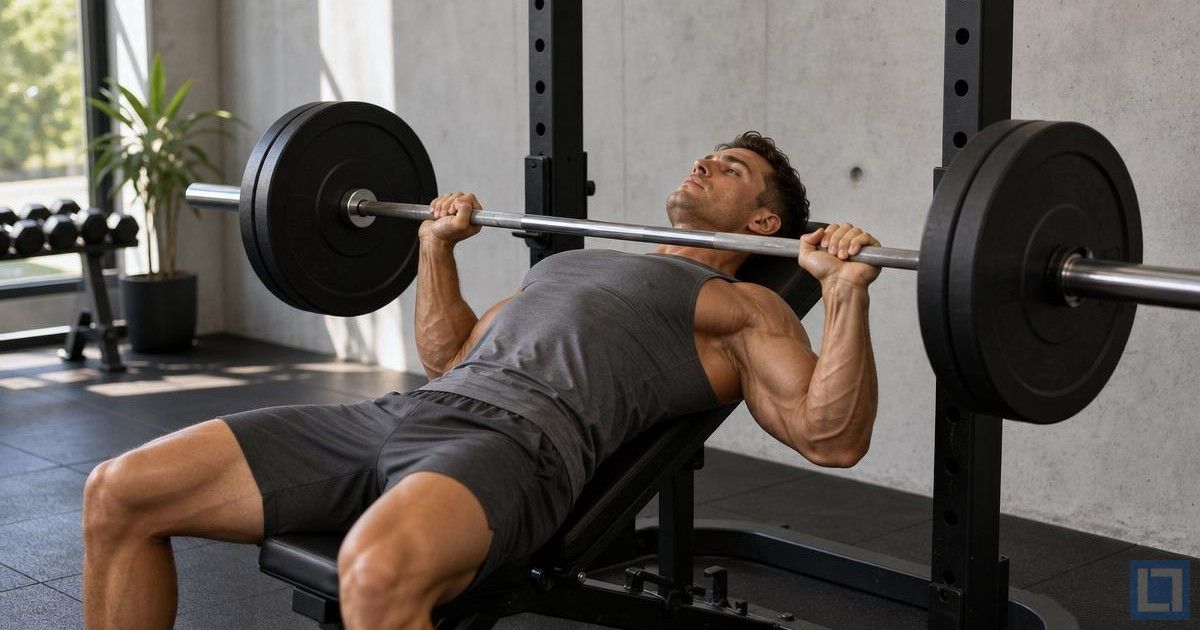
The Dumbbell Incline Bench Press is the most efficient way to target the upper chest specifically. The incline angle shifts emphasis to the clavicular head, and the dumbbells allow each arm to work independently with a longer range of motion than a barbell permits.
Set the bench between 30 and 45 degrees. Steeper angles shift more work to the shoulders and away from the upper chest. Press the dumbbells up and slightly together at the top, with a controlled descent to a deep stretch position. The dumbbells let the chest stretch further than a barbell allows, which is one of the strongest stimuli for muscle growth.
Chest Dip

The Chest Dip is the most effective bodyweight chest exercise and one of the strongest mass-builders overall. The forward lean shifts emphasis from the triceps to the pectoralis major, hitting the lower and outer chest fibers hard.
Lean the chest forward through the dip rather than staying upright. Lower until the upper arms reach parallel with the floor or slightly below, then press back to lockout. Add load via a dip belt once you can complete 12 to 15 clean bodyweight dips. Weighted dips compete with the bench press for the title of best chest mass-builder.
Machine Chest Press

The Machine Chest Press is a plate-loaded chest press machine where you sit and press handles forward horizontally. The machine guides the arc, removing stabilizer demands and allowing you to focus pure pressing force into the chest. It is excellent as a third or fourth movement in a session when fatigue has compromised your barbell form.
The machine is most useful for working the chest hard at the end of a session when you no longer want to balance heavy free weights. It is also a strong choice for lifters with shoulder issues that limit barbell range of motion. Press to full lockout and control the descent the same way you would with free weights.
Hitting Every Part of the Chest
Compound pressing builds the bulk of the chest, but isolation work fills in specific regions and adds the polish that makes the chest look complete. The exercises below target areas that compound pressing covers but does not specialize in.
Push Ups

Push Ups remain a foundational chest exercise even for advanced lifters. They work as a warm-up before pressing, as a high-volume builder later in the workout, or as the entire workout when no equipment is available. The bodyweight load and natural movement pattern make them one of the best chest exercises in any program.
Push-ups become harder by changing position rather than adding weight. Decline push-ups (feet elevated) shift more load to the upper chest. Diamond push-ups emphasize the triceps and inner chest. Plyometric push-ups build explosive power. The variations cover most of what the chest needs.
Cable Crossover

The Cable Crossover is the gold-standard inner chest exercise. The cables maintain constant tension throughout the movement, and the crossover at the front of the body produces a peak contraction across the entire pec that no pressing exercise can match.
Set the cables high to target the lower chest, mid for the mid-chest, or low for the upper chest. Cross the hands fully past each other at the bottom for a strong contraction. Move slowly and let the chest do the work; momentum kills the effectiveness here. The cable fly works as a strong finisher after the heavy compounds are done.
Cable Standing Fly

The Cable Standing Fly is a chest isolation exercise where you arc the arms in toward the center of the body against cable resistance. Unlike the crossover, the arms stay roughly at chest height through the rep, focusing the work on the mid-chest fibers.
The standing fly is an excellent companion to flat-bench pressing for total mid-chest development. The constant cable tension hits the muscle differently than a dumbbell fly, which loses tension at the top and bottom of the movement. Use the cable fly when you want a high-quality contraction that complements your compound pressing.
How Much Volume Builds A Bigger Chest
Most lifters can grow chest meaningfully on 10 to 20 working sets per week, with 12 to 15 sets being a strong middle target for natural lifters. Less than 10 sets per week is rarely enough to drive growth past the beginner stage; more than 20 sets per week becomes harder to recover from than it is worth.
Spread that volume across two to three sessions per week rather than cramming it all into one day. The chest recovers within 48 to 72 hours of training, so hitting it more than once per week produces faster growth than a single high-volume session. A typical setup splits volume between a heavy day (low reps, focus on bench press and dips) and a hypertrophy day (moderate reps, focus on incline press, machine work, and flies).
Rep ranges should vary across the program. The compounds work best in the 5 to 10 rep range for both strength and size. Isolation exercises like cable flies and crossovers respond better to higher rep ranges, often 12 to 20 per set, where the focus is on contraction quality rather than maximum load.
The Mistakes That Stall Chest Growth
Most lifters who fail to grow their chest are making one or more of the same handful of mistakes. The list below covers the issues that come up most often.
Pressing too vertically is the most common mistake. The bench press should travel in an arc, not straight up. Lifters who try to lock the bar straight overhead miss the chest stretch at the bottom and the chest contraction at the top. Lower the bar to the lower-to-mid chest, not the neck or upper chest, and let the bar travel in its natural arc.
Skipping the upper chest is the second most common mistake. The flat bench press is a great exercise but it does not effectively load the clavicular head. Without dedicated upper-chest work (incline press, low-to-high cable fly), the upper chest stays under-developed even as the rest of the muscle grows. The result is a chest that looks “droopy” rather than full.
Insufficient stretch is the third mistake. The chest grows fastest when stretched fully under load. Cutting the bench press range short, using a too-thick chest pad on incline machines, or stopping push-ups before the chest nearly touches the floor all reduce the growth stimulus. Lower the load if needed to reach a full stretch on every rep.
Ignoring mobility is the fourth mistake. Tight chest, lats, and front shoulders restrict the range of motion the chest can train in. Daily chest mobility work like the kneeling chest stretch (held for one to two minutes per side) noticeably opens up bench press depth and incline range over a few weeks.
Activation And Mobility Before Pressing
A few minutes of activation and mobility before chest training can dramatically improve session quality. Two simple drills cover most of what you need.
Kneeling Chest Stretch
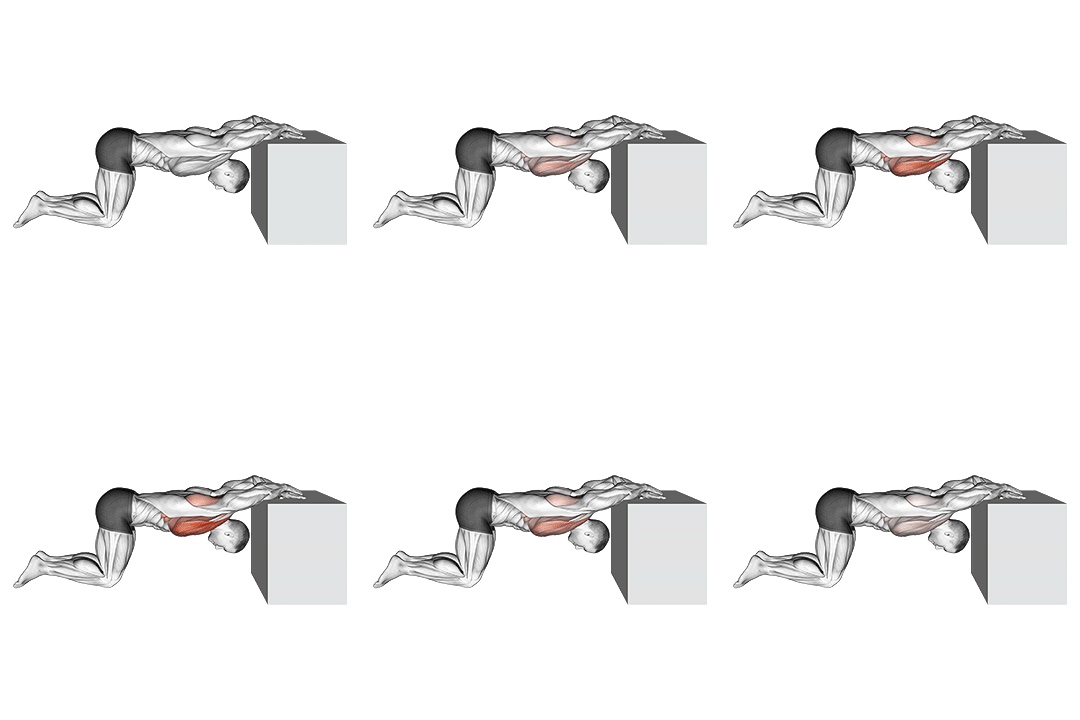
The Kneeling Chest Stretch is a deep chest-opening stretch performed from a kneeling position. With arms extended behind you or placed on an elevated surface, you lean forward to stretch the pectoralis major. It pairs well with any pressing movement because it opens up the range of motion the chest can produce force through.
Move into the stretch slowly. Push the chest forward and down rather than just dropping the body. Hold for 30 to 60 seconds and breathe deeply throughout. Repeat for several rounds before pressing-heavy training.
Isometric Chest Squeeze

The Isometric Chest Squeeze is a chest activation exercise where you press your palms together in front of your chest as hard as possible, contracting the pectorals isometrically. It primes the chest to fire harder during the actual working sets that follow.
Press the palms together as hard as you can for 5 to 10 seconds, then release. Repeat for several rounds. The harder the squeeze, the more useful the exercise. Done immediately before the first working set, it noticeably improves chest engagement on the actual compounds that follow.
Putting It All Together
A productive chest program runs the heavy compounds first when fresh and the isolation work after. A typical session looks like this: warm up with the kneeling chest stretch and isometric squeeze for 5 minutes, then run the heavy compound (bench press or incline press) for 4 to 5 working sets, followed by a second compound (dips or machine press) for 3 to 4 sets, and finish with isolation work (cable crossovers or flies) for 2 to 3 high-rep sets.
For specific session-level programming, see our best dumbbell chest workouts and best bodyweight chest workouts guides.
Final Thoughts
Building a bigger chest is straightforward but slow. Pick two or three heavy compound lifts, train them consistently with progressive overload over months, fill in upper-chest and isolation work with smart accessory choices, and pay attention to the small things like full range of motion, adequate stretch, and pre-session mobility.
Most lifters fail because they get bored, not because the program failed. The lifters who end up with the best chest development are the ones who stuck with the same handful of compound lifts for years and slowly got stronger on each one. There is no shortcut around that.
Frequently Asked Questions
How long does it take to build a noticeably bigger chest?
Most lifters see meaningful chest growth within three to six months of consistent training combined with adequate calories and protein. Visible changes show up earlier (within 8 to 12 weeks) for beginners. Advanced lifters take longer because they have less room left for novel growth, often a year or more for visible chest size changes.
How often should I train chest?
Two to three times per week works for most lifters. The chest recovers within 48 to 72 hours of moderate training, so spreading volume across two sessions produces faster growth than a single high-volume session. Advanced lifters can sometimes benefit from three or more sessions per week if recovery allows.
Bench press or dumbbell press for bigger chest?
Both, with the barbell bench press as the primary compound and dumbbell variations as the supporting work. The barbell allows heavier loading, which drives strength gains and overall mass. Dumbbells allow a longer range of motion and more individual arm work, which catches strength imbalances and produces more even chest development. The best programs use both.
Do I need to do incline pressing?
Yes, if you want a complete chest. The flat bench press emphasizes the sternal head (mid and lower chest), but it does not effectively load the clavicular head (upper chest). Without dedicated upper-chest work, the upper chest stays under-developed even as the rest of the chest grows. Incline pressing is the most efficient way to fix that.
Are dips really as effective as bench press?
For chest specifically, weighted dips are essentially as effective as the bench press, often more so for the lower and outer chest fibers. The forward lean and full range of motion produce a tremendous chest stretch under significant load. Many advanced lifters get more chest development from heavy weighted dips than from any other single exercise.