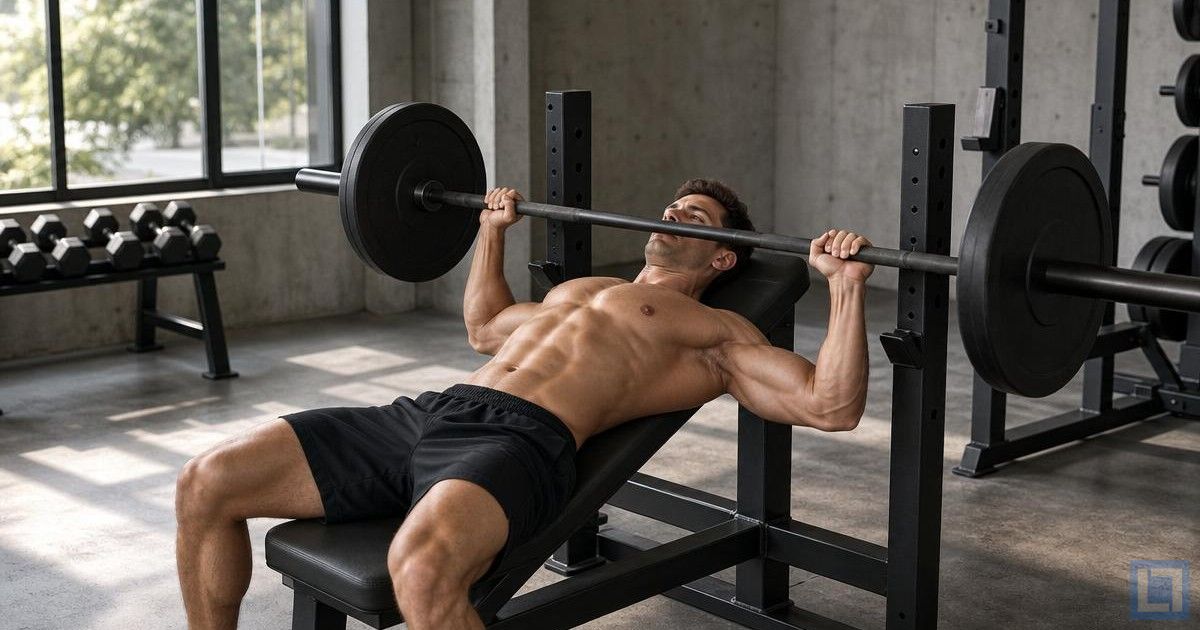
Dumbbells are the gold standard for chest training. The best dumbbell chest workouts let each arm work independently, allow a longer range of motion than a barbell can match, and unlock fly variations that produce contractions barbell pressing simply cannot. The result is more complete chest development than barbell work alone delivers.
Below are ten effective dumbbell chest exercises ranging from the foundational bench press to specialized fly and pressing variations. Together they cover every angle the chest can be loaded from.
Dumbbell Bench Press

The Dumbbell Bench Press is the foundational dumbbell chest exercise. Lying flat on a bench with a dumbbell in each hand, you press the bells to lockout above the chest, then lower them under control. The independent dumbbells allow a longer range of motion than a barbell can match and let each arm work on its own.
For most lifters, the dumbbell bench press is more effective for chest development than the barbell version. The deeper stretch at the bottom hits more fibers, the independent arms catch strength imbalances, and the lighter individual loads tend to be safer for the shoulders. Most chest programs keep both lifts but rotate which one carries the heavier load week to week.
Plant the feet flat and pull the shoulder blades together hard. Press the dumbbells up and slightly together at the top. Lower under control to a deep stretch position before pressing the next rep. Avoid letting the elbows flare straight out from the body.
Dumbbell Incline Fly

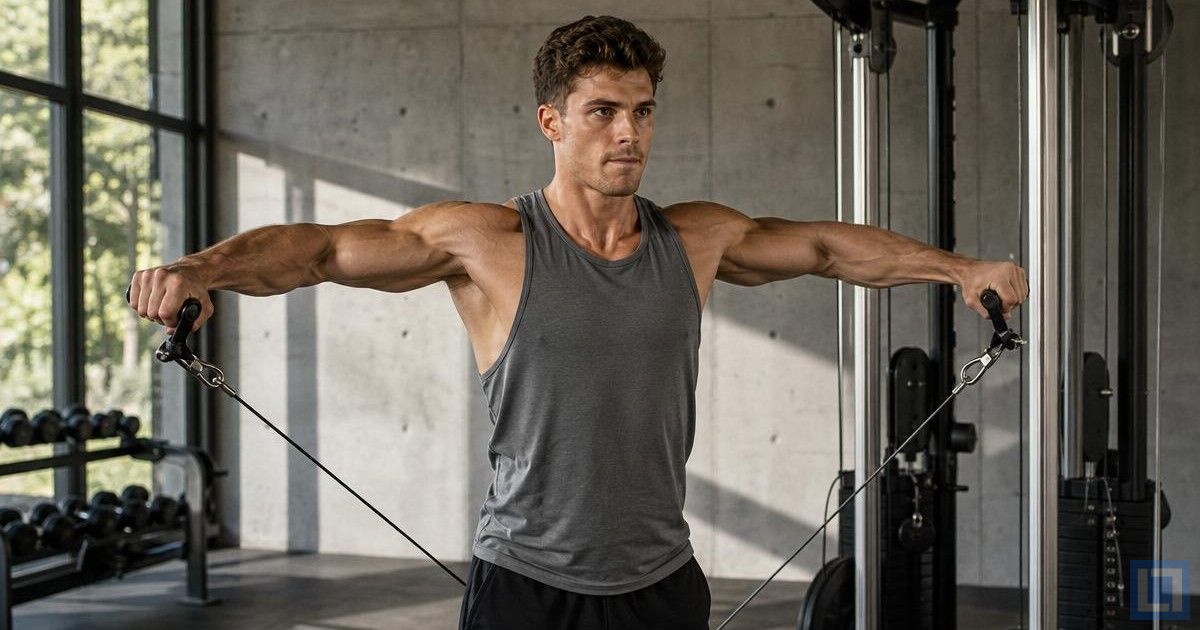
The Dumbbell Incline Fly performs a chest fly on an incline bench. The incline angle stretches the upper chest fibers more deeply than a flat fly, and the open arc trains the chest in pure horizontal adduction without the tricep involvement of pressing.
Flies are the cleanest isolation exercise for the chest. They do not load the muscle as heavily as pressing, but they hit the contraction angle that pressing misses. Using an incline emphasizes the upper chest, which is the area most lifters under-develop with flat-bench-dominant programs.
Set the bench between 30 and 45 degrees. Keep a slight bend in the elbows throughout the rep. Lower the dumbbells in a wide arc to a deep stretch, then arc them back up by squeezing the chest, not by bending the elbows further.
Dumbbell Floor Fly

The Dumbbell Floor Fly is a chest fly performed lying on the floor instead of on a bench. The floor caps the depth of the rep, which protects the shoulders and lets you load heavier than a full-range fly allows. It is a strong choice for lifters with shoulder issues that limit traditional fly depth.
For most lifters, the floor fly is more of a strength variant than a hypertrophy variant. The shorter range of motion produces less stretch but allows heavier load, which trains the chest contraction with mass-building intensity. It pairs well with full-range incline flies in the same workout.
Lie flat on the floor with dumbbells held above the chest. Lower the bells in a wide arc until the upper arms touch the floor. Squeeze the chest to bring them back up. Use moderate weight until the floor-stop range of motion is comfortable.
Dumbbell Low Fly

The Dumbbell Low Fly is a chest fly performed at a low angle, often with the dumbbells starting near the hips and arcing up and across the body. It targets the upper chest fibers from below, mimicking the line of a low-to-high cable fly.
The low fly is one of the few free-weight options for hitting the upper chest fibers in their direct line of pull. Most pressing emphasizes the middle of the chest, and standard flat or incline flies hit the middle to upper chest at perpendicular angles. The low fly fills the gap.
Stand with a slight forward lean. Start with the dumbbells at hip height with palms facing the body. Arc the bells up and across the centerline of the body, finishing high in front of the chest. Squeeze hard at the top before reversing the motion.
Dumbbell Twisted Fly

The Dumbbell Twisted Fly performs a fly with a wrist rotation through the rep. The dumbbells start with palms facing each other at the top and rotate to palms facing forward at the bottom. The added rotation produces a deeper chest stretch and a stronger contraction at the top.
Wrist rotation is one of the small details that distinguishes effective chest work from average chest work. The chest is involved in arm rotation as much as in arm adduction, so movements that combine both functions hit the muscle more completely than ones that hold the wrist static.
Set up like a standard fly with palms facing each other at the top. As the dumbbells lower in the arc, rotate the wrists so palms face forward at the bottom. Reverse the rotation as the bells arc back up. Move slow enough to control both the arc and the rotation.
Dumbbell Bench Dip

The Dumbbell Bench Dip places the hands on a bench behind the body and the feet on another bench in front, then dips the body down by bending the elbows. Adding a dumbbell on the lap loads the movement, building the chest and triceps as a unit.
Bench dips hit the lower chest and triceps in a way standard dips do not, because the hand position behind the body changes the angle of pull on the chest. They are also more accessible than parallel bar dips, which require more bar strength than many lifters have at first.
Hands grip the back bench with fingers forward. Lower the body until the elbows reach roughly 90 degrees, keeping the elbows tucked behind the body rather than flaring out. Press back to lockout. Add load by setting a dumbbell on the lap or wearing a weighted vest.
Dumbbell One Arm Decline Chest Press

The Dumbbell One Arm Decline Chest Press performs a decline press with one dumbbell at a time. The decline angle emphasizes the lower chest, and the unilateral position adds an anti-rotation core demand that bilateral pressing does not have.
Single-arm pressing is one of the most underrated tools for catching strength imbalances. The dominant side does most of the work in bilateral pressing, leaving the weaker side under-developed. Single-arm work forces each side to do its own job and produces more balanced chest growth.
Set the bench at a slight decline. Hold one dumbbell over the chest with the other arm braced on the bench or holding the bell at the shoulder. Press straight up and lower under control to a deep stretch. Switch arms after the set.
Dumbbell Alternate Chest Press on Stability Ball

The Dumbbell Alternate Chest Press on Stability Ball performs alternating presses while lying on a stability ball instead of a bench. The unstable surface adds significant core engagement, and the alternating press extends the time under tension on each side.
The stability ball version is best treated as a finisher rather than a primary mass-builder. The instability caps the load you can handle with clean form, but the extended time under tension and core demand produce a different stimulus than bench-based pressing. Use it after the heavy pressing is done.
Set the upper back on the ball with hips slightly raised. Press one dumbbell while holding the other above the chest, then alternate. Move slowly and control the descent on each rep. The ball should not roll or shift during the set.
Dumbbell One Arm Chest Fly on Exercise Ball

The Dumbbell One Arm Chest Fly on Exercise Ball performs a single-arm fly while lying on a stability ball. The unilateral position trains anti-rotation in the trunk while the fly trains the chest, and the unstable surface increases stabilizer recruitment.
This is an advanced finisher movement. The combination of single-arm load, the fly arc, and the unstable ball surface puts demands on the chest, shoulder stabilizers, and core simultaneously. The total stimulus per rep is high, so the rep counts and loads stay moderate.
Set the upper back on the ball with one dumbbell held above the chest. The other arm braces or holds a light counterbalance. Lower the dumbbell in a wide arc until the upper arm reaches the level of the body. Squeeze the chest to arc back up.
Dumbbell Sprinter Thrust Chest Press

The Dumbbell Sprinter Thrust Chest Press combines a sprinter sit-up motion with a dumbbell press, training the chest and core simultaneously. From a lying position with the knees up, you sit up explosively while pressing the dumbbells overhead.
This is a combo movement, not a primary chest mass-builder. The chest involvement is real but the core demand caps how heavy the dumbbells can go. Use it as a finisher when you want to drive heart rate alongside the chest work or as a conditioning piece in a circuit.
Lie on the back with knees bent. Press the dumbbells up while sitting up explosively. Lower under control to the start position. The movement should feel like a thruster from the floor rather than a strict press.
How To Program These Workouts
A balanced dumbbell chest day picks four to five exercises rather than running through all ten. A strong split is one heavy compound (bench press), one incline movement (incline fly), one specialty pressing variation (single-arm decline press or bench dip), and one or two finishers (floor fly, low fly, or stability ball work).
Train chest two to three times per week. The chest recovers within 48 to 72 hours of moderate training, so spacing the volume across two sessions usually produces faster growth than a single high-volume session. Heavier compound work goes on one day, more isolation-focused work on the other.
For more chest-specific programming, see our best at home chest workouts and how to build a bigger chest guide. To browse the equipment library, explore our dumbbell exercises collection.
Final Thoughts
The best dumbbell chest workouts go far beyond the bench press. The variety of grip positions, body angles, and ranges of motion that dumbbells allow makes them the most versatile chest tool available. Mix the foundational presses with specialized fly work to build the chest fully.
Stay strict on form. Chest exercises are easy to cheat with body sway and momentum, and the chest is easy to under-stimulate when the front delts and triceps take over the load. Pick a weight that lets you do clean reps for the full set, and progress the load only when the form holds across every rep.
Frequently Asked Questions
How heavy should my dumbbells be for chest workouts?
Pick a weight that lets you complete clean sets in your target rep range with one or two reps left in the tank. For most lifters, that means 30 to 60 pounds per dumbbell on the bench press in the 8 to 12 rep range. Lighter weights for fly variations and stability ball work, where the lever arm or instability cap the load you can handle.
Are dumbbells better than barbells for chest?
For most lifters, yes. Dumbbells allow a longer range of motion, support natural shoulder rotation through the rep, and force each arm to work independently. Barbells let you load slightly heavier overall, but the trade-offs in form quality and balanced development usually favor dumbbells for chest work specifically.
How often should I train chest with dumbbells?
Two to three times per week works for most lifters. Total weekly chest volume matters more than session count: aim for somewhere between 12 and 20 working sets per week, including both heavy compound work and isolation flies.
Do I need a bench for dumbbell chest workouts?
A bench dramatically expands the options, but it is not strictly necessary. Floor presses, floor flies, and standing low flies all work without a bench. The deeper range of motion that a bench allows produces more chest stretch, which is a strong driver of growth, but plenty of effective chest work happens without one.
Will dumbbell chest workouts give me a bigger chest?
Yes, when paired with progressive overload, adequate volume, and good nutrition. The chest grows in response to mechanical tension over time, and dumbbells deliver that tension efficiently. Expect visible changes within 8 to 12 weeks of consistent training combined with sufficient calories and protein.