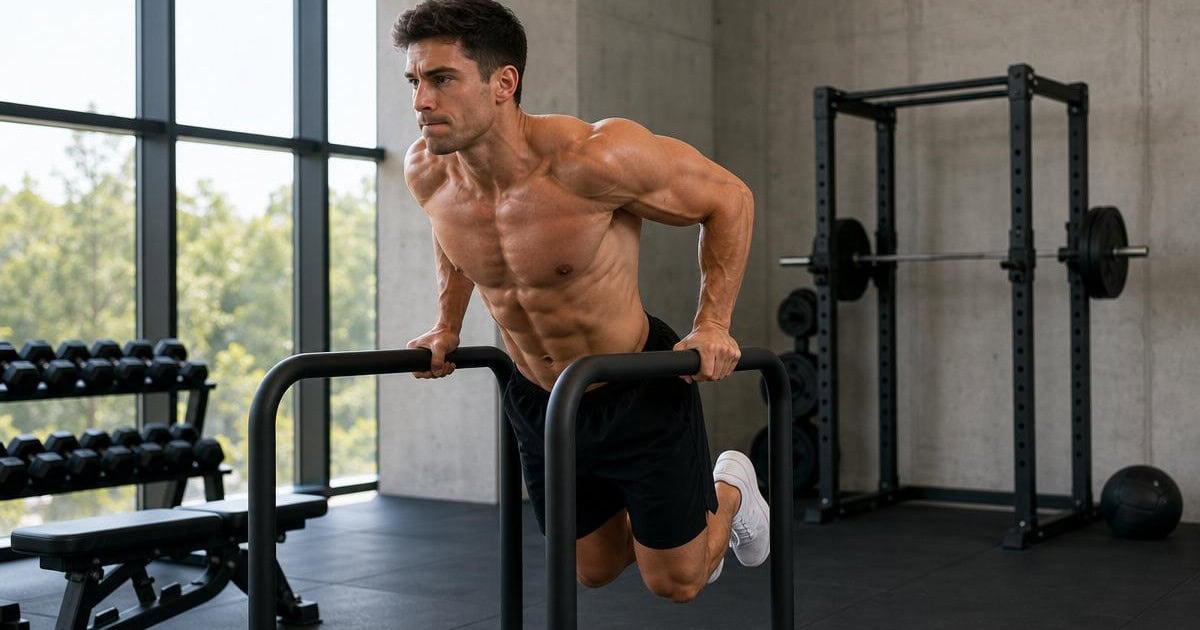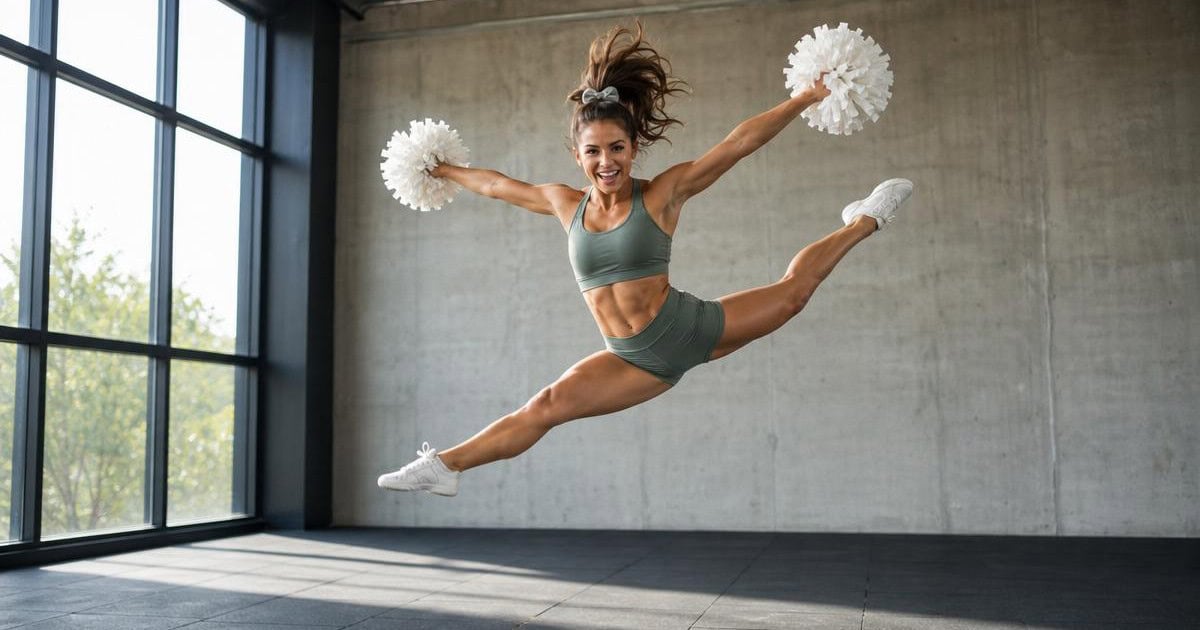
Cheerleading-focused training transforms cheer performance by building the foundational leg strength for jumps, stunts, and tumbling, explosive power for cheer jumps (toe touches, herkies, pikes, hurdlers) and tumbling take-offs, unilateral capacity for tumbling and single-leg loading, deep core stability essential for body position holds and stunting, lateral core for rotational cheer demands, foundational upper-body pulling for basing strength and balanced upper body, foundational pressing for stunting (basing especially), glute strengthening for jumping and tumbling power, dynamic leg strength, and grip endurance for stunt holds across competitive cheerleading, scholastic cheerleading, all-star cheer, and recreational cheerleading. Cheerleaders who consistently train strength and conditioning 2 to 3 times per week alongside cheer practice see measurable improvements: higher cheer jumps through explosive leg power, more powerful tumbling through compound strength and explosive power, more reliable stunting through stronger basing, longer practice endurance through full-body conditioning, addressed left/right asymmetries through unilateral work, faster recovery between practices, longer cheer careers through chronic injury prevention (cheerleading has notable injury rates that benefit from prevention training), and breakthrough cheer performances. Cheerleading is far more physically demanding than non-cheerleaders often recognize – the combination of jumping, stunting, and tumbling produces specific physical requirements that benefit substantially from dedicated strength training.
Below are ten effective exercises for cheerleaders covering compound leg strength (barbell squat), explosive power (jump squat), unilateral leg work (dumbbell Bulgarian split squat), core stability (front plank, side plank), upper-body pulling (pull-up), foundational pressing (push-ups), glute strengthening (barbell glute bridge), dynamic leg work (dumbbell walking lunge), and grip and shoulder mobility (dead hang stretch). Together they form a complete cheerleading-focused program. A 30 to 45-minute session pulled from this list, performed 2 to 3 times per week alongside cheer practice, produces strong development for recreational cheerleaders, scholastic cheer athletes, and competitive all-star cheerleaders. Cheerleading-focused training is particularly valuable because the diverse demands of cheer (jumping, stunting, tumbling, performance) require foundational strength that practice alone cannot fully provide.
Barbell Squat

The Barbell Squat performs back squats. The compound pattern is foundational for cheerleading.
For cheerleaders, the squat builds foundational leg strength supporting jumps, stunts, and tumbling. Run it for 3 to 4 sets of 6 to 10 reps as primary leg work.
Set up a barbell on a rack at upper back height. Position the bar across the upper back. Step back with feet shoulder-width. Squat down by bending the knees and hips. Lower until the thighs are parallel to the floor. Drive back up through the heels. The pattern builds foundational leg strength critical for cheerleading – jumping height for cheer jumps, basing strength for stunts, tumbling power, and the integrated leg strength that defines competitive cheerleading. Strong squats correlate with cheerleading performance through better jumps, more powerful tumbling, and more reliable basing.
Jump Squat

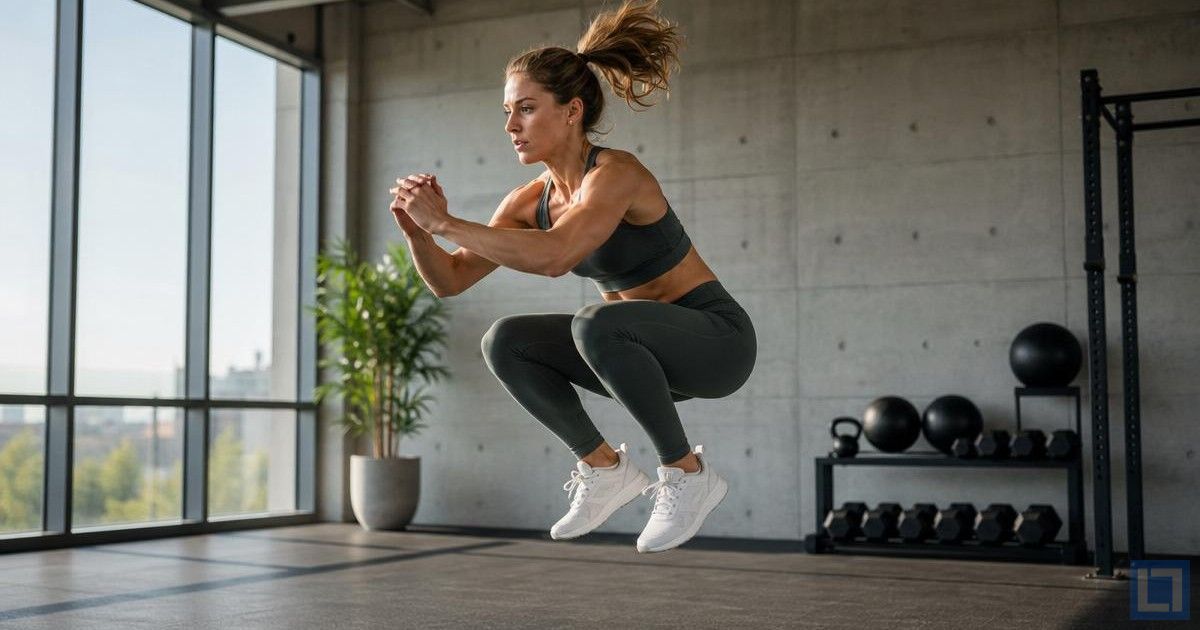
The Jump Squat performs explosive jump squats. The pattern produces explosive jumping power for cheerleading.
For cheerleaders, jump squats produce the explosive power critical for cheer jumps. Run it for 4 sets of 5 to 8 reps as explosive power work.
Stand with feet shoulder-width. Squat down to about quarter-depth. Explosively drive up and jump as high as possible by extending the hips, knees, and ankles. Land softly with bent knees. Reset and repeat. The pattern produces explosive triple-extension power – critical for cheerleading because cheer jumps (toe touches, herkies, pikes, hurdlers) all depend on explosive jumping power. Combined with strength work, jump squats build the explosive power that determines cheer jump height and the explosive demands of stunting and tumbling.
Dumbbell Bulgarian Split Squat
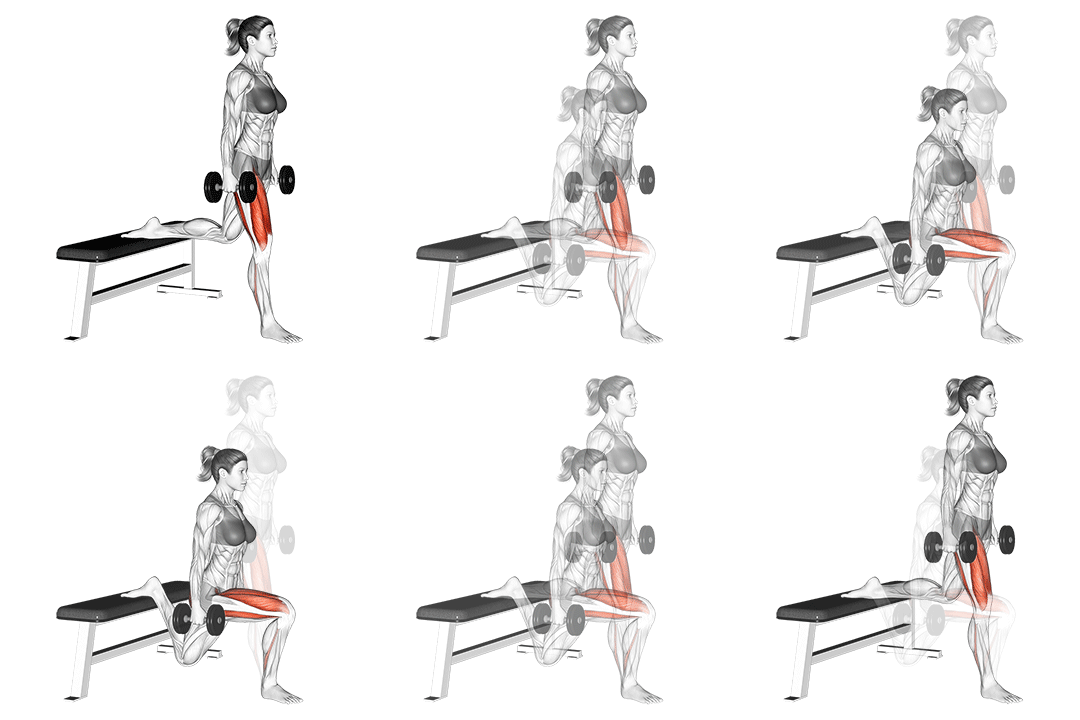
The Dumbbell Bulgarian Split Squat performs Bulgarian split squats. The unilateral pattern is critical for cheerleading.
For cheerleaders, Bulgarian split squats build unilateral leg strength matching tumbling mechanics. Run it for 3 sets of 8 to 10 reps per leg as unilateral work.
Stand 2 to 3 feet in front of a bench. Place the top of the rear foot on the bench behind. Hold dumbbells in each hand at the sides. Squat down by bending the front knee deeply. Lower until the front thigh is parallel to the floor. Drive back up through the front heel. The pattern hits each leg individually with full loading – critical for cheerleading because tumbling, single-leg take-offs, and stunt loading involve substantial unilateral leg work. Strong unilateral legs support cheerleading skills and address asymmetries that develop with extensive cheer practice.
Front Plank
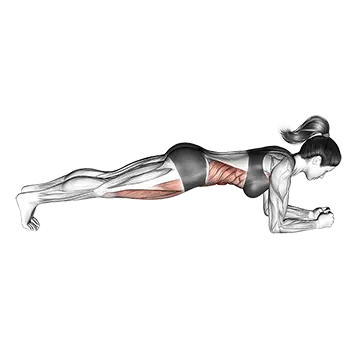
The Front Plank performs forearm plank holds. The pattern builds isometric core for cheerleading.
For cheerleaders, the plank builds the core stability essential for stunting and tumbling. Run it for 3 sets of 60 to 90-second holds as primary core work.
Lie face-down on the floor. Prop up on the forearms with elbows under the shoulders. Lift the hips so the body forms a straight line from shoulders to ankles. The core works hard isometrically. Hold for the working interval. The pattern builds isometric core strength critical for cheerleading – stunting (especially as a flyer in body position holds), tumbling (where core stability prevents form breakdown), and cheer jumps all depend on integrated core stability. Strong core supports the body control that makes cheerleading skills safe and proficient.
Side Plank
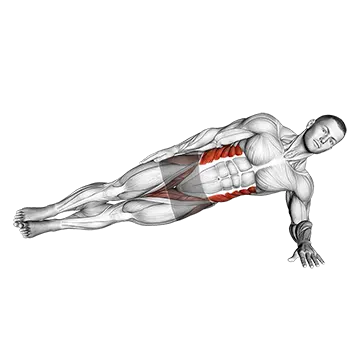
The Side Plank performs side plank holds. The pattern produces lateral core stability for cheerleading.
For cheerleaders, the side plank produces lateral core stability. Run it for 3 sets of 30 to 60-second holds per side as lateral core work.
Lie on one side propped up on the elbow with the elbow under the shoulder. Lift the hips so the body forms a straight line from feet to head. The lateral core (obliques and quadratus lumborum) works hard isometrically. Hold for the working interval. Switch sides. The pattern produces lateral core stability – critical for cheerleading because lateral core supports tumbling, body position holds, and the rotational demands of cheer skills. Combined with front planks, side planks build complete core stability for cheerleading.
Pull Up

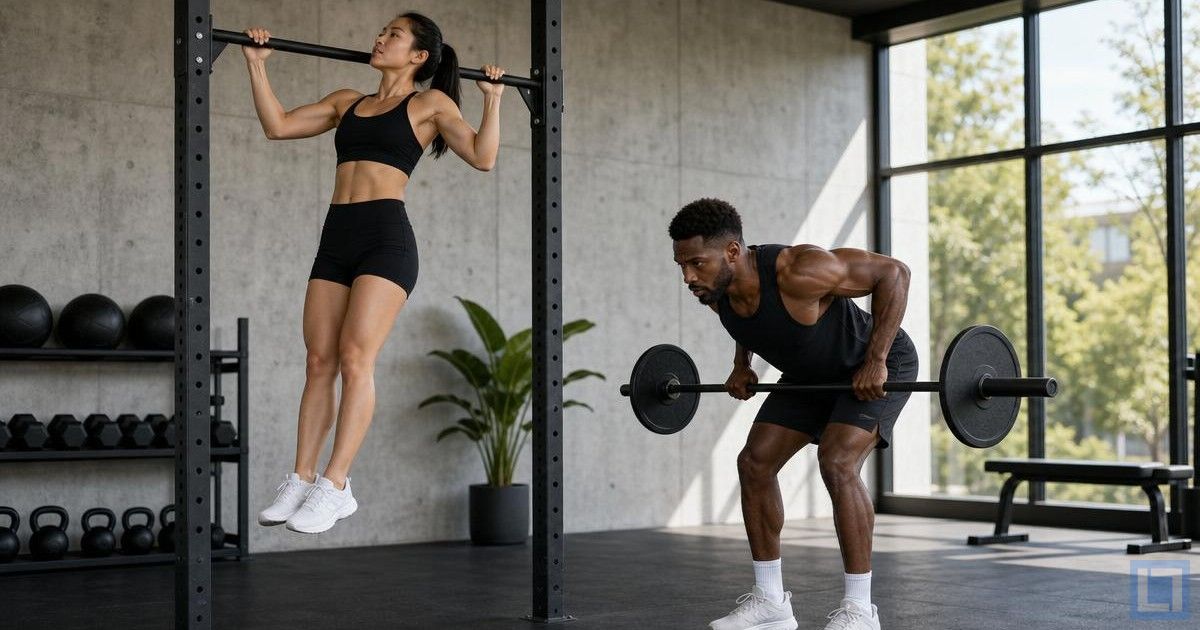
The Pull Up performs bodyweight pull-ups. The pattern is foundational for cheerleading upper body.
For cheerleaders, pull-ups build foundational upper-body pulling capacity. Run it for 3 to 4 sets of 5 to 10 reps as upper-body pulling work.
Hang from a pull-up bar with hands shoulder-width apart and palms facing away. Pull the body up by retracting the shoulder blades and pulling the elbows down toward the ribs until the chin reaches over the bar. Lower under control to full hang. The pattern produces foundational upper-body pulling strength – critical for cheerleading because basing strength depends on pulling capacity, flyers benefit from pulling strength for body position control, and balanced upper-body strength supports the demands of stunting and tumbling.
Push Ups

The Push Ups performs bodyweight push-ups. The pattern produces foundational pressing for cheerleading.
For cheerleaders, push-ups build foundational pressing capacity for stunting. Run it for 3 to 4 sets of 12 to 20 reps as foundational pressing.
Position into a plank with hands shoulder-width apart on the floor and the body straight from head to heels. Lower the body by bending the elbows until the chest nearly touches the floor. Push back up by extending the arms. The chest, anterior delts, and triceps work hard. The pattern produces foundational pressing strength – critical for cheerleading because basing in stunts requires pressing strength, and integrated upper-body pressing capacity supports the demands of stunt holds. Strong push-up capacity contributes to stunting performance and overall upper-body capacity.
Barbell Glute Bridge
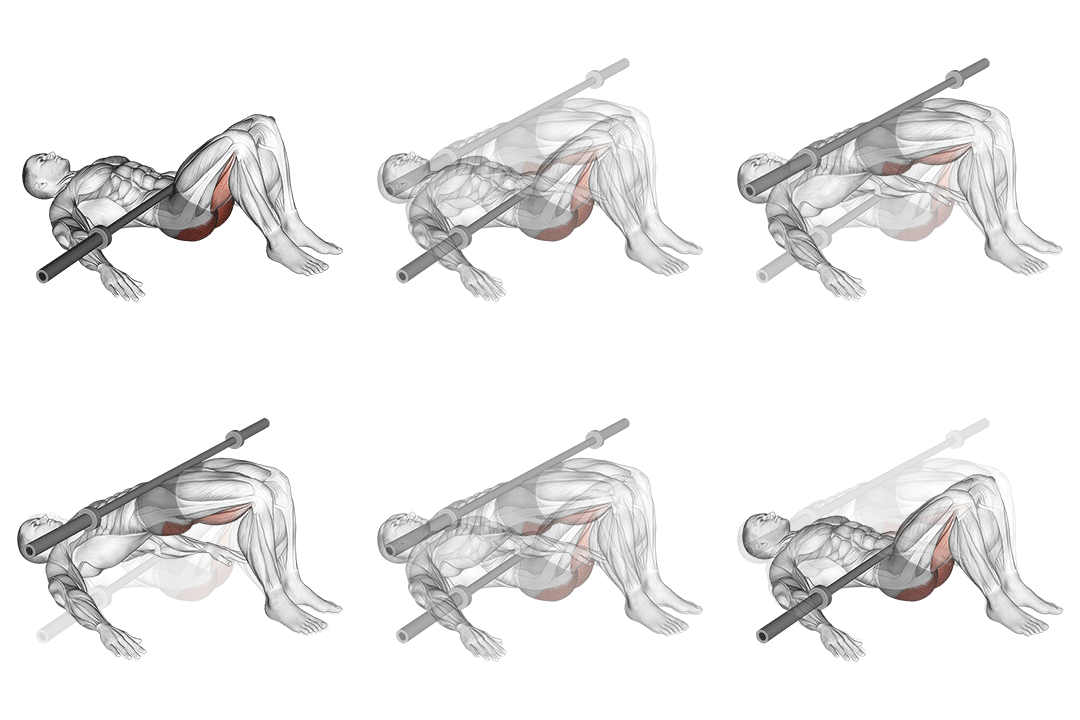
The Barbell Glute Bridge performs glute bridges. The pattern produces glute strengthening for cheerleading.
For cheerleaders, the glute bridge produces direct glute strengthening supporting jumps and tumbling. Run it for 3 sets of 10 to 12 reps as glute work, 2 to 3 times per week.
Lie on the floor with knees bent and feet planted. Position a barbell across the hips. Drive through the heels to lift the hips up by extending the hips. The body forms a straight line from shoulders to knees at the top. The glutes work hard. Squeeze at peak hip extension. Lower under control. The pattern produces direct glute strengthening – critical for cheerleading because the glutes contribute substantially to jumping power (cheer jumps), tumbling power (back handsprings, layouts), and stunt basing through hip extension power. Strong glutes support cheerleading skill performance.
Dumbbell Walking Lunge

The Dumbbell Walking Lunge performs walking lunges. The dynamic pattern builds cheerleading leg strength.
For cheerleaders, walking lunges build dynamic single-leg strength. Run it for 3 sets of 14 to 18 total steps as dynamic leg work.
Stand with feet hip-width holding dumbbells in each hand at the sides. Step forward with one leg into a lunge position, lowering the back knee toward the floor. Drive through the front heel to stand up while bringing the rear leg forward into the next lunge step. Continue alternating. The dynamic pattern develops unilateral leg strength supporting cheerleading – the dynamic loading translates to tumbling demands, single-leg jump take-offs, and the constant single-leg loading of cheerleading.
Dead Hang Stretch

The Dead Hang Stretch performs dead hangs. The pattern produces shoulder decompression and grip endurance.
For cheerleaders, dead hangs build grip strength and shoulder mobility. Run it for 3 sets of 30 to 60-second hangs as grip endurance work, daily.
Hang from a pull-up bar with hands shoulder-width apart and a passive dead hang position (relaxed shoulders). Hold the position for the working interval. The shoulders decompress, the lats stretch, and the upper body lengthens. The grip works hard. The pattern produces excellent grip strength and shoulder decompression – critical for cheerleading because grip strength supports stunting (especially holding flyers in stunts), shoulder mobility supports overhead stunt positions, and decompression supports recovery from compressive stunting demands.
How To Program These Workouts
A productive cheerleading strength session pulls 6 to 8 exercises from the list above. A common balanced session: barbell squat (foundational legs), jump squat (explosive jumping), dumbbell Bulgarian split squat (unilateral), front plank (core), side plank (lateral core), pull-up (upper pull), push-ups (pressing), barbell glute bridge (glutes). For jumping/tumbling emphasis: prioritize jump squats, foundational squats, glute bridges, plyometric work. For stunting emphasis (basers and bases): prioritize compound strength (squats, bench press, pull-ups), grip work, core stability. For flyer emphasis: prioritize core stability (planks, side planks), body weight strength (pull-ups, push-ups), grip endurance. Run heavy compound work for 3 to 4 sets of 6 to 10 reps, explosive power for 4 sets of 5 to 8 reps, core work for 3 sets of 30 to 90-second holds, grip work for 3 sets of 30 to 60-second hangs.
Train cheerleading strength 2 to 3 times per week year-round alongside cheer practice. Off-season: 3 weekly strength sessions emphasizing strength building and explosive power. In-season: 2 weekly maintenance sessions to preserve gains while prioritizing cheer practice and competitions. Competition periods: minimal strength work to maintain freshness. Schedule strength work either: 1) on dedicated S&C days separate from cheer practice, or 2) on light cheer practice days. Avoid heavy strength work the day before competitions. Combined with adequate cheer practice, proper nutrition, and recovery, dedicated strength training improves cheer performance and reduces the chronic shoulder, knee, back, and wrist injuries common in cheerleading.
For broader programming, see our best workouts for athletes and best workouts for gymnastics. For specific work, see our how to build vertical jump.
Final Thoughts
The best workouts for cheerleading deliver real cheer performance improvements through strength and conditioning that targets the diverse demands of cheer: foundational leg strength for jumps and tumbling, explosive power for cheer jumps, unilateral capacity for single-leg loading, deep core stability for body position and stunting, lateral core, upper-body pulling for basing, foundational pressing for stunting, glute strengthening for jumping power, dynamic leg work, and grip endurance. The combination of squats, jump squats, Bulgarian split squats, planks, side planks, pull-ups, push-ups, glute bridges, walking lunges, and dead hangs covers every functional pattern of cheerleading and produces broader athletic development than cheer practice alone could provide. Many cheerleaders discover higher cheer jumps, more powerful tumbling, more reliable stunting, longer practice endurance, addressed asymmetries, faster recovery, longer cheer careers, and breakthrough performances within 8 to 12 weeks of adding consistent strength work. For cheerleaders seeking better performance and longer careers, dedicated strength training is one of the most effective interventions available.
Stay focused on injury prevention plus explosive power as priorities for cheerleading-specific training. The most common mistake cheerleaders make is doing only cheer practice without strength training (assuming cheer practice is sufficient) or doing only general fitness without addressing the explosive demands of cheer. The fix: prioritize the integrated combination of compound strength (squats, deadlifts, pull-ups) plus explosive power (jump squats, plyometric work) plus core stability work (planks, side planks) plus appropriate cheer practice. Combined with proper landing technique, gradual skill progression, and adequate recovery, integrated cheerleading training produces cheer capacity and durability that practice-only training never achieves. Cheerleading is high-impact – strength training is essential for sustained practice and injury prevention.
Frequently Asked Questions
Should cheerleaders lift weights?
Yes – properly programmed strength training improves cheer performance and dramatically reduces injury risk. Strength training produces: higher cheer jumps, more powerful tumbling, more reliable stunting, longer practice endurance, addressed left/right asymmetries, faster recovery, reduced injury risk, and longer cheer careers. Modern competitive cheerleading programs incorporate dedicated strength training. Cheerleading is high-impact with notable injury rates – strength training is essential for sustained practice and competitive longevity. Strong cheerleaders are durable cheerleaders.
How can cheerleaders jump higher?
Develop explosive leg power. Jump squats produce explosive triple-extension power – the most direct exercise for cheer jump height improvement. Combined with foundational compound strength (heavy squats, deadlifts), unilateral leg work (Bulgarian split squats), glute bridges (hip extension power), and dedicated cheer jump practice, this explosive program produces measurable cheer jump improvements within 8 to 12 weeks. The mechanism: cheer jump height depends on explosive triple-extension power transferred through proper coordination during the jump.
How can cheerleaders prevent injuries?
Strength training plus mobility plus proper technique. Strength training (squats, deadlifts, pull-ups, planks) addresses the muscle weaknesses underlying most cheer injuries. Compound strength supports the demands of stunting, jumping, and tumbling. Combined with mobility work (especially shoulder, wrist, hip), proper technique training, gradual skill progression, and adequate recovery, this approach dramatically reduces injury rates. Cheerleading’s notably high injury rates respond well to dedicated injury prevention training – strong cheerleaders are durable cheerleaders.
How often should cheerleaders train strength?
2 to 3 sessions per week alongside cheer practice. Most successful cheerleaders include: 1) cheer practice 3 to 5 times per week, 2) strength training 2 to 3 times per week (foundational strength and explosive power), 3) regular conditioning, 4) regular mobility work. Schedule strength work on dedicated S&C days or light cheer days. Avoid heavy strength work before competitions. Combined with proper recovery, this frequency improves cheer performance and reduces injury rates substantially.
What’s the best exercise for cheerleading?
Squats plus jump squats plus core stability work. Heavy squats build the foundational leg strength critical for jumping, tumbling, stunting, and basing. Jump squats build the explosive power critical for cheer jump height. Front and side planks build the core stability essential for body position holds and stunting. Combined with pull-ups (basing strength), push-ups (pressing), Bulgarian split squats (unilateral), glute bridges (hip power), walking lunges (dynamic), and dead hangs (grip), squats plus jump squats plus core form the foundation of cheerleading training.