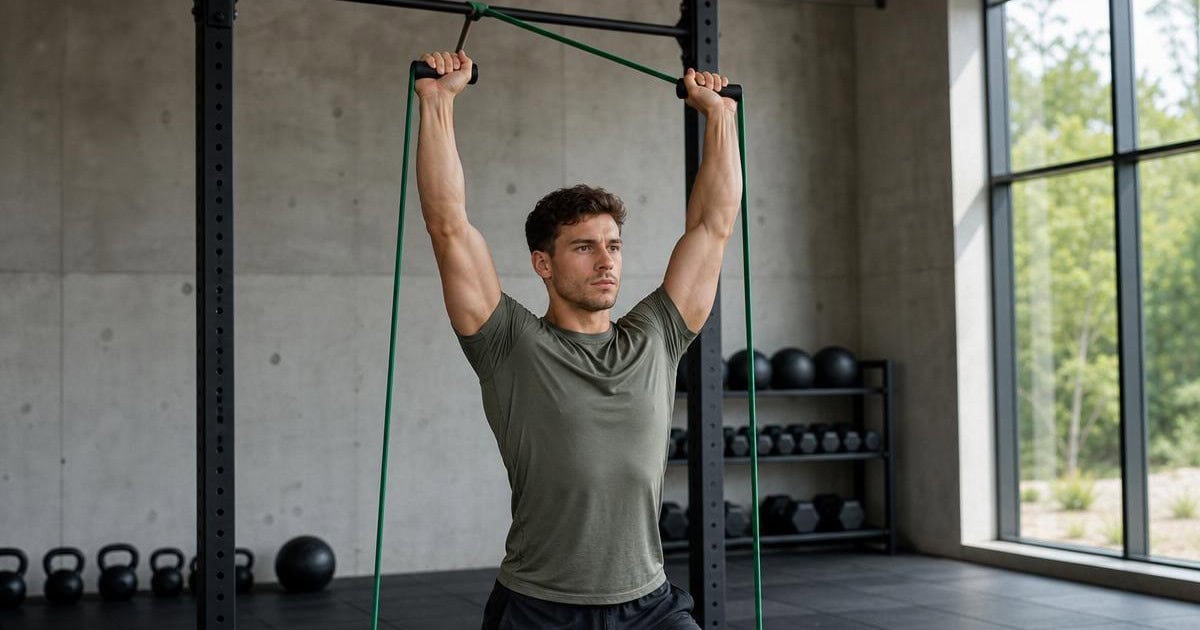
Resistance band shoulder training produces real shoulder growth through the unique advantage that bands offer: progressive tension that increases as the band stretches, hitting the deltoids harder at peak contraction than free weights ever can. The format works particularly well for shoulders because the deltoid responds to time-under-tension and varied angles, both of which bands deliver effectively without requiring expensive equipment or heavy gym setups. Most lifters who consistently train resistance band shoulder work 1 to 2 times per week alongside compound pressing movements (or even alone for home-only training) see measurable shoulder development, improved rear delt visibility, better posture, and stronger overhead pressing within 8 to 12 weeks. The combination of medial delt isolation, rear delt emphasis, rotator cuff work, and posture-focused exercises produces broader shoulder development than pressing alone.
Below are ten effective resistance band shoulder exercises that cover overall delt mass (shoulder press, single-arm overhead press), medial delt isolation (lateral raise, upright row), front delt work (front raise), rear delt isolation (rear delt row, rear fly), posture and shoulder health (face pull, Y raise), and rotator cuff training (external rotation). Together they form a complete resistance band shoulder program that hits every part of the deltoid plus the supporting structures. A 25 to 35-minute session pulled from this list, performed 1 to 2 times per week, produces strong shoulder development for home or travel training.
Band Lateral Raise

The Band Lateral Raise performs side raises using a resistance band anchored under the feet. The pattern produces strong medial deltoid loading with the unique advantage that band tension increases as the arm raises higher.
For resistance band shoulder training, the lateral raise is the most direct medial deltoid loading exercise. The pattern hits the side delts hard with progressive tension that drives medial delt hypertrophy. Run it for 3 to 4 sets of 12 to 15 reps as primary medial delt work.
Stand on the middle of a resistance band with feet shoulder-width and grip the band ends with palms facing the body. Keep a slight bend in the elbows. Raise both arms out to the sides until they reach shoulder height (parallel to the floor). The band tension increases through the raise. Hold briefly at the top. Lower under control until arms return to the sides.
Band Front Raise

The Band Front Raise performs front raises using a resistance band anchored under the feet. The pattern produces strong front deltoid loading with progressive tension throughout the raise.
For resistance band shoulder training, the front raise produces strong front deltoid loading. The pattern hits the anterior delt with progressive band tension. Run it for 3 sets of 10 to 12 reps as front delt work. Note: front delts get heavy work from pressing, so isolation work is supplementary.
Stand on the middle of a resistance band with feet shoulder-width and grip the band ends with palms facing down (overhand grip). Hold the band at the front of the thighs. Raise both arms forward up to shoulder height by lifting the arms straight forward. Maintain a slight bend in the elbows throughout. Lower under control until the arms return to the front of the thighs.
Band Shoulder Press

The Band Shoulder Press performs overhead pressing motion using a resistance band anchored under the feet. The pattern produces strong combined deltoid and tricep loading similar to dumbbell or barbell presses but with band-specific resistance.
For resistance band shoulder training, the shoulder press is the most direct overall deltoid loading exercise. The pattern hits all three delt heads through pressing motion. Run it for 3 to 4 sets of 8 to 12 reps as primary mass-building work in any band shoulder session.
Stand on the middle of a resistance band with feet shoulder-width. Grip the band ends with palms facing forward and bring the hands to shoulder height (band ends near the shoulders). Press both arms straight up overhead by extending through the shoulders and triceps. The band tension increases as the arms extend. Lower under control to shoulder position.
Band Rear Delt Row

The Band Rear Delt Row performs rowing motion with a resistance band anchored at chest height to specifically target the rear deltoids. The pattern is one of the most direct rear delt loading exercises.
For resistance band shoulder training, the rear delt row produces strong rear deltoid loading. The pattern hits the often-neglected rear delts that contribute to shoulder width and posture. Run it for 3 sets of 12 to 15 reps as rear delt isolation work.
Anchor a resistance band at chest height (around a sturdy pole or door anchor). Stand facing the anchor and grip the band ends with both hands. Step back to create tension. Pull the band ends toward the chest by retracting the shoulder blades and pulling the elbows wide and high. The high pull angle hits the rear delts specifically. Return under control.
Band Upright Row

The Band Upright Row pulls a resistance band from below up toward the chest. The pattern hits the medial deltoids and upper traps through pulling motion.
For resistance band shoulder training, the upright row produces combined medial delt and upper trap loading. The pattern hits the side delts and upper traps simultaneously. Run it for 3 sets of 10 to 12 reps as combined medial delt and trap work.
Stand on the middle of a resistance band with feet shoulder-width and grip the band ends with palms facing the body, hands close together. Pull the band straight up the body toward the chin by raising the elbows out and up. The band tension increases through the pull. Lower under control. Avoid rotating shoulders into impingement positions; stop the pull below shoulder height if shoulder mobility is limited.
Band Y Raise

The Band Y Raise performs Y-shape raises with a resistance band anchored low and arms raising up and out at 45-degree angles. The pattern hits the lower traps, rear delts, and rotator cuff simultaneously.
For resistance band shoulder training, the Y raise produces strong lower trap and posterior shoulder loading. The pattern hits the lower traps that are critical for posture and overhead movement quality. Run it for 3 sets of 10 to 12 reps as posture and shoulder health work.
Stand on the middle of a resistance band with feet shoulder-width. Grip the band ends with palms facing each other and arms hanging at the sides. Raise both arms up and out at 45-degree angles to form a Y shape, ending with arms extended overhead and slightly out. Maintain straight arms throughout. Lower under control. The band tension produces strong lower trap loading.
Resistance Band Half Kneeling Face Pull

The Resistance Band Half Kneeling Face Pull performs face pulls with a resistance band anchored at face height while in a half-kneeling position. The kneeling position eliminates lower body involvement.
For resistance band shoulder training, the half-kneeling face pull is one of the most important exercises that exists for shoulder health, posture, and rear delt development. The pattern hits the rear delts, rotator cuff, and middle traps simultaneously. Run it for 3 to 4 sets of 12 to 20 reps as foundational shoulder health work.
Anchor a resistance band at face height. Take a half-kneeling position with one knee down and the other foot forward. Grip the band ends with both hands at arm length toward the anchor. Pull the band toward the face by retracting the shoulder blades and pulling the elbows wide. Pull the band ends apart at peak contraction. Hold briefly. Return under control. Switch knees between sets.
Band Upright Shoulder External Rotation

The Band Upright Shoulder External Rotation performs single-arm rotator cuff external rotation using a resistance band anchored at hip height. The pattern produces strong rotator cuff loading critical for shoulder health.
For resistance band shoulder training, the external rotation is the most direct rotator cuff loading exercise that exists. The pattern hits the infraspinatus and teres minor that are critical for shoulder stability. Run it for 3 sets of 12 to 15 reps per arm as rotator cuff and shoulder health work.
Anchor a resistance band at hip height. Stand sideways to the anchor and grip the band end with the outside arm. Pin the elbow against the side at 90 degrees with the forearm pointing toward the anchor. Rotate the forearm outward (away from the anchor) by external rotation at the shoulder. Maintain elbow position pinned to the side. Return under control. Use light band tension only; rotator cuff exercises produce strong loading at low resistance levels.
Resistance Band Rear Fly

The Resistance Band Rear Fly performs rear delt flyes using a resistance band anchored at chest height. The pattern produces strong rear deltoid isolation through optimal loading position.
For resistance band shoulder training, the rear fly produces strong rear deltoid isolation. The pattern hits the rear delts through pure horizontal abduction. Run it for 3 sets of 12 to 15 reps as rear delt isolation work.
Anchor a resistance band at chest height. Stand facing the anchor and grip the band ends with both hands, arms extended forward. Step back to create tension. Pull the band ends back and out to the sides by retracting the shoulder blades and bringing the arms wide. Squeeze the rear delts at peak contraction with arms extended out. Return under control. Maintain straight arms throughout.
Resistance Band Single Arm Overhead Shoulder Press

The Resistance Band Single Arm Overhead Shoulder Press performs single-arm pressing using a resistance band anchored under the foot. The unilateral pressing produces strong delt loading combined with core stability work.
For resistance band shoulder training, the single-arm press produces strong unilateral delt loading combined with core anti-rotation work. The pattern hits the delts through pressing while challenging core stability. Run it for 3 sets of 8 to 10 reps per arm as unilateral pressing work.
Stand on one end of a resistance band with one foot. Grip the other end with the same-side arm and bring the band end to shoulder height. The non-working arm rests at the side. Press the working arm straight up overhead by extending through the shoulder and tricep. Maintain core tightness to resist rotation. Lower under control to shoulder position. Switch arms between sets.
How To Program These Workouts
A productive resistance band shoulder session pulls 5 to 7 exercises from the list above based on training goals. A common balanced session: band shoulder press (mass), band lateral raise (medial delts), band rear delt row (rear delts), resistance band half kneeling face pull (rear delts and posture), band Y raise (lower traps), band external rotation (rotator cuff). Run pressing work for 3 to 4 sets of 8 to 12 reps, isolation work for 3 sets of 10 to 15 reps per arm, posture work (face pulls, Y raises) for 3 sets of 12 to 20 reps, and rotator cuff work for 3 sets of 12 to 15 reps with light band tension.
Train resistance band shoulder work 1 to 2 times per week as part of broader pressing-day or home-training programming. Bands work particularly well for travel, home gyms, and rehab/prehab work because they provide progressive resistance without heavy weights. Most successful programs include band shoulder work either: 1) at the end of a pressing day (after compound presses), 2) on a dedicated shoulder day combined with compound presses, or 3) as a complete shoulder session for home-only training. Keep shoulder training time under 30 to 35 minutes per session. Always include rear delt and rotator cuff work for shoulder health.
For broader shoulder programming, see our how to build bigger shoulders and best workouts for wider shoulders. For specific rear delt work, see our best workouts for rear delts.
Final Thoughts
The best resistance band shoulder workouts deliver real shoulder growth through the unique advantage of progressive tension that bands provide as they stretch through every shoulder movement. The combination of overall delt mass work, medial delt isolation, rear delt emphasis, rotator cuff work, and posture-focused exercises covers every part of the shoulder complex and produces broader shoulder development than pressing alone. For lifters who want to train shoulders effectively at home or on the road, want to add band-specific tension to existing programs, want to bulletproof shoulder health for long-term training, or want to break through plateaus in delt development, dedicated resistance band shoulder work is one of the most effective options available.
Stay focused on band selection and progressive overload. The most common resistance band shoulder training mistakes include using bands that are too heavy for proper form on small-muscle exercises (especially rotator cuff work) and not progressing band tension over time. The fix: use light bands for rotator cuff and rear delt work where strict form matters most, and progress band tension by upgrading to heavier bands or doubling up bands as strength builds. Quality reps with appropriate band tension produce stronger shoulder development than ego-driven heavy bands with sloppy form.
Frequently Asked Questions
Are resistance band shoulder workouts effective?
Yes very effectively. Resistance bands produce real shoulder hypertrophy through progressive tension that increases throughout each rep, time-under-tension benefits, and the angle versatility that bands provide. Many lifters build strong shoulders through dedicated band training. Most successful programs include bands alongside dumbbells and barbells when accessible, but bands alone can produce strong shoulder development for lifters with limited equipment or who train at home.
Can resistance bands replace dumbbell shoulder workouts?
Yes for many lifters. Resistance bands can produce all the loading patterns shoulders need (overhead pressing, lateral raises, rear delt work, rotator cuff work) and the constant tension produces strong hypertrophy results. Most lifters with access to both should include both, but lifters with only band access can build excellent shoulders through dedicated band training combined with compound bodyweight pressing (push-ups, dips). The key is progressive overload through heavier bands over time.
How heavy should bands be for shoulder workouts?
Lighter than you think for most exercises. The shoulders are a small muscle group that responds best to moderate resistance with strict form rather than heavy resistance with body english. Most successful resistance band shoulder programs use light to medium bands (5 to 30 pounds of resistance) for isolation work and medium to heavy bands (20 to 50 pounds) for pressing. Rotator cuff exercises (external rotations) should use very light bands only.
How often should I train shoulders with bands?
One to two band shoulder sessions per week works for most lifters. The shoulders accumulate substantial fatigue from compound pressing and pulling work. Most successful programs include band shoulder work either at the end of a pressing day, on a dedicated shoulder day, or twice per week with one heavier session and one lighter pump-focused session. Daily band shoulder training typically produces overuse issues rather than accelerated progress.
What’s the most important resistance band shoulder exercise?
The resistance band face pull is arguably the most important shoulder exercise period. It hits the rear delts, rotator cuff, and middle traps simultaneously while improving posture and shoulder health. Most successful programs include face pulls 2 to 3 times per week minimum. Band lateral raises are equally important for medial delt development if shoulder size is the primary goal.