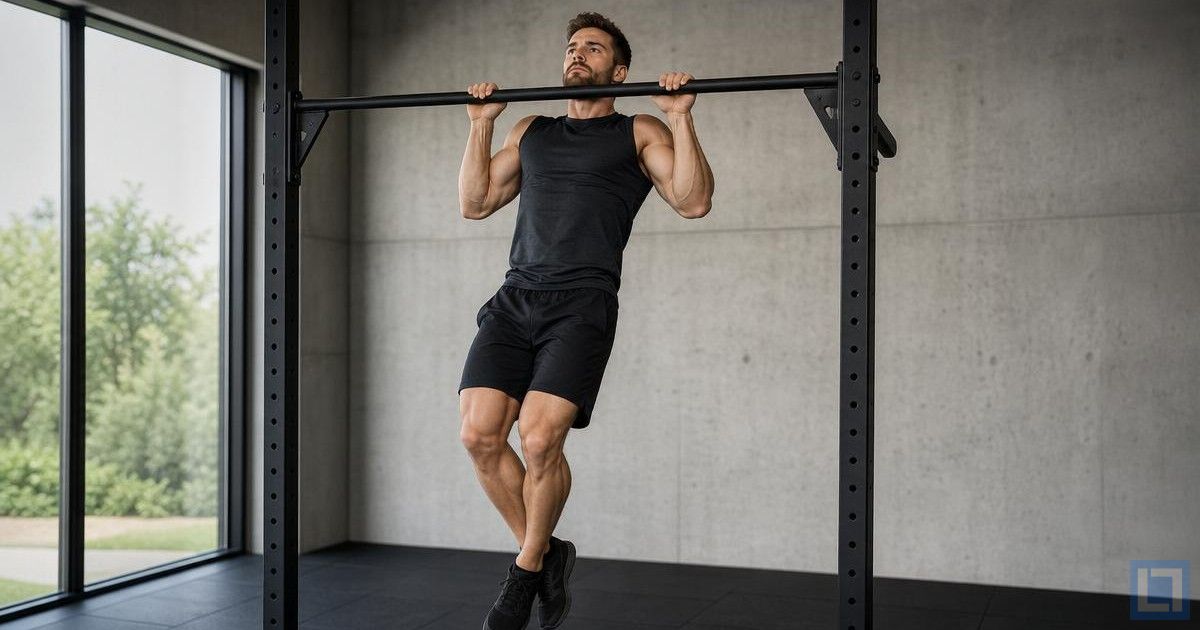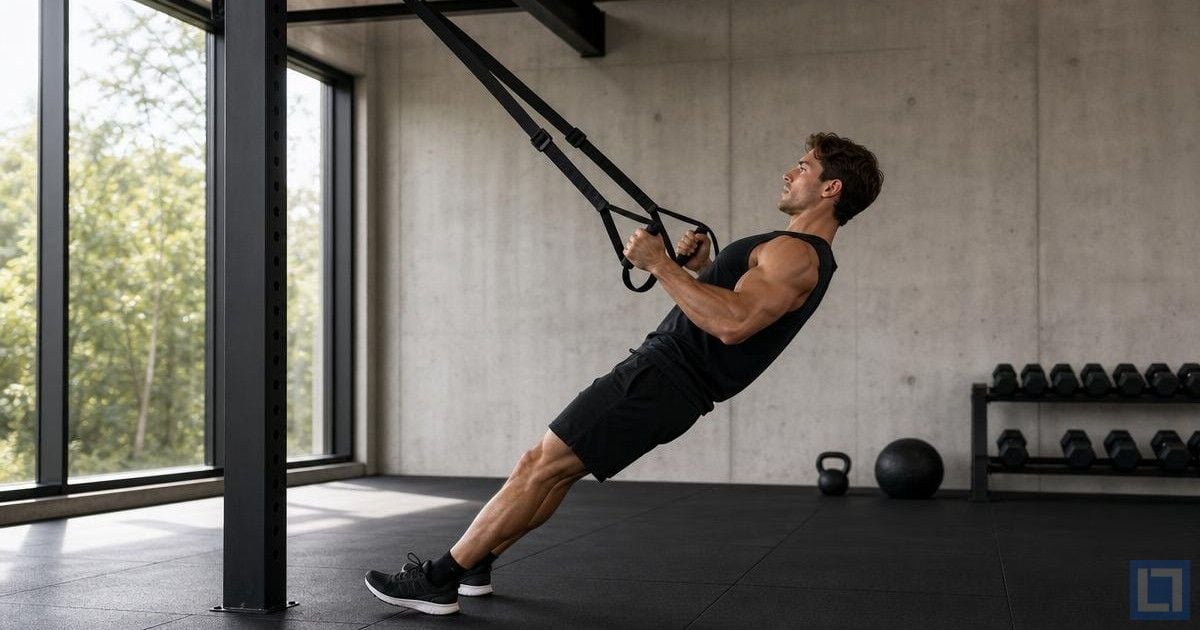
TRX shoulder training produces real shoulder development through suspension trainer loading that targets all three deltoid heads (front, side, rear) plus the rotator cuff and surrounding stabilizers. The format works particularly well for shoulder training because the unstable straps require constant shoulder stabilization throughout every exercise, which means the rotator cuff and deep shoulder muscles get strong stimulus that traditional fixed-equipment training rarely produces. The TRX also enables shoulder exercises through positions that fixed equipment cannot match: rotator cuff work under suspension load, rear delt isolation through fly variations, and even handstand push-ups for extreme vertical pressing. Most lifters who consistently train TRX shoulders 1 to 2 times per week see measurable shoulder strength, balance, and health improvements within 6 to 10 weeks.
Below are ten effective TRX shoulder exercises that cover rotator cuff training (external rotation), front delt isolation (front raise), rear delt training (reverse fly, ring reverse fly, reverse fly wake-up, rear delt row), shoulder posture work (face pull, Y lateral raise), advanced pressing (handstand push-up), and combined shoulder-and-leg work (forward lunge with rear fly). Together they form a complete TRX shoulder training program that hits every major shoulder muscle and movement pattern. A 30 to 40-minute session pulled from this list produces strong combined shoulder development across all three delt heads plus rotator cuff and posture work.
Suspender Shoulder External Rotation

The Suspender Shoulder External Rotation holds TRX handles with elbows tucked at the sides and externally rotates the shoulders to pull the handles outward. The pattern produces direct rotator cuff loading critical for shoulder health.
For TRX shoulder training, the external rotation is the foundational rotator cuff exercise. The pattern hits the rotator cuff muscles that traditional pressing exercises bypass. Run it for 3 sets of 10 to 12 reps as rotator cuff and shoulder health work.
Set up TRX with handles at chest height. Hold the handles with both hands and lean back slightly. Tuck the elbows at the sides with the forearms extended forward (palms facing each other). Rotate the shoulders to pull the handles outward while keeping the elbows tucked. Return under control. Use light tension.
Suspender Front Raise

The Suspender Front Raise holds TRX handles with arms extended at the sides and raises them forward to shoulder height. The pattern produces direct front delt loading through pure shoulder flexion.
For TRX shoulder training, the front raise produces direct front delt isolation. The pattern hits the front delts through pure shoulder flexion under suspension load. Run it for 3 sets of 10 to 12 reps as front delt isolation work.
Set up TRX with handles at hip height. Hold the handles and lean back slightly with arms at the sides. Raise the arms forward to shoulder height while keeping the body angled back. Lower under control to the start position. Maintain consistent body angle throughout.
Suspender Reverse Fly

The Suspender Reverse Fly holds TRX handles with arms extended in front, then opens the arms out to the sides. The pattern produces direct rear delt loading through pure shoulder horizontal abduction.
For TRX shoulder training, the reverse fly is one of the most direct rear delt exercises that exists with the format. The pattern hits the rear delts that contribute to balanced shoulder development. Run it for 3 sets of 10 to 12 reps as direct rear delt work.
Set up TRX with handles at chest height. Hold the handles with both hands and lean back, putting body weight on the arms. Start with arms extended forward at chest height. Open the arms out to the sides in a reverse fly motion until the body forms a Y shape. Squeeze the rear delts at the contracted position. Return under control.
Suspender Face Pull

The Suspender Face Pull holds TRX handles and pulls them toward the face with elbows held high, externally rotating at the contracted position. The pattern produces strong rear delt and external rotator loading.
For TRX shoulder training, the face pull produces direct rear delt and rotator cuff loading. The pattern hits the back-of-shoulder muscles that contribute to good posture and shoulder health. Run it for 3 sets of 12 to 15 reps as rear delt and rotator cuff work.
Set up TRX with handles at face height. Hold the handles with both hands and lean back. Pull the handles toward the face with the elbows held high and externally rotating at the end of the pull (so the hands end up alongside the head). Squeeze the rear delts and rotator cuff at peak contraction. Return under control.
Suspender Rear Delt Row

The Suspender Rear Delt Row pulls TRX handles toward the upper chest with the elbows held at chest level (rather than tucked at the sides). The high-elbow position emphasizes the rear delts and upper back.
For TRX shoulder training, the rear delt row produces direct rear delt loading through the high-elbow rowing pattern. The pattern hits the rear delts through both rowing motion and shoulder horizontal abduction. Run it for 3 sets of 10 to 12 reps as primary rear delt work.
Set up TRX with handles at chest height. Hold the handles with both hands and lean back, putting body weight on the arms. Pull the body up toward the handles with the elbows held high at chest level (rather than tucked at the sides). Squeeze the rear delts at the contracted position. Return under control.
Suspender Y Lateral Raise

The Suspender Y Lateral Raise holds TRX handles with arms extended forward, then raises them up and out into a Y shape overhead. The pattern produces direct lower trap, rear delt, and side delt loading.
For TRX shoulder training, the Y lateral raise is one of the most direct shoulder posture exercises that exists. The pattern hits the lower traps, rear delts, and side delts that contribute to good shoulder positioning. Run it for 3 sets of 10 to 12 reps as shoulder posture and stability work.
Set up TRX with handles at chest height. Hold the handles with both hands and lean back. Start with arms extended forward at chest height. Raise the arms up and out into a Y shape overhead by lifting through the shoulders. Lower under control to the start position. Maintain body angle throughout.
Ring Reverse Fly

The Ring Reverse Fly sets up holding gymnastic rings or TRX handles with arms extended forward, then opens the arms out to the sides. The pattern produces strong rear delt loading through pure shoulder horizontal abduction.
For TRX shoulder training, the ring reverse fly provides varied rear delt loading complementing other rear delt exercises. The unstable rings or TRX produce stronger stability demands than fixed-cable reverse flys. Run it for 3 sets of 10 to 12 reps as varied rear delt work.
Set up TRX with handles at chest height. Hold the handles with both hands and lean back, putting body weight on the arms. Start with arms extended forward at chest height. Open the arms out to the sides in a reverse fly motion until the body forms a Y shape. Squeeze the rear delts at the contracted position. Return under control.
Suspender Reverse Fly Wake Up

The Suspender Reverse Fly Wake Up performs a rear delt fly motion with the body in a more horizontal position than standard reverse flys, producing stronger rear delt loading through increased body weight on the arms.
For TRX shoulder training, the reverse fly wake-up provides advanced rear delt loading by increasing the body angle to put more weight on the arms. The pattern hits the rear delts through stronger loading than standard reverse flys. Run it for 3 sets of 10 to 12 reps as advanced rear delt work.
Set up TRX with handles at chest height. Hold the handles with both hands and lean back into a more horizontal position than standard reverse flys (more body weight on arms). Start with arms extended forward at chest height. Open the arms out to the sides in a reverse fly motion. Squeeze the rear delts at the contracted position. Return under control.
Suspender Handstand Push-Up

The Suspender Handstand Push-Up performs handstand push-up motion with feet supported in TRX handles. The pattern produces strong vertical pressing loading on the shoulders through inverted body position.
For TRX shoulder training, the handstand push-up is one of the most demanding shoulder pressing exercises that exists. The pattern hits the shoulders through full bodyweight vertical pressing in inverted position. Run it for 3 sets of 4 to 8 reps as advanced shoulder pressing work.
Set up TRX with handles at hip height. Place feet in the handles and walk hands toward the anchor until the body is in an inverted handstand position with hands on the floor and feet supported in TRX. Lower the head toward the floor by bending the elbows. Press back to lockout. Maintain tight body position throughout.
Suspender Forward Lunge with Rear Fly

The Suspender Forward Lunge with Rear Fly combines a forward lunge motion with rear fly arm motion, performing both simultaneously. The combined motion produces strong combined leg, core, and shoulder loading per rep.
For TRX shoulder training that includes leg and core work, the forward lunge with rear fly produces strong combined loading. The pattern hits the rear delts through fly motion while the lunge adds leg and stability demand. Run it for 3 sets of 8 to 10 reps per side as combined shoulder and leg work.
Set up TRX with handles at chest height. Hold the handles and lean back. Step forward into a lunge with one leg while simultaneously opening the arms out to the sides in a rear fly motion. Drive back to standing while bringing the arms back together. Switch sides between sets.
How To Program These Workouts
A productive TRX shoulder session pulls 6 to 8 exercises from the list above. A balanced session includes one rotator cuff exercise (external rotation), one front delt exercise (front raise), one primary rear delt exercise (reverse fly or rear delt row), one face pull (rear delt and rotator cuff combined), one Y raise (posture work), and one demanding press (handstand push-up if accessible, or combined lunge with fly otherwise). Run rotator cuff and posture work for 3 sets of 10 to 15 reps; primary rear delt work for 3 sets of 10 to 12 reps; demanding presses for 3 sets of 4 to 8 reps. Total session covers 18 to 24 working sets across all major shoulder functions.
Train TRX shoulder sessions 1 to 2 times per week as part of broader shoulder or upper-body programming. The shoulders recover within 48 to 72 hours of moderate training. Most successful programs include 1 to 2 weekly TRX shoulder sessions, which works well as either a complete shoulder program (for travelers, home gym setups) or as supplementary work alongside traditional barbell shoulder training. The format works particularly well as a rotator cuff, rear delt, and posture-focused session paired with a heavier barbell overhead press session for complete shoulder development.
For broader TRX programming, see our best trx workouts and best full body trx workouts. For specific TRX work, see our best upper body trx workouts.
Final Thoughts
The best TRX shoulder workouts deliver real shoulder development through suspension trainer loading that engages all three deltoid heads plus the rotator cuff and stabilizers traditional shoulder training rarely reaches. The combination of rotator cuff work, front and rear delt training, posture exercises, and advanced pressing covers every major shoulder function and produces broader development than single-modality shoulder training. For lifters who want functional shoulder strength, want to address shoulder health and posture issues, or want advanced shoulder training stimulus that fits any setting, dedicated TRX shoulder training is one of the most effective options available.
Stay focused on rotator cuff and rear delt work. The most common shoulder training mistake (TRX or otherwise) is overemphasizing front delt and pressing work while neglecting rotator cuff and rear delt training, which contributes to shoulder imbalances and injury risk. The fix: prioritize rotator cuff exercises (external rotation), rear delt work (reverse fly variations), and posture work (Y raises, face pulls) in TRX shoulder programs. Quality time spent on neglected shoulder muscles produces stronger overall shoulder development and reduces injury risk during heavy pressing work in other training.
Frequently Asked Questions
Can TRX build big shoulders?
Yes for beginners through intermediate lifters. The combination of progressive overload, appropriate volume, and consistent nutrition produces real shoulder muscle development for the first 12 to 24 months of training. Advanced lifters chasing maximum shoulder size typically benefit from adding heavier resistance training (barbell overhead press, dumbbell press), but TRX continues to provide useful supplementary stimulus and rotator cuff health work.
How long should TRX shoulder workouts be?
Thirty to forty minutes per session works for most lifters. The format includes 6 to 8 exercises across rotator cuff, delt isolation, and posture work, which requires 30 to 40 minutes for proper sets and rest. Shorter sessions (20 to 25 minutes) work well for prehab-focused TRX shoulder circuits.
How often should I do TRX shoulder workouts?
One to two times per week for primary shoulder work; rotator cuff and posture exercises can be done 3 to 5 times per week as warm-ups or rehab work. The shoulders recover within 48 to 72 hours of moderate training. Most successful programs include 1 to 2 weekly primary TRX shoulder sessions plus daily rotator cuff and posture work as warm-ups before any upper-body training.
Are TRX shoulder exercises good for shoulder health?
Yes very effectively. TRX shoulder exercises produce strong rotator cuff and rear delt loading that traditional pressing-focused shoulder training often neglects. The format is one of the most effective shoulder health and prehab approaches available. Most successful shoulder health programs include daily TRX rotator cuff work (external rotation, face pulls, Y raises) as warm-ups before upper-body training to maintain shoulder balance and reduce injury risk.
Can I do shoulder day with only TRX?
Yes, the 10-exercise program above produces a complete shoulder session covering every major shoulder muscle and movement pattern. The combination of rotator cuff work, front and rear delt training, posture exercises, and advanced pressing produces strong combined shoulder stimulus. Most successful TRX-only shoulder programs include 5 to 7 exercises per session focused on different shoulder functions, performed 1 to 2 times per week with progressive overload over time.