Calisthenics is the most accessible form of serious strength training there is. The best calisthenics workout plan covers every major movement pattern using only bodyweight: pushing, pulling, squatting, hinging, and stabilizing. The setup requires almost no equipment, scales from beginner to advanced through harder progressions, and produces strength that transfers directly to athletic movement.
Below are ten foundational calisthenics exercises organized by movement pattern. Together they form a complete training plan that you can run anywhere with minimal equipment. Master these and you have a system that will keep you challenged for years.
Push Ups

Push Ups are the foundational pressing exercise in calisthenics. Hands set roughly shoulder-width apart on the floor, body in a straight line from head to heels, you lower the chest to nearly touch the floor and press back to lockout. They train the chest, shoulders, triceps, and core simultaneously.
Every calisthenics program lives or dies by the push-up. The progression from kneeling push-ups (beginner) to standard push-ups to elevated decline push-ups, plyometric push-ups, and one-arm push-ups covers the entire span of pressing strength bodyweight can develop. Most lifters who can do 30+ clean push-ups in a single set have built a strong chest and shoulders.
Body stays straight from head to heels, no sagging hips, no piking up. Lower until the chest is roughly an inch off the floor and press back without locking out hard. Tight elbows (45 to 60 degrees from the torso) is generally better than flared elbows for shoulder health.
Pull Up

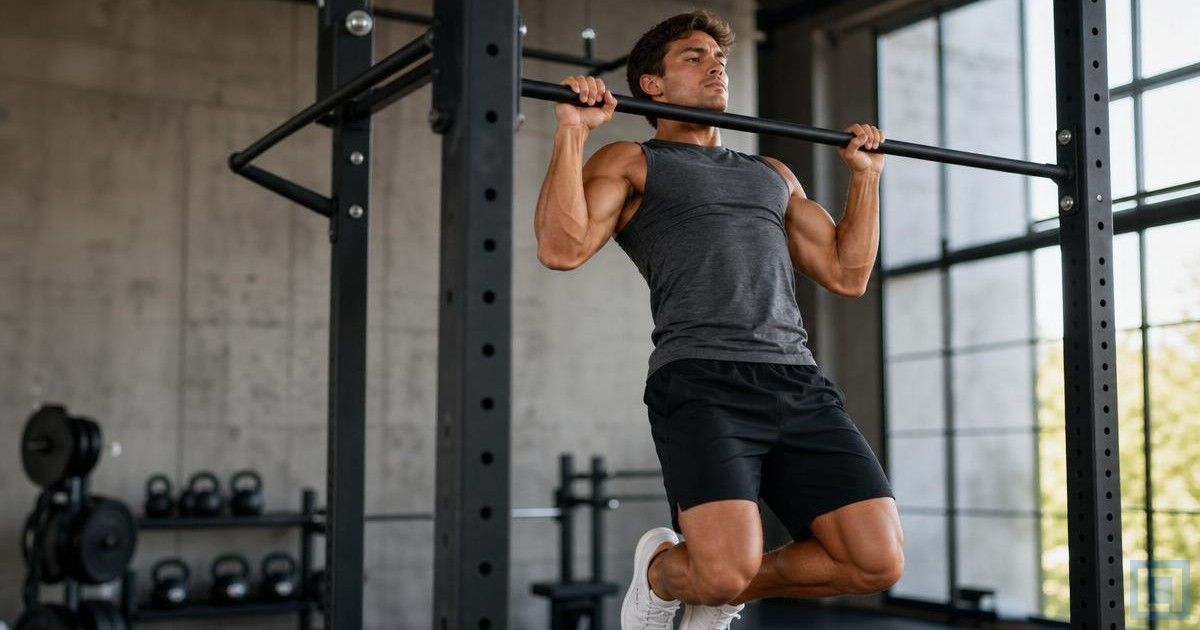
The Pull Up is the king of vertical pulling. Hanging from a bar with an overhand grip, you pull the body up until the chin clears the bar, then lower under control. It builds the lats, biceps, mid-back, and core in a way no other single bodyweight movement can match.
A clean pull-up is the cleanest test of relative upper-body strength bodyweight training has. Beginners typically need months of progression work (seated pull-ups, bench-assisted pull-ups, top holds) before their first rep. Advanced calisthenics athletes work toward weighted pull-ups, muscle-ups, and front levers from the same starting position.
Hang fully at the bottom with arms straight. Drive the elbows down and back to pull the chest toward the bar. Lower under control to a full hang and reset. Avoid kipping or swinging the body to use momentum.
Squat

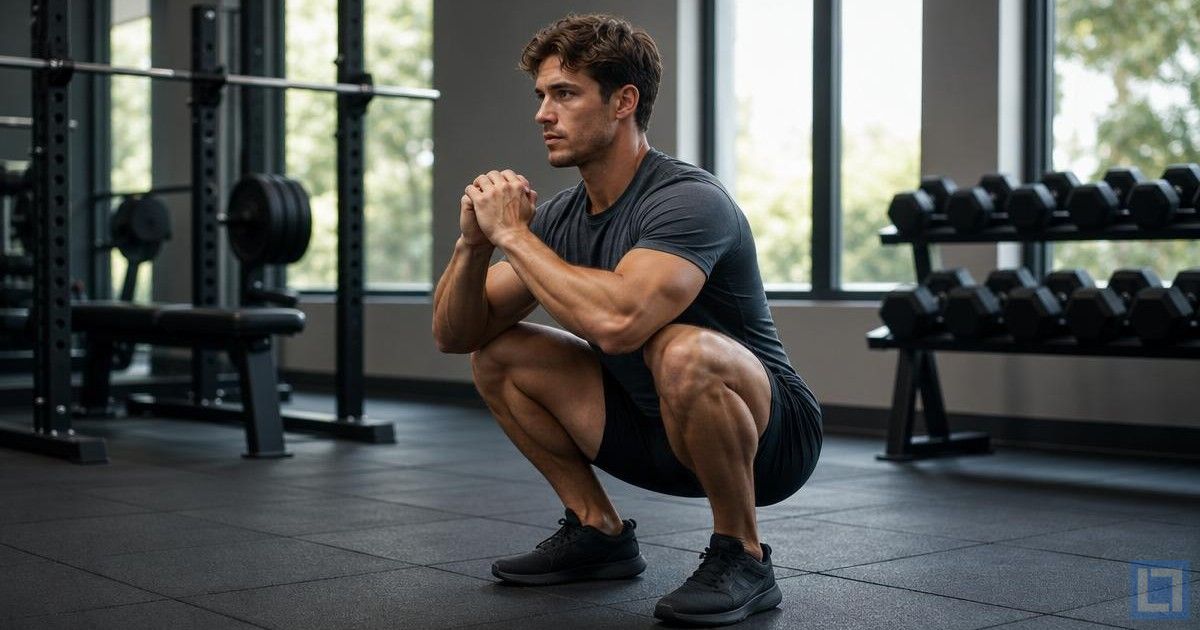
The Squat is the foundational lower-body movement in any training system, and the bodyweight version is where everyone starts. Standing with feet shoulder-width, you squat to roughly parallel depth or below by hinging at the hips and bending the knees, then drive back to standing.
Bodyweight squats look simple but deserve real attention. They teach the squat pattern, build the quads and glutes for higher rep ranges, and serve as the entry point to weighted squats, jump squats, and pistol squats. A solid base of bodyweight squats translates directly to better form and depth on every loaded squat variation that follows.
Knees track over the toes and the chest stays tall. Squat to whatever depth your mobility allows cleanly. The heels stay planted; if they lift off the floor, mobility work needs to come first before adding load.
Triceps Dip

The Triceps Dip is performed on parallel bars with the body upright, lowering until the upper arms are roughly parallel to the floor and pressing back to lockout. It is the most effective bodyweight tricep exercise and a strong secondary chest builder.
Dips are the closing pressing movement on most calisthenics push days. After push-ups have fatigued the chest and shoulders, dips finish the triceps with bodyweight loading that lets you train to true muscular failure. They also load the chest and front delts hard if performed with a forward lean.
Stay relatively upright through the rep to keep the triceps as the prime mover. Lower until the upper arms reach parallel with the floor, then press back to full lockout. Forward lean shifts emphasis to the chest, which is fine if that is the goal.
Lunge

The Lunge steps forward, backward, or sideways into a split stance and lowers the back knee toward the floor before standing back up. Unlike the squat, the lunge is unilateral, which catches strength imbalances bilateral squats hide and produces more balanced lower-body development.
Every solid leg routine includes lunges in addition to squats. The unilateral position trains balance and stability alongside the strength work, and the wide variety of lunge patterns (forward, reverse, lateral, walking, curtsy) lets you train the legs through every plane of motion. They are also lower-back friendly compared to squats.
Step into a long lunge and drop straight down rather than forward. The front knee tracks over the toes; the back knee hovers just above the floor. Drive through the front heel to stand. Alternate sides for balanced work.
Pike Push Up

The Pike Push Up performs a push-up from a piked position with the hips raised high and the head pointing toward the floor. The angle changes the load to emphasize the shoulders and upper chest rather than the mid chest, making it the bodyweight equivalent of an overhead press.
For lifters working toward a handstand push-up (the bodyweight overhead press), the pike push-up is the foundational progression. The piked angle delivers significant overhead pressing stimulus without requiring the wall or freestanding handstand control. Adding elevation under the feet over time progresses the move toward a vertical handstand push-up.
Set up in a downward dog position with hips high and feet under or behind the head. Lower the head toward the floor between the hands by bending the elbows. Press back to the starting pike position. Keep the hips high throughout; do not let them drop into a regular push-up position.
Inverted Row with Bent Knee Between Chairs

The Inverted Row with Bent Knee Between Chairs is a bodyweight horizontal pulling exercise. A sturdy bar across two chairs supports the upper body while the lifter pulls the chest up to the bar. The bent-knee position scales the load and makes the row accessible to lifters of any strength level.
Most calisthenics programs over-emphasize vertical pulling (pull-ups) and under-train horizontal pulling. Inverted rows fill that gap. They hit the rhomboids, mid-back, and rear delts in a way pull-ups do not, and the bent-knee assistance lets even beginners train the pattern with significant load.
Set the bar low enough that you can grip it while seated under it. Pull the chest up to the bar by squeezing the shoulder blades together at the top. Lower under control. Straightening the legs makes the move significantly harder; bend them more to scale down.
Mountain Climber

The Mountain Climber holds a high plank position and rapidly drives one knee forward to the chest, alternating sides. The continuous motion elevates the heart rate quickly while loading the core, hip flexors, and shoulders.
Mountain climbers are the most accessible calisthenics conditioning exercise. They require zero equipment, almost zero space, and they deliver a serious cardio response within 30 to 60 seconds. They also train the core under dynamic load, which transfers better to athletic movement than static plank holds.
Hold a strong plank position with hands directly under the shoulders. Drive each knee toward the chest in turn, keeping the hips level (not bouncing up and down). Move at whatever tempo you can hold without form breaking down.
Front Plank
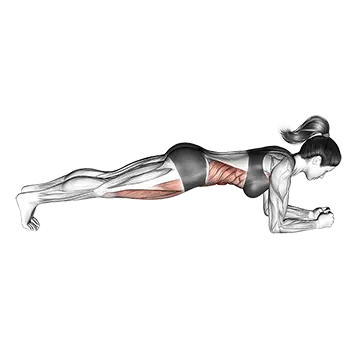
The Front Plank holds a forearm plank position with the body in a straight line from head to heels. It is the foundational core exercise in every training system, building isometric core strength and teaching the trunk to brace under static load.
Planks teach the core its primary function: bracing the trunk to prevent unwanted movement. That skill carries directly to every other exercise in any program, especially any compound lift like squats or deadlifts where the spine needs to stay neutral under load. A strong plank is the foundation for a strong everything else.
Set up on the forearms with elbows directly under the shoulders. Body straight from head to heels, hips not sagging or piking. Hold the position while breathing normally. End the set when form breaks down (hips drop or pike up), not when a clock runs out.
Hollow Hold
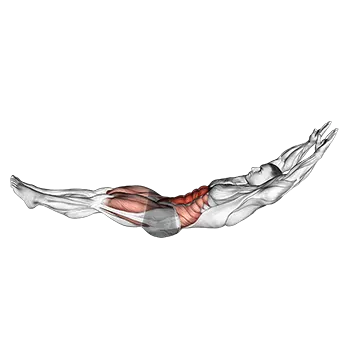
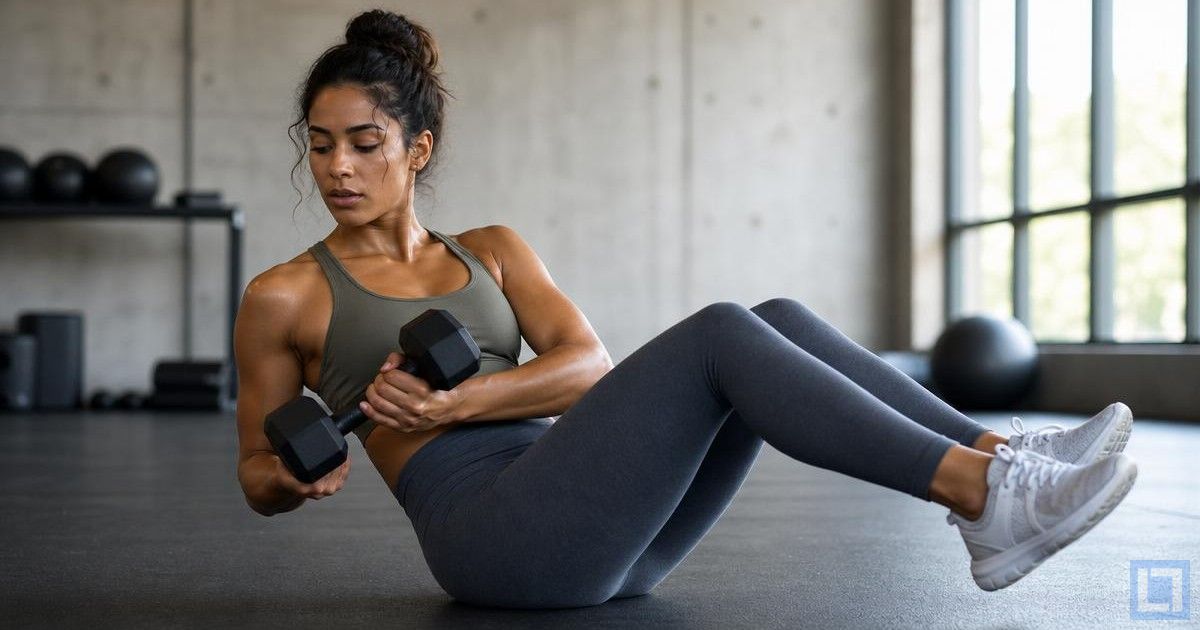
The Hollow Hold lies on the back with arms extended overhead and legs extended forward, lifting both off the floor in a hollow body position. It trains anti-extension core strength in a way the standard plank does not, by keeping the lower back pressed flat to the floor against the leverage of the limbs.
For anyone working toward gymnastics-skill movements like front levers, planches, or muscle-ups, the hollow hold is non-negotiable. It teaches the body to maintain a strong neutral spine under load, which is the foundation of almost every static gymnastics shape. Even for general lifters, hollow holds build the kind of core strength that transfers to every compound movement.
Press the lower back firmly into the floor at the start. Lift the arms, head, and legs off the floor while keeping the lower back pressed down. Hold for time. If the lower back arches up, lower the legs higher or bend the knees to scale.
How To Program These Workouts
A productive calisthenics session pulls four to six exercises from the list above, organized by pattern: one push (push-up or dip), one pull (pull-up or inverted row), one squat (bodyweight squat or lunge), one core (plank or hollow hold), and one or two conditioning movements (mountain climber). That structure covers the full body in 30 to 45 minutes.
Train two to four sessions per week. Calisthenics recovers fast for most lifters, but the muscles still need rest days to actually grow. Beginners do well on three days per week. Intermediates can run a four-day push/pull split with each day repeated. Advanced lifters often work toward more complex five and six-day setups around skill work.
Progressive overload in calisthenics comes from harder variations rather than heavier weights. Once an exercise gets easy, move to a more demanding version: from kneeling push-ups to standard, from standard push-ups to decline, from decline to plyometric, from plyometric to one-arm. The same logic applies to every other movement pattern.
For specific session ideas, see our best full body calisthenics workout, best bodyweight chest workouts, and how to do a pull up guide.
Final Thoughts
The best calisthenics workout plan does not require a gym, expensive equipment, or hours per session. The exercises above cover the full range of patterns the body needs: squat, hinge, push, pull, rotate, and stabilize. Done consistently with progressive overload, they produce strength gains comparable to weight room training for the first several years of any lifter’s career.
Stay consistent. Calisthenics rewards patience more than most training styles because progress is measured in cleaner reps and harder variations rather than bigger weights on the bar. Show up two to four times per week for six months and the difference will be obvious.
Frequently Asked Questions
How long does it take to get strong with calisthenics?
Strength improvements show up within the first 2 to 4 weeks as the nervous system gets more efficient. Visible muscle growth typically takes 8 to 12 weeks of consistent training, adequate sleep, and sufficient protein intake. Major skill milestones like the first pull-up or muscle-up usually take several months to a year for most lifters.
Can calisthenics build real muscle?
Yes, especially for beginners and intermediates. Calisthenics builds muscle through the same mechanism as weight training: progressive overload and adequate volume. Advanced lifters eventually hit a ceiling where adding load becomes more efficient than finding harder bodyweight variations, but that takes years to reach.
Do I need a pull-up bar?
A pull-up bar dramatically expands the options for back training. Doorway bars are inexpensive and worth the small investment. Without one, the inverted row between chairs is a workable substitute, though it does not develop the same vertical pulling strength a pull-up bar enables.
How long should a calisthenics workout last?
Thirty to forty-five minutes is a strong target for most sessions. That includes a five-minute warm-up, twenty to thirty minutes of work, and a short conditioning finisher. Longer than 45 minutes usually means quality has dropped off; shorter than 20 minutes typically does not deliver enough total volume.
Should I do calisthenics or weight training?
Either works for general strength and fitness. Calisthenics has the advantage of accessibility, joint-friendliness, and minimal equipment. Weight training has the advantage of more direct progressive overload and faster strength gains for advanced lifters. Many lifters do both, using calisthenics for warm-ups, conditioning, and travel, with weights handling primary strength work.