Calisthenics is the most accessible form of strength training there is. The best full body calisthenics workout requires zero equipment, can be done in roughly any open space, and trains every major muscle group through patterns the body actually has to perform in real life: squatting, pulling, pressing, hinging, rotating, and stabilizing.
Below are ten exercises that together cover the entire body, from the legs and hips through the core, chest, back, and shoulders, plus a conditioning piece. If you are training calisthenics from home, also see our bodyweight workouts for runners and how to work out without a gym for related programming ideas.
Bodyweight Full Squat with Overhead Press

The Bodyweight Full Squat with Overhead Press performs a deep squat followed by reaching the arms overhead at the top. The combo trains the legs, shoulders, and trunk together, mimicking the overhead pressing pattern without weight. It is a useful warm-up, mobility drill, and conditioning move.
In a calisthenics context, this is one of the few movements that hits hip mobility, ankle mobility, shoulder flexion, and thoracic extension all in one rep. Done at the start of a session, it preps the entire body. Done in volume, it becomes a real conditioning piece.
Squat as deep as you can clean. The press happens at the top, so reach the arms straight overhead with the biceps next to the ears. If you cannot reach overhead without arching the lower back, work the squat depth and shoulder mobility separately first.
Bodyweight Skipping

Bodyweight Skipping mimics the skipping motion of a jump rope without the rope. With small light hops on the balls of the feet and arm circles miming the rope, you elevate the heart rate quickly and build calf endurance. It is a strong choice when you have no rope or limited space.
Cardio is the part of full-body training calisthenics enthusiasts most often skip. Without a treadmill or rope, conditioning becomes either burpees or sprints, both of which are punishing on day one. Skipping is the lower-impact middle ground that lets you build cardio capacity gradually.
Stay light on the balls of the feet. Land softly, not heavily. Mix straight-ahead skipping with side-to-side and front-to-back patterns to keep the calves and ankles working in different planes.
Bodyweight Frog Pump

The Bodyweight Frog Pump is a high-rep glute burnout. The lifter lies on the floor with the soles of the feet pressed together and the knees out wide, then pumps the hips up and down rapidly to burn out the glutes. It works well as a finisher.
Standard glute bridges hit the glute max, but the frog position widens the femurs in a way that emphasizes the upper glute fibers and the gluteus medius. The result is more complete glute development than bridges alone, with no equipment whatsoever.
Drive the heels into each other, not into the floor. Squeeze hard at the top of every rep. High reps work better here than slow controlled ones, since the goal is metabolic burnout rather than strength.
Bodyweight Svend Press

The Bodyweight Svend Press is a self-resistance chest exercise. You press your palms together hard while extending your arms forward. The continuous palm-press creates strong tension on the chest with no equipment. It is a useful warm-up or finisher for chest training.
In full-body calisthenics, the chest is often left under-trained because most lifters can only do so many push-ups before form falls apart. The Svend press fills that gap by giving you a way to keep loading the chest after push-up volume taps out, with zero equipment and minimal joint stress.
Press the palms together as hard as possible throughout the movement. The harder you press, the more tension on the chest. Move the arms slowly forward and back rather than fast. This is a tension exercise, not a momentum exercise.
Cross Body Crunch

The Cross Body Crunch crunches with rotation, bringing the opposite elbow toward the opposite knee. It targets both the rectus abdominis and the obliques in one movement, essentially the bicycle crunch performed one rep at a time.
For a full-body calisthenics session, you want core work that hits both flexion and rotation rather than just one or the other. Cross body crunches do both in a single movement, which makes them efficient. They scale well too: from slow controlled reps to high-tempo bicycle-style work.
Touch the elbow as close to the knee as your range of motion allows. The rotation comes from the trunk, not just the arms. Lower under control rather than dropping.
Bodyweight Pulse Squat

The Bodyweight Pulse Squat performs short pulse reps at the bottom of the squat range. By moving up only a few inches before pulsing back down, you keep continuous tension on the quads and glutes throughout the set. The pulses build muscular endurance and create a strong burn.
Standard bodyweight squats hit a wall fairly fast for trained lifters because the load is fixed and the rep count needed to challenge the legs becomes mind-numbing. Pulse squats are one of the cleanest fixes: by limiting the range and removing the rest at the top, the legs stay under tension and fatigue much faster.
Pulse only a few inches up and down, never standing all the way up. The chest stays up and the heels stay flat. Aim for time-based sets (30 to 60 seconds) rather than chasing rep counts.
Bodyweight Overhead Squat

The Bodyweight Overhead Squat squats with both arms locked out overhead. With no weight, it serves as a mobility assessment and development tool, testing shoulder, thoracic, hip, and ankle mobility simultaneously. Coaches use it to assess overall movement quality.
Most lifters fail this movement somewhere. The arms drop forward, the heels lift, the knees cave, or the hips can’t hit depth without rounding the back. Each failure point reveals a specific mobility limitation worth addressing. Practice the overhead squat regularly and the limitations get exposed and worked simultaneously.
Reach the arms tall overhead with the biceps near the ears. Keep the heels flat as you squat as deep as you can clean. Stop short of any depth where the form breaks down rather than chasing range you cannot hold.
Bodyweight Standing Fly

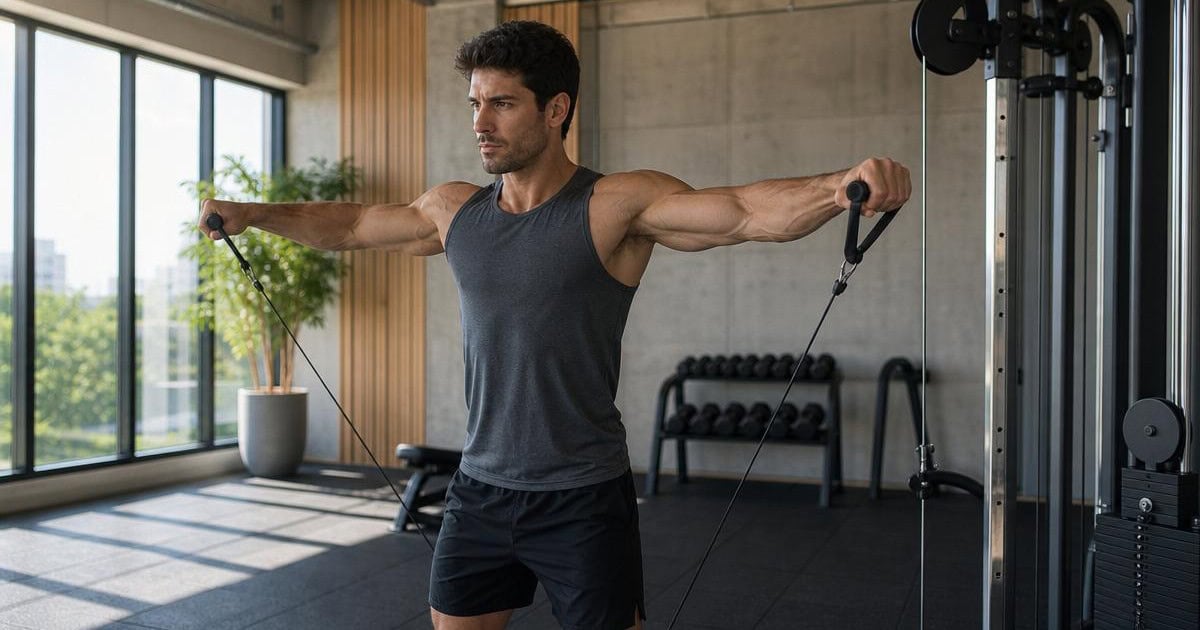
The Bodyweight Standing Fly is a standing chest stretch and warmup drill. With arms held at chest height, you open the arms wide to the sides for a stretch, then bring them back in front of the body. The motion warms up the chest and shoulders and improves chest mobility.
In a full-body session, this is the kind of movement that pays for itself by preparing the shoulders and chest for heavier work later. Five to ten reps before push-ups or any pressing pattern reduces the risk of cranky shoulders and lets the chest fire harder when the actual work starts.
Open the arms wide and feel the stretch across the chest, then squeeze them together in front of the body. The motion is slow and controlled rather than fast. Use it as a warm-up or as an active rest between heavier movements.
Full Squat Mobility

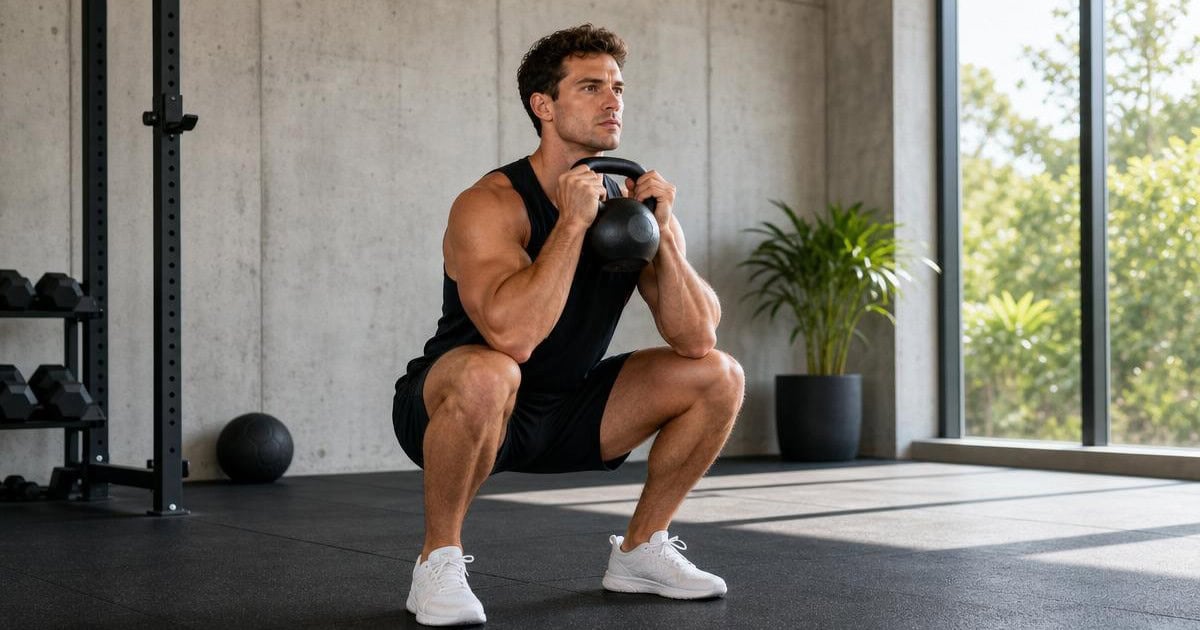
The Full Squat Mobility hold (sometimes called the deep squat hold or Asian squat) sits in the deepest possible squat position and holds it for time. It develops hip, ankle, and thoracic mobility simultaneously.
Most adults in Western countries have lost the ability to sit comfortably in a deep squat. The hips, ankles, and lower back all want to compromise instead. Spending time in the bottom position daily slowly restores it, which carries over to better depth in actual squats and lunges and to dramatically less back and hip pain in everyday life.
Aim for two to three minutes total per day, which can be split into shorter sessions. Hands can rest on the inside of the knees to gently push them out. If holding it on the floor is impossible at first, hold a sturdy object for support and gradually reduce the assistance.
Bodyweight Standing Row

The Bodyweight Standing Row uses a sturdy doorframe, post, or pillar to perform a horizontal pulling motion. Standing close to the post and gripping it with one or both hands, you lean back and pull yourself toward the post. It is a strong choice for back training when no other equipment is available.
Pull-ups dominate calisthenics back work, but they are also the hardest bodyweight movement for many lifters and require a bar to begin with. Standing rows fill the gap by giving anyone a way to actually train horizontal pulling, which the back actually needs as much as vertical pulling.
Lean back as far as your grip and the post allow. Pull the chest toward the post, squeezing the shoulder blades together at the top. Slow the descent rather than just letting yourself fall back to the start position. The lowering portion is where most of the muscle-building work happens.
How To Program These Workouts
A solid full-body calisthenics session has a warm-up, a strength block, and a finisher. From the list above, pick the standing fly and full squat mobility for the warm-up. For strength, choose three or four movements covering legs (full squat with overhead press, pulse squat, overhead squat), pull (standing row), and core (cross body crunch). Cap the session with skipping or frog pumps as a conditioning finisher.
Train two to four sessions per week. Calisthenics recovers fast for most lifters, but the muscles still need rest days to actually grow. Alternate between push-focused and pull-focused emphasis if you train more than three days a week.
Progressive overload in calisthenics comes from harder variations rather than heavier weights. Once an exercise gets easy, move to a more demanding version: from regular push-ups to decline, from pulse squats to pistol squat progressions, from standing rows to inverted rows on a bar.
Final Thoughts
The best full body calisthenics workout does not require a gym, does not require equipment, and can be scaled from absolute beginner to advanced lifter using nothing but the body. The exercises above cover the full range of patterns the body needs: squat, hinge, push, pull, rotate, and stabilize.
Stay consistent. Calisthenics rewards patience more than most training styles because progress is measured in cleaner reps and harder variations rather than bigger weights on the bar. Show up two to four times a week for six months and the difference will be obvious.
Frequently Asked Questions
Can calisthenics build real muscle?
Yes, especially for beginners and intermediates. Calisthenics builds muscle through the same mechanism as weight training: progressive overload and adequate volume. Advanced lifters eventually hit a ceiling where adding load becomes more efficient than finding harder bodyweight variations, but that takes years of training to reach.
How long should a full body calisthenics workout last?
Thirty to forty-five minutes is a strong target for most sessions. That includes a five-minute warm-up, twenty to thirty minutes of work, and a short finisher. Longer than that and most lifters’ quality drops off; shorter than that and you may not get enough total volume.
Do I need a pull-up bar?
Not for the workout above. Standing rows substitute for some pull work, and the rest of the exercises require nothing. That said, a pull-up bar opens up the back-training portion considerably. Doorway bars are inexpensive and worth the money once you commit to calisthenics for the long term.
Should I do calisthenics or weight training?
Either works. Calisthenics has the advantage of accessibility, joint-friendliness, and minimal equipment. Weight training has the advantage of more direct progressive overload and faster strength gains for advanced lifters. Many lifters do both, using calisthenics for warm-ups, conditioning, and travel and weights for primary strength work.
How long until I see results?
Visible muscle changes typically take 8 to 12 weeks of consistent training combined with adequate nutrition. Strength improvements show up faster, often within the first few weeks as the nervous system gets more efficient. Mobility and movement quality improve almost immediately when you start practicing the basics regularly.