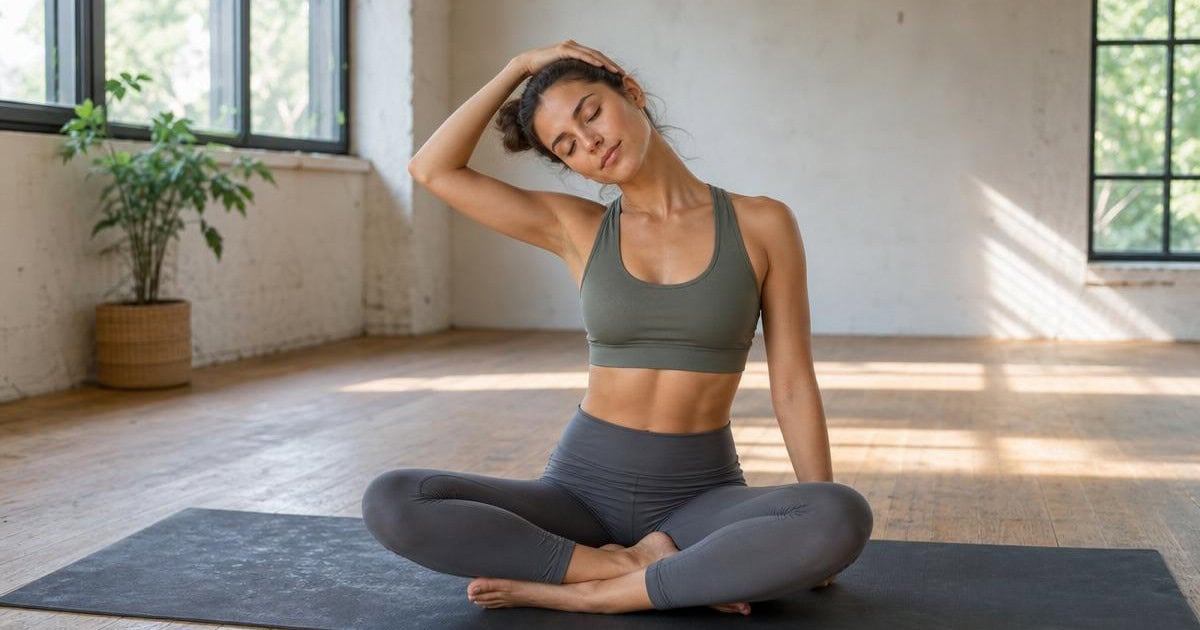
Starting a yoga practice can feel overwhelming with hundreds of poses to learn and dozens of styles to choose from. The good news is that the foundation of any yoga practice rests on a small number of essential postures. The best yoga poses for beginners cover the major movement patterns (standing, balancing, backbending, forward folding, twisting) and produce the flexibility, strength, and body awareness that more advanced practice builds on.
Below are ten foundational yoga poses that form the core of any beginner practice. Together they cover the spine in every direction, build leg and core strength, develop balance, and teach the breathing patterns that make yoga work. Practice these consistently for a few weeks before moving on to more advanced sequences.
Mountain Pose

The Mountain Pose (Tadasana) stands tall with feet together, weight distributed evenly across both feet, and arms relaxed at the sides. Despite looking like simple standing, the pose teaches active alignment that becomes the foundation for nearly every other yoga posture.
Mountain pose is the starting point for most yoga sequences and the position you return to between standing poses. Learning to engage the legs, lift the chest, and align the spine in mountain pose teaches the body awareness that transfers to every other position. It is the most underrated pose in any beginner sequence.
Stand with feet together (or hip-width if balance is an issue). Press the feet into the ground and engage the leg muscles. Lengthen the spine upward and let the shoulders relax down and back. Arms hang naturally at the sides with palms facing forward. Breathe slowly and deeply.
Downward Facing Dog
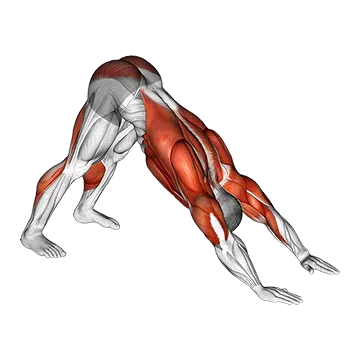
The Downward Facing Dog (Adho Mukha Svanasana) forms an inverted V-shape with the hands and feet on the floor and the hips lifted high. It stretches the hamstrings, calves, and shoulders simultaneously while building strength in the arms and core.
Downward dog appears in nearly every yoga class as a foundational pose and a transition between other poses. The combination of stretch and strength makes it one of the most efficient single yoga postures: it works flexibility and strength in one position. Beginners often find it challenging at first; it gets easier within a few weeks of consistent practice.
Start on hands and knees. Tuck the toes and lift the hips up and back, straightening the legs as much as possible. Press the hands firmly into the mat with fingers spread wide. Bend the knees if hamstring tightness limits the position; the heels do not need to touch the floor.
Child Pose
The Child Pose (Balasana) kneels on the floor with the big toes touching, sits back on the heels, and folds the chest down toward the thighs with the arms extended forward. It serves as a resting pose between more demanding postures and stretches the lower back, hips, and shoulders.
Child pose is the universal “rest” position in any yoga practice. When a posture feels too demanding or you need a moment to recover, returning to child pose is always appropriate. It also serves as a strong standalone stretch for the lower back, which is one of the most common areas of chronic tightness.
Kneel with big toes touching and knees roughly hip-width apart. Sit back onto the heels and fold the chest down toward the thighs. Extend the arms forward on the floor or relax them alongside the body. Rest the forehead on the mat and breathe slowly. Hold for as long as the pose feels useful.
Cat Cow Stretch


The Cat Cow Stretch flows between two positions on hands and knees: arching the back upward and tucking the chin (cat) and dropping the belly while lifting the chest and tailbone (cow). The continuous flow mobilizes the entire spine through both flexion and extension.
Cat-cow is the most accessible spine mobility drill in any yoga practice. The flow takes the spine through its full range of motion in both directions, which keeps the back healthy and prevents the chronic stiffness that comes from prolonged sitting. Beginners often feel immediate relief from lower-back tightness after just a few cycles.
Start on hands and knees with hands directly under the shoulders and knees under the hips. Inhale: drop the belly, lift the chest, and look up (cow). Exhale: round the back, tuck the chin, and pull the belly in (cat). Move with the breath, one position per inhale and exhale. Continue for 8 to 12 cycles.
Cobra Yoga Pose

The Cobra Yoga Pose (Bhujangasana) lies face-down with hands under the shoulders, then presses the chest up and back to lengthen the front of the body and open the chest. It strengthens the lower back while stretching the abs, chest, and hip flexors.
For lifters who spend long hours sitting, cobra pose is one of the most valuable counter-positions available. The combination of chest opening and lower-back strengthening reverses the rounded forward posture that prolonged sitting creates. Five to ten reps of cobra, held for a few breaths each, produces noticeable change over weeks.
Lie face-down with hands under the shoulders and elbows tucked at the sides. Press the chest up and back, keeping the hips and lower body on the floor. Look forward or slightly up; do not crunch the back of the neck. Hold for 3 to 5 breaths, then lower.
Warrior Pose I Virabhadrasana

The Warrior Pose I (Virabhadrasana I) takes a long lunge stance with the back foot turned out at 45 degrees and reaches the arms overhead. The posture builds leg strength and shoulder mobility simultaneously while opening the hip flexors of the back leg.
Warrior I is one of the foundational standing poses in any beginner yoga practice. The stance requires both strength and flexibility, which makes it useful for practitioners coming from any background. The hip flexor stretch on the back leg is also one of the most direct counter-positions to chronic sitting.
Step one foot back into a long lunge. Turn the back foot out to roughly 45 degrees and press the heel into the floor. Bend the front knee to roughly 90 degrees, ensuring the knee tracks over the ankle. Reach both arms overhead with palms together or apart. Hold for 5 to 8 breaths, then switch sides.
Warrior Pose II

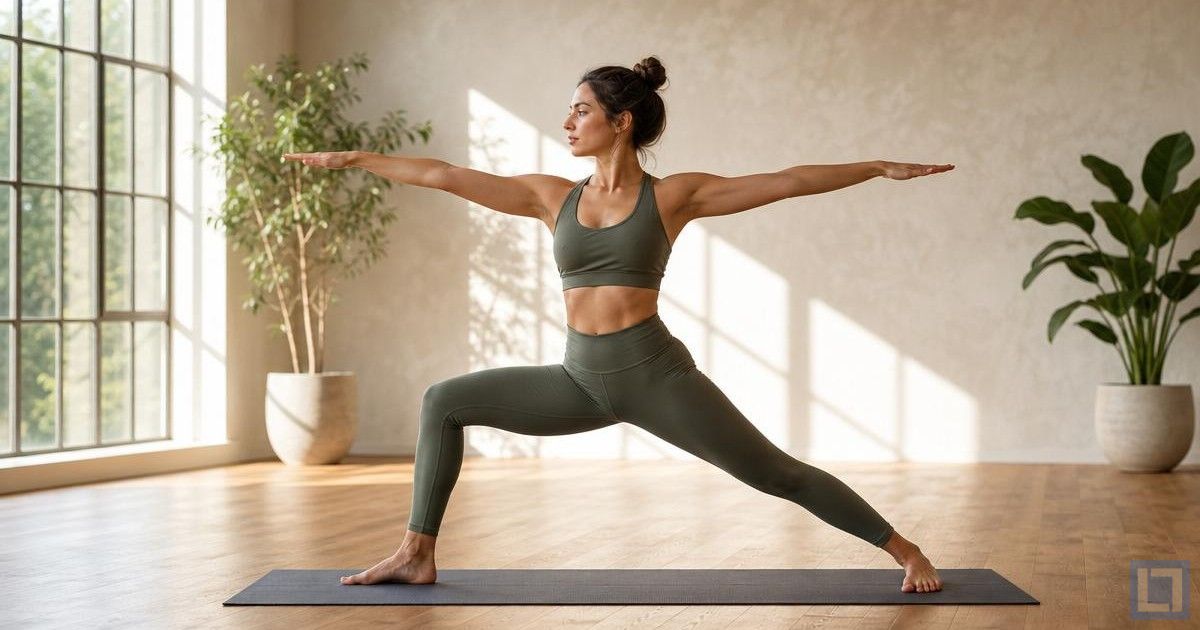
The Warrior Pose II (Virabhadrasana II) takes a similar stance to Warrior I but opens the hips and torso to face the side, with arms extended out parallel to the floor. The wider open position builds hip mobility and strengthens the legs from a different angle than Warrior I.
Warrior II builds on Warrior I by adding the hip-opening element. Where Warrior I has hips squared forward, Warrior II opens the back hip out to the side, which targets adductor flexibility and outer hip mobility. The two poses together cover most of the movement patterns the lower body needs.
Take a long stance with feet roughly 4 feet apart. Turn the front foot to point straight forward and the back foot to point out 90 degrees. Bend the front knee to roughly 90 degrees, keeping the knee tracking over the ankle. Open the torso to face the side. Extend the arms out parallel to the floor with palms facing down. Hold for 5 to 8 breaths.
Tree Pose Vrksasana

The Tree Pose (Vrksasana) stands on one leg with the opposite foot placed on the inner thigh or calf (not the side of the knee). It builds balance, ankle stability, and core strength through a position held for 30 seconds to a minute per side.
Tree pose is the foundational beginner balance pose. Most lifters who have never practiced balance exercises find it challenging at first; the ability to balance on one foot for a full minute is something most adults have lost. Practice produces noticeable improvements within a few weeks, and the carryover to athletic balance and ankle stability is significant.
Stand in mountain pose. Shift weight onto one foot and place the other foot on the inner thigh or calf of the standing leg (avoid placing it on the side of the knee). Bring hands to the chest in prayer or extend them overhead. Find a fixed gaze point ahead to help balance. Hold for 30 to 60 seconds per side.
Bridge Pose Yoga Stretch
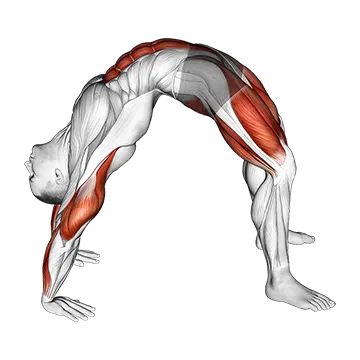
The Bridge Pose (Setu Bandhasana) lies on the back with knees bent and feet flat on the floor, then lifts the hips up by pressing through the feet. It strengthens the glutes and back while opening the hip flexors and chest.
Bridge pose is one of the most beginner-friendly back-bending positions in any yoga practice. The lifted-hip position counters the chronic forward rounding of seated postures, strengthens the glutes (which most adults have weakened from sitting), and opens the chest. It is also one of the easier poses to modify for any flexibility level.
Lie on the back with knees bent and feet flat on the floor, hip-width apart. Press through the feet to lift the hips up. Keep the thighs parallel and the chin slightly tucked. Hold for 5 to 8 breaths. Lower under control.
Corpse Pose Savasana

The Corpse Pose (Savasana) lies flat on the back with arms relaxed at the sides, legs extended, and the entire body fully released. It is the closing pose of nearly every yoga practice and is held for 5 to 10 minutes at the end of a session.
Despite looking like the easiest pose in any practice, savasana is often described as the hardest because it requires complete mental and physical surrender. The active relaxation produces measurable nervous system benefits: lower heart rate, reduced cortisol, and improved sleep quality. Skipping savasana skips most of the benefits the rest of the practice creates.
Lie flat on the back with arms relaxed at the sides, palms facing up, and legs extended with feet falling out naturally. Close the eyes and let the entire body release. Breathe naturally without controlling the breath. Hold for 5 to 10 minutes, longer if time allows.
How To Program These Workouts
A productive beginner yoga session runs 20 to 45 minutes. Start with mountain pose for a few breaths to set the body, flow through cat-cow for spinal mobility, work through downward dog and the warriors for strength, add tree pose for balance, include cobra and bridge for backbends, and close with child pose and savasana for recovery. The full sequence covers every major pattern in roughly 30 minutes.
Practice three to five times per week for the fastest progress. Yoga is a skill-building practice; consistency matters more than session length. Twenty minutes daily produces faster progress than two-hour sessions twice a week. Most beginners notice improvements in flexibility, balance, and spine mobility within four to six weeks of consistent practice.
For complementary mobility work, see our best hip mobility stretches and best lower back stretches guides.
Final Thoughts
The best yoga poses for beginners build the foundation that years of advanced practice rest on. Master these ten postures before adding more complex sequences; the body awareness, breathing patterns, and basic strength that come from these foundational poses transfer directly to everything that follows.
Stay patient with the practice. Yoga rewards consistency over intensity, and the changes happen over months and years rather than weeks. The lifters who get the most benefit from yoga are the ones who practice 20 minutes daily for years rather than the ones who occasionally do hour-long sessions. Start small, stay consistent, and let the practice deepen over time.
Frequently Asked Questions
How long should a beginner yoga session be?
Twenty to forty-five minutes works for most beginners. Shorter sessions (10 to 15 minutes) are useful for daily practice and habit formation; longer sessions (60 to 90 minutes) become more accessible after a few months of foundational work. Daily 20-minute sessions produce faster progress than occasional 90-minute sessions.
How often should I practice yoga as a beginner?
Three to five times per week for the fastest progress. Yoga is a skill-building practice, so consistency matters more than session length. Most beginners notice meaningful changes in flexibility and balance within four to six weeks of consistent practice. Daily practice is fine if the session length stays moderate.
Do I need any equipment to start yoga?
A yoga mat is the only essential equipment. Blocks, straps, and bolsters are useful additions but not necessary for the poses in this guide. Most beginners can start with just a mat and add equipment as the practice deepens.
What’s the difference between yoga styles?
Hatha yoga is the foundational slow-paced style that most beginner classes use. Vinyasa flows continuously between poses with breath. Yin yoga holds passive stretches for several minutes per pose. Ashtanga follows a set series of poses. The best style for beginners is typically hatha or beginner-level vinyasa, where the pace gives time to learn each pose properly.
Can yoga build strength?
Yes, especially the standing and arm-balancing poses. Warrior poses, plank variations, and downward dog all build real strength in the legs, core, and shoulders. Yoga alone is unlikely to build maximum strength compared to dedicated lifting, but it produces noticeable strength improvements alongside the flexibility benefits.