CrossFit training produces real athletic performance improvements through exercises that build the broad fitness capacities CrossFit demands: strength, power, conditioning, gymnastics skill, and Olympic lifting technique. The format works particularly well for general fitness because it requires multiple physical capacities simultaneously rather than specializing in any single domain. Most CrossFit athletes who consistently train 3 to 5 times per week with proper technique focus see measurable improvements across all fitness markers (strength, conditioning, gymnastics) within 12 to 24 weeks. The combination of foundational movements (thrusters, kettlebell swings), Olympic lifts (snatch, clean and jerk), gymnastics (muscle ups, handstand push-ups), and conditioning exercises (burpees, wall balls) covers every major CrossFit demand and produces broad-spectrum fitness development.
Below are ten effective CrossFit exercises that cover foundational metcon movements (thruster, kettlebell swing, burpee, wall ball), Olympic lifts (snatch, clean and jerk), gymnastic strength (muscle up, handstand push-up), and squat variations critical for CrossFit (front squat, overhead squat). Together they form a complete CrossFit training program that hits every major demand of the sport. A 60 to 90-minute session pulled from this list (combining strength work with metcon conditioning), performed 3 to 5 times per week, produces strong athletic foundation for CrossFit performance.
Barbell Thruster

The Barbell Thruster combines a front squat with an overhead press in one continuous motion. The pattern is one of the most iconic CrossFit exercises and produces strong combined leg, core, and shoulder loading.
For CrossFit training, the thruster is one of the foundational metcon exercises that exists. The pattern hits the legs, core, and shoulders through dynamic combined motion that sustains heart rate during workouts. Run it for 3 to 5 sets of 5 to 10 reps for strength, or as a metcon component with higher rep ranges (15 to 30+ reps).
Set up with a barbell racked on the front of the shoulders (front squat position with elbows up). Squat down by sitting the hips back. Drive explosively up out of the squat while simultaneously pressing the bar overhead by extending the legs and arms. Lower the bar back to the front rack position. Continue for the working set.
Barbell Snatch
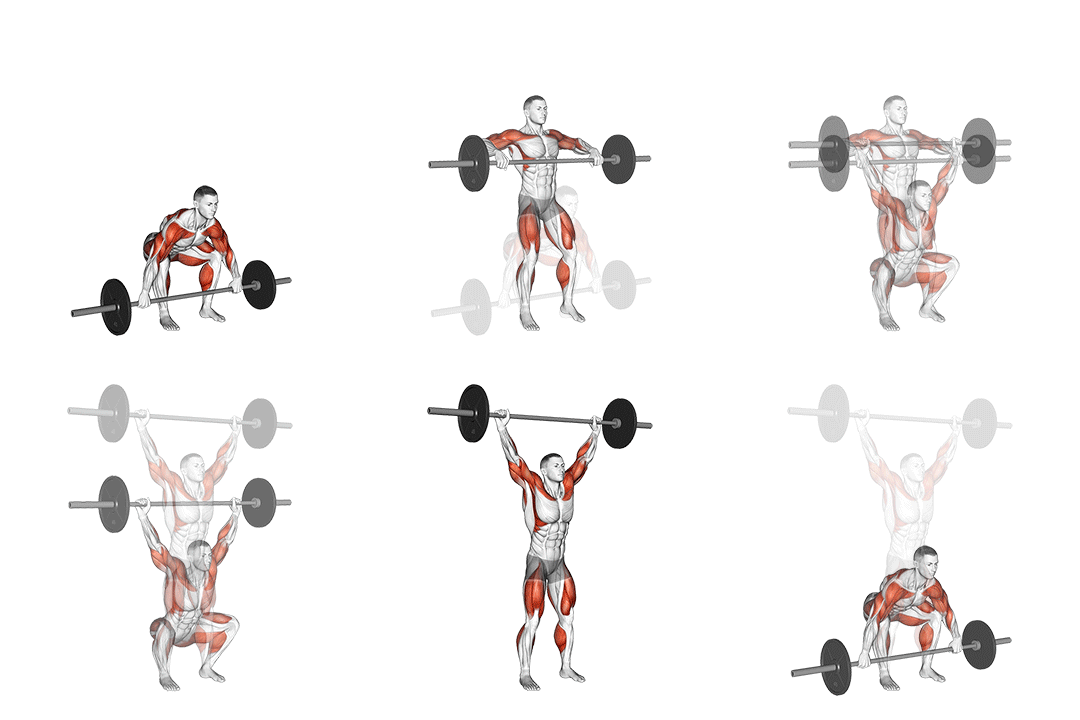
The Barbell Snatch lifts a barbell from the floor to overhead in one continuous motion. The pattern is one of the two Olympic lifts and a foundational CrossFit movement that builds full-body explosive power.
For CrossFit training, the snatch is one of the most foundational Olympic lifts that exists. The pattern hits the entire body through explosive total-body extension. Run it for 5 to 8 sets of 1 to 3 reps for strength training, with attention to technique quality on every rep.
Set up over a loaded barbell with feet hip-width and a wide overhead grip on the bar. Pull the bar from the floor explosively, extending through the legs, hips, and back, then drop under the bar by pulling the body down into a squat position with the bar locked overhead. Stand up to complete the lift. Maintain locked arm overhead throughout the squat. Olympic lifting requires extensive coaching to learn safely.
Barbell Clean and Jerk

The Barbell Clean and Jerk lifts a barbell from the floor to the front rack position (the clean), then drives it overhead (the jerk). The pattern is the second Olympic lift and a foundational CrossFit movement.
For CrossFit training, the clean and jerk is the second Olympic lift and produces strong full-body power. The pattern hits the entire body through two explosive movements. Run it for 5 to 8 sets of 1 to 3 reps for strength training, with attention to technique quality.
Set up over a loaded barbell with feet hip-width and a clean grip. Clean: explosively pull the bar from the floor, extending through the legs and hips, then drop under the bar to receive it in the front rack position. Stand up. Jerk: dip slightly at the knees, then explosively drive the bar overhead while splitting the legs into a split position (or dropping into a power position). Recover to standing with the bar overhead. Olympic lifting requires extensive coaching to learn safely.
Kettlebell Swing

The Kettlebell Swing performs hip-hinge motion with a kettlebell, swinging it from between the legs to chest or overhead height. The pattern produces explosive hip extension that builds the posterior chain power critical for CrossFit performance.
For CrossFit training, the kettlebell swing is one of the foundational metcon exercises that exists. The pattern hits the posterior chain through explosive hip extension and works as both a strength and conditioning exercise. Run it for 3 sets of 15 to 25 reps for conditioning, or higher volume during metcon work.
Stand with feet shoulder-width and a kettlebell on the floor in front. Hinge at the hips to grip the kettlebell. Hike the kettlebell back between the legs while loading the hamstrings. Drive the hips forward explosively, swinging the kettlebell up to chest height (Russian swing) or overhead (American swing). Maintain straight arms throughout (the legs and hips do the work, not the arms). Continue for the working set.
Burpee

The Burpee combines a squat thrust into a push-up and a vertical jump. The pattern is one of the most iconic CrossFit exercises and produces strong full-body conditioning loading.
For CrossFit training, the burpee is one of the foundational conditioning exercises that exists. The pattern hits the entire body through high-intensity total-body motion. Run it for 3 to 5 sets of 10 to 20 reps as conditioning work, or as a metcon component with higher rep ranges.
Stand with feet shoulder-width. Drop into a squat position and place the hands on the floor. Kick the feet back into a high plank position. Lower the chest to the floor in a push-up. Press back to high plank. Jump the feet forward to the squat position. Explosively jump up vertically with arms reaching overhead. Land softly and immediately repeat for the next rep.
Wall Ball
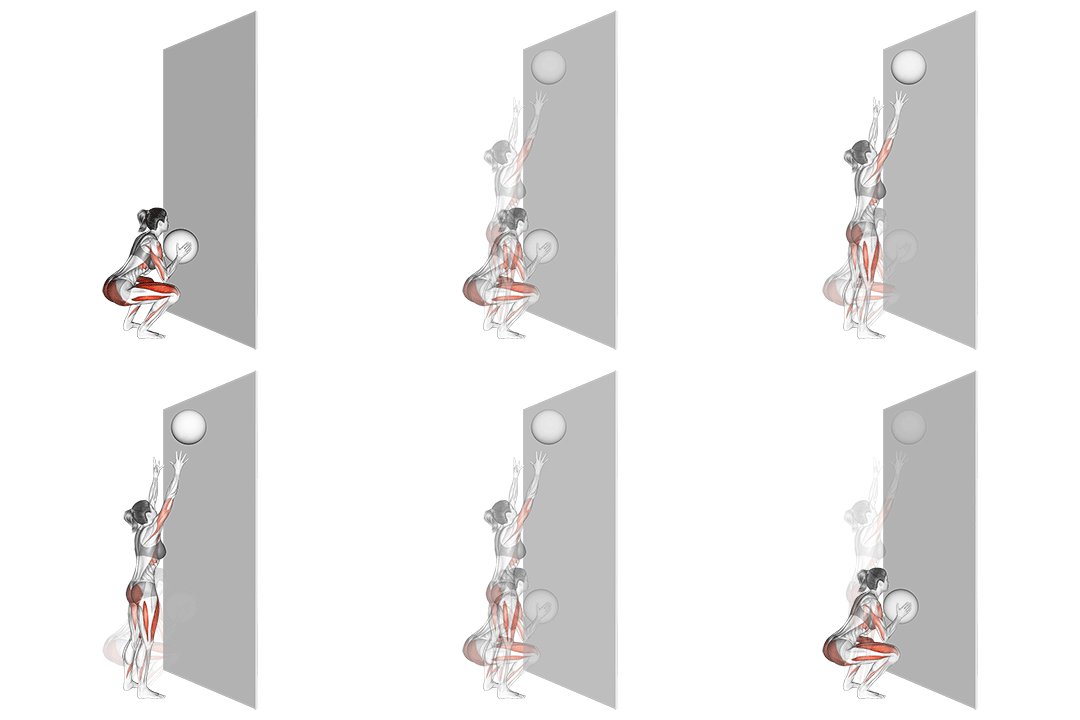
The Wall Ball performs a front squat with a medicine ball, then explosively throws the ball up to a target on the wall (typically 9 to 10 feet high). The pattern produces strong combined leg, core, and shoulder loading through explosive total-body motion.
For CrossFit training, the wall ball is one of the foundational metcon exercises that exists. The pattern hits the legs, core, and shoulders through dynamic explosive motion. Run it for 3 to 5 sets of 15 to 25 reps as conditioning work, or as a metcon component with higher rep ranges (50 to 150+ reps).
Stand 1 to 2 feet from a wall with feet shoulder-width and a medicine ball held at the chest. Squat down by sitting the hips back. Explosively extend the legs, hips, and arms to throw the ball up to a target on the wall (typically 9 feet for women, 10 feet for men). Catch the ball and immediately lower into the next squat. Continue for the working set.
Muscle Up

The Muscle Up combines a pull-up with a transition over the bar (or rings) to a dip lockout position. The pattern is one of the most demanding CrossFit movements and produces strong combined upper-body strength and skill.
For CrossFit training, the muscle up is one of the most advanced upper-body exercises that exists. The pattern hits the back, chest, shoulders, and arms through combined pulling and pressing motion. Run it for 3 to 5 sets of 1 to 5 reps as advanced upper-body work, with progressions for athletes still building toward unsupported reps.
Hang from a pull-up bar (or gymnastic rings) with overhand grip. Pull explosively while leaning back to bring the chest toward the bar. As the chest approaches the bar, transition by rolling the shoulders over the bar and pressing up to a dip lockout position with arms straight and the body above the bar. Lower under control to start. Beginners should master strict pull-ups and dips before attempting muscle ups.
Handstand Push Up

The Handstand Push-Up performs push-up motion in a full handstand position with feet against a wall for stability. The pattern produces the strongest possible vertical shoulder pressing under full bodyweight loading.
For CrossFit training, the handstand push-up is one of the most demanding shoulder pressing exercises that exists with bodyweight. The pattern hits the shoulders through full bodyweight vertical pressing. Run it for 3 to 5 sets of 5 to 10 reps as advanced shoulder work, with kipping variations for higher-rep metcon work.
Set up in a handstand position with hands shoulder-width on the floor and feet against a wall for stability. Lower the head toward the floor by bending the elbows. Press back to lockout by extending through the shoulders and triceps. Maintain tight body position throughout. Beginners can scale by starting with pike push-ups and progressing to wall-supported handstand push-ups.
Barbell Front Squat

The Barbell Front Squat performs squat motion with a barbell racked on the front of the shoulders rather than across the back. The pattern emphasizes the quads and core and is foundational for CrossFit thrusters and clean lifts.
For CrossFit training, the front squat is one of the most foundational squat patterns that exists. The pattern hits the quads, core, and upper back through deep front-loaded squats. Run it for 4 sets of 5 to 8 reps as primary squat work in any CrossFit strength training session.
Set up with a barbell racked on the front of the shoulders (resting across the front delts and clavicles, with elbows pointed forward). Step back to clear the rack with feet shoulder-width. Squat down by sitting the hips back, keeping the elbows up to maintain bar position. Drive back to standing through the heels. Maintain upright torso position throughout.
Barbell Overhead Squat

The Barbell Overhead Squat performs squat motion with a barbell held overhead with locked arms throughout. The pattern is one of the most demanding squat variations and is foundational for CrossFit snatches and complex movements.
For CrossFit training, the overhead squat builds the mobility, stability, and strength foundation needed for snatches and complex CrossFit movements. The pattern hits the entire body through demanding combined squat and overhead position work. Run it for 3 to 4 sets of 5 to 8 reps as advanced squat and Olympic lifting accessory work.
Set up with a barbell held overhead in a snatch grip (wide grip with arms locked overhead). Step back to clear the rack with feet shoulder-width. Squat down by sitting the hips back while maintaining the bar locked overhead. The bar should stay over the mid-foot throughout. Drive back to standing while keeping the bar locked overhead. Requires significant shoulder, hip, and ankle mobility.
How To Program These Workouts
A productive CrossFit training program organizes these exercises across appropriate weekly splits combining strength work and metcons (metabolic conditioning workouts). A common 5-day structure: Day 1: Strength (front squat, overhead squat) plus metcon (burpees, wall balls). Day 2: Olympic lifting practice (snatch, clean and jerk) plus skill work (muscle up, handstand push-up progressions). Day 3: Strength (back squat or deadlift) plus metcon (thrusters, kettlebell swings). Day 4: Active recovery or skill day. Day 5: Long metcon combining multiple movements. Run strength work for 4 to 5 sets of 5 to 8 reps; metcon work follows specific time- or rep-based protocols; Olympic lifts run for 5 to 8 sets of 1 to 3 reps with technique focus.
Train CrossFit sessions 3 to 5 times per week with at least 1 to 2 rest days per week. The combination of high-intensity metcons, heavy strength work, and skill practice produces strong but recoverable training stimulus when properly programmed. Most successful CrossFit programs include 3 to 5 weekly sessions of 60 to 90 minutes each, organized as combinations of strength work plus metcons. The format works particularly well when paired with appropriate nutrition (caloric maintenance or surplus during training periods, sufficient protein at 0.8 to 1.0 grams per pound of bodyweight), adequate sleep (7 to 9 hours per night), and proper warm-up and mobility work. Working with experienced CrossFit coaches significantly improves technique quality and reduces injury risk.
For broader athletic programming, see our best workouts for athletes and best functional fitness workouts. For specific lifting work, see our best olympic lifts.
Final Thoughts
The best workouts for CrossFit athletes deliver real broad-spectrum fitness development through exercises that build strength, power, conditioning, gymnastics skill, and Olympic lifting technique. The combination of foundational metcon movements, Olympic lifts, gymnastic strength, and squat variations covers every major CrossFit demand and produces broader athletic development than single-modality training programs. For lifters who want general fitness, want to compete in CrossFit events, or want training that produces measurable improvements across multiple fitness markers, dedicated CrossFit training is one of the most comprehensive approaches available.
Stay focused on technique and recovery. The most common CrossFit training mistakes include either rushing through workouts at the expense of proper form (which limits long-term gains and increases injury risk significantly) or undertraining recovery (skipping rest days, neglecting mobility work, sleeping insufficiently). The fix: prioritize technique quality on every rep (especially Olympic lifts and gymnastic movements which have steep learning curves), and treat recovery as critical as training intensity. Quality reps with strict form produce stronger long-term progress than ego-driven heavy weights with poor form. CrossFit is a long-term pursuit; sustainable training over years produces better results than burning out in months.
Frequently Asked Questions
How often should CrossFit athletes train?
Three to five times per week works for most athletes. The combination of high-intensity metcons, heavy strength work, and skill practice produces strong but recoverable training stimulus when properly programmed. Most successful programs include 3 to 5 weekly sessions of 60 to 90 minutes each, with at least 1 to 2 rest days per week for full recovery. Daily training (6 to 7 sessions per week) typically produces accumulated fatigue and injury risk for most athletes.
Should I do CrossFit at home?
Yes possible with proper equipment investment. Home CrossFit setups typically require: barbell with 200+ pounds of plates, kettlebells (16, 24, 32 kg are common), pull-up bar, gymnastic rings, jump rope, and adequate floor space. Investment costs $1500 to $3000 for a complete setup that supports most CrossFit programming. However, working with experienced coaches in a CrossFit gym (box) significantly improves technique quality, especially for Olympic lifts and gymnastic movements. Most CrossFit athletes benefit from at least starting in a gym setting before transitioning to home training.
Are Olympic lifts safe to learn?
Yes with proper coaching. Olympic lifts (snatch, clean and jerk) are technically demanding but safe when learned with experienced coaching, appropriate progressions (start with PVC pipes, then empty barbell, then progressively load), and consistent technique focus. Most beginners need 6 to 12 months of regular practice to develop competent technique. Self-teaching Olympic lifts from videos or books typically produces poor technique and elevated injury risk; working with a coach significantly improves both safety and progress.
How long does it take to get good at CrossFit?
Beginners typically see foundational improvements in 6 to 12 weeks (basic conditioning, simple movements). Intermediate development (competent Olympic lifting technique, basic gymnastic movements like muscle ups) typically takes 12 to 24 months. Advanced CrossFit fitness (RX’d workouts, competitive performance) typically takes 3 to 5+ years of consistent training. The broad scope of CrossFit means there’s always something to improve, which is part of what makes the sport sustainable for long-term practice.
Can older adults do CrossFit?
Yes effectively with appropriate modifications. CrossFit programming can be scaled for any age and fitness level through reduced intensity, modified movements, or alternative exercises. Many CrossFit gyms include masters athletes (50+, 60+, 70+ years old) who train with appropriate scaling and produce real fitness improvements. Older athletes typically benefit from extra warm-up, focus on mobility work, and slightly longer recovery periods between sessions. Working with experienced coaches who understand age-appropriate scaling is critical for older athletes starting CrossFit.