Kettlebell HIIT training combines the cardiovascular intensity of high-intensity interval training with the strength loading of kettlebell ballistic work. The combination produces stronger fitness adaptations per minute than either pure cardio HIIT or pure kettlebell strength training alone. The ballistic kettlebell movements (swings, snatches, cleans) drive heart rate up rapidly while simultaneously loading the posterior chain, which builds both cardiovascular fitness and functional strength in the same training session. Done correctly, a focused 20 to 30-minute kettlebell HIIT session produces broader fitness gains than longer steady-state cardio sessions.
Below are ten effective kettlebell HIIT exercises that cover ballistic swings (standard swing, overhand swing), explosive overhead work (snatch, one-arm snatch), combined movements (clean and press, thruster), full-body conditioning (kettlebell burpee), plyometric loading (goblet squat jump), heavy pulling (sumo deadlift), and core finishers (Russian twist, goblet squat). Together they form a complete kettlebell HIIT training program that fits in any home gym with one or two kettlebells. Pull 5 to 7 exercises per session and rotate the selection across sessions for complete training.
Kettlebell Swing

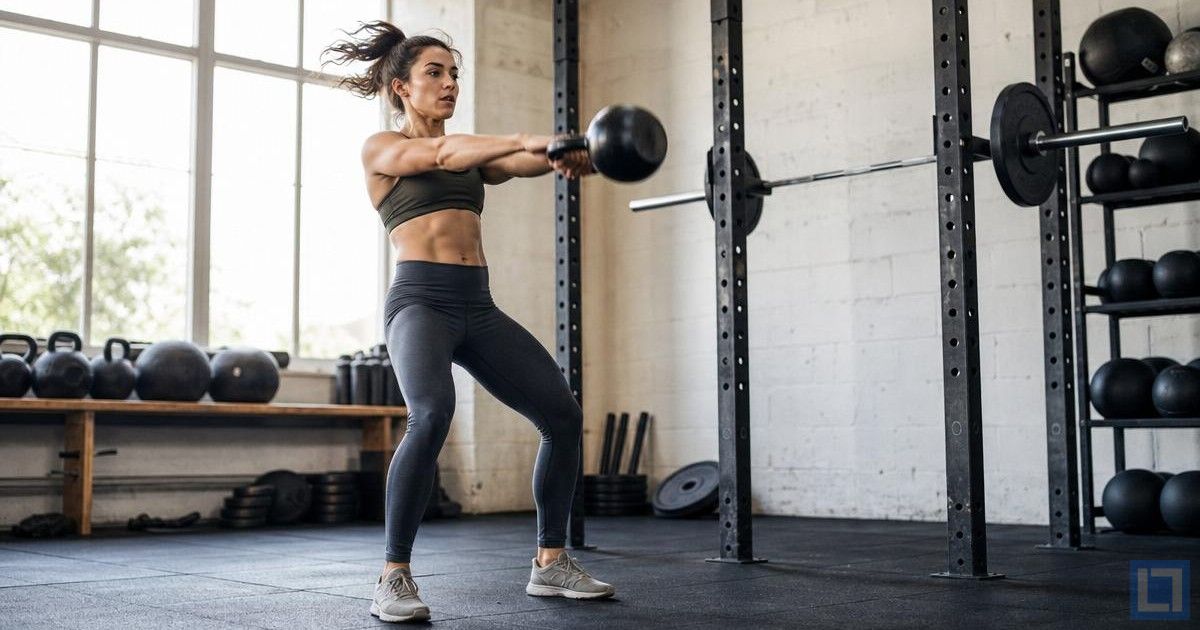
The Kettlebell Swing hinges at the hips and swings a kettlebell from between the legs to chest height (or overhead in the American style) using powerful hip drive. The pattern is the foundational kettlebell ballistic exercise and the cornerstone of kettlebell HIIT training.
For kettlebell HIIT, the swing is the absolute cornerstone exercise. The pattern produces stronger cardiovascular conditioning per minute than nearly any other movement, and the hip-hinge mechanics translate to broader athletic function. Run swings for 30 to 45-second intervals or 15 to 20 reps per round as the primary HIIT exercise.
Stand with feet shoulder-width and a kettlebell between the legs. Hinge at the hips and let the bell swing back between the legs. Drive the hips forward explosively to swing the bell up to chest height. Let the bell return through the legs by hinging back at the hips. The motion comes from the hips, not the arms.
Kettlebell Snatch

The Kettlebell Snatch lifts a kettlebell from between the legs to overhead lockout in one continuous explosive motion. The pattern combines the swing pattern with the overhead press into a single high-power movement.
For kettlebell HIIT that includes overhead loading, the snatch is one of the most demanding exercises that exists. The full-body explosive motion produces extreme cardiovascular and muscular conditioning per rep. Run it for 30-second intervals or 8 to 10 reps per side as advanced HIIT work.
Stand with feet shoulder-width and a kettlebell between the legs. Grip the bell with one hand. Hinge at the hips, then drive the hips forward explosively. Pull the bell up close to the body, transitioning to overhead lockout in one continuous motion. Lower under control through the legs. Switch arms between rounds.
Kettlebell Clean and Press

The Kettlebell Clean and Press lifts a kettlebell from between the legs to the rack position (the “clean”) and presses overhead in one continuous motion. The two-phase exercise produces strong full-body conditioning.
For kettlebell HIIT that includes overhead pressing strength, the clean-and-press combines lower-body explosive power with upper-body strength in one rep. The full-body pattern produces broader fitness adaptations than pure cardio movements. Run it for 3 to 4 sets of 6 to 8 reps per side.
Stand with feet shoulder-width and a kettlebell between the legs. Hinge at the hips, then drive the hips forward to swing the kettlebell up to the rack position. Catch with the elbow bent and palm facing the body. Press the kettlebell overhead. Lower to the rack, then back to the start.
Kettlebell Thruster

The Kettlebell Thruster combines a front squat (with kettlebells in the rack position) and an overhead press in one continuous motion. The combined leg drive and overhead press produces full-body HIIT conditioning per rep.
For kettlebell HIIT, the thruster is one of the most efficient single exercises that exists. The combined leg and overhead press pattern works the entire body in one rep and drives heart rate up rapidly. Run it for 30 to 45-second intervals or 8 to 10 reps per round.
Stand with kettlebells in the rack position at the shoulders. Squat down to a deep front squat. Drive up explosively while pressing the kettlebells overhead in one continuous motion. Lower the kettlebells to the rack position. Repeat immediately into the next squat.
Kettlebell Burpee

The Kettlebell Burpee combines the standard burpee with a kettlebell pull or row at the bottom. The combination of full-body burpee mechanics and kettlebell loading produces extreme HIIT conditioning per rep.
For kettlebell HIIT that maximizes per-rep conditioning, the kettlebell burpee is one of the most demanding exercises that exists. The combination of bodyweight burpee and loaded kettlebell pull produces stronger conditioning than either exercise alone. Run it for 30-second intervals or 5 to 8 reps per round.
Stand with feet shoulder-width and a kettlebell on the floor in front. Drop into a squat and place hands on the kettlebell. Kick the legs back into a push-up position with hands still on the bell. Jump the feet back to the squat. Stand while pulling the kettlebell up. Lower and repeat.
Kettlebell One Arm Snatch

The Kettlebell One Arm Snatch performs the snatch motion with a single kettlebell in one hand. The unilateral pattern produces strong asymmetric loading along with the explosive snatch mechanics.
For kettlebell HIIT with maximum unilateral demand, the one-arm snatch produces stronger asymmetric conditioning than two-arm snatches. The unilateral pattern catches strength imbalances and produces broader athletic development. Run it for 3 to 4 sets of 8 to 10 reps per arm.
Stand with feet shoulder-width and a kettlebell between the legs. Grip the bell with one hand. Hinge at the hips, then drive the hips forward explosively. Pull the bell up close to the body, transitioning to overhead lockout. Lower under control through the legs. Complete all reps on one side before switching.
Kettlebell Goblet Squat Jump

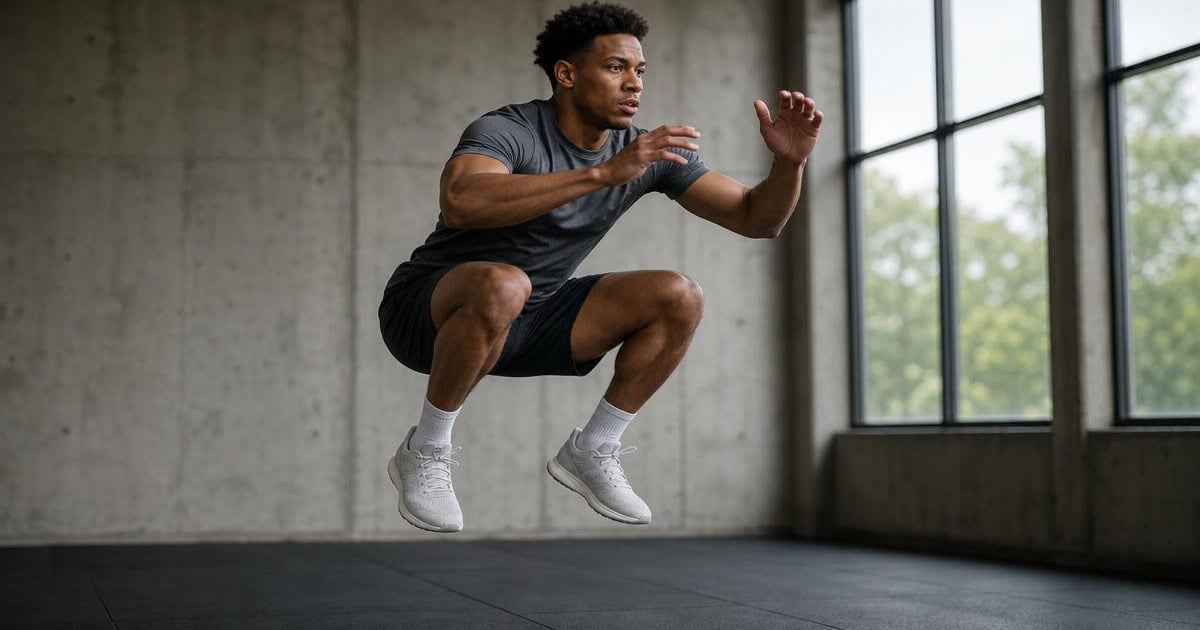
The Kettlebell Goblet Squat Jump holds a kettlebell at the chest in goblet position and performs squat jumps. The combination of loaded squatting and plyometric jump produces strong leg power along with cardiovascular demand.
For kettlebell HIIT that emphasizes leg power, the goblet squat jump is one of the most direct lower-body conditioning exercises. The plyometric component drives heart rate up while the kettlebell loading produces stronger power adaptation than bodyweight jumps. Run it for 3 sets of 8 to 10 reps with moderate weight.
Hold a kettlebell at the chest with both hands cupping the top end (goblet position). Stand with feet shoulder-width. Squat down by sitting the hips back and bending the knees. Drive explosively upward into a vertical jump while keeping the kettlebell at the chest. Land softly back into the squat.
Kettlebells Sumo Deadlift

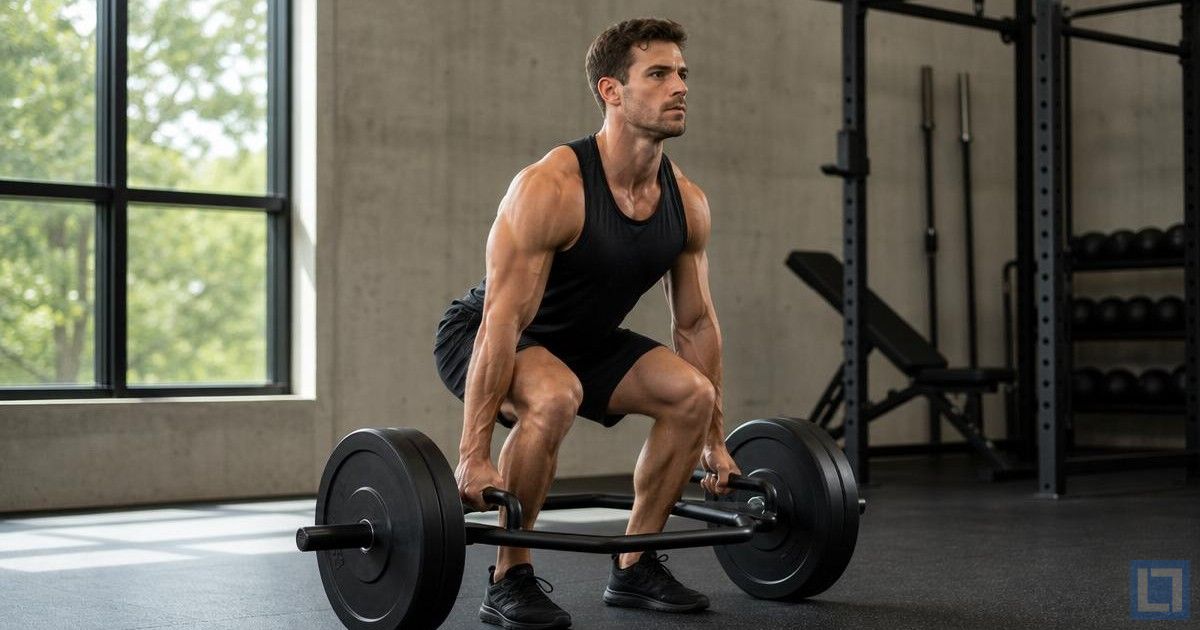
The Kettlebells Sumo Deadlift takes a wide stance with kettlebells positioned between the legs and lifts them by extending through the hips and legs. The wide stance produces strong inner-thigh and posterior-chain loading.
For kettlebell HIIT that includes heavy pulling work, the sumo deadlift produces strong posterior-chain loading that complements the swing pattern. The wide-stance pattern hits the inner thighs and adductors more directly than conventional deadlifts. Run it for 3 sets of 6 to 10 reps as the heavy pulling exercise in any HIIT session.
Take a wide stance with toes pointed slightly outward. Place kettlebells between the legs. Hinge at the hips and bend the knees to grip the bells. Drive through the legs and hips to stand fully upright. Lower under control by hinging back at the hips.
Kettlebell Russian Twist

The Kettlebell Russian Twist sits on the floor with a kettlebell held at the chest and twists the trunk side-to-side. The continuous rotation hits the obliques throughout the entire set with continuous loaded tension.
For kettlebell HIIT that includes core conditioning, the Russian twist produces strong rotational core loading in minimal time. The pattern fits naturally as a core finisher between higher-intensity exercises. Run it for 3 sets of 16 to 20 total reps with moderate weight.
Sit on the floor with knees bent. Lean back slightly to engage the abs and lift the feet off the floor for added difficulty. Hold a kettlebell at the chest with both hands. Twist the trunk to bring the kettlebell to one side, then to the other side. Continue alternating throughout the set.
Kettlebell Goblet Squat

The Kettlebell Goblet Squat holds a kettlebell at the chest with both hands and performs a squat motion. The front-loaded position emphasizes the quads and produces strong upright torso bracing throughout the rep.
For kettlebell HIIT that includes a moderate-intensity strength component, the goblet squat fits naturally as the foundational lower-body exercise between higher-intensity ballistic work. The pattern produces real leg conditioning at sustainable intensity. Run it for 3 sets of 12 to 15 reps as foundational lower-body work.
Hold a kettlebell at the chest with both hands cupping the top end. Stand with feet shoulder-width or slightly wider. Squat down by sitting the hips back while bending the knees, keeping the kettlebell at the chest. Drive back to standing through the whole foot.
How To Program These Workouts
A productive kettlebell HIIT workout uses interval-based organization: 5 to 7 exercises performed at near-maximum intensity for 30 to 45 seconds, followed by 15 to 30 seconds of rest, repeated for 3 to 4 rounds. The entire session including warm-up and cool-down runs 25 to 35 minutes. Common interval structures include 30 seconds work / 30 seconds rest (balanced), 40 seconds work / 20 seconds rest (high-intensity), or Tabata-style 20 seconds work / 10 seconds rest for 8 rounds.
Train kettlebell HIIT 3 to 4 times per week. The high-intensity format produces significant cardiovascular and muscular fatigue, which requires appropriate recovery between sessions. Most lifters do well with 3 to 4 HIIT sessions per week alongside dedicated strength training and 1 to 2 lower-intensity cardio or recovery sessions. Daily HIIT typically produces burnout within 4 to 6 weeks; spaced-out sessions sustain the format long-term.
For more kettlebell programming, see our best kettlebell workouts and best full body kettlebell workouts. For other HIIT training, see our best 10 minute hiit workouts.
Final Thoughts
The best kettlebell HIIT workouts deliver real cardiovascular conditioning and strength stimulus through high-intensity interval training combined with kettlebell ballistic loading. The combination produces broader fitness adaptations than either pure cardio HIIT or pure kettlebell strength training alone. The format also fits naturally into busy schedules because 20 to 30-minute sessions produce strong fitness gains without requiring 60 to 90-minute training commitments. For lifters with kettlebell access who want efficient, effective conditioning, kettlebell HIIT is one of the most powerful options available.
Stay focused on technique under fatigue. The most common kettlebell HIIT mistake is letting form deteriorate as fatigue accumulates, which produces increased injury risk and reduces the actual training stimulus. The fix: pick weights light enough to maintain clean form throughout the entire session. Most kettlebell HIIT works best with weights 30 to 50 percent lighter than what would be used for pure strength training. The intensity comes from the interval structure and pace, not from maximum weights.
Frequently Asked Questions
Are kettlebell HIIT workouts effective for fat loss?
Yes, very effectively. The combination of high-intensity interval training and kettlebell ballistic loading produces strong calorie burn during and after training (the EPOC effect), and the strength component preserves muscle during fat-loss phases. Most lifters who consistently do 3 to 4 kettlebell HIIT sessions per week alongside a moderate caloric deficit produce real fat loss results over 8 to 12 weeks. Training alone without dietary management rarely produces significant weight loss.
How heavy should kettlebells be for HIIT?
Most beginners work with 8 to 12 kg (18 to 26 pounds) for HIIT exercises; intermediates work with 16 to 20 kg (35 to 44 pounds). The right weight is whatever allows clean technique under fatigue. Heavier weights with deteriorating form produce less benefit than moderate weights with strict technique throughout the session. Kettlebell HIIT typically uses lighter weights than strict strength training because the interval structure prevents full recovery between sets.
How often should I do kettlebell HIIT?
Three to four times per week works for most lifters. The high-intensity format produces significant fatigue, which requires appropriate recovery between sessions. Daily HIIT typically produces burnout within 4 to 6 weeks. Most successful programs include 3 to 4 kettlebell HIIT sessions per week alongside dedicated strength training and 1 to 2 lower-intensity cardio sessions.
Can beginners do kettlebell HIIT?
Yes, with appropriate exercise selection and intensity scaling. Beginners should start with the easier exercises (swings, goblet squats, sumo deadlifts) and longer rest periods (30 seconds work / 30 seconds rest) before progressing to harder exercises and shorter rest periods. The format scales naturally as fitness builds; most beginners can progress to standard 30-on/15-off intervals within 4 to 6 weeks of consistent training.
What’s the best kettlebell HIIT exercise?
The kettlebell swing is the foundational HIIT exercise. The pattern produces strong cardiovascular conditioning per minute while loading the posterior chain heavily, and the technique scales from beginner to advanced through weight selection. Most successful kettlebell HIIT programs include swings as the cornerstone exercise alongside more advanced patterns (snatches, thrusters, clean-and-presses) for variety. Build the swing technique first before progressing to more complex patterns.