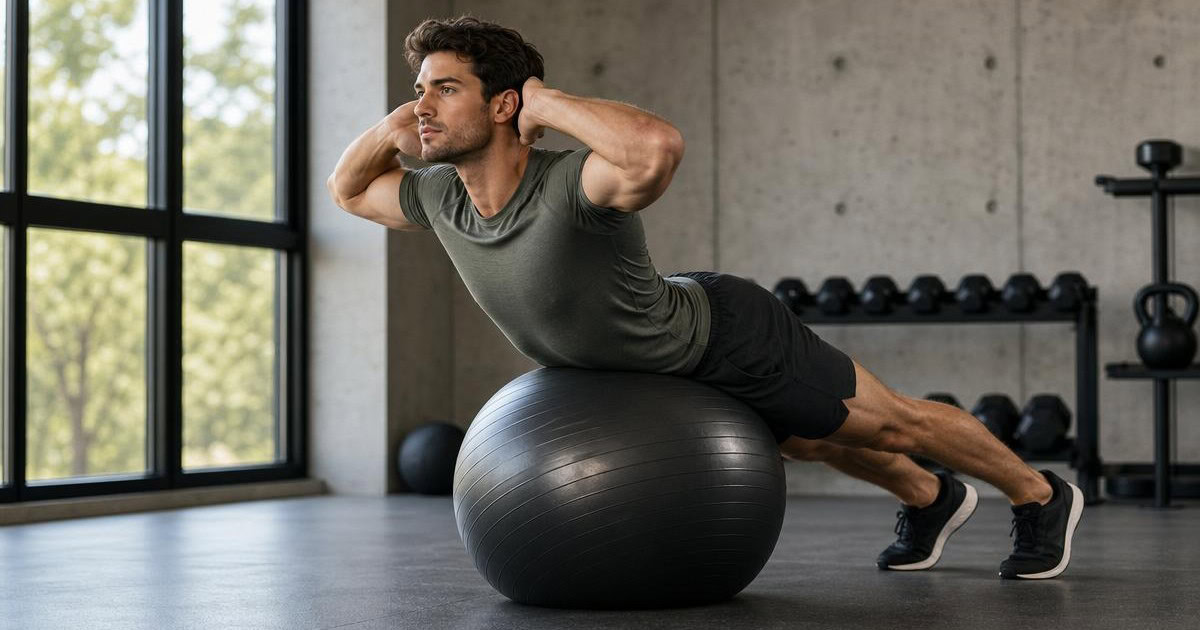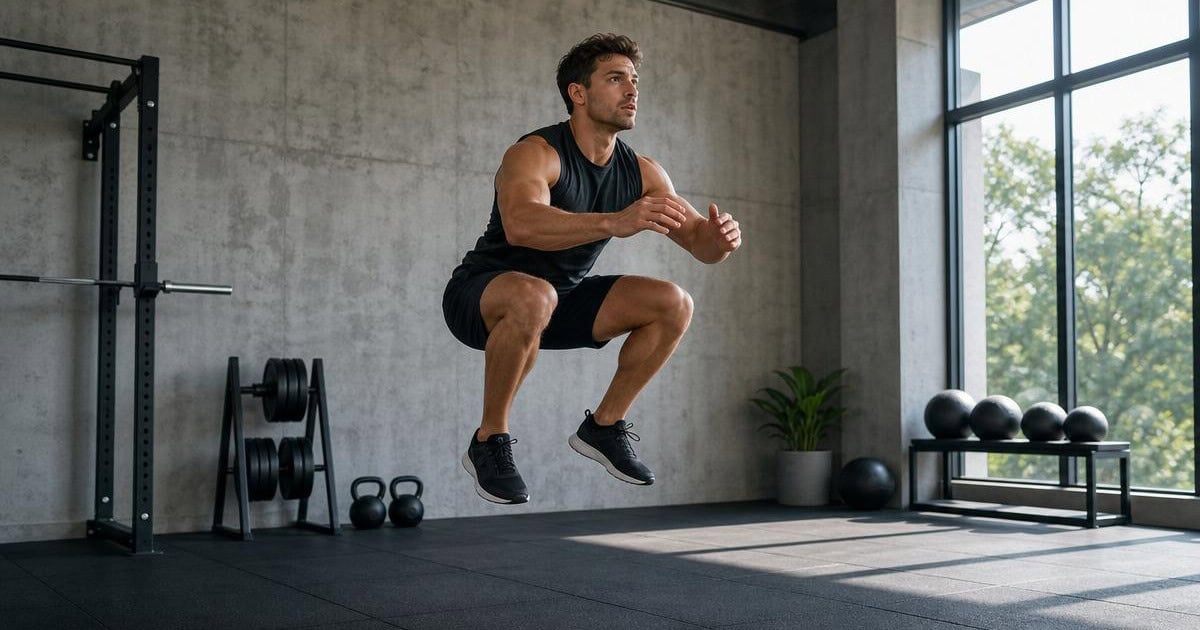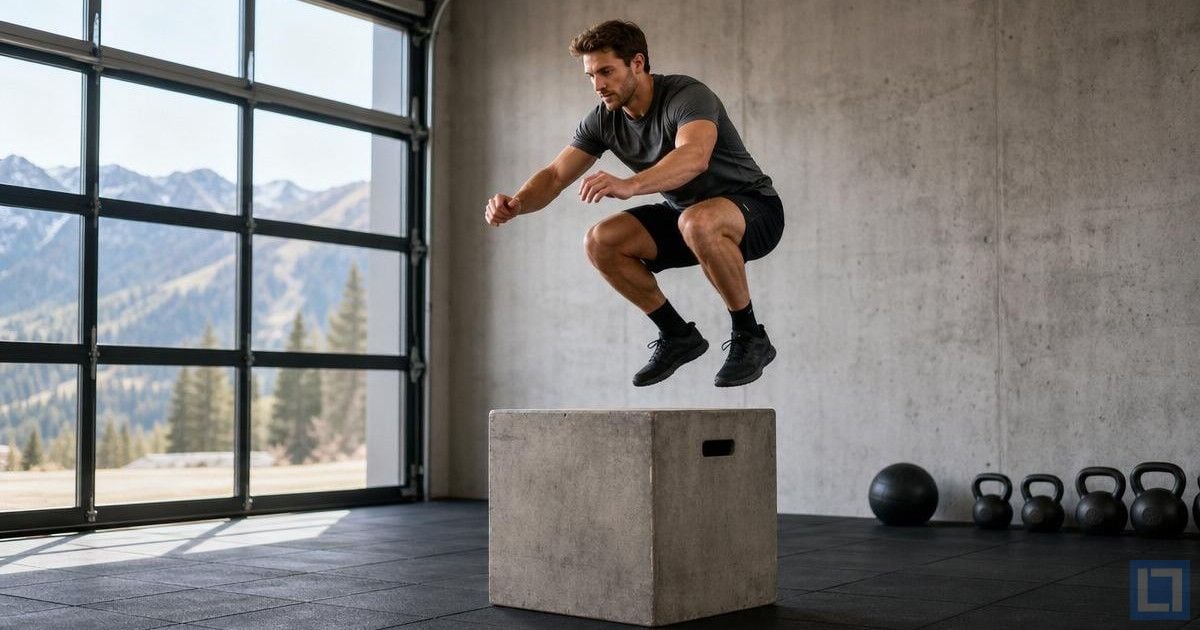
Mountain biking strength training produces real performance benefits through exercises that target the specific demands of trail riding: leg strength for climbing and sprinting, posterior-chain power for hip drive, unilateral strength for balance and weight shifting, core stability for absorbing terrain impacts, upper-body strength for handlebar control on technical descents, and grip endurance for long downhill sections. The format works particularly well because mountain biking places combined demands on multiple fitness qualities (strength, power, endurance, balance, grip) that single-modality training cannot address. Most mountain bikers who add 2 to 3 weekly strength sessions see measurable performance improvements within 6 to 12 weeks: faster climbs, sustained sprint capacity, less arm and forearm fatigue on long descents, and better stability through technical sections.
Below are ten effective exercises for mountain biking that cover heavy compound leg strength (back squat, deadlift), unilateral leg work (Bulgarian split squat, single leg deadlift), core stability (plank, side plank, dead bug), explosive hip-hinge power (kettlebell swing), upper-body strength (push-ups), and grip and trap conditioning (farmers walk). Together they form a complete mountain biking strength program that addresses every major fitness demand of trail riding. A 45 to 60-minute session pulled from this list produces strong combined strength, power, and conditioning stimulus for MTB performance.
Barbell Squat

The Barbell Squat holds a barbell across the upper back and squats down. For mountain bikers, the squat builds the foundational leg strength that drives climbing power, sprint acceleration, and out-of-saddle pedaling demands.
For mountain biking strength, the back squat is the foundational compound exercise. Strong squats translate directly to climbing power and sustained sprint capacity on technical terrain. Run it for 4 to 5 sets of 4 to 6 reps as primary heavy leg strength work in any MTB-focused program.
Set up under a barbell on a squat rack with the bar across the upper back. Step back to clear the rack. Stand with feet shoulder-width and toes pointed slightly out. Squat down by sitting the hips back while bending the knees, keeping the chest tall. Drive back to standing through the whole foot.
Barbell Deadlift

The Barbell Deadlift starts with the barbell on the floor and lifts it to standing position by hinging at the hips and extending through the legs. For mountain bikers, the deadlift builds the posterior-chain strength needed for hip drive on climbs and bunny-hop power.
For mountain biking strength, the deadlift produces strong combined posterior-chain loading that translates to hip-hinge power on the bike. The pattern hits the glutes, hamstrings, and lower back through heavy compound loading. Run it for 4 sets of 3 to 6 reps as primary posterior-chain strength work.
Stand with feet hip-width with the barbell over the middle of the feet. Hinge at the hips and bend the knees to grip the bar with shoulder-width grip. Drive through the legs and pull the bar up close to the body until standing fully upright. Reverse the motion under control. Reset before each rep.
Dumbbell Bulgarian Split Squat
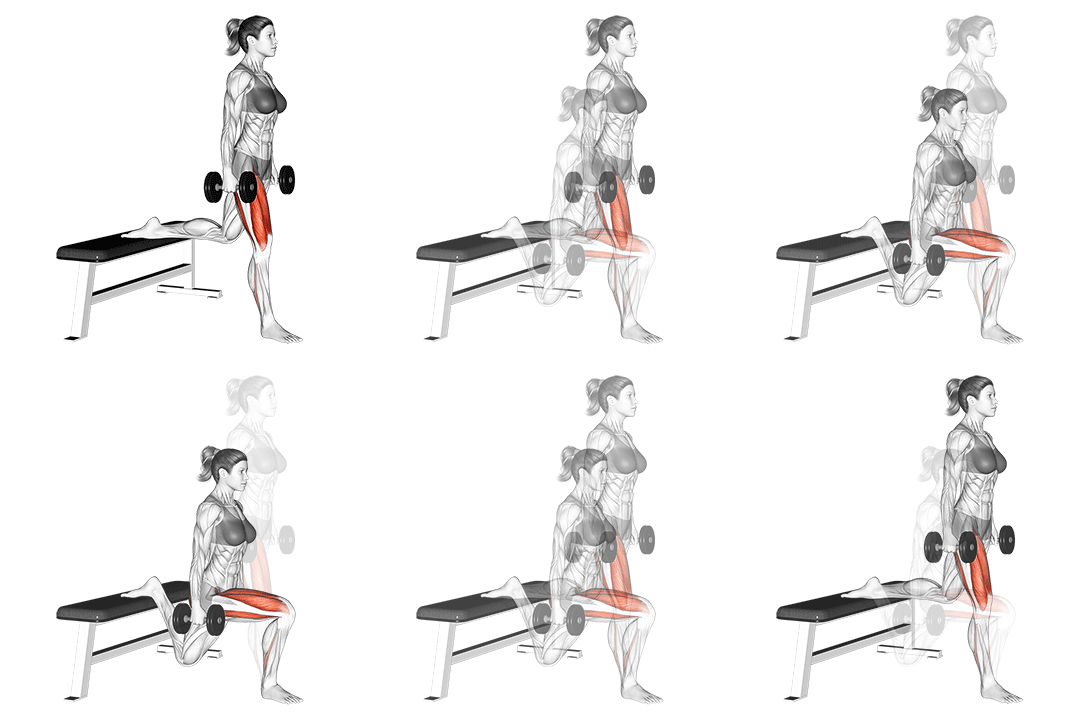
The Dumbbell Bulgarian Split Squat performs split squats with the back foot elevated on a bench while holding dumbbells at the sides. For mountain bikers, the unilateral pattern addresses left-right strength imbalances that show up during technical riding requiring balance and weight shifting.
For mountain biking strength, the Bulgarian split squat is one of the most direct unilateral leg exercises that translates to riding performance. The single-leg loading addresses imbalances that bilateral squats can hide. Run it for 3 sets of 6 to 10 reps per leg as primary unilateral leg work.
Hold dumbbells at the sides with arms extended. Stand 2 to 3 feet in front of a bench with one foot on the bench behind the body. Drop straight down by bending the front knee until the back knee approaches the floor. Drive through the front foot to push back to standing. Switch sides between sets.
Bodyweight Single Leg Deadlift

The Bodyweight Single Leg Deadlift performs single-leg deadlift motion to touch the floor with the hands while balancing on one leg. For mountain bikers, the pattern develops the unilateral hip-hinge and balance demands that translate to off-camber riding and weight-shifting on technical terrain.
For mountain biking strength, the single leg deadlift produces strong combined balance and hip-hinge loading. The pattern translates to the off-bike balance demands of technical riding. Run it for 3 sets of 6 to 10 reps per leg as combined balance and hip-hinge work.
Stand on one leg with the other leg lifted slightly behind. Hinge at the hips of the standing leg while extending the back leg behind for balance. Lower the upper body forward until the hands touch the floor in front of the standing foot. Drive back up by extending the standing-leg hip. Switch sides between sets.
Plank on Hands
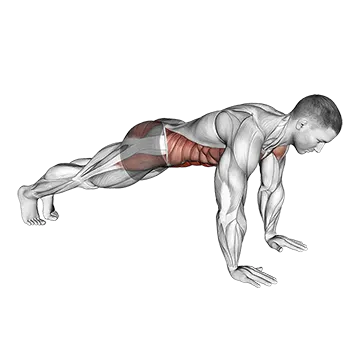
The Plank on Hands sets up in a high plank position with hands shoulder-width and body in a straight line, then holds isometrically while bracing the core. For mountain bikers, plank stability translates directly to the core demands of handling rough terrain and absorbing impacts.
For mountain biking strength, the plank is the foundational core stability exercise. The pattern hits the entire core through anti-extension demand that protects the lower back during hard riding. Run it for 3 sets of 45 to 60-second holds as primary core stability work.
Set up in a high plank position with hands shoulder-width and arms locked out. The body forms a straight line from head to heels. Brace the core hard, squeeze the glutes, and breathe normally. Maintain tight body position throughout the hold without allowing hip sag or pike.
Side Plank
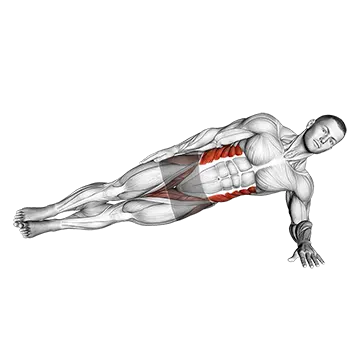
The Side Plank sets up on one forearm with feet stacked and the body in a straight line, holding isometrically while engaging the obliques and lateral core. For mountain bikers, the side plank builds the lateral core stability needed for hard cornering and stable cockpit position.
For mountain biking strength, the side plank produces direct oblique and lateral core loading. The pattern hits the side core muscles that handle lateral forces during cornering and weight shifts. Run it for 3 sets of 30 to 45-second holds per side as primary lateral core work.
Lie on one side with the bottom forearm on the floor and the elbow directly under the shoulder. Stack the feet on top of each other. Lift the hips off the floor to form a straight line from head to heels. Maintain the position by engaging the obliques. Switch sides between sets.
Dead Bug

The Dead Bug lies on the back and alternates extending the opposite arm and leg while maintaining a flat lower back against the floor. For mountain bikers, the dead bug develops anti-extension core control that protects the lower back during heavy pedaling and rough terrain.
For mountain biking strength, the dead bug is one of the most direct deep core stability exercises that exists. The pattern hits the deep abs and transverse abdominis through controlled anti-extension. Run it for 3 sets of 8 to 12 reps per side as deep core stability work.
Lie flat on the back with arms extended toward the ceiling. Bend the knees to 90 degrees with feet lifted. Slowly extend one arm overhead toward the floor while extending the opposite leg toward the floor (without letting either touch). Press the lower back into the floor throughout. Return to the start. Switch sides on each rep.
Kettlebell Swing

The Kettlebell Swing hinges at the hips and swings the kettlebell from between the legs up to chest level using hip drive. For mountain bikers, the kettlebell swing builds explosive hip-hinge power that translates directly to climbing acceleration and sprint capacity.
For mountain biking strength, the kettlebell swing is one of the most direct hip-power exercises that exists. The pattern produces explosive hip extension that translates to pedaling power. Run it for 4 sets of 15 to 20 reps as explosive posterior-chain work and conditioning.
Stand with feet shoulder-width and a kettlebell positioned 1 to 2 feet in front. Hinge at the hips and grip the kettlebell with both hands. Hike the kettlebell back between the legs. Drive the hips forward explosively, swinging the kettlebell up to chest level. Let the kettlebell swing back down between the legs into the next rep.
Push Ups

The Push Ups perform standard push-ups with hands shoulder-width and body in a straight line. For mountain bikers, push-ups build the upper-body pressing strength needed for handlebar control on technical descents and the absorbing arms required for rough terrain.
For mountain biking strength, push-ups produce the foundational upper-body strength that translates to handlebar control. The pattern hits the chest, shoulders, and triceps for the pushing demands of riding. Run it for 4 sets of 12 to 20 reps as primary upper-body strength work.
Set up in a high plank position with hands shoulder-width and body in a straight line. Lower the chest to the floor by bending the elbows back at roughly 45 degrees from the body. Press back to lockout. Maintain tight body position throughout the rep without letting the hips sag or pike.
Farmers Walk
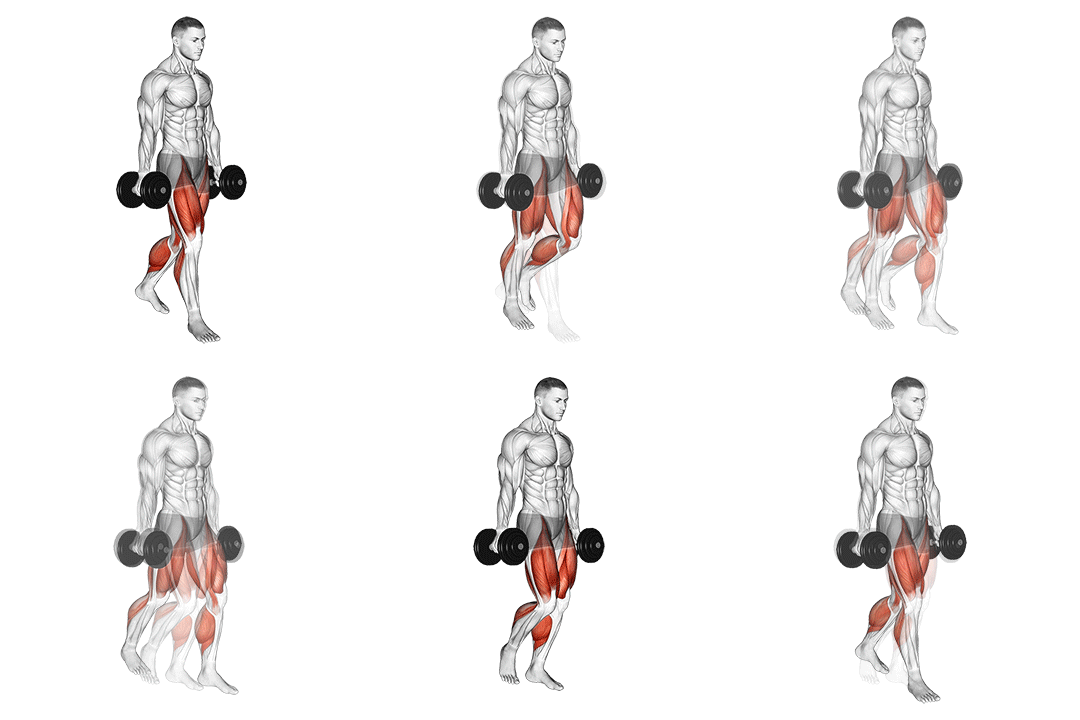
The Farmers Walk holds heavy dumbbells or kettlebells at the sides and walks for distance or time. For mountain bikers, the farmers walk builds the grip strength needed for long technical descents and the trap and core loading that translates to upper-body endurance.
For mountain biking strength, the farmers walk produces strong combined grip, trap, and core loading. The grip strength translates directly to the demands of long technical descents that fatigue the forearms. Run it for 3 sets of 30 to 60-second walks as primary grip and conditioning work.
Hold heavy dumbbells or kettlebells at the sides with arms extended. Stand tall with shoulders back and core braced. Walk forward at a steady pace for the working distance or time. Maintain upright posture and engaged core throughout the walk. Set the weights down between sets. Use heavy loads (50 to 80 percent of bodyweight).
How To Program These Workouts
A productive mountain biking strength program organizes these exercises across 2 weekly sessions. A standard structure: Day 1 (heavy strength: barbell squat 4×4 to 6, barbell deadlift 4×3 to 5, dumbbell Bulgarian split squat 3×6 to 8 per leg, push-ups 4×12 to 20, plank on hands 3×45 to 60 seconds), Day 2 (varied strength and conditioning: bodyweight single leg deadlift 3×6 to 10 per leg, kettlebell swing 4×15 to 20, side plank 3×30 to 45 seconds per side, dead bug 3×8 to 12 per side, farmers walk 3×30 to 60 seconds). The two sessions cover 28 to 33 total working sets per week dedicated to MTB-specific development.
Train mountain biking strength sessions 2 times per week alongside actual riding. The combined demands of riding and strength training require careful recovery management. Most successful programs include 2 weekly strength sessions on non-riding days or after easy rides. The 2-session structure produces strong cumulative volume without compromising riding performance. Riders training for specific events (races, big rides) typically reduce strength volume during peak event periods to prioritize on-bike specificity, then return to normal strength volume during off-season or base-building periods.
For broader programming, see our best compound exercises for strength and best full body kettlebell workouts. For specific strength work, see our how to do a kettlebell swing.
Final Thoughts
The best workouts for mountain biking deliver real performance benefits through exercises that target the specific demands of trail riding: leg strength, hip power, unilateral balance, core stability, upper-body control, and grip endurance. The combination of heavy compound lifts, unilateral leg work, core stability, explosive hip-hinge work, upper-body strength, and grip conditioning covers every major MTB demand and produces broader performance development than riding alone. For mountain bikers who want faster climbs, better technical descents, less fatigue on long rides, or want to break through performance plateaus, dedicated MTB-specific strength training is one of the most effective options available.
Stay focused on the heavy compound lifts as the foundation. The most common mountain biking strength training mistake is prioritizing endurance and core work while neglecting heavy compound lifts (squat, deadlift) that drive raw strength development. The fix: include heavy strength training (3 to 6 rep ranges) for squats and deadlifts as the foundation of MTB strength programs, with accessory and conditioning work building on top of that strength foundation. Quality progressive overload on the heavy compound lifts produces stronger MTB performance than higher volumes of accessory and conditioning work alone. Strength is the foundation that other qualities build upon.
Frequently Asked Questions
Should mountain bikers lift weights?
Yes, very effectively for performance. Mountain biking places combined demands on strength, power, endurance, balance, and grip that single-modality training (riding alone) cannot fully address. Most mountain bikers who add 2 to 3 weekly strength sessions see measurable performance improvements within 6 to 12 weeks: faster climbs, sustained sprint capacity, less arm and forearm fatigue on descents, and better stability through technical sections.
How often should mountain bikers strength train?
Two times per week works for most riders. The combined demands of riding and strength training require careful recovery management. Most successful programs include 2 weekly strength sessions on non-riding days or after easy rides. Higher frequencies (3+ strength sessions per week) typically compromise riding performance and recovery. The 2-session structure produces strong cumulative volume without affecting on-bike training quality.
Will lifting weights make me too bulky for mountain biking?
No for the vast majority of riders. Strength training in the rep ranges most effective for performance (3 to 8 reps) produces strength and power gains without significant muscle mass increases for most lifters. Most mountain bikers gain 3 to 8 pounds of lean muscle from 6 to 12 months of consistent strength training, which improves performance more than the marginal weight increase affects climbing speed. Bodybuilding-style training (8 to 15 reps with dedicated mass-building focus and surplus calories) produces more mass gains; performance-focused strength training does not.
Can strength training improve my climbing on the bike?
Yes significantly. Heavy squats and deadlifts produce stronger leg drive that translates directly to climbing power. Most riders see measurable climbing improvements within 8 to 12 weeks of consistent strength training. The key training elements: heavy bilateral leg compounds (squat, deadlift), unilateral leg strength (Bulgarian split squat) that addresses left-right imbalances, and explosive hip-hinge work (kettlebell swing) for sprint acceleration. The combination produces stronger climbing performance than riding alone.
How long should mountain biking strength sessions be?
Forty-five to sixty minutes per session works for most riders. The format includes 6 to 8 exercises across heavy compounds, unilateral work, core stability, and conditioning, which requires 45 to 60 minutes for proper sets and rest. Shorter sessions (30 to 40 minutes) work for maintenance during peak riding periods; longer sessions (75+ minutes) typically compromise next-day riding performance through accumulated fatigue.