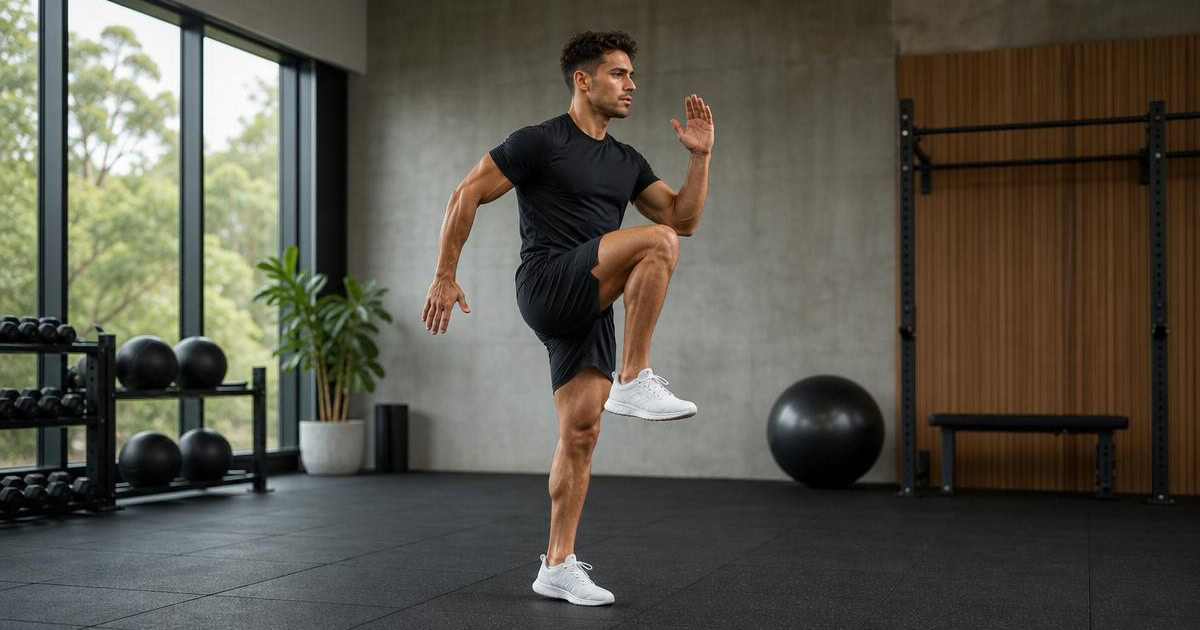
Bodyweight hip flexor training produces real hip flexor strength through patterns that load the often-undertrained hip flexors effectively without equipment: knee raise variations, dynamic running-form drills, alternating leg movements, and core-integrated patterns. The format works particularly well for hip flexors because they are critical for nearly every athletic movement (running, sprinting, kicking, jumping, climbing) but rarely get direct training attention in typical strength programs. Most lifters who consistently train bodyweight hip flexor work 1 to 2 times per week alongside compound lower-body movements see measurable improvements in sprint speed, kicking power, knee drive height, athletic explosiveness, and reduced lower-back compensation issues within 6 to 10 weeks. Hip flexor weakness is a common cause of lower-back pain, poor sprinting mechanics, and limited athletic performance, all of which dedicated bodyweight hip flexor work addresses directly.
Below are ten effective bodyweight hip flexor exercises that cover athletic conditioning (mountain climber, mountain climber jump, high-knee sprints, vertical mountain climber, celebratory knee drives), direct isolation (knee raise, decline knee raise, alternate toe tap leg lift), and combined hip flexor and core endurance (flutter kicks, seated flutter kicks). Together they form a complete bodyweight hip flexor program that hits the muscle through every functional pattern. A 20 to 30-minute session pulled from this list, performed 1 to 2 times per week, produces strong hip flexor development that supports athletic performance and complements compound leg work.
Mountain Climber

The Mountain Climber performs alternating knee drives toward the chest from a high plank position. The pattern produces strong combined hip flexor and core loading through dynamic alternating motion.
For bodyweight hip flexor training, the mountain climber is one of the most foundational exercises that exists. The pattern hits the hip flexors through dynamic alternating knee drives combined with core stability. Run it for 3 to 4 sets of 30 to 45 seconds as primary hip flexor and conditioning work.
Start in a high plank position with hands directly under shoulders and body in a straight line. Drive one knee forward toward the chest, planting the foot on the floor under the body. Quickly switch legs, driving the other knee forward while extending the first leg back. Continue alternating in a smooth running rhythm. Maintain plank position with stable shoulders throughout.
Mountain Climber Jump

The Mountain Climber Jump combines mountain climber motion with explosive jumping switches. The pattern produces strong combined hip flexor power and conditioning loading.
For bodyweight hip flexor training, the mountain climber jump produces strong combined power and conditioning work. The pattern hits the hip flexors through explosive alternating motion. Run it for 3 sets of 20 to 30 seconds as advanced hip flexor and conditioning work.
Start in a high plank position with hands directly under shoulders. Begin with one foot forward (knee toward chest) and one foot back. Explosively jump-switch the foot positions, bringing the back foot forward and the front foot back simultaneously while staying low. Continue alternating in a quick rhythm. The explosive switching produces strong hip flexor power loading.
High Knee Sprints

The High Knee Sprints perform sprinting-form running in place with the knees driving up to chest height. The pattern produces strong combined hip flexor and conditioning loading.
For bodyweight hip flexor training, the high-knee sprint produces strong combined power and athletic conditioning work. The pattern hits the hip flexors through dynamic sprinting motion in a stationary position. Run it for 3 to 4 sets of 30 to 45 seconds as primary hip flexor and conditioning work.
Stand with feet hip-width. Begin running in place by driving the knees up alternately to at least hip height (or chest height for advanced) while pumping the arms in opposite sprinter form. Maintain quick cadence and tall posture. Drive each knee up explosively. Continue for the working interval. The combination of explosive knee drives and quick cadence produces strong hip flexor and cardiovascular work.
Knee Raise

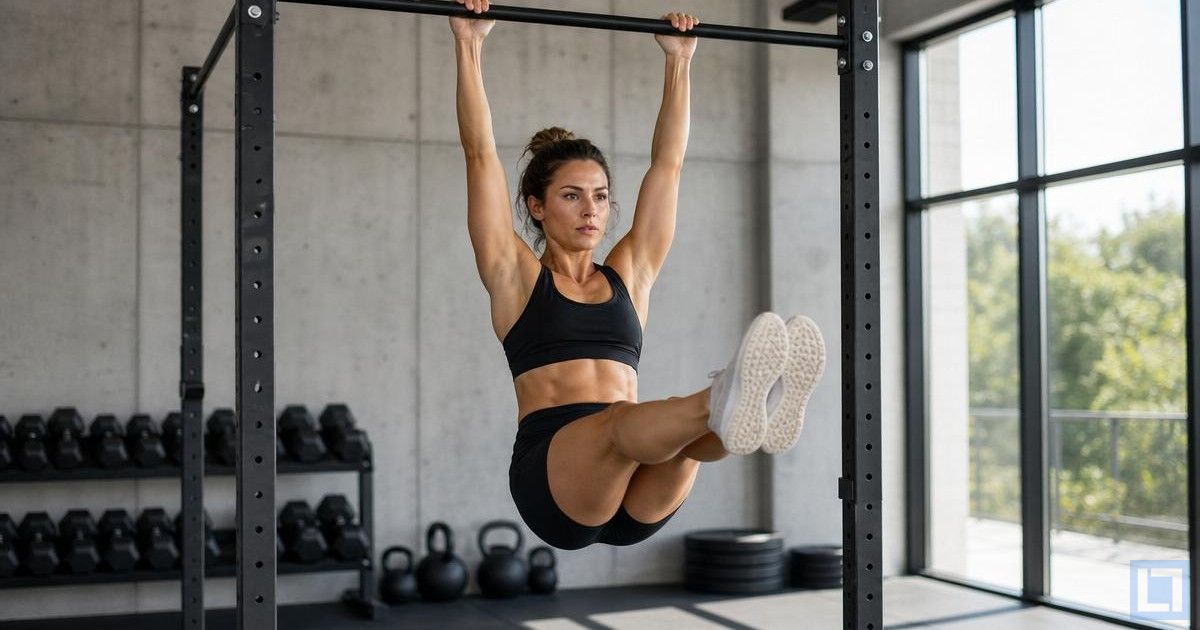
The Knee Raise performs hanging or supported knee raises by lifting the knees toward the chest. The pattern produces direct hip flexor loading combined with lower abdominal work.
For bodyweight hip flexor training, the knee raise is one of the most direct hip flexor isolation exercises that exists. The pattern hits the hip flexors and lower abs through pure hip flexion. Run it for 3 sets of 10 to 15 reps as primary hip flexor isolation work.
Hang from a pull-up bar with arms fully extended (or use a captain’s chair / dip station for support if hanging is too difficult). Lift the knees up toward the chest by flexing the hips. Avoid swinging or using momentum. Hold briefly at the top. Lower under control until the legs are fully extended. The direct hip flexion produces strong hip flexor loading.
Decline Knee Raise

The Decline Knee Raise performs knee raises while lying on a decline bench. The decline angle increases the loading on the hip flexors compared to flat or hanging variations.
For bodyweight hip flexor training, the decline knee raise produces strong hip flexor loading through the increased decline angle. The pattern hits the hip flexors and lower abs through hip flexion against gravity. Run it for 3 sets of 10 to 15 reps as primary hip flexor work.
Lie on a decline bench with the head end at the top and grip the bench or pad above the head with both hands for stability. Lift the knees up toward the chest by flexing the hips. Hold briefly at the top. Lower under control until the legs are fully extended. The decline angle produces stronger hip flexor loading than flat-back variations.
Flutter Kicks

The Flutter Kicks perform alternating small leg flutters while lying flat on the back with legs slightly raised. The pattern produces combined hip flexor and core stability loading.
For bodyweight hip flexor training, flutter kicks produce strong combined hip flexor endurance and core stability loading. The pattern hits the hip flexors and lower abs through sustained alternating motion. Run it for 3 sets of 30 to 45 seconds as endurance and core stability work.
Lie flat on the back with hands under the lower back or at the sides. Lift both legs slightly off the floor (about 6 inches). Alternate small flutter motions, raising one leg slightly while lowering the other. Continue in a rhythmic flutter motion. The legs should never touch the floor or rise above hip level. The sustained low position produces strong hip flexor endurance loading.
Seated Flutter Kick

The Seated Flutter Kick performs flutter kicks from a seated position with the upper body leaned back at 45 degrees. The pattern produces combined hip flexor and core stability loading with greater hip flexor demand than lying variations.
For bodyweight hip flexor training, the seated flutter kick produces stronger hip flexor loading than lying variations through the leaned-back position. The pattern hits the hip flexors and core through sustained alternating motion. Run it for 3 sets of 30 to 45 seconds as advanced hip flexor and core work.
Sit on the floor with hands behind the body for support. Lean the upper body back to about 45 degrees. Lift both feet off the floor and extend the legs slightly. Perform alternating flutter kicks, raising one leg slightly while lowering the other. Maintain the leaned-back position throughout. The combined leaning posture and flutter motion produces strong hip flexor loading.
Celebratory Knee Drives

The Celebratory Knee Drives perform alternating knee drives while standing in place. The pattern produces strong combined hip flexor power and athletic mechanics work without equipment.
For bodyweight hip flexor training, the celebratory knee drive produces strong combined hip flexor power and athletic coordination work. The pattern hits the hip flexors through explosive alternating knee drives. Run it for 3 sets of 30 to 45 seconds as combined hip flexor and conditioning work.
Stand with feet hip-width. Drive one knee up to chest height explosively while raising the opposite arm. Quickly lower the foot back down and immediately drive the other knee up while raising the opposite arm. Continue alternating with athletic explosive motion. The combination of explosive knee drives and arm coordination produces strong hip flexor work.
Alternate Toe Tap Leg Lift

The Alternate Toe Tap Leg Lift performs alternating leg lifts while standing, with the lifted leg tapping the floor in front. The pattern produces strong unilateral hip flexor loading combined with balance work.
For bodyweight hip flexor training, the alternate toe tap leg lift produces combined unilateral hip flexor and balance loading. The pattern hits each hip flexor independently while challenging single-leg balance. Run it for 3 sets of 10 to 15 reps per leg as combined hip flexor and balance work.
Stand with feet hip-width. Lift one leg up by flexing the hip until the thigh is parallel to the floor (or higher). Lower the leg and tap the toe in front of the body without putting full weight on it. Lift the leg back up. Switch legs between sets or alternate. The unilateral motion combined with the controlled tap produces strong hip flexor isolation.
Vertical Mountain Climber

The Vertical Mountain Climber performs mountain climber motion in a standing vertical position with one leg driving up at a time while the other foot stays planted. The pattern produces combined hip flexor work without ground demands.
For bodyweight hip flexor training, the vertical mountain climber produces hip flexor loading without the wrist and shoulder demands of horizontal mountain climbers. The pattern hits the hip flexors through dynamic alternating knee drives. Run it for 3 sets of 30 to 45 seconds as accessible hip flexor work.
Stand with feet hip-width and hands raised above the head. Drive one knee up toward the chest while simultaneously bringing the hands down to meet the knee. Return to starting position and immediately repeat with the other leg. Continue alternating in a quick rhythm. The standing vertical position eliminates ground demands while maintaining strong hip flexor loading.
How To Program These Workouts
A productive bodyweight hip flexor session pulls 5 to 6 exercises from the list above based on training goals. A common athletic-focused session: high-knee sprints (3 sets x 30 sec), mountain climber jump (3 sets x 20 sec), celebratory knee drives (3 sets x 30 sec), knee raise (3 sets x 10 to 15 reps), flutter kicks (3 sets x 30 sec). For isolation focus: knee raise, decline knee raise, alternate toe tap leg lift, seated flutter kick. Run dynamic conditioning work for 30 to 45-second intervals, isolation work for 10 to 15 reps per side, and core-integrated work for 30 to 60-second holds. Total session covers 12 to 18 working intervals or sets focused on hip flexor development.
Train bodyweight hip flexor work 1 to 2 times per week as part of broader lower-body or core programming. The hip flexors are involved in most lower-body movements but rarely get direct training attention. Most successful programs include hip flexor work either: 1) as a warm-up or activation block before lower-body training, 2) at the end of a leg day or core day, 3) as part of a dedicated mobility and athletic prep session, or 4) integrated into core sessions. Keep training time under 25 to 30 minutes per session. Hip flexor work pairs well with hip extension work (glute training) for balanced hip development.
For broader hip programming, see our best hip workouts and how to strengthen hip flexors. For specific athletic work, see our best workouts for sprinters.
Final Thoughts
The best bodyweight hip flexor workouts deliver real hip flexor strength through patterns that load the often-undertrained hip flexors effectively without equipment. The combination of athletic conditioning drills, direct isolation work, and core-integrated patterns covers every functional pattern of the hip flexor and produces broader development than ignored hip flexors that compound work alone leaves. For lifters who want to improve sprint speed and athletic explosiveness, want to fix lower-back compensation issues caused by hip flexor weakness, want to enhance kicking power and knee drive height, or want to add direct hip flexor work to a balanced training program, dedicated bodyweight hip flexor work is one of the most effective options available.
Stay focused on full range of motion and proper hip flexion mechanics. The most common bodyweight hip flexor training mistake is using momentum (swinging legs or jerking the body) instead of strict hip flexion to lift the knees. The fix: drive the knees up under control through hip flexion (not lower-back motion or arm swinging) and squeeze the hip flexor at the top of every rep. The second common mistake is neglecting balance between hip flexion and hip extension (glute training); over-prioritizing hip flexor work without glute training can produce hip imbalances. Quality hip flexor work paired with glute training produces balanced hip development.
Frequently Asked Questions
Should you train hip flexors directly?
Yes for most athletes and lifters. Hip flexors are critical for nearly every athletic movement (running, sprinting, kicking, jumping, climbing) but rarely get direct training attention in typical strength programs. Most successful athletes include 1 to 2 weekly hip flexor sessions as part of overall programming. Direct hip flexor training improves sprint speed, kicking power, knee drive height, athletic explosiveness, and can reduce lower-back compensation issues caused by hip flexor weakness.
Can tight hip flexors be strengthened?
Yes through proper training combined with mobility work. Tight hip flexors are often weak hip flexors that have shortened from prolonged sitting or improper training. The fix is dual: 1) regular hip flexor strengthening through the exercises in this list, and 2) hip flexor and hip extension stretching/mobility work. Strengthening alone without mobility work can worsen tightness; mobility work alone without strengthening rarely produces lasting change. The combination produces both stronger and more mobile hip flexors over 8 to 12 weeks.
How often should I train hip flexors?
One to two sessions per week works for most lifters. The hip flexors recover reasonably quickly but accumulate fatigue from running, sprinting, and compound lower-body work that already activates them substantially. Most successful programs include hip flexor work either at the start of lower-body training (as activation), at the end of leg or core sessions, or in a dedicated mobility and athletic prep session. Daily hip flexor training typically produces overuse issues rather than accelerated progress.
Do mountain climbers work hip flexors?
Yes effectively. Mountain climbers are one of the most foundational hip flexor exercises that exist, hitting the hip flexors through dynamic alternating knee drives combined with core stability work. Most successful bodyweight hip flexor programs include mountain climbers as primary athletic conditioning work. Variations like mountain climber jump (more explosive) and vertical mountain climber (no ground demand on shoulders/wrists) provide variety in stimulus.
Are weak hip flexors causing my lower-back pain?
Possibly. Hip flexor weakness can contribute to lower-back issues through compensation patterns: when hip flexors are weak, the lower back often takes over to lift the legs during running, kicking, and other movements, leading to overuse and pain. However, lower-back pain has many possible causes including disc issues, muscle imbalances, poor squat mechanics, and weak glutes. If lower-back pain persists, consult a qualified physical therapist for proper assessment. Regular hip flexor training (combined with glute work) can address weakness-related lower-back issues but is not a substitute for medical evaluation of persistent pain.