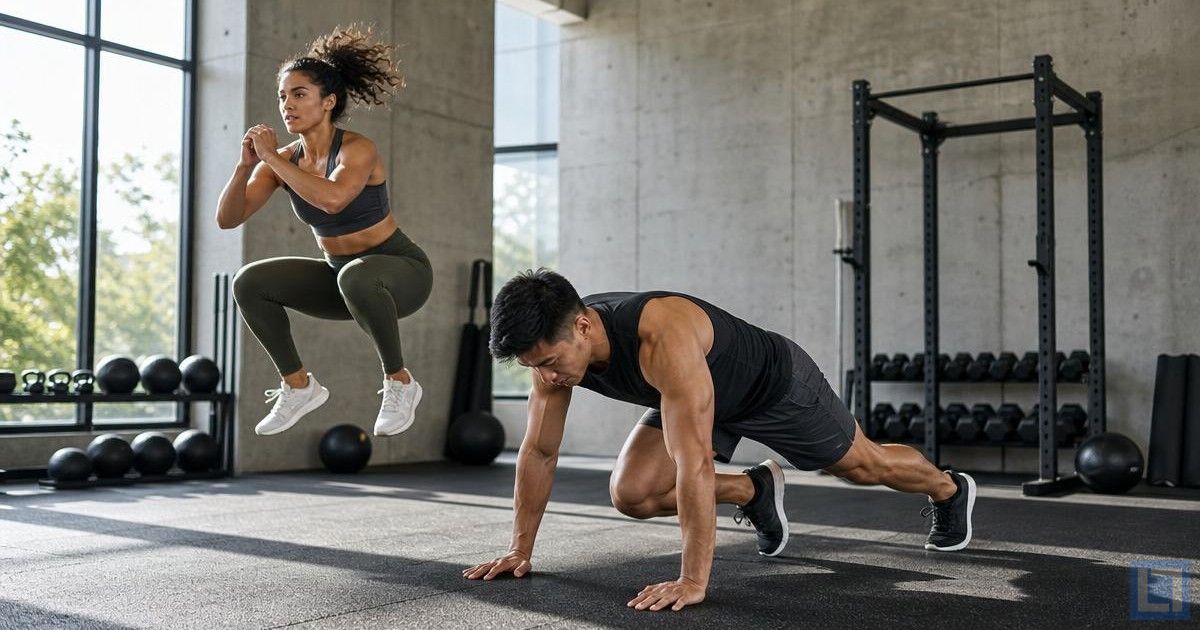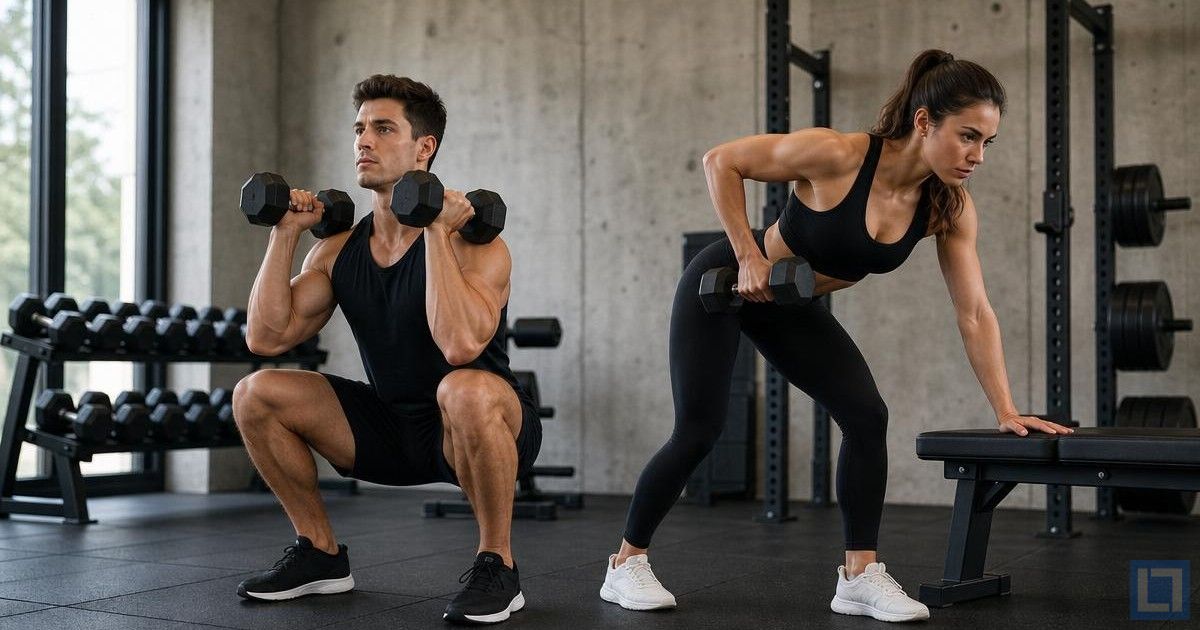
A full-body dumbbell workout is the most efficient training structure for lifters with limited time, limited equipment, or both. The best full body dumbbell workouts use a small set of foundational compound lifts to hit chest, back, legs, shoulders, and arms in a single session, with enough total stimulus to drive consistent strength and muscle gains.
Below are ten effective full-body dumbbell exercises that cover every major movement pattern: pushing, pulling, squatting, hinging, single-leg work, and loaded carries. Together they form a complete workout that fits in 45 to 60 minutes and requires nothing more than a pair of dumbbells and a bench.
Dumbbell Bench Press

The Dumbbell Bench Press is the foundational chest exercise for any dumbbell-only program. Lying flat with a dumbbell in each hand, you press the bells to lockout above the chest, then lower under control. The independent dumbbells allow a longer range of motion than a barbell can match.
No full-body dumbbell program is complete without bench pressing. The deeper stretch at the bottom hits more chest fibers than barbell pressing, the independent arms catch strength imbalances, and the lighter individual loads tend to be safer for the shoulders. It is the chest anchor that every other pressing variation builds on.
Plant the feet flat and pull the shoulder blades together hard. Press the dumbbells up and slightly together at the top. Lower under control to a deep stretch position before pressing the next rep. Avoid letting the elbows flare straight out from the body.
Dumbbell One Arm Bent Over Row
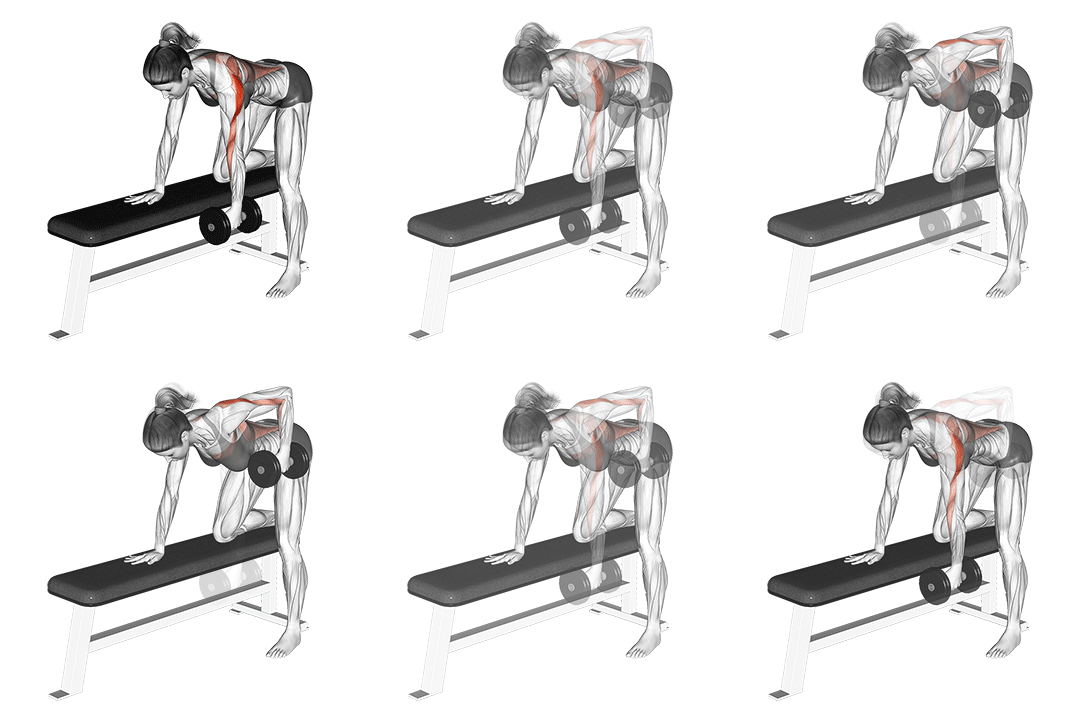
The Dumbbell One Arm Bent Over Row is the foundational pulling movement in any dumbbell program. Bracing one hand on a bench with the opposite knee on the bench, you row a dumbbell up to the hip with the other hand. The supported position eliminates body sway and lets you load the lat directly.
Single-arm rows complete the upper-body loading patterns alongside bench pressing. The unilateral position catches strength imbalances bilateral barbell rows hide, and the bench-supported setup removes the lower-back demand that limits some lifters on heavier rowing variations.
Set one hand and the same-side knee on a bench with the back flat and parallel to the floor. Hold the dumbbell in the opposite hand and pull it to the hip, squeezing the lat at the top. Lower under control. Avoid jerking the dumbbell with body momentum.
Dumbbell Goblet Squat
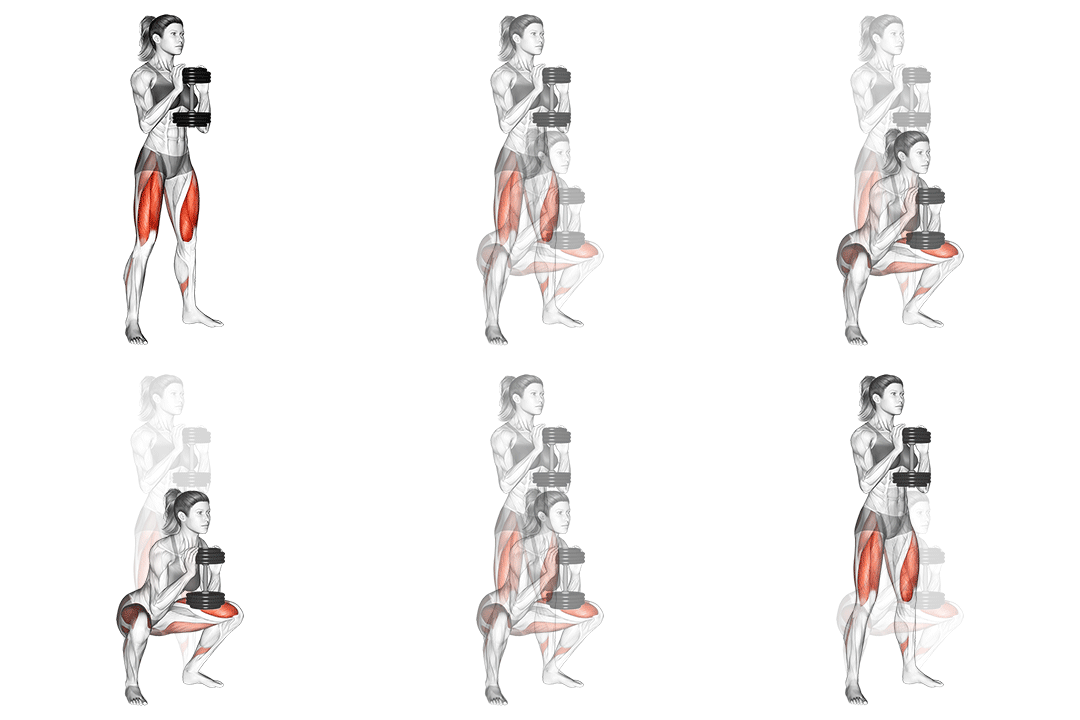
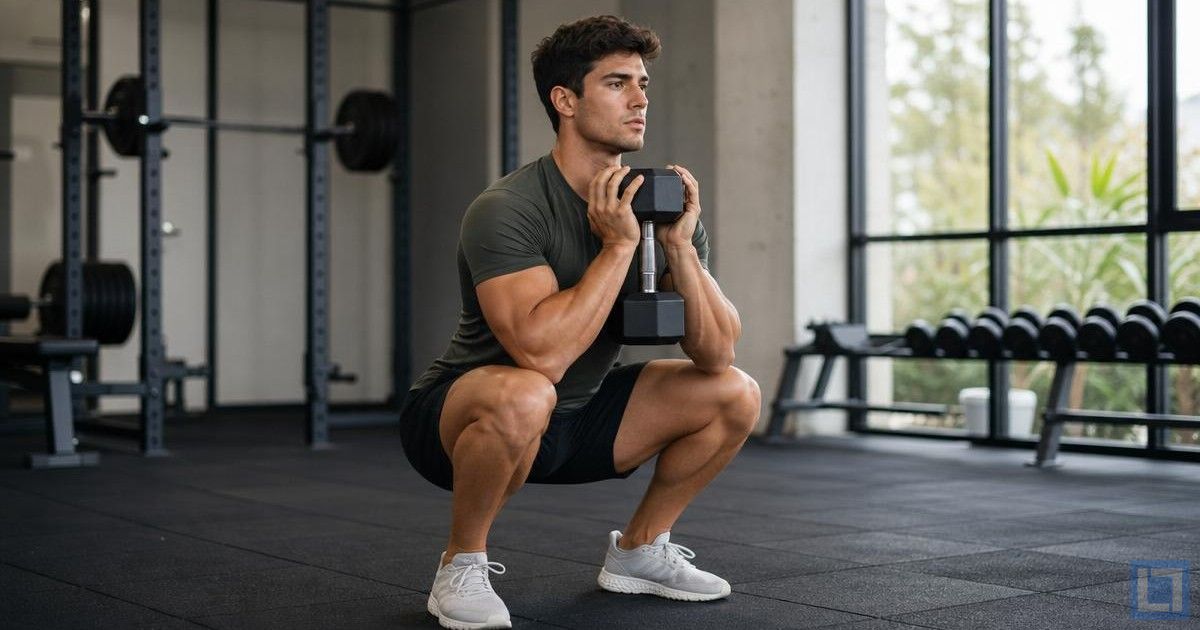
The Dumbbell Goblet Squat holds a single dumbbell vertically at the chest with both hands and squats to roughly parallel depth. The chest-loaded position keeps the torso upright through the squat, which makes it one of the most accessible lower-body compound movements that exists.
For lifters without rack access, the goblet squat is the best primary leg exercise that dumbbells offer. The vertical loading limits how heavy you can go (most lifters cap out at the 70 to 100-pound range), but for most full-body programming that range is more than enough to drive consistent strength and muscle gains.
Hold the dumbbell vertically against the chest with both hands cupping the top end. Squat to parallel depth or below with feet shoulder-width and chest tall. Drive up through the whole foot. Keep the elbows tucked inside the knees at the bottom.
Dumbbell Romanian Deadlift
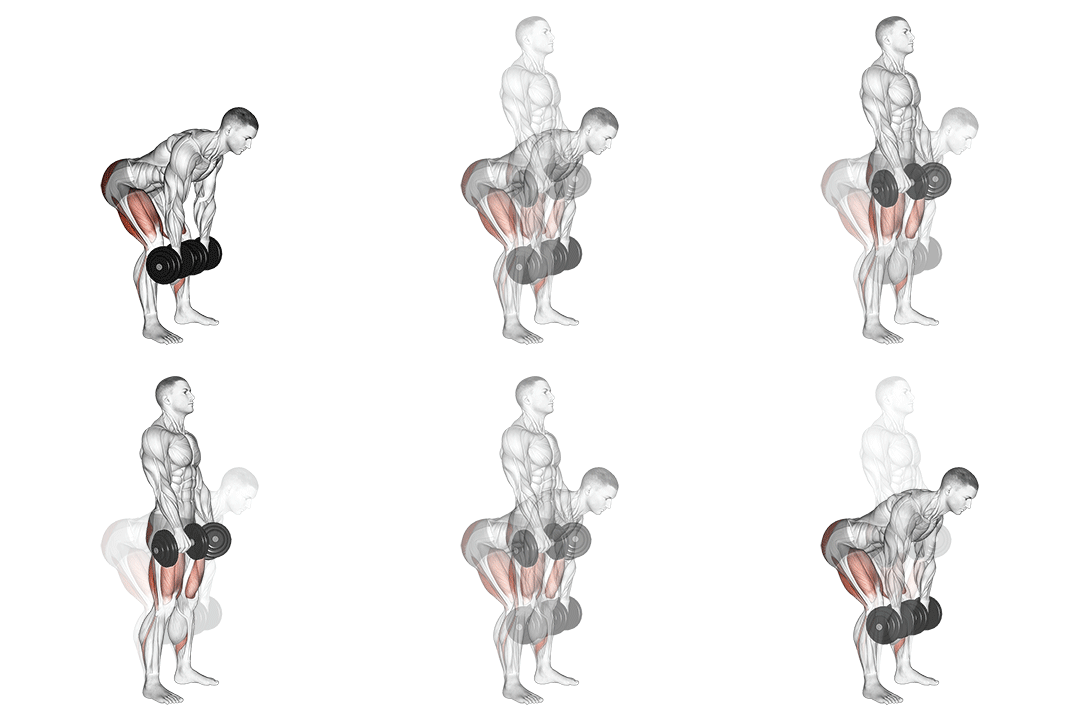
The Dumbbell Romanian Deadlift performs a Romanian deadlift with dumbbells at the sides instead of a barbell in front. It targets the hamstrings, glutes, and lower back through the hinge pattern with a deeper stretch than the conventional deadlift allows.
The dumbbell RDL is one of the most effective hamstring builders in any program. It pairs perfectly with the goblet squat: the squat handles knee-dominant loading, the RDL handles hip-dominant loading, and together they cover the entire lower body in two movements.
Hinge at the hips with a slight bend in the knees. Lower the dumbbells in a path close to the legs until the hamstrings stretch significantly. Drive the hips forward to stand back up. Keep the back flat throughout. The dumbbells should not bounce off the floor.
Dumbbell Seated Shoulder Press

The Dumbbell Seated Shoulder Press sits on a bench with back support and presses the dumbbells overhead. The seated position eliminates the leg drive of standing presses and isolates the shoulders directly, while the back support keeps the spine in a stable position throughout the lift.
Vertical pressing complements the horizontal pressing that bench press handles. The shoulder press hits the front delts heavily and engages the side delts and triceps as secondary movers. The seated dumbbell version is the most accessible vertical pressing variation for any lifter who cannot do standing barbell pressing.
Sit with feet planted and back firmly against the bench. Press the dumbbells overhead until the arms are nearly locked, then lower under control to roughly ear level. Keep the elbows at roughly 30 degrees in front of the body rather than directly to the sides.
Dumbbell Biceps Curl

The Dumbbell Biceps Curl is the most fundamental arm exercise in any program. Standing with dumbbells at the sides, you curl the bells to the shoulders by flexing the elbows. The exercise hits the biceps directly and is the foundation that all other curl variations build on.
Direct bicep work fits any full-body program that wants visible arm development. The bicep curl produces the most direct loading of the biceps brachii of any movement available. Three sets of 8 to 12 reps as the main bicep work in a full-body session is plenty.
Stand tall with dumbbells at the sides, palms facing forward. Curl both dumbbells up to the shoulders, keeping the elbows pinned to the sides through the entire rep. Lower under control to full extension. Avoid swinging the bells using body momentum.
Dumbbell Lateral Raise

The Dumbbell Lateral Raise stands with dumbbells at the sides and lifts them out to shoulder height. It is the most effective side delt exercise and the foundation of any program built for visible shoulder width.
Most pressing exercises emphasize the front delts heavily, leaving the side delts under-trained. Lateral raises fix that gap. They are particularly valuable in a full-body session where pressing already covers the front delts; the lateral raise fills in what the press misses.
Keep the elbows slightly bent and lift the dumbbells straight out to the sides until parallel with the floor. Pause briefly at the top, then lower under control. Avoid swinging the weight; if the load is too heavy to do strict, drop down a pair.
Dumbbell Lunge

The Dumbbell Lunge holds dumbbells at the sides and steps forward into a long lunge, dropping the back knee toward the floor before pressing back to standing. It is one of the most effective unilateral leg exercises in any program.
Lunges complement bilateral squatting by adding unilateral loading. The single-leg pattern catches strength imbalances and produces more balanced lower-body development than squats alone. They also drive heart rate up more than equivalent bilateral work, which adds some cardiovascular response to the strength session.
Step into a long lunge and drop straight down rather than forward. The front knee tracks over the toes; the back knee hovers just above the floor. Drive through the front heel back to the starting position. Alternate sides on each rep.
Dumbbell Farmers Carry

The Dumbbell Farmers Carry holds heavy dumbbells at the sides and walks for distance or time. The continuous walking under heavy load trains the entire back, the grip, and the core in one combined exercise.
Loaded carries are one of the most underrated full-body conditioning exercises in any program. The heavy load forces the upper back to stay engaged through every step, the grip works continuously, and the core has to brace against the asymmetric load. They make excellent finishers in full-body sessions.
Hold heavy dumbbells at the sides with a strong grip. Walk with normal posture: tall spine, shoulders back, eyes forward. End the set when grip gives out or form breaks down. Both indicators are good signals to stop.
Walking Lunge

The Walking Lunge holds dumbbells at the sides and walks forward in alternating long lunges. The continuous walking under load produces both strength and cardiovascular adaptation, which makes it one of the most efficient single exercises in any full-body program.
Where the static dumbbell lunge lets you reset between reps, the walking lunge keeps the body moving continuously. The added demand makes it more challenging both mechanically (each step requires balance and control) and metabolically (the heart rate stays elevated). It is a strong finisher for full-body sessions.
Step into a long lunge and drop straight down. Drive through the front heel to take the next step, lunging onto the opposite leg. Maintain balance and control throughout; do not let the body sway side to side. Continue for the prescribed distance or rep count.
How To Program These Workouts
A productive full-body dumbbell session pulls six to eight exercises from the list above. A balanced session includes one heavy push (bench press), one heavy pull (single-arm row), one squat pattern (goblet squat), one hinge pattern (RDL), one shoulder movement (seated press or lateral raise), one unilateral leg exercise (lunge or walking lunge), and one finisher (farmers carry).
Train full body two to three times per week. Full-body sessions need at least 48 hours of recovery between workouts because every major muscle group works each session. A Monday/Wednesday/Friday or Tuesday/Thursday split works well for most lifters. Beginners often do better with 2x per week to allow more recovery between sessions.
For more dumbbell-specific programming, see our best upper body dumbbell workouts and best dumbbell leg workouts. To browse the equipment library, explore our dumbbell exercises collection.
Final Thoughts
The best full body dumbbell workouts deliver complete training with the most accessible weight room equipment available. A pair of dumbbells covers chest, back, legs, shoulders, and arms with enough exercise variety to keep most lifters challenged for years. The structure works particularly well for home gyms, busy schedules, and beginners building their first complete training program.
Stay consistent with the foundational lifts. Most lifters get caught up rotating exercises every few weeks; the lifters who actually build strength and muscle stick with the same handful of foundational lifts and slowly add load over months and years. The bench press, row, squat, and hinge are the core. Everything else is supplementary.
Frequently Asked Questions
How heavy should my dumbbells be for full body workouts?
For most intermediate lifters, a range of 30 to 60 pounds for primary compound work (bench press, single-arm row, goblet squat, RDL), 20 to 40 pounds for shoulder presses, and 15 to 35 pounds for isolation work covers most needs. The right weight is whatever lets you complete clean sets in your target rep range with one or two reps in reserve.
How often should I do full body dumbbell workouts?
Two to three times per week works for most lifters. Full-body sessions need at least 48 hours of recovery between workouts. Beginners often start with 2x per week to allow more recovery; intermediates and advanced lifters can typically handle 3x per week. Daily full-body training is rarely productive because total recovery suffers.
Can dumbbell workouts replace barbell training?
For most beginners and intermediates, yes. Dumbbells produce real strength and muscle gains for years before lifters bump up against the load ceiling that barbells eventually surpass. Advanced lifters chasing maximum strength sometimes benefit from adding barbell work, but consistent dumbbell training remains useful at every level.
How long should a full body dumbbell workout be?
Forty-five to sixty minutes is the standard range. Shorter sessions (30 minutes) work for time-limited days but cover fewer exercises; longer sessions (90+ minutes) usually mean either too much volume or too long between sets. Forty-five focused minutes with proper rest between sets is plenty for most lifters.
What if I don’t have a bench?
Most of the exercises above can be done without a bench, though a few benefit from one. The bench press can be done on the floor (limited range of motion but workable). The single-arm row requires either a bench or a sturdy chair as a brace. The seated shoulder press can be done standing instead. The other seven exercises work fine without a bench.