Calisthenics shoulder training produces real shoulder development without requiring dumbbells, barbells, or any pressing equipment. The combination of pike push-ups (vertical pressing through the shoulders), handstand variations (advanced overhead bodyweight pressing), and progressive shoulder mobility work covers every major shoulder function the body uses. The progression from beginner-accessible pike push-ups to advanced handstand push-ups produces shoulder strength and mass comparable to barbell overhead pressing for most lifters.
Below are ten effective calisthenics shoulder exercises that cover dynamic warm-ups (shoulder circling, arm circles, pendulum), foundational pressing (push-ups, pike push-ups), advanced vertical pressing (wall handstand, handstand push-up, ball-elevated pike push-up), specialty work (pseudo planche push-up), and shoulder blade control (scapula push-up). Together they form a complete calisthenics shoulder training program from beginner through elite levels.
Pike Push Up

The Pike Push Up sets up in an inverted V position with the hips piked toward the ceiling and presses the head toward the floor. The vertical pressing pattern emphasizes the shoulders heavily, which makes it the most accessible bodyweight shoulder exercise that exists.
For calisthenics shoulder training, the pike push-up is the foundational exercise. The inverted angle shifts loading from chest to shoulders, which fills the gap between standard push-ups and full handstand pressing. Build to 10 to 15 strict reps before progressing to elevated pike push-ups or handstand variations. Run it for 3 sets of 8 to 12 reps as primary shoulder work.
Set up in a downward dog position with hands shoulder-width and feet planted, hips piked high toward the ceiling. Lower the head toward the floor between the hands by bending at the elbows. Press back to the start by extending the elbows. Keep the hips piked throughout to maintain shoulder emphasis.
Handstand Hold on Wall
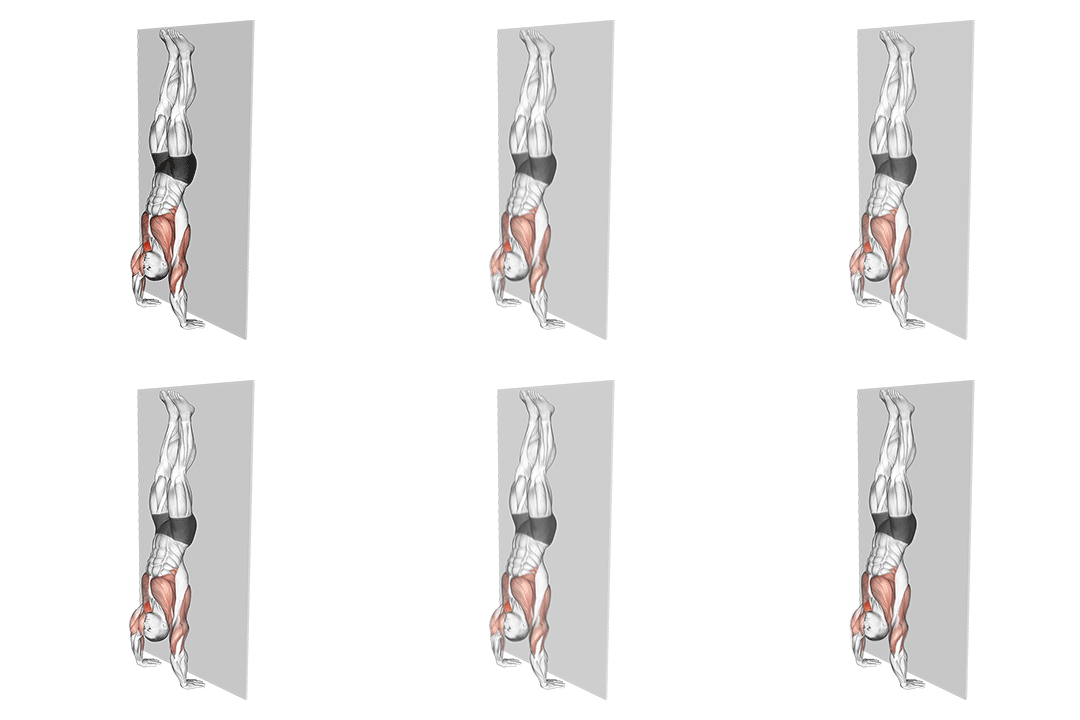
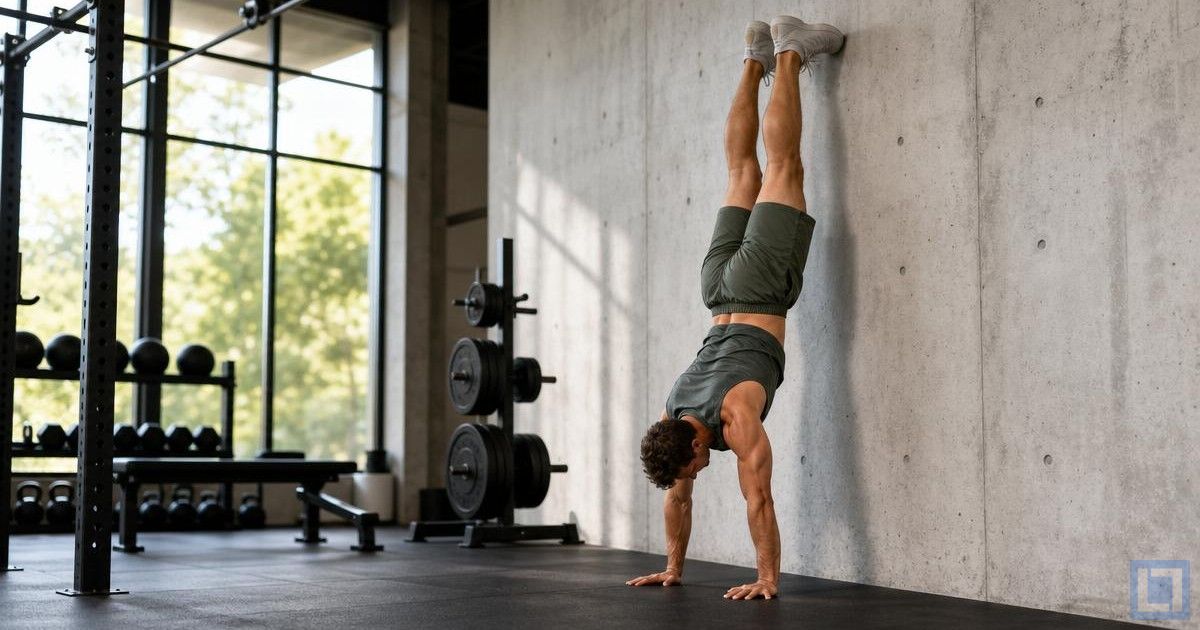
The Handstand Hold on Wall kicks up to a handstand position with the heels resting against a wall and holds the position. The static hold builds shoulder strength, balance, and the body awareness required for free-standing handstands.
For calisthenics shoulder development, the wall-supported handstand hold is the foundational handstand exercise. The static loading produces strong shoulder strength while the wall provides safety and feedback for proper alignment. Build to 30 to 60-second clean holds before attempting free-standing handstands. Run it for 3 sets of 30 to 45-second holds.
Stand a few feet from a wall facing it. Place hands on the floor close to the wall. Kick up one leg at a time to bring the body to vertical, ending with the heels resting lightly against the wall. Hold the position with arms locked out and body straight. Lower one leg at a time to return to standing.
Handstand Push Up

The Handstand Push Up performs a vertical pressing motion in the handstand position, lowering the head toward the floor and pressing back to lockout. The exercise is the bodyweight equivalent of heavy overhead barbell pressing.
For advanced calisthenics shoulder development, the handstand push-up is the gold standard. The exercise produces shoulder strength and mass that few other bodyweight exercises can match. Most lifters need 6 to 18 months of progressive pike push-up and wall handstand training before strict handstand push-ups become accessible. Run it for 3 sets of 5 to 8 reps once feasible.
Kick up to a handstand position against a wall (or free-standing for advanced lifters). Lower the head toward the floor by bending at the elbows, keeping the body in a straight line from heels to head. Press back to lockout by extending the elbows. Lower under control. The wall-supported version is significantly easier than the free-standing version.
Pseudo Planche Push-up

The Pseudo Planche Push-up performs the push-up with the hands positioned at the hips rather than at the chest, fingers pointing back toward the feet. The forward lean creates extreme shoulder loading that builds toward the full planche position used in advanced calisthenics.
For lifters working toward advanced bodyweight skills, pseudo planche push-ups build the foundational shoulder strength and lean position. The pattern is significantly harder than it looks; even strong lifters often struggle with 5 strict reps initially. Run it for 3 sets of 6 to 10 reps as a progression exercise toward the planche.
Set up in a push-up position with hands placed at the hips with fingers pointing back toward the feet. Lean forward to shift weight onto the hands until the shoulders are positioned forward of the wrists. Lower the chest toward the floor by bending at the elbows while maintaining the forward lean. Press back to the start.
Push Ups

The Push Ups perform a push-up motion in standard plank position. While primarily a chest exercise, push-ups also load the shoulders heavily and serve as foundational shoulder strength work for calisthenics programming.
For calisthenics shoulder training, standard push-ups serve as the foundational pressing pattern that pike push-ups and handstand variations build from. The pattern produces strong shoulder strength alongside chest and tricep development. Run them for 3 sets of 12 to 20 reps as part of any complete calisthenics shoulder session.
Set up in plank position with hands directly under the shoulders and body in a straight line from head to heels. Lower the chest to within an inch of the floor by bending the elbows. Press back to lockout. Maintain tight body position throughout.
Exercise Ball Pike Pushup

The Exercise Ball Pike Pushup performs the pike push-up with the feet elevated on a stability ball, which dramatically increases the shoulder loading and adds significant core stability demand. The exercise serves as a stepping-stone toward handstand push-ups.
For lifters who have mastered standard pike push-ups but cannot yet do handstand push-ups, the elevated pike push-up on a stability ball is the appropriate progression. The elevated feet shift more bodyweight onto the shoulders while the unstable surface adds core demand. Run it for 3 sets of 6 to 10 reps as accessory shoulder work.
Set up in a pike position with the feet resting on top of a stability ball and hands on the floor in front of the body. Lower the head toward the floor by bending at the elbows, keeping the hips piked. Press back to the start. Maintain ball control throughout; the ball should not roll significantly during the rep.
Standing Shoulder Circling

The Standing Shoulder Circling stands tall and rotates the shoulders in large circles, first forward and then backward. The dynamic motion warms up the shoulder joint through full ranges of motion and serves as the foundational warm-up drill for calisthenics shoulder training.
For calisthenics shoulder programs, shoulder circling is the foundational warm-up drill. The dynamic motion lubricates the shoulder joint and prepares the rotator cuff for heavier work. Run 10 forward and 10 backward circles before any pressing or pulling work. The drill takes 30 seconds and prevents the shoulder issues that aggressive cold pressing produces.
Stand tall with arms relaxed at the sides. Roll the shoulders forward in large circles for 10 reps, then reverse direction and roll backward for 10 reps. Move slowly and deliberately rather than chasing speed. Feel the joint move through its full range.
Incline Scapula Push-Up

The Incline Scapula Push-Up places the hands on an elevated surface and performs a small motion that protracts and retracts the shoulder blades without bending the elbows. The exercise builds the foundational shoulder blade control that all advanced calisthenics shoulder skills depend on.
For shoulder mobility and serratus anterior development, scapula push-ups are essential for calisthenics progression. The exercise teaches the shoulder blade control required for handstands, planches, and all advanced bodyweight pressing skills. Run it for 3 sets of 12 to 15 reps as warm-up or accessory work.
Set up with hands on an elevated surface (couch, bench, sturdy chair) and feet planted on the floor. Keep the arms straight throughout. Lower the chest slightly by allowing the shoulder blades to retract together; press back by protracting the shoulder blades apart. The motion is small (a few inches); the elbows do not bend.
Shoulder Circle

The Shoulder Circle extends the arms out to the sides and circles them in large arcs, first forward and then backward. The added arm extension creates larger ranges of motion than basic shoulder circling and produces stronger mobility benefits.
For deeper shoulder mobility work, the arm circle progresses past basic shoulder circling. The increased range demand produces stronger mobility gains over time, particularly in the rotator cuff and shoulder capsule. Run it as the second warm-up drill after basic shoulder circling for any calisthenics shoulder session.
Extend the arms out to the sides at shoulder height. Make large forward circles with the arms for 10 to 15 reps, then reverse to backward circles for 10 to 15 reps. Start with smaller circles and progressively widen them as the shoulders warm up.
Bent Over Shoulder Pendulum

The Bent Over Shoulder Pendulum hinges over from a standing position and lets the arm hang freely while moving in pendulum motions. The hanging position decompresses the shoulder joint and produces relief from chronic tension.
For calisthenics shoulder recovery, pendulum exercises are one of the most effective drills that exists. The bent-over hanging position relieves the constant pull of gravity on the shoulder joint, which produces immediate relief from chronic shoulder tightness. Use it as a recovery drill between sets of heavier shoulder work or as a daily shoulder health habit.
Hinge over with one hand resting on a bench or chair for support. Let the opposite arm hang freely toward the floor. Move the hanging arm in small circles (10 each direction), then in side-to-side swings, then in front-to-back swings. Switch sides.
How To Program These Workouts
A productive calisthenics shoulder session pulls five to seven exercises from the list above based on strength level. Start with warm-up drills (shoulder circling, arm circles, scapula push-ups) for 5 to 10 minutes, then progress to primary pressing work (pike push-ups, push-ups). Intermediate and advanced lifters can include wall handstand holds, handstand push-ups, pseudo planche push-ups, and ball-elevated pike push-ups. Run pressing exercises for 3 to 4 sets of 6 to 12 reps; isometric holds for 30 to 45 seconds; warm-ups for 10 to 15 reps each.
Train calisthenics shoulders 2 to 3 times per week. The shoulders recover within 48 to 72 hours of moderate training, but the high involvement in chest pressing exercises (push-ups, dips) means shoulder work compounds with other upper-body training. Most lifters program one focused shoulder session per week alongside the indirect shoulder work from chest training, or split shoulder work across two upper-body days for higher total volume.
For broader shoulder programming, see our best at home shoulder workouts and best shoulder mobility exercises. For broader calisthenics training, see our best calisthenics workouts.
Final Thoughts
The best calisthenics shoulder workouts deliver real shoulder development through progressive bodyweight exercises that work in any environment with no equipment requirements. The combination of dynamic warm-ups, foundational pressing, advanced handstand variations, and shoulder mobility work covers every major shoulder function while building the kind of functional strength that translates to athletic performance. For lifters who want strong shoulders without weight equipment, calisthenics shoulder training is one of the most effective options available.
Stay focused on shoulder mobility alongside strength work. The most common calisthenics shoulder training mistake is rushing into pressing work without adequate warm-up or mobility training, which produces chronic shoulder issues that limit long-term progression. The fix: dedicate 5 to 10 minutes per session to shoulder circling, scapula push-ups, and pendulum exercises. The 5 to 10-minute investment prevents shoulder issues and produces stronger long-term progression than skipping the mobility work for more pressing volume.
Frequently Asked Questions
Can calisthenics build big shoulders?
Yes for beginners and intermediates. The combination of pike push-ups, handstand variations, and progressive shoulder loading produces real shoulder development for years of consistent practice. Advanced calisthenics athletes who can perform 10+ strict handstand push-ups typically have shoulders comparable to lifters who do heavy barbell overhead pressing. The progression takes longer than barbell training but produces equivalent results for most general fitness goals.
How often should I train calisthenics shoulders?
Two to three times per week works for most lifters. The shoulders recover within 48 to 72 hours of moderate training. Most successful programs include one focused shoulder session per week alongside the indirect shoulder work from chest pressing exercises, or split shoulder work across two upper-body days for higher total volume.
What’s the progression to handstand push-ups?
Pike push-ups (10 to 15 strict reps) → elevated pike push-ups on a box or ball (8 to 12 strict reps) → wall handstand holds (60 to 90 seconds) → wall-supported handstand push-ups (5 to 10 strict reps) → free-standing handstand push-ups (advanced level). Most lifters need 6 to 18 months of progressive practice to reach strict handstand push-ups.
Do I need a pull-up bar for calisthenics shoulders?
Not for the exercises in this list. Pike push-ups, push-ups, handstand variations, pseudo planche push-ups, and scapula push-ups all work with floor space alone. A wall is helpful for handstand training; an elevated surface (couch, chair, bench) is helpful for elevated pike push-ups and incline scapula push-ups. None require pull-up bars or specialized equipment.
Why do my shoulders hurt during calisthenics work?
The most common cause is insufficient warm-up combined with weak rotator cuff muscles relative to the much stronger pressing muscles. The fix: include 5 to 10 minutes of shoulder mobility work (shoulder circling, scapula push-ups, pendulum) before every shoulder session. The 5 to 10-minute investment prevents the chronic shoulder issues that aggressive cold pressing produces. Persistent pain even with appropriate warm-up warrants a visit to a sports medicine doctor.