Shoulder mobility is one of the most under-trained elements of strength programs. Years of heavy pressing without dedicated mobility work produces forward-rounded posture, limited overhead range of motion, and the chronic shoulder pain that limits long-term lifting. The best shoulder mobility exercises address this directly through dynamic warm-up drills, static stretches for chronically tight muscles, and self-massage with foam rollers that improves tissue quality.
Below are ten effective shoulder mobility drills that cover dynamic warm-ups, T-spine mobility, rotator cuff stretches, and tissue-quality work with foam rollers. Together they form a complete shoulder mobility program that takes 10 to 15 minutes per day and produces measurable improvements in range of motion and posture within 6 to 8 weeks of consistent practice.
Standing Shoulder Circling

The Standing Shoulder Circling stands tall and rotates the shoulders in large circles, first forward and then backward. The dynamic motion warms up the shoulder joint through the full range of motion and is one of the most accessible mobility drills that exists.
For pre-training warm-ups, shoulder circling is the foundational shoulder mobility drill. The dynamic motion lubricates the shoulder joint and prepares the rotator cuff for heavier work without static stretching that can temporarily reduce strength. Run 10 forward and 10 backward circles before any pressing or pulling work.
Stand tall with arms relaxed at the sides. Roll the shoulders forward in large circles for 10 reps, then reverse direction and roll backward for 10 reps. Move slowly and deliberately rather than chasing speed. Feel the joint move through its full range.
Shoulder Circle

The Shoulder Circle extends the arms out to the sides and circles them in large arcs, first forward and then backward. The added arm extension creates larger ranges of motion than shoulder-only circling and produces stronger mobility benefits.
For deeper shoulder warming and mobility work, the arm circle progresses past simple shoulder circling. The increased range demand produces stronger mobility gains over time, particularly in the rotator cuff and shoulder capsule. Use it as the second warm-up drill after basic shoulder circling.
Extend the arms out to the sides at shoulder height. Make large forward circles with the arms for 10 to 15 reps, then reverse to backward circles for 10 to 15 reps. Start with smaller circles and progressively widen them as the shoulders warm up.
Kneeling T Spine Mobility Stretching
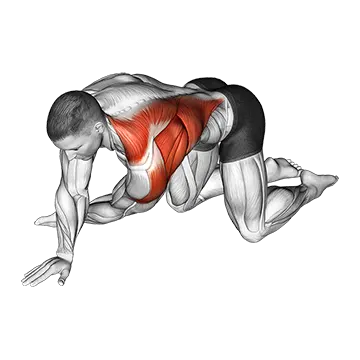
The Kneeling T Spine Mobility Stretching kneels on the floor with hands placed on a low surface and rotates the upper back through twists and bends. The motion targets thoracic spine mobility, which is the upper-back rotation that many shoulder problems trace back to.
Most chronic shoulder mobility issues originate in the thoracic spine rather than the shoulder joint itself. A stiff upper back forces the shoulders to compensate during overhead movements, which produces the impingement and rotator cuff issues many lifters experience. T-spine mobility work addresses the root cause rather than the symptoms.
Kneel on the floor with hands placed on a low bench or chair. Drop the chest toward the floor while keeping the hips back. Add small rotational twists at the bottom to load the thoracic spine. Hold for 30 to 60 seconds total. Move slowly through the range.
Bent Over Shoulder Pendulum

The Bent Over Shoulder Pendulum hinges over from a standing position and lets the arm hang freely while moving in pendulum motions (circular and side-to-side swings). The hanging position decompresses the shoulder joint and produces relief from chronic tension.
Pendulum exercises are one of the most underrated shoulder mobility drills that exist. The bent-over hanging position relieves the constant pull of gravity on the shoulder joint, which produces immediate relief from chronic shoulder tightness. Use it as a recovery drill between sets of heavier shoulder work.
Hinge over with one hand resting on a bench or chair for support. Let the opposite arm hang freely toward the floor. Move the hanging arm in small circles (10 each direction), then in side-to-side swings, then in front-to-back swings. Switch sides.
Cross Over Shoulder Stretch
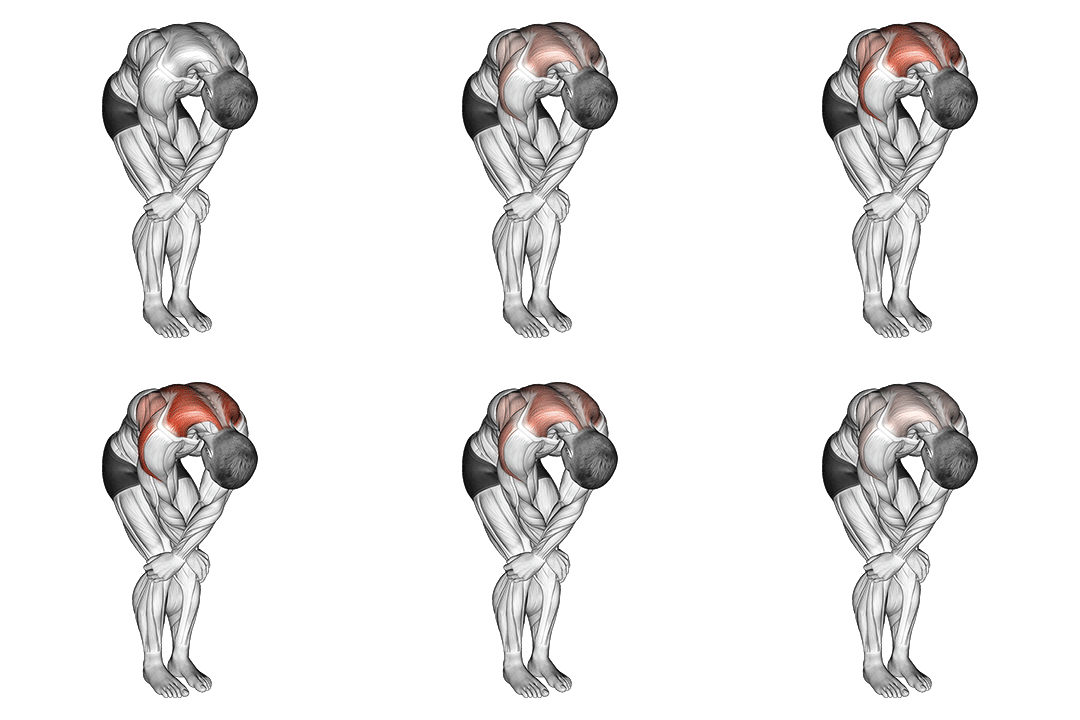
The Cross Over Shoulder Stretch reaches one arm across the body horizontally and uses the opposite arm to pull it closer to the chest. The position stretches the rear deltoid and the back of the shoulder capsule.
Tight rear delts and posterior shoulder capsules contribute to forward-shoulder posture and limited overhead range of motion. The cross-over stretch addresses both directly with a 60 to 90-second hold per side. Daily practice produces measurable improvements within 4 to 6 weeks.
Stand or sit tall. Reach one arm across the body at chest height. Use the opposite hand to pull the arm closer to the chest, feeling the stretch in the back of the shoulder. Hold for 60 to 90 seconds per side. Switch sides and repeat.
Internal Shoulder Rotation Stretch
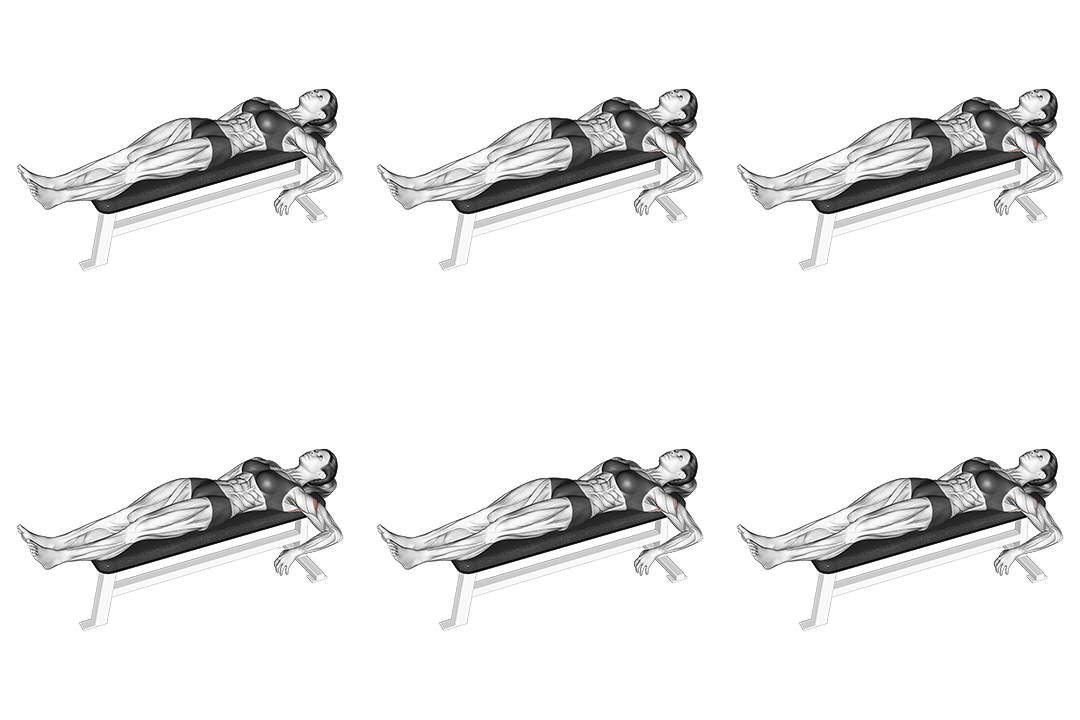
The Internal Shoulder Rotation Stretch reaches one arm behind the back and uses a towel or strap to gently pull the hand higher up the back. The position stretches the front of the shoulder capsule and improves the internal rotation range that many lifters lack.
Internal rotation deficits are one of the most common shoulder mobility limitations in lifters. Years of pressing-heavy training without rotational work tighten the front of the shoulder capsule and limit internal rotation range. The towel-assisted stretch addresses this directly.
Stand tall with one arm reaching down behind the back from above and the other from below. Hold a towel or strap connecting both hands. Use the upper arm to gently pull the lower arm higher up the back. Hold for 60 to 90 seconds per side. Switch sides.
Standing Reverse Shoulder Stretch
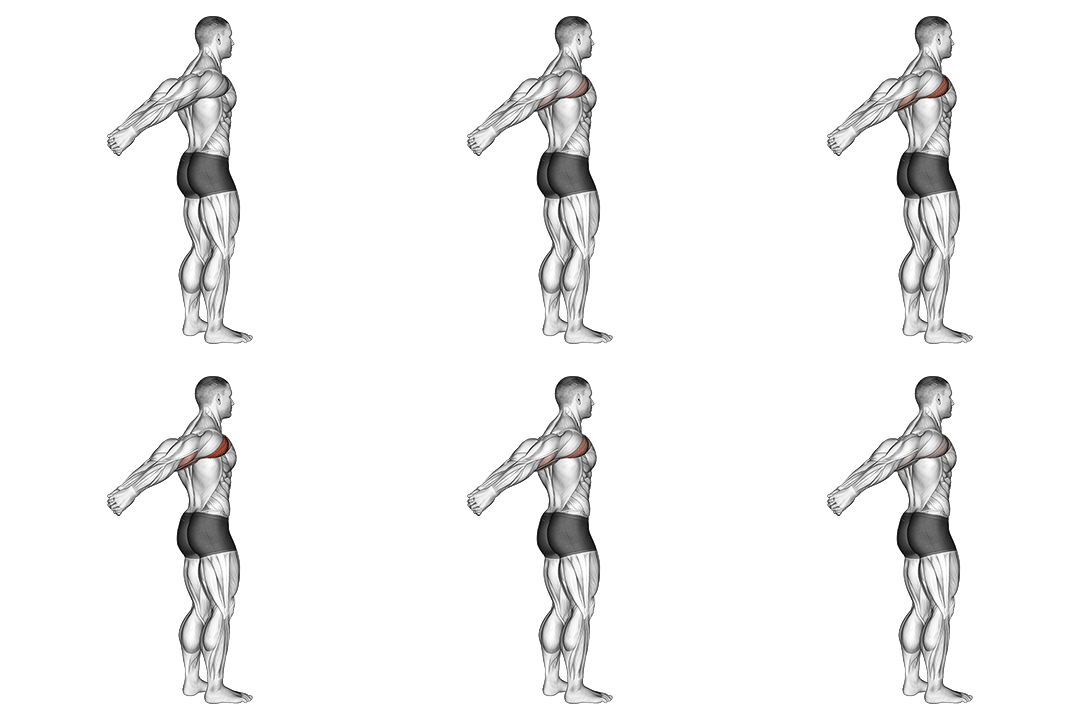
The Standing Reverse Shoulder Stretch interlocks the fingers behind the back and lifts the hands away from the body to stretch the front of the shoulders and the chest. The position addresses chronic tightness in the anterior shoulder caused by forward-rounded posture.
Forward-rounded shoulder posture is one of the most common postural issues in modern lifters. The standing reverse stretch directly counteracts this by opening the chest and stretching the front shoulders. Daily practice for 60 to 90 seconds produces measurable posture improvements within 4 to 6 weeks.
Stand tall with feet shoulder-width apart. Interlock the fingers behind the back. Lift the hands away from the body, squeezing the shoulder blades together. Tilt the chin slightly up to deepen the chest stretch. Hold for 60 to 90 seconds.
Roll Shoulder Blade Reach Lying on Floor

The Roll Shoulder Blade Reach Lying on Floor lies on the back with a foam roller positioned along the spine and reaches the arms overhead in a controlled rolling motion. The position stretches the front of the shoulders and chest while improving thoracic spine mobility simultaneously.
For combined shoulder and upper-back mobility work, the lying foam roller reach is one of the most efficient drills that exists. The supine position allows gravity to assist the chest opening, while the foam roller adds thoracic mobility work to the shoulder stretching. Use it as a finishing drill after pressing-heavy sessions.
Lie on the back with a foam roller positioned vertically along the spine from head to tailbone. Reach the arms overhead in a controlled motion, feeling the stretch in the chest and shoulders. Hold the overhead position for 30 to 60 seconds. Lower the arms and repeat.
Roll Shoulder Back Rotation Lying on Floor

The Roll Shoulder Back Rotation Lying on Floor lies on the back with a foam roller positioned vertically and rotates the arms in large arcs to mobilize the shoulders and upper back. The combination of rolling support and dynamic arm motion produces both mobility and tissue-quality improvements.
For lifters who feel restricted during overhead pressing or pulling, the foam-roller rotation drill addresses both the shoulder joint mobility and the underlying tissue tightness simultaneously. The combination produces stronger results than dedicated mobility work that ignores tissue quality.
Lie on the back with a foam roller positioned vertically along the spine. Start with arms extended at the sides at shoulder height. Move the arms in large arcs overhead and back to the sides in a windshield-wiper motion. Move slowly and deliberately for 10 to 15 reps.
Seated Shoulder Flexor Depressor Retractor Stretch Bent Knee

The Seated Shoulder Flexor Depressor Retractor Stretch combines several simultaneous shoulder stretches in one seated position with bent knees. The complex stretch addresses multiple shoulder muscle groups at once, which makes it efficient for lifters short on mobility-work time.
For comprehensive shoulder mobility in minimal time, the seated combined stretch hits the rotator cuff, scapular stabilizers, and chest simultaneously. Daily practice for 60 to 90 seconds produces measurable improvements in shoulder range of motion within 6 to 8 weeks.
Sit on the floor with knees bent and feet flat. Reach one arm overhead and across the body, while the opposite arm reaches behind the back. Hold the combined stretch position with deliberate breathing. Switch sides after 60 to 90 seconds.
How To Program These Workouts
A productive shoulder mobility routine combines dynamic warm-up drills (shoulder circling, arm circles) with targeted static stretches (cross-over stretch, internal rotation stretch, standing reverse stretch) and tissue-quality work (foam roller drills). Dynamic work fits as a pre-training warm-up; static stretches go after training when the muscles are warm; foam rolling fits before either to open tissue.
Daily mobility work produces faster results than infrequent long sessions. Five to ten minutes per day, six days per week, will produce noticeable changes within four to six weeks. Most lifters struggle with consistency more than effort; building a 5-minute mobility habit at the start or end of every training session is the most reliable way to make the practice stick.
For broader mobility programming, see our best hip mobility stretches and best hamstring stretches guides. For yoga-style flexibility work, browse our best yoga poses for beginners.
Final Thoughts
Shoulder mobility issues rarely come from the shoulder alone. Tight upper back (thoracic spine), weak rotator cuff, and chronic forward-rounded posture all contribute to the limited range of motion most lifters carry. The best shoulder mobility exercises address the connected muscles as much as the shoulder itself, which is why programs that include T-spine and chest work produce better results than shoulder-only stretching.
Build the habit. Five to ten minutes per day produces faster change than one hour-long session per week. The body adapts to consistent, frequent stimulus better than to occasional heavy doses. Most of the drills above work without any equipment beyond a foam roller, which makes them practical to do at home, in the gym, or during rest periods between heavy lifting sets.
Frequently Asked Questions
How long does it take to improve shoulder mobility?
Most lifters see meaningful improvement within four to six weeks of daily practice. Long-term mobility changes (the kind that produce permanent posture and range-of-motion improvements) take three to six months of consistent practice. The body responds to repeated stimulus over time rather than to occasional heavy doses.
Should I stretch shoulders before or after lifting?
Both, but with different approaches. Before lifting, use dynamic warm-up drills (shoulder circling, arm circles) and brief activation work for 5 to 10 minutes. After lifting, use static stretches held for 60 to 90 seconds per side to produce lasting flexibility changes. Static stretching before lifting can temporarily reduce strength output, so save the long holds for after.
Why do my shoulders click and pop?
Shoulder clicking and popping without pain is usually harmless and comes from gas bubbles in the joint fluid or normal tendon movement over bone. With pain, the same sounds may indicate impingement, rotator cuff issues, or labral problems. Most painless clicking responds to consistent mobility work over weeks; persistent painful clicking warrants a visit to a sports medicine doctor.
Can shoulder mobility prevent injury?
Yes, significantly. Most non-traumatic shoulder injuries (impingement, rotator cuff strains, anterior shoulder pain) come from poor mobility patterns combined with heavy training. Lifters who include 10 minutes of daily shoulder mobility work typically report fewer shoulder issues than those who skip mobility entirely. Prevention is far easier than rehabilitation after injury.
Why is my upper back so tight from lifting?
Chronic upper-back tightness usually comes from a combination of heavy pressing and pulling without dedicated thoracic spine mobility work, prolonged sitting, and chronic forward-head posture. T-spine work like the kneeling T-spine mobility stretching and foam roller drills addresses the root cause; just stretching the muscles without mobilizing the spine produces only temporary relief.