Medicine ball core training produces real core development through weighted loading combined with explosive power patterns that traditional ab training cannot replicate. The format works particularly well for core training because the medicine ball enables both static weighted ab work (crunches, leg raises, dead bugs) and dynamic power patterns (rotational throws, overhead throws, catch-and-throw) that build the core strength and explosive power critical for athletic performance. The combination of static weighted loading and dynamic power work produces broader core development than either single-modality approach. Most lifters who consistently train medicine ball core 1 to 3 times per week see measurable core strength, ab muscle development, and rotational power improvements within 6 to 12 weeks.
Below are ten effective medicine ball core exercises that cover weighted ab work (medicine ball crunch, overhead-extended crunch, lying leg raise, dead bug), rotational power (rotational throw, step-behind rotational throw, around-head rotation), explosive power (backward throw, overhead throw, catch-and-throw), and dynamic conditioning. Together they form a complete medicine ball core training program that hits every major core muscle and movement pattern with both strength and power emphasis. A 30 to 40-minute session pulled from this list produces strong combined core development across static strength, rotational power, and explosive total-body work.
Medicine Ball Crunch

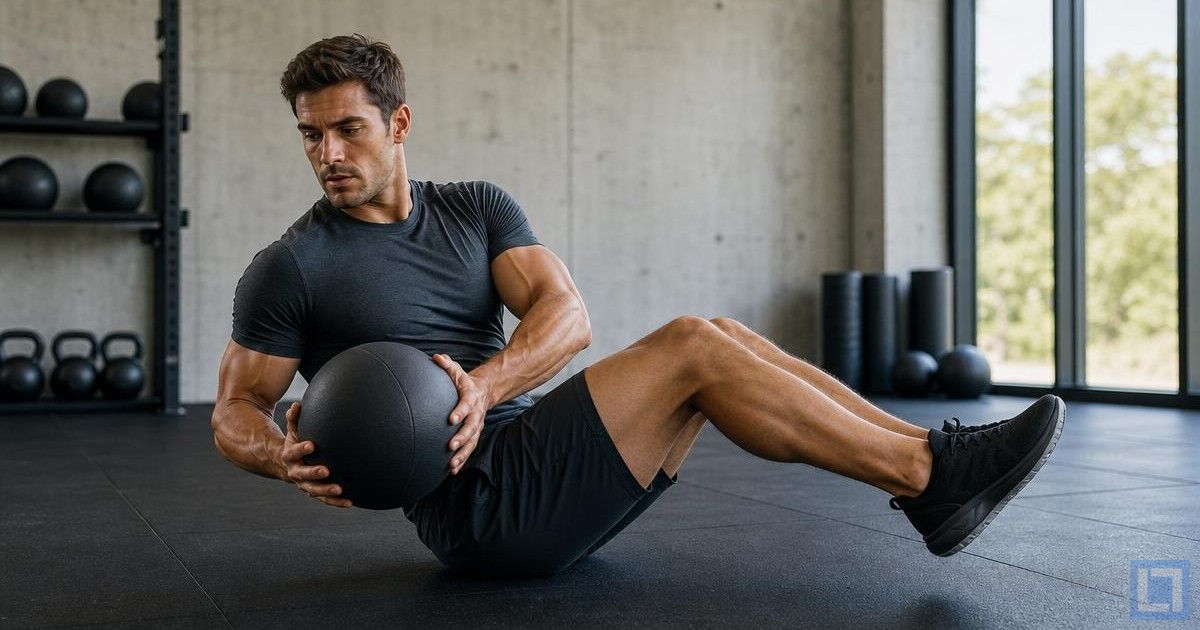
The Medicine Ball Crunch lies on the back with knees bent and a medicine ball held at the chest, then performs crunches with the ball providing additional weighted loading. The pattern produces stronger ab loading than bodyweight crunches.
For medicine ball core training, the medicine ball crunch is the foundational weighted ab exercise. The pattern hits the rectus abdominis through weighted crunch motion. Run it for 4 sets of 10 to 15 reps as primary weighted ab work in any MB core session.
Lie flat on the back with knees bent and feet planted. Hold a medicine ball at the chest with both hands. Crunch the trunk up by lifting the upper body toward the knees while keeping the ball at the chest. Lower under control. The added weight increases ab loading throughout the rep.
Medicine Ball Around Head Rotation

The Medicine Ball Around Head Rotation holds a medicine ball overhead and rotates it in a circular motion around the head. The pattern produces direct shoulder, core, and oblique loading through dynamic rotation.
For medicine ball core training, the around-head rotation produces strong combined core and shoulder loading. The pattern hits the obliques through dynamic rotation under overhead load. Run it for 3 sets of 10 to 12 reps per direction as combined core and shoulder work.
Stand with feet shoulder-width and a medicine ball held overhead. Rotate the ball in a circular motion around the head, moving it through a full circle while engaging the core to stabilize. Reverse direction between sets. Maintain upright posture throughout the motion.
Medicine Ball Rotational Throw
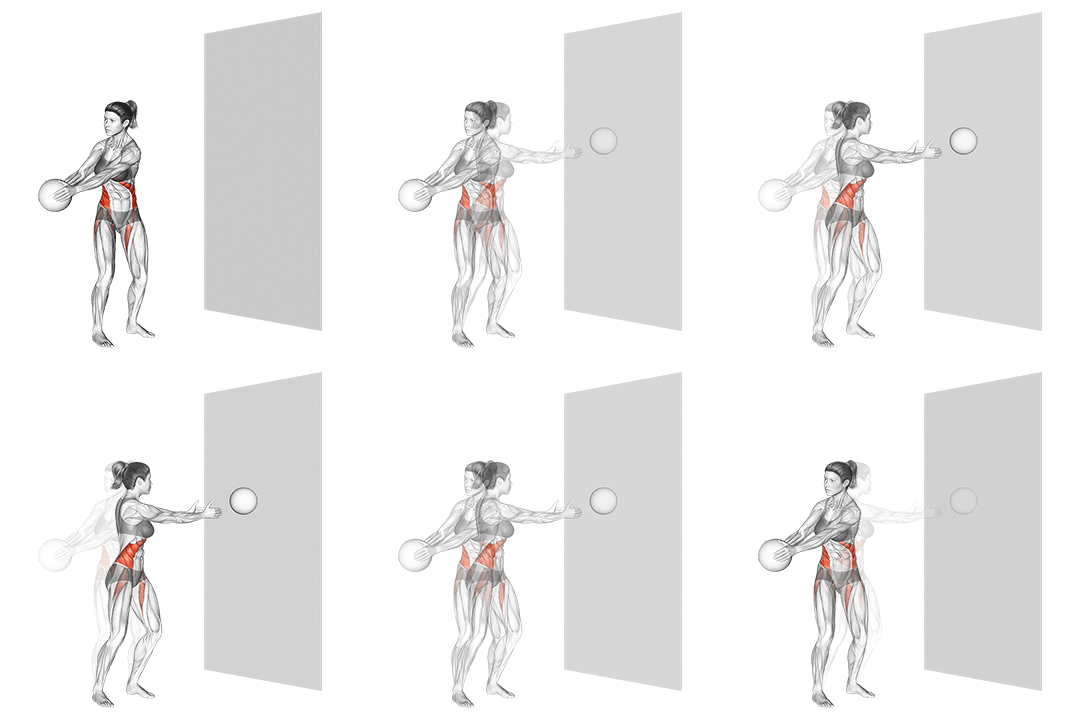
The Medicine Ball Rotational Throw stands sideways to a wall and throws a medicine ball into the wall using rotational hip and core power. The pattern produces explosive rotational power that translates directly to athletic performance.
For medicine ball core training, the rotational throw is one of the most direct rotational power exercises that exists. The pattern hits the obliques and hips through explosive rotation. Run it for 4 sets of 6 to 8 reps per side as primary explosive rotational work.
Stand sideways to a wall about 3 to 5 feet away with feet shoulder-width. Hold a medicine ball at the hip closer to the wall. Rotate explosively at the hips and core, throwing the ball into the wall. Catch the rebound and reset. Switch sides between sets. Use a medicine ball that can withstand impact.
Medicine Ball Lying Leg Raise

The Medicine Ball Lying Leg Raise lies on the back and squeezes a medicine ball between the feet while performing leg raises. The pattern produces strong combined lower ab and hip flexor loading with added weight from the ball.
For medicine ball core training, the leg raise variation produces direct lower ab loading with added weight from the squeezed ball. The pattern hits the lower abs through weighted leg raise motion. Run it for 3 sets of 10 to 12 reps as direct lower ab work.
Lie flat on the back with arms at the sides. Squeeze a medicine ball between the feet (or hold it between the lower legs). Raise the legs straight up toward the ceiling by engaging the lower abs. Lower under control without letting the legs touch the floor. Maintain ball squeeze throughout.
Crunch With Medicine Ball

The Crunch With Medicine Ball performs crunch motion while holding a medicine ball with arms extended overhead. The overhead position increases the lever arm and produces stronger ab loading than chest-held crunches.
For medicine ball core training, the overhead-extended crunch produces stronger ab loading than chest-held versions due to the longer lever arm. The pattern hits the rectus abdominis through advanced weighted crunch motion. Run it for 3 sets of 8 to 12 reps as advanced weighted ab work.
Lie flat on the back with knees bent and feet planted. Hold a medicine ball with both hands and extend the arms overhead. Crunch the trunk up by lifting the upper body while keeping the ball overhead with extended arms. Lower under control. The extended-arm position increases the lever arm and ab loading.
Dead Bug With Medicine Ball

The Dead Bug With Medicine Ball performs dead bug motion while holding a medicine ball overhead with extended arms. The added weight increases the anti-extension demand on the deep core throughout the exercise.
For medicine ball core training, the weighted dead bug produces stronger deep core loading than bodyweight versions. The pattern hits the deep abs and transverse abdominis through weighted anti-extension control. Run it for 3 sets of 8 to 12 reps per side as deep core work.
Lie flat on the back with arms extended toward the ceiling holding a medicine ball. Bend the knees to 90 degrees with feet lifted. Slowly extend one arm overhead toward the floor (with the ball) while extending the opposite leg toward the floor. Press the lower back into the floor throughout. Return to the start. Switch sides on each rep.
Medicine Ball Backward Throw

The Medicine Ball Backward Throw squats down with a medicine ball at the chest, then explosively extends and throws the ball backward overhead. The pattern produces strong combined leg, core, and posterior-chain power.
For medicine ball core training, the backward throw produces explosive combined core, leg, and posterior-chain power. The pattern hits the entire body through dynamic full-body extension. Run it for 4 sets of 6 to 8 reps as explosive full-body power work with strong core demand.
Stand with feet shoulder-width and a medicine ball held at the chest. Squat down by sitting the hips back. Explosively extend the legs, hips, and arms while throwing the ball backward overhead behind the body. Reset between reps. Use a medicine ball that can withstand impact. Perform outdoors or in a safe space.
Medicine Ball Step Behind Rotational Throw

The Medicine Ball Step Behind Rotational Throw combines a step-behind motion with a rotational throw, adding step movement to standard rotational throws. The pattern produces explosive rotational power with footwork demand.
For medicine ball core training, the step-behind rotational throw adds dynamic footwork to the standard rotational throw, producing stronger total-body power. Run it for 3 sets of 6 to 8 reps per side as advanced explosive rotational work.
Stand sideways to a wall about 3 to 5 feet away. Hold a medicine ball at the hip closer to the wall. Step the back foot behind the front foot in a crossover step while simultaneously rotating explosively to throw the ball into the wall. Catch the rebound and reset. Switch sides between sets.
Medicine Ball Catch and Overhead Throw

The Medicine Ball Catch and Overhead Throw catches a medicine ball thrown by a partner, then explosively throws it back overhead. The pattern produces combined catch-and-throw power that builds reactive core strength.
For medicine ball core training, the catch-and-throw produces strong reactive power and core stability. The pattern hits the core through dynamic catch absorption and explosive overhead throw. Run it for 3 sets of 8 to 10 reps as reactive core power work.
Stand with feet shoulder-width facing a partner. Receive a medicine ball thrown by the partner and absorb the impact through the core (lower into a slight squat). Explosively extend the legs, hips, and arms to throw the ball back overhead to the partner. Repeat for the working set.
Medicine Ball Standing Overhead Throw

The Medicine Ball Standing Overhead Throw stands with feet shoulder-width and throws a medicine ball overhead and forward into a wall or open space. The pattern produces explosive total-body extension power.
For medicine ball core training, the standing overhead throw produces explosive total-body power. The pattern hits the entire posterior chain through dynamic extension and the core through stabilization during the throw. Run it for 4 sets of 6 to 8 reps as explosive total-body power work.
Stand with feet shoulder-width and a medicine ball held overhead with both hands. Hinge slightly at the hips to load the throw, then explosively extend the legs, hips, and arms to throw the ball forward and overhead into a wall (or open space). Reset between reps.
How To Program These Workouts
A productive medicine ball core session pulls 6 to 8 exercises from the list above. A balanced session includes one weighted ab exercise (medicine ball crunch or overhead-extended crunch), one lower ab exercise (medicine ball lying leg raise), one deep core exercise (dead bug with medicine ball), one explosive rotational exercise (rotational throw or step-behind rotational throw), one explosive total-body exercise (backward throw or overhead throw), and one rotational mobility exercise (around-head rotation). Run weighted ab work for 4 sets of 10 to 15 reps; explosive power work for 4 sets of 6 to 8 reps; deep core work for 3 sets of 8 to 12 reps. Total session covers 18 to 24 working sets.
Train medicine ball core sessions 1 to 3 times per week as part of broader core or athletic training. The combination of weighted ab work and explosive power patterns produces strong but recoverable training stimulus. Most successful programs include 2 to 3 weekly MB core sessions of 30 to 40 minutes each. The format works particularly well for athletes (rotational power for sports performance), general lifters (varied core stimulus beyond standard ab training), and people training in outdoor or open spaces where explosive throw work is feasible.
For broader medicine ball programming, see our best medicine ball workouts and best medicine ball ab workouts. For specific core work, see our best at home core workouts.
Final Thoughts
The best medicine ball core workouts deliver real core development through weighted loading combined with explosive power patterns that traditional ab training cannot replicate. The combination of weighted ab work, rotational power, explosive total-body throws, and deep core stability covers every major core function and produces broader development than single-modality core training. For lifters who want explosive rotational power for sports, want to break through plateaus on standard ab training, or want core training that translates to athletic performance, dedicated medicine ball core training is one of the most effective options available.
Stay focused on the explosive intent on power patterns. The most common medicine ball core training mistake is performing rotational and overhead throws with submaximal effort, which reduces the power-development stimulus that makes the format effective. The fix: throw the medicine ball with maximum intent on every power exercise rep, treating each throw as a maximum-effort attempt. Quality explosive reps with maximum intent produce stronger power development than higher rep counts with submaximal effort. The medicine ball power patterns specifically target the rate of force development that submaximal effort cannot train.
Frequently Asked Questions
What weight medicine ball should I use?
Most lifters benefit from a medium-weight medicine ball (8 to 14 pounds) for combined static and dynamic core work. The medium weight provides meaningful loading for ab work while remaining manageable for explosive throws. Beginners should start with lighter balls (6 to 8 pounds) for technique mastery; advanced lifters can use heavier balls (15 to 20 pounds) for static work but typically benefit from staying under 12 pounds for explosive throws to maintain proper power output.
How often should I train medicine ball core?
One to three times per week works for most lifters. The combination of weighted ab work and explosive power patterns produces strong but recoverable training stimulus. Most successful programs include 2 to 3 weekly MB core sessions of 30 to 40 minutes each. Daily medicine ball core training typically produces accumulated fatigue without proportional gains, especially given the explosive power demands.
Can medicine ball workouts build a strong core?
Yes effectively. Medicine ball core training produces real core development through weighted loading and explosive power patterns. The combination of static and dynamic stimulus develops both core strength and rotational power that traditional ab training rarely matches. Most successful athletes (especially in rotational sports like baseball, golf, tennis, hockey) include medicine ball core work as primary core training.
Are medicine ball workouts good for athletes?
Yes particularly effectively. Medicine ball core training produces explosive rotational and total-body power that translates directly to athletic performance in rotational sports (baseball, golf, tennis, hockey, lacrosse, MMA) and contact sports requiring reactive core strength. The format is one of the most effective athletic core training approaches available, especially when combined with traditional strength training and sport-specific practice.
Where can I do medicine ball workouts?
Most lifters benefit from outdoor spaces, open gym areas, or walls designed for impact (concrete walls, special MB walls). Throwing-based MB exercises require sturdy walls or open spaces; static exercises (crunches, dead bugs) work in any setting. Specially-designed slam balls handle ground impact better than standard medicine balls and work for slam-style training. Avoid throwing standard medicine balls onto hard floors which can damage the balls.